


Tech Secrets Big Companies Don’t Want You to Know
Tech Billionaires Are Quietly Leaving Social Media
The people who engineered the attention economy spent years keeping their own families away from it. Now their personal exits are documented — and the reason turns out to be more structurally honest than a moral awakening.
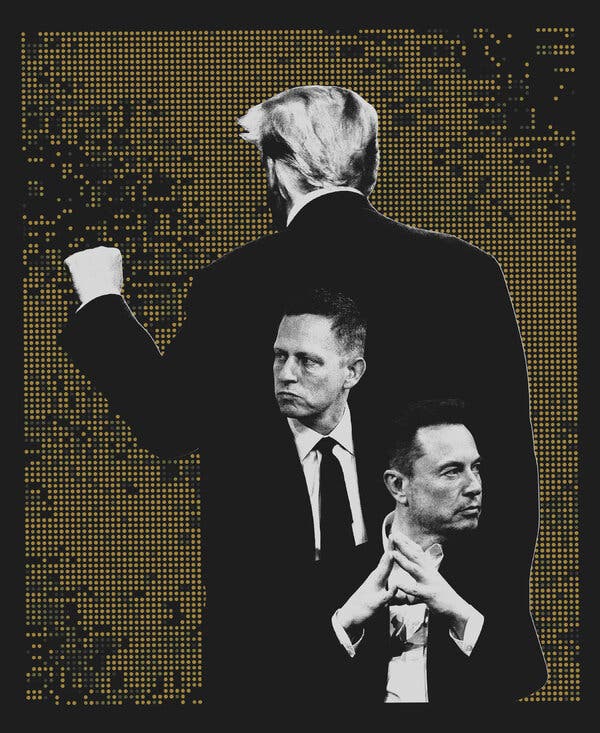
Seven and a half hours. That’s the average daily screen time for American children, per the American Academy of Child & Adolescent Psychiatry. Meanwhile, Peter Thiel — the man who wrote the first $500,000 check to Facebook — caps his own kids at 90 minutes a week.
That’s not some crunchy parenting philosophy. That’s someone who understands the product intimately, and doesn’t want it applied to people he actually loves.
For years, the founders-restricting-their-kids story felt like a convenient irony — useful for dinner-party outrage, but not a full picture. The harder question was: are the founders themselves leaving? Were they quietly stepping off the platforms they built?
That question is answerable now. And honestly, what the evidence shows is stranger and more interesting than “billionaires feel guilty.” It’s a group of technically sophisticated people who cannot find a platform they trust enough to stay on — including platforms they personally created.
That’s a different diagnosis. And it matters more.
The Mechanism First — Then the Exits
You can’t understand why the founders are leaving without understanding what they built. And on this, we have a remarkable primary source: Sean Parker himself, founding president of Facebook.
In November 2017, at the National Constitution Center, Parker told Axios something extraordinarily candid: the goal from day one was consuming as much of users’ time and conscious attention as possible. Likes and comments were engineered as dopamine hits — a social-validation feedback loop deliberately exploiting a vulnerability in human psychology. Parker, Zuckerberg, and Kevin Systrom “understood this consciously. And we did it anyway.”
A self-report is one thing. The neuroscience is another. A 2025 PRISMA-compliant systematic review by Dores et al. in Healthcare (Basel) — searching PubMed, Web of Science, and EBSCOhost through September 2024, analyzing fMRI and EEG studies on the “like” feature — confirmed the mechanism Parker described using measures he couldn’t have staged.
The Dopamine Feedback Loop — How “Likes” Work on Your Brain
Source: Dores et al., Healthcare (Basel), Jan 2025 · DOI: 10.3390/healthcare13010089
Variable-ratio schedule mechanism: Clark & Zack, 2023 — same principle as slot machine design
Social feedback through the like button activates the ventral striatum and nucleus accumbens in patterns consistent with variable-ratio reinforcement schedules — the same mechanism that makes slot machines so difficult to walk away from. The unpredictability of the reward maximizes dopamine release more effectively than a predictable outcome ever could.
There’s a second-order finding that’s even more disturbing. The same Dores et al. review found that activation in reward-processing regions was associated with diminished prefrontal regulation — the part of the brain responsible for evaluating whether a behavior is even warranted. The loop doesn’t just create compulsion. It degrades the neural capacity to detect the compulsion.
Parker wasn’t describing a product that exploits a vulnerability. He was describing a product engineered so the vulnerability becomes invisible to the person experiencing it. That’s why widespread awareness of exactly how it works hasn’t fixed anything.
The Documented Exits
Now: the actual departures. These are not rumors. Each is traceable to primary sources.
Jack Dorsey: Five Steps Across Three Platforms in Three Years
The clearest trajectory belongs to Twitter’s co-founder.
At the time of writing, his X account follows three people: Elon Musk, Edward Snowden, and Stella Assange. The man who built the original platform is posting primarily on a protocol so marginal it doesn’t appear in mainstream reporting. He donated $5 million to Nostr — the infrastructure underneath Primal — and has platform-hopped through every available alternative, including two he personally built, without finding one that works.
“Bluesky is literally repeating all the mistakes [Twitter] made.”
— Jack Dorsey, @jack, X, May 2024. Source: Bloomberg, TIME, May 6, 2024.
Mark Zuckerberg: Uses a Competitor’s App for Private Communication
Less theatrical. But documented.
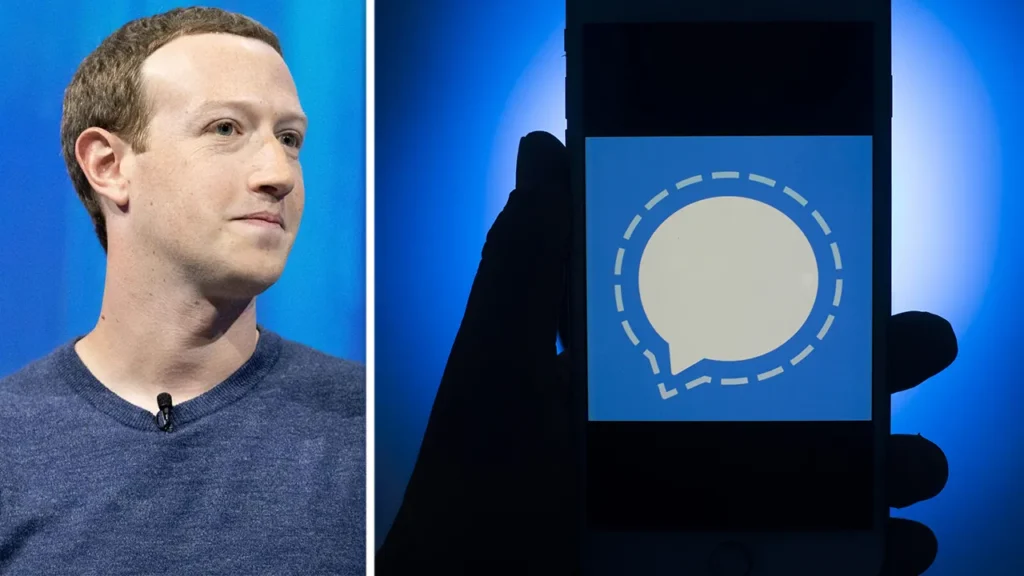
In April 2021, security researcher Dave Walker examined data from the 2021 Facebook data breach — 533 million users exposed, Zuckerberg included — and confirmed that his phone number was registered to a Signal account. Walker’s disclosure on Twitter, April 4, 2021, is the primary source. No subsequent primary evidence has shown him migrating back to Meta products for private communication.
Meanwhile, Meta’s internal communications platform, Workplace — which Zuckerberg uses for company business — is being shut down. Read-only from September 2025; fully closed by June 2026. Reason given: Meta is “refocusing on AI and the metaverse.”
The man who owns WhatsApp uses a competitor for personal privacy. The man whose platform was caught covertly tracking users through incognito mode does not use that platform for his own private communication.
On April 23, 2025, the European Commission issued Decision DMA.100055, finding Meta’s “pay or consent” model violated Article 5(2) of the Digital Markets Act. Fine: €200 million. The Commission determined Meta’s binary choice between paying for ad-free service or consenting to personalized advertising “did not give users the required specific choice” and “did not allow users to exercise their right to freely consent.”
Separately, a peer-reviewed research team from IMDEA Networks, Radboud University, and KU Leuven published findings in June 2025 that Meta’s Android apps had been covertly tracking users’ web browsing — including in incognito mode and through VPNs — by exploiting a localhost channel that bypassed Android’s own sandboxing. Active since September 2024. Google confirmed the technique “blatantly violates privacy principles.” Meta paused the behavior after disclosure.
The Others: Restriction Without Personal Exit
The pattern is broader than Dorsey and Zuckerberg, though the specifics differ:
- Peter Thiel — 90 minutes per week for his kids. No documented personal exit from platforms.
- Bill Gates — no smartphones before 14, no phones at dinner. Family restriction without public departure.
- Evan Spiegel (Snap CEO) — 90 minutes weekly for his kids, stated publicly in 2018. Still running Snapchat.
- Sean Parker — called himself a “conscientious objector” in 2017 while holding Facebook equity. Described the mechanism; didn’t delete his accounts.
- Elon Musk — remains on X, which he owns. Not an exit; an acquisition. Said it “might’ve been a mistake” not to set rules for his own kids around X.
The “quietly leaving” thesis applies specifically to Dorsey and Zuckerberg. The broader pattern is family restrictions plus structural critique — not a mass billionaire departure. Worth keeping that distinction clean.
Three Things That Accelerated Everything Between 2024 and 2026
The mechanism was always there. The exits above span 2022–2025. But three developments in 18 months made both significantly more visible.
1. The Political Alignment Killed the Neutrality Fiction
Zuckerberg killed fact-checking across Facebook, Threads, and Instagram in the days before the Trump inauguration — nobody pretended this timing was coincidental. Musk rebuilt X around a political identity that alienated a meaningful portion of its 2022 user base. Bezos, Pichai, Cook, and Musk sat together at the inauguration after their companies collectively donated around $3 million to the inaugural fund.
A senior digital communications practitioner with 20 years at two major tech-adjacent organizations — who asked not to be named, institutional affiliation on file — described the shift bluntly in February 2026: “The product is now explicitly the politics. Being on the platform is now implicitly an endorsement.”
That’s not fringe analysis. It’s the reason Dorsey posted his March 2025 lockout not on X, but on Primal.
2. AI Content Flooded the Feed and Killed the Reward Loop
This is where the evidence gets structurally interesting — because it connects the billionaire exits to the broader user disengagement in a way that’s more than parallel.
Forbes and ArtSmart AI data from 2025 indicate that 71% of social media images are now AI-generated, and over 80% of content recommendations are powered by AI. A CNET survey from February 2026 — 2,443 US adults, methodologically transparent — found that 94% believe they encounter AI-created or altered content on social media, but only 44% are confident they can actually tell the real from the generated. Half (51%) want better labels. Only 11% find AI content useful, informative, or entertaining.
Here’s why that matters mechanistically: remember the Dores et al. finding about variable-ratio reinforcement schedules. The dopamine response Parker engineered requires genuine unpredictability to sustain activation in the midbrain and basal ganglia. The slot machine works because you genuinely don’t know what’s coming. A synthetic feed provides the formal structure of the loop — notifications, counts, apparent engagement — while replacing the human signal that made it neurologically rewarding.
The machine still runs. The fuel is gone.
3. The Surveillance Exposure Became Personal and Technical
The IMDEA Networks / Radboud / KU Leuven research, published June 2025, documented that Meta’s Android apps had been running a covert localhost channel since September 2024 that linked users’ web browsing to their logged-in identity — bypassing incognito mode, VPNs, and Android’s sandboxing entirely. The EFF published a user-facing analysis. Google confirmed the technique violated its privacy principles.
A high-net-worth individual operating in a sensitive business environment has a materially different threat model around covert data collection than the average user. They understand the architecture. They understand what it means. That’s not the same as reading a privacy policy.
The Alternatives Also Failed — Documented
The exits are real. Where people went afterward is, in almost every case, also a mess. This is the part that doesn’t get enough coverage.
Dorsey’s trajectory compresses the story: he co-founded Bluesky as the open alternative Twitter should have been. Deleted his account. Left the board. Called it a repeat of Twitter’s mistakes. Donated $5 million to Nostr. Got locked out of X. Now posts primarily on Primal — infrastructure so marginal it doesn’t register in mainstream reporting.
He built two platforms specifically designed to solve the ownership problem. Neither worked.
| Platform / Tool | Architecture | Adoption (2025–26) | Status | Documented Failure |
|---|---|---|---|---|
| Bluesky | Federated, AT Protocol, data-portable | ~36M users (self-reported, Jan 2026) | ⚠ Troubled | Oct 2025 CEO moderation crisis (“WAFFLES”); code-verified post suppression; retaliatory bans; PDS migration creates phantom accounts (GitHub #274, Sept 2025). Dorsey departed calling it a Twitter repeat. |
| Signal | End-to-end encrypted, minimal data collection | No public stats; widely used by professionals, governments | ✓ Works for its purpose | Not a public social network. Solves private communication. Does not replace social media. It’s a different product. |
| Nostr / Primal | Decentralized, cryptographic-key identity | Negligible mainstream adoption; no standardized data | ✗ Not viable for most | Functionally unusable for ordinary users. Dorsey — one of its most prominent figures — is also one of its only prominent figures. That is the failure case. |
| Reddit / Discord | Centralized, community-moderated | Brands migrating toward community spaces (Sprout Q4 2025, vendor-reported) | ⚠ Directional | Still centralized; replicates moderation and governance risks of legacy platforms. Better community control, not architectural independence. |
| Email / Newsletter | Decentralized, owned by sender | Growing; no single stat source | ✓ Most portable option | Not a social network. But subscriber relationships don’t get algorithmically zeroed. Data migrates. The platform cannot revoke your list. |
Bluesky’s October 2025 moderation crisis made this concrete for a wider audience. CEO Jay Graber responded to a user raising trans safety concerns with an all-caps “WAFFLES.” Code analysis confirmed a trans artist’s critical post was subsequently suppressed; a Black social-justice advocate was permanently banned without disclosed cause, with a post-facto justification manufactured from a two-week-old post that didn’t violate Bluesky’s own terms. The platform’s 2025 Transparency Report logged 9.97 million user reports — up 54% year-over-year.
The architecture is genuinely different from X. The human dynamics replicated within 18 months of meaningful scale. That’s the lesson — and it matters more than any protocol debate.
The Platforms Aren’t Dying — But the Numbers Are Worse Than They Look
GWI’s latest figures — the standard for global digital behavior research — show the typical internet user now spends 2 hours and 21 minutes daily on social media, down 10 minutes from 2023 levels. Current daily averages are lower than 2018 levels, before TikTok and Reels came to dominate. Between 2024 and 2025, net follower growth year-over-year dropped by as much as 44% for some industries, per Dash Social data.
Instagram is testing “Early Access Reels” to restore meaning to following — an explicit acknowledgment that follower counts have become weaker indicators of actual reach. Meta’s own Q4 2025 earnings call revealed the company is optimizing for “original content,” with Instagram original content growing 10 percentage points to 75% of US recommendations in Q4 2025. That’s an implicit admission that non-original (AI/aggregated) content had degraded the feed experience enough to require a product response.
The causal claim requires careful framing: the AI content statistics and engagement declines are correlated, not causally proven in a single longitudinal study. The academic literature on AI content and disengagement remains emergent. The stronger claim is phenomenological — users perceive feeds as hollow, and platform behavior confirms the platforms themselves recognize the degradation.
Dorsey’s documented exits (2022–2025), Parker’s 2017 architecture admission, and the Dores et al. (2025) neuroscience of the like-button mechanism together produce a conclusion none of the three sources states directly:
The billionaire departure is not occurring because the platforms became harmful. It’s occurring because the platforms became broken in a specific way — they preserved the manipulation infrastructure while losing the human signal the manipulation required.
Parker’s variable-ratio reward schedule needs genuine social unpredictability to activate the ventral striatum. An AI-saturated feed provides the structural form of the reward loop without the content that makes it neurologically rewarding. The founders are leaving a machine that stopped functioning on its own designed terms.
Your Platform Is Now a Political Artifact. Your Analytics Don’t Know That Yet.
Here’s the actual problem for your team: you have a brand-safety issue that your infrastructure still treats as a performance issue. The question isn’t “where are our users” — it’s “what does remaining on this platform signal to the portion of your audience that has already started leaving it, and can they see that you’re still there?”
In 2022 those questions had the same answer. In 2026 they don’t.
Run a conflict audit — not a PR exercise, an actual inventory. Map your stated values against documented platform behavior. The EU consent violation (Decision DMA.100055, April 23, 2025) and the IMDEA Networks localhost tracking disclosure are both primary, public documents. If your company has a stated privacy commitment, a journalist can now cross-reference it against both. That gap is discoverable in a way it wasn’t two years ago.
Nobody in your org owns this. Your legal team needs a specific regulatory trigger. Your analytics team sees ROI numbers. The gap between them is where brand-safety crises incubate.
You Don’t Own Your Following. You Rent It — and the Lease Terms Are Getting Worse.
Dorsey’s trajectory is useful here for a specific reason: he built two platforms explicitly designed to solve the ownership problem, and couldn’t make either work. Bluesky had the right architecture and replicated moderation failures within 18 months of meaningful scale. Nostr has the right protocol and essentially nobody on it. AT Protocol promises portability and in practice produces phantom accounts (GitHub #274).
The architecture debate is real. It hasn’t produced a reliable alternative.
What doesn’t get broken by architectural choices is an email address. It’s yours. It migrates. A newsletter subscriber is a relationship the platform cannot revoke. A follower count on X or Instagram is a metric the platform controls, depreciates, and can zero out with an algorithm change you’re not consulted about.
The honest complication: follower counts are still used by editors, clients, and speaking bookers as proxies for credibility. That perverse incentive hasn’t gone away. Building a list is slower, the metrics are invisible to the people evaluating you, and there’s no vanity number to point to. There’s no clean answer for that tension. But a large following on a platform with deteriorating governance is a depreciating asset you don’t control. The list compounds. The follower count is a lease.
Nobody Apologized. Nobody Built the Alternative.
The exits are real. They’re also incomplete, awkward, and in some cases actively ironic.
Parker said in 2017 he’d become “something of a conscientious objector” — while holding equity in the company he was objecting to. Dorsey is currently posting primarily on Primal, a protocol he funded that essentially nobody else uses, after building and abandoning two platforms. Zuckerberg communicates privately on a competitor’s encrypted app while his own platform ran covert tracking that a peer-reviewed research team had to disclose publicly in June 2025.
The thing the evidence actually requires you to sit with: the exit is structurally available to people with the technical literacy and resources to rebuild their presence elsewhere. Your data from the last decade doesn’t migrate with you. Your social graph stays with the platform.
The same data infrastructure the founders built to extract value from 3 billion users now contains them too. Most of those 3 billion users can’t leave the way Dorsey can — which is to say: expensively, awkwardly, and over the course of several years, while still not landing somewhere that actually works.
That’s the part of the story that usually gets cut for length.
Sources & Citations
- Primary Dores et al., Healthcare (Basel), January 6, 2025. PRISMA-compliant systematic review on social media “like” feature and dopamine feedback. DOI: 10.3390/healthcare13010089
- Primary Sean Parker, Axios interview at National Constitution Center, November 2017. Axios report
- Primary Jack Dorsey, @jack, X/Twitter, August 25, 2022. Original post (widely archived)
- Primary European Commission Decision DMA.100055, April 23, 2025 — Meta “pay or consent” DMA violation, €200M fine. EC Press Release
- Peer-reviewed Herrera et al. / IMDEA Networks, Radboud University, KU Leuven. Meta Android covert tracking via localhost channel, published June 5, 2025. The Register coverage · EFF analysis, June 25, 2025
- Primary Dave Walker, @Daviey, Twitter, April 4, 2021 — Zuckerberg’s phone number registered to Signal (via Facebook data breach analysis). Reported by Business Standard
- News Dorsey departs Bluesky board, May 2024. Bloomberg · TIME
- News Dorsey X lockout, March 2025. The Post Millennial, March 12, 2025
- Primary Bluesky 2025 Transparency Report, January 29, 2026 — 9.97M reports, self-reported. Bluesky blog
- Technical Bluesky PDS migration phantom-account issue. GitHub bluesky-social/pds issue #274, September 28, 2025
- News Meta Workplace shutdown. CNBC, January 7, 2025
- Survey CNET AI content survey, February 23, 2026 (n=2,443 US adults). CNET
- Data GWI / DataReportal Digital 2025 — global social media time data. DataReportal · We Are Social, February 2025
- Earnings Meta Q4 2025 Earnings Call Transcript, January 28, 2026 — original content share, Instagram algorithm. Meta Investor Relations
- Data Forbes / ArtSmart AI — 71% AI-generated social images, 80% AI recommendations, 2025. Forbes, March 2025
- Academic Clark & Zack (2023) — variable-ratio reinforcement mechanisms, cited in Dores et al. PMC review (PMC11719588).
- Roundup Peter Thiel, Bill Gates, Evan Spiegel screen-time statements. Fortune, February 2026
Meta Knew Instagram Killed Gabby Cusato. The Trial Starts November 2026
The Hidden iPhone Features Apple Doesn’t Want You to Know in 2026
Future Side Hustles That Pay More Than a Job
AI Is Running Your Life: 12 Shocking Ways It Controls You Now
Post-Smartphone Strategies: Scientists Predict the End of Smartphones by 2030
The Weirdest Internet Challenges of 2026
The Meme That Accidentally Changed Politics