
What Scientists Found in Antarctica Will Shock You 7 Discoveries That Rewrite the Rules · April 2026
Antarctica was supposed to be a lifeless slab of ice. That story is over. Over the past 18 months, researchers have found sharks where no shark belongs, rivers that flow uphill, microbes sealed in darkness for thousands of years, and climate signals that make every existing model look like an underestimate.
- A sleeper shark filmed 490 meters deep in waters where no shark had ever been recorded
- Hydrothermal vents at 1,300 meters producing new species on the Antarctic mid-ocean ridge
- Ancient microbes alive in a subglacial lake sealed for millennia — implications for life on Europa
- Ice cores with 3-million-year atmospheric data showing today’s CO₂ is 70% above Pliocene peaks
- Rivers that flow uphill, spanning 460 km, accelerating glacier melt by 20–50%
- Hektoria Glacier — half its mass gone in two months — fastest retreat in recorded history
- Antarctica’s gravity anomaly solved: deep Earth processes tied directly to ice sheet stability
Antarctica Was Not What We Thought
For most of scientific history, Antarctica was essentially a footnote. Cold. Stable. Predictable. You studied it for climate baselines and left.
That changed — fast. Between January 2025 and April 2026, a sequence of discoveries hit the scientific press that, taken together, don’t just update our understanding of one continent. They fundamentally rewrite what we know about life’s limits, the physics of ice, and how much trouble our climate projections might already be in.
What follows is the full breakdown of each finding. Not a summary. The actual science, explained clearly — with the context that makes each one genuinely alarming or genuinely astonishing, depending on your disposition.
| # | Discovery | Category | Global Implication |
|---|---|---|---|
| 1 | Sleeper shark in Antarctic waters | Biology | Marine ecosystems shifting faster than documented |
| 2 | Hydrothermal vents + new species | Biology | New metabolic models for life in extreme environments |
| 3 | Subglacial microbes, Mercer Lake | Astrobiology | Life on Europa / Enceladus now plausible by direct analogy |
| 4 | 3-million-year ice core CO₂ data | Climate | Current CO₂ = 70% above any level in 3 million years |
| 5 | Uphill rivers, accelerated melt | Glaciology | Sea level rise models significantly underestimated |
| 6 | Hektoria Glacier rapid retreat | Climate | Fastest retreat in modern recorded history |
| 7 | Antarctic gravity anomaly solved | Geophysics | Deep Earth dynamics linked to ice sheet stability |
A Sleeper Shark Where No Shark Should Exist
Marine biology has a fairly well-established rule: sharks don’t live in Antarctica. The Southern Ocean is too cold, the salinity profile is wrong, the prey base is insufficient for a large apex predator. Marine biologists treated this as settled science.
Then a deep-sea camera changed everything.
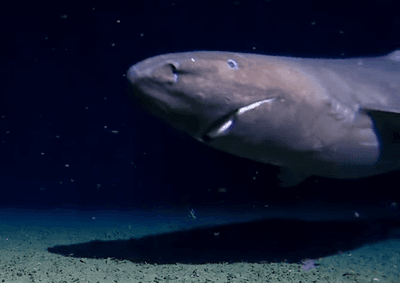
In January 2025, footage from 490 meters below the surface near the South Shetland Islands — Antarctic Peninsula waters — captured a sleeper shark somewhere between 10 and 13 feet long. Swimming. In water at 1.27°C. As marine biologist Alan Jamieson described it when he first reviewed the footage: a hunk of a shark. Unmistakable. Undeniable. And definitively impossible, according to everything we knew.
Peter Kyne, conservation biologist at Charles Darwin University, confirmed: no shark had ever been documented this far south. Not previously, not in any historical survey, not in any subfossil record. This wasn’t a near miss. It was a blank.
Two explanations are on the table, and both are unsettling in different ways. Either sleeper sharks have been operating in these waters for years — maybe decades — and we simply lacked the deep-sea camera infrastructure to catch them. Or warming ocean temperatures are now pushing species into territory they previously avoided.
The first possibility says our understanding of Southern Ocean ecology has a significant gap. The second says species range shifts are happening faster than our monitoring systems can track. Pick your discomfort.
The Southern Ocean has absorbed a disproportionate share of global ocean warming. If apex predators like sleeper sharks are moving south, the cascading effects on prey species — Antarctic krill, notothenioid fish, squid — could be significant and largely unmodeled.
Hydrothermal Vents and an Ecosystem Nobody Knew Existed
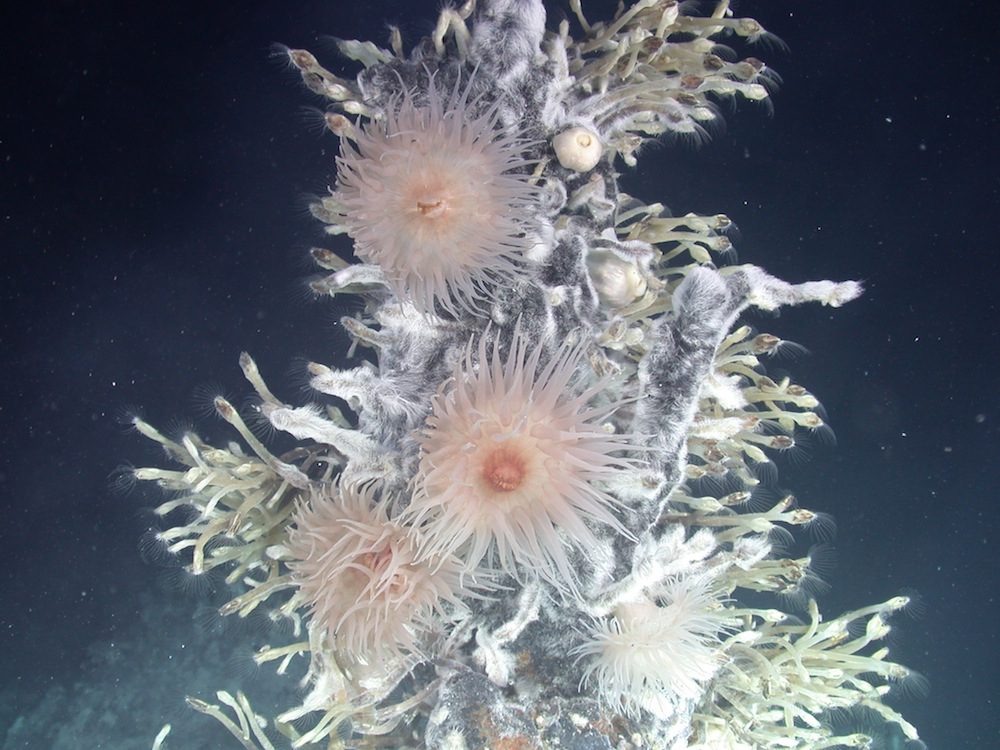
In April 2026, the Korea Polar Research Institute did something that had literally never been done before: directly observed hydrothermal vents along the Antarctic mid-ocean ridge using an unmanned submersible. A world first.
At 1,300 meters below the frozen surface, hot fluid surges upward from the seafloor. Around it, a complete ecosystem — nourished entirely by chemical energy, no sunlight, total darkness, crushing pressure. The team collected 12 deep-sea organisms including cnidarians, sponges, and echinoderms. Many are believed to be previously unknown species. Not undescribed subspecies. Unknown species.
The metabolic strategies these organisms use are genuinely alien by the standards of surface biology. No photosynthesis. Energy derived from chemical reactions between seawater and the mineral-rich hot fluid — a process called chemosynthesis. The Antarctic vent ecosystem has likely been running for millions of years in complete isolation from anything living at the surface.
The team also mapped extensive sulfide ore deposits rich in copper and zinc at the site. That adds an economic dimension that complicates everything: the same seafloor that hosts undiscovered species also contains commercially valuable mineral deposits. The Antarctic Treaty System will be having some very difficult conversations in the next decade.
Microbial Life Sealed Beneath 1,000 Meters of Ice for Millennia
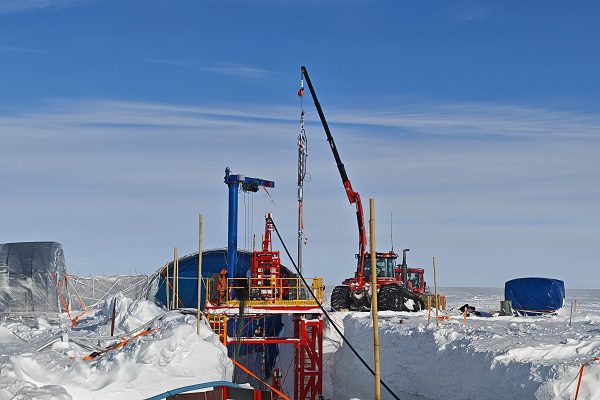
This one took years to pull off. The SALSA project — Subglacial Antarctic Lakes Scientific Access — drilled 1,085 meters through the West Antarctic Ice Sheet to reach Mercer Subglacial Lake. A body of liquid water that has had essentially zero contact with the surface world for thousands of years. No sunlight. No atmospheric exchange. A sealed system.
Using clean hot-water drilling to prevent surface contamination from invalidating results, researchers extracted water and sediment samples. Genetic analysis of 1,374 single-cell amplified genomes revealed something extraordinary: most organisms were previously unknown species, genetically distinct from anything found in marine or surface environments anywhere on Earth.
“They display a range of metabolic strategies… and this metabolic flexibility is likely the key to their survival.”
— Dr. Kyuin Hwang, co-first author, SALSA ProjectThese microbes run on two completely different energy systems depending on local conditions. Where oxygen is available, they oxidize organic matter. Where it isn’t, they switch to inorganic compounds. That’s not a biological quirk. That’s an evolutionary strategy that allowed a population to survive in total isolation, in total darkness, under conditions that would kill virtually every other organism on Earth.
Europa (Jupiter’s moon) and Enceladus (Saturn’s) both harbor liquid water oceans beneath frozen crusts. Mercer Subglacial Lake is now the closest terrestrial analog to those environments we have ever directly sampled. These findings move the probability of extraterrestrial microbial life from “theoretically possible” to “biologically precedented.” That is a meaningful scientific shift.
For context: the United States is the only nation that has successfully accessed a subglacial lake without contamination. This was only the second time it has happened in human history. The first was Whillans Subglacial Lake in 2013. Both are in West Antarctica. Both yielded living, previously unknown organisms.
A 3-Million-Year Climate Record — And What It Tells Us About Right Now
The COLDEX team — Center for Oldest Ice Exploration — spent years drilling for something specific: ice old enough to contain atmospheric snapshots from the Pliocene epoch. They found it. Ice cores with trapped gas bubbles dating back 3 million years.
Using noble gases locked in those bubbles, the team determined that average ocean temperatures have dropped 2 to 2.5°C over the past 3 million years — much of the cooling concentrated in the early part of that period, coinciding with the formation of large ice sheets in the Northern Hemisphere. That’s the long arc of natural climate change. Slow. Orbital-driven. Predictable.
Then they measured the CO₂ concentrations in the same cores.
Here’s the thing that makes this genuinely difficult: greenhouse gas concentrations alone don’t fully explain Earth’s long-term cooling over this period. Other factors — surface reflectivity changes, vegetation shifts, ocean circulation — played significant roles. Which means the climate system has feedback mechanisms that we understand in general but cannot yet fully model in combination.
That’s not a caveat. That’s a warning. We’re running an atmospheric experiment with no historical analog, in a system whose full feedback architecture we have not mapped. The COLDEX team has also identified ice potentially as old as 6 million years at the base of one core, with analysis ongoing. What those layers contain may push the picture back even further.
Hidden Rivers That Flow Uphill — And Accelerate Ice Loss
Water flows downhill. Every child knows this. It is about as fundamental a physical principle as exists.
Antarctica disagrees.
A March 2025 study in Nature Communications, led by glaciologist Christine Dow, mapped a river system beneath the West Antarctic Ice Sheet that flows uphill. Not metaphorically. Physically uphill. Hundreds of feet, against gravity, up the steep sides of subglacial mountains.
The physics actually makes sense once you know the mechanism. Subglacial water doesn’t just respond to gravity — it responds to pressure. Where the ice above is thick, pressure is extremely high. Where the ice thins, pressure drops. That pressure gradient can override gravity completely, forcing water to climb topographic obstacles it would normally be blocked by.
When these rivers discharge into the ocean at the grounding line — where glaciers meet sea — they create turbulent upwelling that lifts warm, salty seawater from the ocean floor against the underside of ice shelves. This process increases melt rates by 20 to 50% in some regions. That’s not a marginal effect. That’s a mechanism that substantially changes the trajectory of ice loss.
Totten Glacier alone holds enough ice to raise global sea levels by 12 feet. Current climate models do not include subglacial river dynamics in their ice loss calculations. Meaning projections for sea level rise may be significantly underestimated — not because scientists got the physics wrong, but because they didn’t know this mechanism existed at this scale.
A Glacier the Size of Philadelphia Lost Half Its Mass in Two Months
The Hektoria Glacier sits on the Antarctic Peninsula, the finger of land that extends toward South America. It is not one of the largest glaciers in Antarctica. That’s what makes what happened to it so striking — if this happened to a mid-size glacier on the warmest part of the continent, the question is obvious: what happens when this process reaches the big ones?
The mechanism is self-accelerating. Because Hektoria sits on a flat ice plain, as it thins from warm seawater below, more of its base lifts off the bedrock — becoming buoyant and vulnerable to calving. The thinner it gets, the faster icebergs break away. The faster icebergs break away, the more ocean surface is exposed to further warming. It’s a feedback loop, not a linear process.
Antarctica is warming roughly twice as fast as the global average. The West Antarctic Ice Sheet, in particular, is grounded below sea level across most of its base — making it physically susceptible to exactly this kind of marine ice sheet instability. If all of Antarctica’s glaciers melted completely — an extreme scenario, but one scientists now consider relevant for multi-century projections — global sea levels rise by approximately 195 feet, according to NASA.
Nobody is predicting that in a century. But the direction of travel, demonstrated concretely by Hektoria, is not ambiguous.
Antarctica’s Gravity Hole — A Decades-Old Mystery, Finally Solved
Antarctica has a gravity anomaly. Gravity is measurably weaker beneath parts of the continent, which means the ocean surface actually sits slightly lower than it would otherwise — because water follows the gravitational field. Scientists have known about this for decades. Nobody knew why.
In March 2026, a team from the University of Florida and the Paris Institute of Earth Physics published the answer. It comes from extremely slow movements of rock deep inside the planet — shifts occurring over tens of millions of years that have no surface expression you’d notice on any human timescale. These movements created the gravity anomaly and appear to have occurred in parallel with major shifts in Antarctica’s climate history.
“If we can better understand how Earth’s interior shapes gravity and sea levels, we gain insight into factors that may matter for the growth and stability of large ice sheets.”
— Alessandro Forte, co-author, University of FloridaThe research combined global earthquake recordings with physics-based computer models to map the three-dimensional structure of Earth’s interior beneath the continent. What they found connects processes happening hundreds of kilometers underground to the behavior of ice sheets at the surface. Deep Earth and surface climate, linked.
The practical implication: our models of ice sheet stability need to account for gravitational and mantle dynamics that most current frameworks simply ignore. The gravity anomaly isn’t just a geophysical curiosity. It affects where water goes, how ice sheets grow and shrink, and how the system responds to perturbations like rapid warming.
The Unifying Thread: Antarctica Affects Everything, and the Models Know It Now
A September 2025 study by the European Geosciences Union looked at something meta: how accurate are our existing climate models when it comes to Antarctica’s global impact? The findings were sobering.
The mechanism behind these errors is actually straightforward once you see it. Most climate models calibrate against data from the last century or so. But the Southern Ocean may have been meaningfully colder during the pre-industrial era — with more extensive sea ice — than that short observational window captures. Deeper ocean layers were also cooler. This produced thicker cloud cover over mid-latitudes. More cloud cover means more sunlight reflected back into space. As greenhouse gases build, that reflective capacity decreases — creating a stronger amplifying effect than the models currently account for.
Or, as the researchers stated directly: “This likely stronger warming that may await us calls for urgent action.”
Seven discoveries. Each independently significant. Together, they form a single coherent picture: Antarctica is not the stable, predictable ice block we assumed. It is a dynamic system — biological, geological, hydrological, and gravitational — and nearly every direction we look at it reveals mechanisms that are moving faster, and interacting more powerfully, than our current models knew to predict.
Current IPCC sea level rise projections do not include subglacial river dynamics, do not fully account for marine ice sheet instability like Hektoria demonstrated, and may underestimate cloud feedback from Southern Ocean warming by 19–31%. These are not fringe concerns — they’re the consensus findings of peer-reviewed research published in Nature-tier journals in the past 18 months. The projections will need to be revised upward.
What You Do With This
Antarctica is not a distant abstraction. Every ice shelf that collapses, every glacier that retreats, every subglacial river that discharges warm water into the ocean — those events have addresses. Coastal cities. Island nations. Infrastructure built to sea level specifications that are now being quietly revised.
The sleeper shark finding says marine ecosystems are reorganizing in ways we cannot fully track yet. The subglacial microbes say life persists in conditions we considered definitionally impossible, with direct implications for how we search for life elsewhere in the solar system. The 3-million-year ice record says our current atmospheric CO₂ concentration is without precedent in human evolutionary history. And the rivers, the glacier collapse, the gravity anomaly — they all say the same thing: the physics of this system is more complex, and faster-moving, than the models assumed.
For policymakers, sea level projections should now be treated as conservative estimates, not central ones. For scientists, decades of established assumptions about Antarctic ecology, glaciology, and climate sensitivity are actively under revision. For everyone else: the continent at the bottom of the world is not a passive victim of climate change. It is an amplifier — and it is sending signals we are only just beginning to read.
The ice is not just melting. It’s revealing a world we never knew existed. And that world has a great deal to tell us about the one we’re building.
- Alan Jamieson et al. — Sleeper shark footage, South Shetland Islands (Nature, January 2025)
- Korea Polar Research Institute — Hydrothermal vent observation, Antarctic mid-ocean ridge (April 2026)
- SALSA Project — Mercer Subglacial Lake genomic analysis; Dr. Kyuin Hwang, co-first author
- COLDEX — Center for Oldest Ice Exploration, 3-million-year ice core publication (April 2026)
- Christine Dow et al. — Subglacial rivers, uphill flow, Totten Glacier drainage, Nature Communications (March 2025)
- Naomi Ochwat, Ted Scambos et al. — Hektoria Glacier rapid retreat, Nature Geoscience (2025)
- European Geosciences Union — Southern Ocean climate model underestimates study (September 2025)
- Alessandro Forte et al. — Antarctic gravity anomaly and deep Earth dynamics, University of Florida / Paris Institute of Earth Physics (March 2026)
- NASA — Antarctic ice loss and global sea level implications
Scientists Revived Viruses Frozen for 48,500 Years. Here’s the actual science.
The Organisms That Actually Eat Plastic — and the Ones That Just Hold It
Why Students Are Using AI to Cheat (and Win)
25 Strange Science Facts That Scientists Still Can’t Explain
These Scientific Phenomena Defy Logic — And Scientists Still Can’t Explain Them
Biohacking Secrets 2026: How Hackers Add 20 Extra Years to Life
AI Is Running Your Life: 12 Shocking Ways It Controls You Now
1 thought on “What Scientists Found in Antarctica”