
25 Strange Science Facts That
Scientists Still Can’t Explain
The universe has been around for 13.8 billion years. We’ve been doing rigorous science for maybe 400. Here are 25 things that remain, stubbornly, bewilderingly unexplained — even to the people who’ve spent their careers studying them.
TL;DR – What You Need to Know in 2 Minutes
- The Hubble tension is real and deepening. A April 2026 study in Astronomy & Astrophysics measured the universe’s expansion at 73.50 ± 0.81 km/s/Mpc — still ~10% faster than early-universe models predict, with no measurement error to blame.
- Hot water sometimes freezes before cold water — a 2025 Physical Review Letters paper finally offered a thermodynamic framework for this, but the debate isn’t over.
- Birds navigate using quantum mechanics inside their eyes, at body temperature. How this survives the “warm, wet, noisy” biology environment remains genuinely mysterious.
- 95% of the universe is invisible to us — dark matter and dark energy — and we still have no direct detection of either.
- Consciousness has no physical explanation. Despite mapping nearly every neuron, no one knows why brain activity produces subjective experience.
- The Fermi Paradox is getting weirder. The universe is 13.8 billion years old. There should be plenty of time for intelligent civilisations to arise. The silence is deafening.
- Next steps: Browse all 25 mysteries below, check the sources, and form your own view on which is most likely to be cracked first. (My bet: quantum biology.)
There is a particular kind of intellectual vertigo that hits when you realize the world’s best-funded, best-equipped scientific institutions are genuinely baffled by something. Not “we haven’t gotten around to it” baffled. Not “the data is messy” baffled. Deeply, structurally, philosophically baffled — the kind where smart people disagree not just about answers but about what the right question even is.
The 25 mysteries below are real. Every one has peer-reviewed research behind it. None has a clean, accepted explanation. I’ve tried to include the latest findings — several from 2025 and 2026 — rather than repeating the same ancient curiosities you’ve read in a dozen listicles. Some of these will probably be solved in the next decade. Others might require a complete reimagining of how we understand reality. That distinction, honestly, is part of what makes them interesting.
A quick note on honesty: where there are competing explanations, I say so. Where scientists are genuinely split, I represent that split. This isn’t a post about “amazing things science has figured out” — it’s specifically about the cases where science hasn’t. That matters.
The Universe Is Expanding Too Fast — And Nobody Knows Why
The Hubble tension isn’t new, but it’s getting worse. In April 2026, the H0 Distance Network Collaboration published what is arguably the most precise independent measurement of the universe’s expansion rate ever achieved — 73.50 ± 0.81 km/s per megaparsec, with uncertainty of just over 1%. That sounds like a triumph. It isn’t.
The problem is that this value — derived from observations of nearby galaxies and supernovae — flatly contradicts what the early-universe data says. Measurements of the cosmic microwave background (the faint afterglow of the Big Bang) consistently predict an expansion rate of roughly 67 km/s/Mpc. A ~10% gap. Between two measurements of the same number. Using completely different methods.
Candidate explanations include early dark energy, new physics in the late universe, or the possibility that our cosmic neighborhood — a region some researchers now suggest could be a billion-light-year void — is genuinely expanding faster than the cosmic average. None of these is proven. What UCLA’s Tommaso Treu told Astronomy and Astrophysics in 2026 captures the mood: “What many scientists are hoping is that this may be the beginning of a new cosmological model.”
Source: EarthSky / Astronomy & Astrophysics, April 202695% of the Universe Is Invisible — and Completely Unexplained
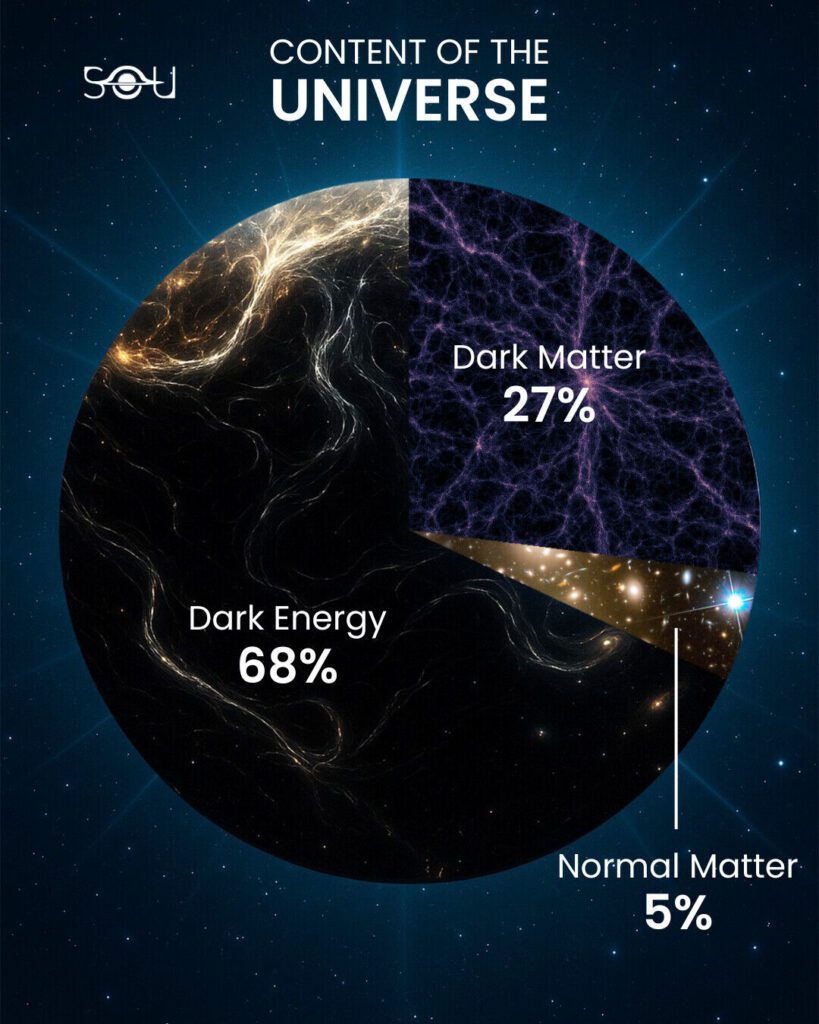
Everything you can see — every star, planet, galaxy, nebula, gas cloud — accounts for roughly 5% of the universe’s mass-energy content. The rest is dark matter (~27%) and dark energy (~68%). We call them “dark” not because they’re mysterious (though they are) but because they emit no light we can detect.
Dark matter’s existence is inferred from gravitational effects: galaxies rotate at speeds that shouldn’t be possible given their visible mass, galaxy clusters bend light more than their visible matter explains, and the large-scale structure of the universe — that cosmic web of filaments and voids — only makes sense if something invisible is holding it together. Candidates include WIMPs (Weakly Interacting Massive Particles), axions, primordial black holes. None has been directly detected despite decades of increasingly sensitive experiments.
Dark energy is even stranger. It appears to be a property of space itself — a kind of intrinsic energy of the vacuum — that is causing cosmic expansion to accelerate. Einstein called his cosmological constant his “greatest blunder.” He may have been wrong to do so.
Source: CBC Quirks & Quarks, June 2025Why Does Brain Activity Feel Like Anything at All?
Philosopher David Chalmers named it the “hard problem of consciousness” in 1995, and the name has stuck because the problem itself stubbornly hasn’t budged. We can map neural activity. We can identify which brain regions respond to which stimuli. We can build increasingly detailed models of information processing in the cortex. None of that explains why any of it is experienced.
Why does the firing of neurons produce the redness of red, the sharpness of pain, the taste of coffee? Why isn’t all this information processing happening “in the dark” — without any subjective experience at all? This is genuinely, philosophically distinct from questions about how brains work. It’s a question about why physical processes give rise to inner experience at all.
What’s striking is that this isn’t a question of lacking tools or data. It’s a question of whether our current conceptual framework — the one that treats mind as product of matter — is even the right starting point.
Source: Science News Today, 2025Hot Water Sometimes Freezes Before Cold Water
In 1963, a 13-year-old Tanzanian student named Erasto Mpemba was making ice cream in his school’s cooking class. Running late, he put his hot milk mixture directly into the freezer. It froze before his classmates’ cooled mixtures. His physics teacher mocked the observation. When Mpemba later put the question to Denis Osborne, a physicist from the University of Dar es Salaam, Osborne had the intellectual honesty to test it — and confirmed it.
Six decades later, this remains genuinely unresolved. In March 2025, Kyoto University researchers published a paper in Physical Review Letters proposing a thermodynamic framework — “thermomajorization” — that could explain Mpemba-like effects in quantum systems. It’s progress. But the classical water-in-a-freezer question still has no agreed mechanism.
Current candidates: evaporation (hot water loses mass, less volume to freeze), supercooling behavior, hydrogen bond restructuring, dissolved gas content, or convection currents. The frustrating part is that different experimental setups seem to favor different explanations, suggesting the effect may not have a single cause.
Source: ScienceDaily / Physical Review Letters, March 2025Birds Navigate Using Quantum Entanglement — In Their Eyes
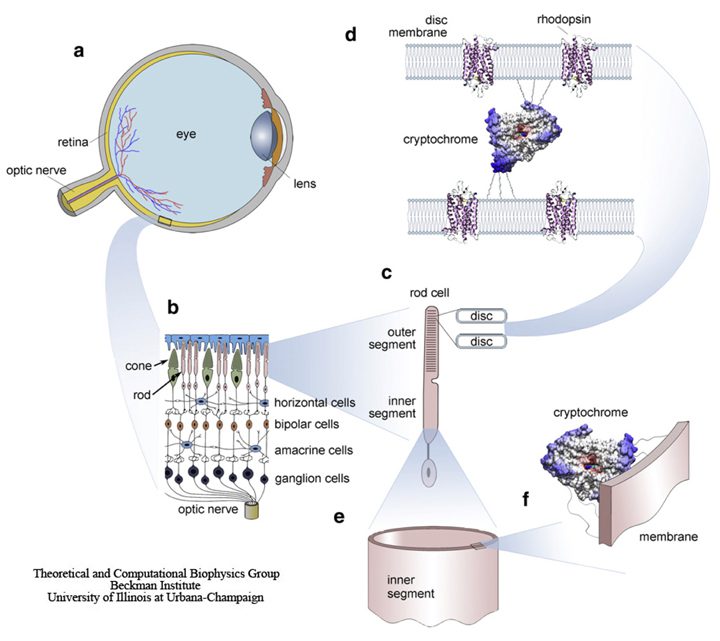
European robins migrate thousands of kilometers with extraordinary precision. The leading explanation involves a protein called cryptochrome 4 (Cry4) in the birds’ retinas, which appears to act as a quantum magnetic sensor. When light hits it, an electron pair is generated in an entangled quantum state. The Earth’s magnetic field subtly influences these electron spins, which changes the chemical reaction products, which somehow encodes directional information into the bird’s visual field.
The mind-bending part: cryptochrome proteins apparently maintain quantum coherence for roughly 100 microseconds at 40°C — body temperature, in a warm, wet, biologically noisy environment. Current quantum computers require cooling to near absolute zero to achieve comparable coherence times. Birds do it in their eyes, while flying.
Sugar Pills Can Cure Real Pain — and Nobody Fully Knows Why
The placebo effect is not “thinking yourself better.” It is measurable, physiological, and dose-dependent. Larger pills work better than smaller ones. Two pills work better than one. Injections work better than pills. Sham surgery works better than sham pills. Branded placebos outperform generics. The color of the pill matters.
In documented cases, placebo treatment has triggered the brain’s own opioid system, released genuine adrenaline, reduced measurable inflammation, and improved Parkinson’s symptoms by triggering dopamine release. A 2025 review in the New England Journal of Medicine reaffirmed that the placebo effect represents one of medicine’s most powerful and least understood phenomena.
The mechanism is partially understood — expectation triggers anticipatory neurochemistry — but why expectation alone can produce effects comparable to active drugs, and why this varies so dramatically between individuals and conditions, remains genuinely open. There’s also the ethical puzzle of “open-label” placebos: patients told they’re receiving a placebo still experience real effects.
We Spend a Third of Our Lives Unconscious — and Science Isn’t Sure Why
Sleep is universal among animals with nervous systems. It leaves organisms vulnerable. It consumes enormous energy. It is, from a pure evolutionary standpoint, baffling — yet the cost of not sleeping is clearly lethal (see: fatal familial insomnia). Whatever sleep does, it’s non-negotiable.
Current leading theories involve memory consolidation, cellular waste clearance (the glymphatic system flushes metabolic debris from the brain during sleep), immune function, and metabolic restoration. A 2025 fMRI study from the Max Planck Institute suggested dreams serve a “future-proofing” function for memory, helping practice social scenarios. But we still don’t understand why sleep produces the specific neurological state it does — why consciousness dims, why dreams feel real, why REM and non-REM alternate in the specific pattern they do.
And the content of dreams? Completely opaque. We can observe the neural correlates of dreaming. We can’t explain why your brain generates the specific imagery it does, or what — if anything — it means.
The Fermi Paradox: A Universe 13.8 Billion Years Old, and We Hear Nothing
In 1950, over lunch, physicist Enrico Fermi asked a simple question: given the age and size of the galaxy, the abundance of stars with planets, and the apparently non-special nature of our solar system — where is everybody?
The numbers are staggering. The Milky Way alone contains ~200–400 billion stars. Billions have Earth-like planets in habitable zones. The galaxy has been around for 13 billion years — long enough for a civilization that appeared even 1 billion years ago to have colonized the entire galaxy multiple times over, even at sub-light speeds. Yet the silence from SETI searches is total. No confirmed signal. No megastructures. No evidence of Dyson spheres. Nothing.
None is proven. Each has uncomfortable implications. And the James Webb Space Telescope, which has now found galaxies forming unexpectedly early in cosmic history, is raising new questions about just how ordinary or extraordinary the conditions for life might be.
Gravity Is Inexplicably, Absurdly Weaker Than Every Other Force
The four fundamental forces of nature are the strong nuclear force, the weak nuclear force, electromagnetism, and gravity. Three of them are broadly comparable in strength. Then there’s gravity. Gravity is roughly 1036 times weaker than electromagnetism. A small magnet can pick up a paperclip, overcoming the gravitational pull of the entire Earth.
This is known as the “hierarchy problem,” and it is one of physics’ most glaring embarrassments. There is no known reason for this extraordinary disparity. Proposed solutions include extra dimensions (gravity “leaks” into dimensions we can’t detect, making it seem weaker), supersymmetry (which predicts partner particles that haven’t been found), or the anthropic principle (in a universe where gravity wasn’t weak, no planets or life would exist to notice). None is satisfying.
General relativity and quantum mechanics — our two best theories of physics — are also fundamentally incompatible with each other, and gravity sits at the heart of that incompatibility. A unified “theory of everything” remains the most consequential open problem in theoretical physics.
The Big Bang Should Have Created Equal Amounts of Matter and Antimatter — and Annihilated Both
According to the Standard Model of particle physics, matter and antimatter should be created in equal quantities in high-energy events — including the Big Bang. They should also annihilate each other on contact, converting into energy. If the early universe produced equal amounts of both, there should be nothing left. No galaxies, no planets, no you.
Yet here we are. The universe is made overwhelmingly of matter. Something — a slight asymmetry in the laws of physics, a tiny preference for matter over antimatter — tilted the balance. This is called CP violation (violation of charge-parity symmetry), and while it’s been observed in particle physics experiments, the known amount of CP violation is far too small to explain the observed matter-antimatter asymmetry. There’s missing physics somewhere.
We Have No Idea How Dead Chemistry Became a Living Cell
The origin of life is not the same question as evolution. Evolution explains how life changes. Abiogenesis asks how life started — how non-living chemistry produced the first self-replicating, metabolizing, membrane-bound entity. That transition is one of science’s deepest unsolved problems.
The RNA world hypothesis — that self-replicating RNA molecules preceded DNA and protein — is currently the leading framework, and there’s been real progress synthesizing RNA-like molecules under plausible early-Earth conditions. But “progress” here means getting RNA nucleotides to form spontaneously, not assembling anything resembling a functional cell. The gap between interesting chemistry and the simplest known living organism remains enormous.
Other proposals focus on hydrothermal vents (where chemical gradients could power proto-metabolism), clay minerals (which can concentrate organic molecules), or even panspermia (life arrived from space). None is proven. We may never know which, if any, is right — the evidence is 4 billion years old.
Source: List25, April 2026Your Gut Has a “Second Brain” — and We’re Just Starting to Understand It
The enteric nervous system — the network of 500 million neurons lining your gut — is so complex that it can function independently of the brain. It’s sometimes called the “second brain.” This system communicates bidirectionally with the central nervous system via the vagus nerve, and the relationship is proving far stranger than anyone anticipated.
Gut microbiome composition appears linked to mood, anxiety, depression, and cognitive function. Disruptions in gut bacteria correlate with Parkinson’s disease. Some researchers now suspect gut signals may influence neurotransmitter levels — the gut produces roughly 95% of the body’s serotonin. But the mechanisms by which trillions of microbes influence brain chemistry, behavior, and potentially psychiatric conditions remain poorly understood. The field exists at the intersection of neuroscience, gastroenterology, immunology, and microbiology — which means it’s moving fast and has few settled answers.
Long COVID Exists, Affects Millions, and Has No Clear Biological Explanation
Long COVID — persistent symptoms lasting months to years after acute SARS-CoV-2 infection — affects an estimated 10–30% of people who contract COVID-19. Symptoms range from debilitating fatigue and brain fog to cardiovascular damage and dysautonomia. The NIH’s RECOVER initiative has been parsing subtypes and running mechanism-targeted trials since 2021.
As of mid-2025, there’s no single agreed mechanism — and multiple appear to be operating simultaneously depending on the patient. Viral persistence (fragments of virus remain in tissues), immune dysregulation, vascular endothelial damage, microbiome disruption, and reactivated latent viruses like Epstein-Barr are all implicated in different cases. The challenge: each mechanism-targeted intervention only helps a subset of patients, suggesting Long COVID may not be a single disease but a cluster of post-infectious syndromes with a shared trigger.
Source: Interesting Engineering, Sept 2025Ball Lightning Is a Real, Documented Phenomenon — and Physics Has No Explanation
Ball lightning — luminous, spherical objects ranging from golf-ball to basketball size, floating through the air during or after thunderstorms — has been reported by credible witnesses for centuries, including pilots, soldiers, and scientists. It has been photographed and, in at least one case, captured on spectrometer during a 2012 event in China. It is real.
It also has no accepted explanation. Proposed mechanisms include microwave radiation trapped in a plasma bubble, burning silicon vapor, miniature nuclear reactions, and quantum interference effects. The 2012 Chinese spectrographic measurement showed silicon, iron, and calcium — consistent with soil elements — but no coherent theory ties the formation, behavior, duration, and demise of ball lightning into a single framework.
Time Only Flows Forward — But the Laws of Physics Allow It to Go Both Ways
Nearly all fundamental equations of physics are time-symmetric: they work equally well if you reverse time. A video of two billiard balls colliding looks physically plausible whether played forward or backward. Yet we experience time as strictly one-directional. Eggs break; they don’t unbreak. You remember yesterday, not tomorrow. Why?
The standard answer involves entropy — the Second Law of Thermodynamics says entropy (disorder) always increases, which defines a thermodynamic “arrow of time.” But this raises a deeper question: why did the universe start in a state of extremely low entropy? That is also unresolved. The “arrow of time” turns out to be a cosmological mystery dressed in thermodynamic clothing.
Tardigrades Survive the Vacuum of Space — and We Can’t Fully Explain How
Tardigrades — microscopic “water bears” about 0.5mm long — can survive conditions that would kill virtually any other animal: temperatures from -272°C to 150°C, radiation doses 1,000 times lethal to humans, complete dehydration for decades, and confirmed survival in the vacuum of space. They do this by entering a state called cryptobiosis, reducing their metabolism to 0.01% of normal and replacing cellular water with a glassy sugar called trehalose.
What’s not well understood is the full molecular machinery behind this. Their genome contains a unique protein called Dsup (Damage Suppressor) that appears to physically shield DNA from radiation — something not seen in any other organism. Researchers have successfully inserted Dsup into human cells in culture, where it reduced radiation damage by ~40%. But the complete picture of how tardigrades protect every cellular component — membranes, organelles, ribosomes — during extreme desiccation and radiation exposure remains only partially mapped.
The Ocean Is Full of Unexplained Sounds — Including “The Bloop”
In 1997, NOAA hydrophones in the Pacific picked up an ultra-low-frequency sound of extraordinary power, detectable from 5,000 km away. They called it “The Bloop.” For 15 years it was unexplained. In 2012, NOAA concluded it was almost certainly the sound of a large icequake — glacial ice breaking and shifting. Most researchers accept this.
But the ocean contains other persistent acoustic mysteries. The “Julia” sound (1999), “Train” (1997), and “Upsweep” (ongoing since 1991) have less convincing explanations. “Upsweep” — a seasonally varying long-duration narrowband signal — has been attributed to volcanic activity, but the source location hasn’t been confirmed. The deep ocean is still very poorly monitored, and there are likely many regular phenomena we haven’t characterized yet.
Déjà Vu Has No Agreed Neurological Explanation
Nearly 70% of people experience déjà vu — that uncanny sensation that a new experience has happened before. It’s transient, harmless, and frustratingly difficult to study (you can’t make it happen in a lab on demand). EEG studies of epilepsy patients who experience déjà vu as an aura before seizures have implicated the rhinal cortex — a region involved in familiarity detection — but the exact mechanism in healthy people is unknown.
Leading hypotheses: a brief mismatch between memory-encoding and memory-retrieval circuits, a hiccup in dual-processing (familiarity signaling activates when it shouldn’t), or a momentary parallel processing lag. The fact that it becomes more common under fatigue or stress, and less common in older adults, suggests it’s related to the health of memory circuits — but this is inference, not mechanism.
Prime Numbers Follow a Pattern That Mathematicians Can’t Prove Exists
Prime numbers — integers divisible only by 1 and themselves — appear in a pattern that seems almost random at the local level but becomes eerily regular in the aggregate. The Riemann Hypothesis, proposed in 1859, predicts precisely how primes are distributed along the number line. It is almost certainly true — it’s been verified computationally for the first 1013 primes, and thousands of results in number theory assume it’s true. But nobody has proved it.
It’s one of the Millennium Prize Problems: worth $1 million to anyone who can provide a rigorous proof. It’s been called one of the most important unsolved problems in mathematics. The connection between prime numbers — purely abstract constructs — and the zeros of the Riemann zeta function, which lives in the complex plane, is itself deeply strange and not intuitively obvious.
We Know Aging Happens — We Don’t Know Why It Has To
Aging is not simply “wear and tear.” Different species age at radically different rates — a bowhead whale can live 200+ years; a mayfly lives a day. Naked mole rats barely age at all and rarely develop cancer. This suggests aging is, at least partly, a regulated biological process rather than simple entropy. Which raises an uncomfortable question: why did evolution allow it to happen at all?
Candidate mechanisms include telomere shortening, accumulation of senescent cells, epigenetic drift (the “epigenetic clock”), mitochondrial dysfunction, declining protein quality control, and stem cell exhaustion. These are not competing explanations so much as concurrent processes — multiple biological systems deteriorate simultaneously. Which one drives the others, whether there’s a master aging program, and whether aging can be substantially reversed in humans remain open.
The fact that caloric restriction extends lifespan in virtually every animal tested, and that specific genes (FOXO3, SIRT1) are associated with longevity in humans, strongly suggests aging is partly programmable. The mechanism is not yet understood well enough to act on.
Anesthesia Has Been Used for 175 Years — We Still Don’t Know How It Works
General anesthesia reliably produces unconsciousness, amnesia, analgesia, and muscle relaxation. It is used in hundreds of millions of surgeries annually and has been since the 1840s. The mechanism by which anesthetic agents produce unconsciousness — as distinct from their other effects — is not understood.
The Meyer-Overton hypothesis (1890s) noted that anesthetic potency correlates with oil-solubility, suggesting they work by dissolving into lipid membranes and disrupting neuronal function. Modern research has shifted toward GABA receptors and various ion channels. But none of these accounts fully explain why anesthetics produce unconsciousness specifically — why the patient is not just sedated or amnesic but truly, globally unresponsive while remaining alive and intact. The relationship to consciousness means this connects directly to mystery #3: we can’t fully explain anesthesia because we can’t fully explain what consciousness is.
Some Materials Conduct Electricity Perfectly — But Only Above the Temperature They “Should”
Conventional superconductors — materials that conduct electricity with zero resistance — only work at temperatures near absolute zero (-273°C), which physicists understand reasonably well via BCS theory. “High-temperature” superconductors (still cold by everyday standards, around -130°C to -70°C) were discovered in 1986. They don’t obey BCS theory. Despite 40 years of research, there is no agreed theoretical explanation for why they superconduct.
In January 2026, China’s EAST tokamak achieved stable plasma at record conditions, surpassing previous limits — exciting fusion news. But the dream of room-temperature superconductivity, which would transform energy transmission globally, awaits not just better materials but better theoretical understanding of what’s happening at the quantum level in cuprate and iron-based superconductors. We’re building on an empirical foundation without a theoretical one.
Source: 2026 in Science / WikipediaEarth’s Magnetic Field Reverses at Irregular Intervals — and No One Knows Why
The geomagnetic field — generated by convection currents in Earth’s liquid iron outer core — has reversed hundreds of times in geological history, with north and south magnetic poles switching places. The last full reversal was about 780,000 years ago (the Brunhes-Matuyama reversal). We are currently in what might be the early stages of another — the magnetic north pole has been migrating toward Siberia at an accelerating rate.
What triggers a reversal is unknown. The reversals are aperiodic — intervals range from tens of thousands to millions of years with no clear pattern. A “Levantine Iron Age Anomaly” ~3,000 years ago, when archaeomagnetic data shows field strength spiked and fell at rates that current models struggle to reproduce, has attracted significant attention in recent research. Understanding reversals matters practically: during a reversal, the field weakens substantially, potentially increasing cosmic ray exposure at Earth’s surface.
Source: Interesting Engineering, 2025Fast Radio Bursts: Millisecond Flashes of Energy From Across the Universe
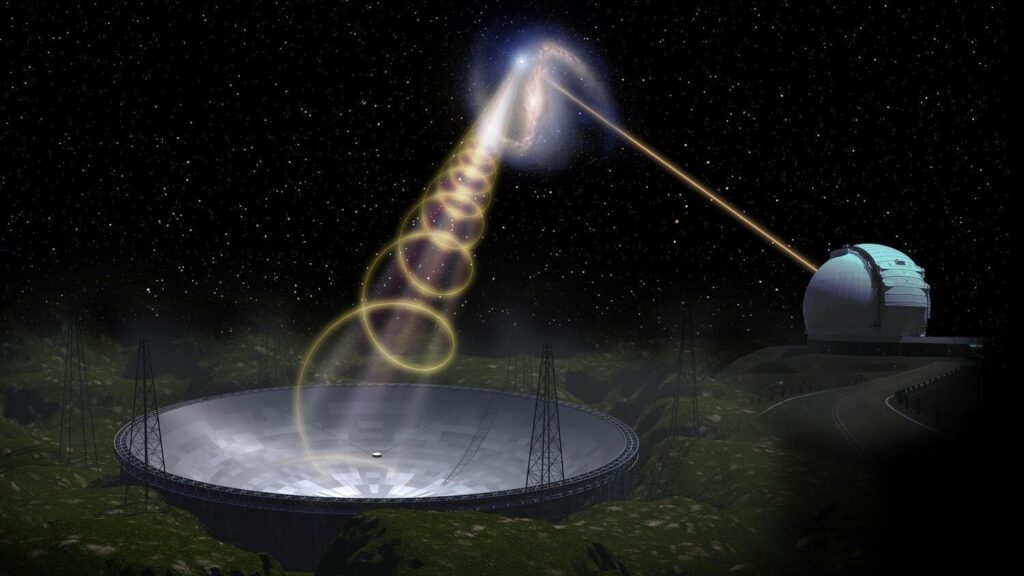
Fast Radio Bursts (FRBs) are intensely bright, millisecond-duration radio pulses from extragalactic distances — releasing in a millisecond the energy our sun emits over days. The first was discovered in archival data in 2007. We now catalog hundreds. The majority appear to be one-off events. Some repeat. One, FRB 20220912A, has repeated hundreds of times.
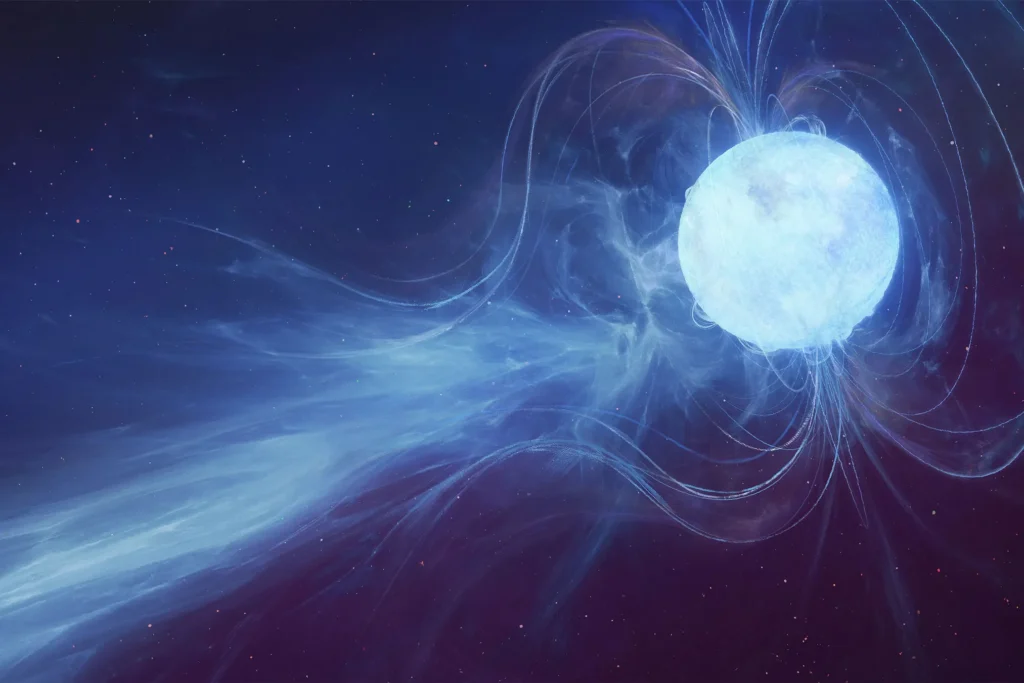
The leading candidate source: magnetars (highly magnetized neutron stars). A magnetar-like burst was detected within our own galaxy in 2020, lending support to this theory. But magnetars don’t explain all the diversity in FRB behavior, and the repeating bursters in particular show periodic behavior suggesting an orbital or precession mechanism not yet fully characterized. FRBs are now being used as cosmological tools — their dispersion through intergalactic medium reveals information about the distribution of matter in the universe — which makes understanding their origin all the more valuable.
‘Olo’ — Scientists Created a Color That Should Be Impossible to See
In 2025, researchers at UC Berkeley reported inducing perception of a color — nicknamed “olo” — that sits outside the human visual range: a blue-green of a saturation so intense that it cannot be produced by any conventional light source or display. The closest visible color is approximately hex #00ffcc, but “olo” is described by subjects who experienced it as incomparably more vivid.
The method required a precisely calibrated laser system to stimulate specific cone cells in the retina in a way that normal light cannot. The experience was genuinely novel — subjects had no prior reference for the color. This raises fascinating questions about the relationship between physics and perception. Colors are not wavelengths; they’re experiences generated by the brain. The existence of “olo” suggests the brain’s color space is larger than the visible spectrum — that there are experiences of color that lack any corresponding physical stimulus under ordinary conditions.
At a Glance: All 25 Mysteries Ranked
Subjective assessment of likelihood of resolution within the next 20 years, based on current research trajectories.
| # | Mystery | Field | Status | Near-Term Resolution? |
|---|---|---|---|---|
| 1 | Hubble Tension | Cosmology | Deepening | Unlikely |
| 2 | Dark Matter / Dark Energy | Cosmology | Unresolved | Unlikely |
| 3 | Consciousness | Neuroscience | Unresolved | Very Unlikely |
| 4 | Mpemba Effect | Chemistry | Partial (2025) | Possible |
| 5 | Quantum Bird Navigation | Quantum Biology | Active Research | Likely within 10 yrs |
| 6 | Placebo Effect | Medicine | Partial | Possible |
| 7 | Why We Sleep | Neuroscience | Improving | Possible |
| 8 | Fermi Paradox | Astrobiology | Unresolved | Unlikely |
| 9 | Gravity’s Weakness | Physics | Unresolved | Unlikely |
| 10 | Missing Antimatter | Particle Physics | Unresolved | Unlikely |
| 11 | Origin of Life | Biology | Active | Possible |
| 12 | Gut-Brain Axis | Biology/Neuro | Rapidly Advancing | Likely |
| 13 | Long COVID Mechanism | Medicine | Active | Likely within 5 yrs |
| 14 | Ball Lightning | Physics | Unresolved | Possible |
| 15 | Arrow of Time | Physics | Unresolved | Unlikely |
| 16 | Tardigrade Survival | Biology | Improving | Likely |
| 17 | Ocean Sounds | Geoscience | Mostly Explained | Likely |
| 18 | Déjà Vu | Neuroscience | Theories Only | Possible |
| 19 | Riemann Hypothesis | Mathematics | Unproven | Very Unlikely |
| 20 | Why We Age | Biology | Advancing | Possible |
| 21 | How Anesthesia Works | Medicine | Unresolved | Possible |
| 22 | High-Temp Superconductivity | Physics | Unresolved Theory | Possible |
| 23 | Magnetic Field Reversals | Geoscience | Unresolved Timing | Possible |
| 24 | Fast Radio Bursts | Astrophysics | Source Class Known | Likely |
| 25 | ‘Olo’ Color Perception | Neuroscience | New 2025 | Possible |
The most beautiful thing we can experience is the mysterious. It is the source of all true art and science.
— Albert Einstein, “What I Believe,” 1930Frequently Asked Questions
Questions real readers send in — answered directly and honestly.
Which of these mysteries is most likely to be solved first?
My best guess: Long COVID’s mechanism (within 5 years, given the level of funding and the availability of patients and samples), followed by the quantum biology of bird navigation (within 10 years, as measurement techniques improve). Both have clear research programs and active funding. The Hubble tension and consciousness are, in my view, the least likely to resolve any time soon — they may require entirely new conceptual frameworks, not just better data.
Is the Hubble tension really that significant, or is it just a measurement discrepancy?
It’s genuinely significant. The April 2026 H0DN study specifically ruled out systematic measurement errors within individual methods. The gap between ~67 km/s/Mpc (early universe prediction) and ~73.5 km/s/Mpc (direct local measurement) is now over 5-sigma — well beyond the threshold for statistical significance in physics. Most cosmologists now believe the tension reflects missing physics in the standard cosmological model (ΛCDM), not a mistake. What that missing physics is — early dark energy, new particle species, modified gravity — is entirely unknown.
Can we really say dark matter “exists” if we’ve never directly detected it?
Fair challenge. The evidence for dark matter is overwhelmingly gravitational — we observe effects that can’t be explained by visible matter. The alternative, MOND (Modified Newtonian Dynamics), can explain galactic rotation curves but fails at larger scales (galaxy clusters, the cosmic web). Most physicists consider dark matter more likely than modified gravity, but the honest answer is: we know something is producing these gravitational effects; we don’t know what it is. Direct detection experiments (LUX-ZEPLIN, XENONnT) have found nothing yet.
Is consciousness an unsolvable problem by definition?
Some philosophers think so — Daniel Dennett famously argued the “hard problem” is a category error and that explaining the functional brain processes is sufficient. Others, like Chalmers, insist the subjective “what it’s like” aspect is irreducible to physical processes. The honest position is that we don’t yet know whether consciousness is in principle explainable in physical terms or requires something genuinely new. The fact that we can’t yet explain it doesn’t mean it’s forever unexplainable — but the problem has resisted 50 years of serious neuroscience, which should inspire humility.
Why does the Mpemba effect still not have a clear explanation?
Partly because it may not be a single, reproducible phenomenon. Different experiments produce the effect under different conditions and may be capturing different underlying mechanisms. The 2025 Physical Review Letters paper addressed a quantum analog of the effect — important theoretically — but doesn’t definitively explain classical hot water in a domestic freezer. Water is also a genuinely unusual substance with dozens of anomalous properties, making it hard to isolate which one is responsible.
Should I be worried about Earth’s magnetic field weakening or reversing?
Not in any near-term practical sense, though it’s scientifically interesting. The field has been slowly weakening for about 2,000 years. Past reversals show no mass extinctions directly attributable to field weakening — species survived them. During a reversal, cosmic ray exposure at the surface may increase, potentially affecting technology (satellites, power grids more than humans). The timing of the next reversal is completely unpredictable — it could be thousands of years away or already beginning.
Is the Fermi Paradox evidence for extraterrestrial life or against it?
Strictly speaking, it’s evidence of absence, not proof of absence. We’ve searched a tiny fraction of possible signal types, frequencies, and directions for a very short time. SETI is still in its early infancy. That said, the paradox is real: if intelligent life is common, the silence is genuinely puzzling given the age of the universe. Many researchers have shifted toward the “Rare Earth” hypothesis — that complex life is far less common than previously assumed — especially after JWST found galaxies forming earlier than expected, suggesting our cosmic environment may be unusual.
What was the ‘olo’ color discovery exactly, and is it real?
Yes, it’s real — published peer-reviewed research from UC Berkeley in 2025. Using a specialized laser system (called OISF — Optical Intrinsic Stimulation Framework), researchers selectively stimulated one type of cone in the retina (M-cones) without stimulating adjacent cones in the way normal light inevitably does. The result is a color percept that normal illumination cannot produce — a blue-green of extreme saturation that subjects describe as unlike any ordinary color experience. The technique requires specialized equipment and isn’t something you’d encounter naturally.
How do scientists study something like the placebo effect without bias?
With great difficulty, honestly. The gold standard is randomized controlled trials comparing active treatment, placebo, and no treatment (open-label studies where even the patient knows they’re receiving a placebo). Brain imaging during placebo treatment has shown measurable changes in opioid receptor activity and dopamine release, confirming the effect is biological. But individual variability is enormous — some people respond strongly to placebos, others not at all — and the predictors of placebo response are only partially understood. The field has improved dramatically in methodological rigor since the 1990s.
Has progress been made on high-temperature superconductors since 2020?
Yes, materially. Room-temperature superconductivity under high pressure has been reported (most notably by Ranga Dias’s group, though those results are now heavily contested and partly retracted). More solid progress: new families of superconducting materials have been identified, and theoretical tools like tensor-network methods and quantum simulation are beginning to model cuprate superconductors more accurately. But a satisfying theoretical explanation comparable to BCS for conventional superconductors? Still absent. Room-temperature, atmospheric-pressure superconductivity remains elusive.
Are tardigrades actually invincible?
Not truly — they can be killed with sufficient prolonged heat (above ~150°C) or very high pressures, and some toxins affect them. But “almost invincible” is fair. What’s remarkable is not just that they survive extreme conditions but that they revive from them — emerging from decades of complete desiccation and resuming normal biology. The Dsup protein that shields their DNA from radiation is real and has been transferred to human cells in culture with measurable protective effects, though applying this to actual human biology is a very long way off.
What’s the relationship between the unsolved mysteries in physics and the search for a “Theory of Everything”?
Many are connected. The hierarchy problem (gravity’s weakness), the matter-antimatter asymmetry, and dark matter all point to physics beyond the Standard Model. A true Theory of Everything — unifying general relativity and quantum mechanics — would presumably resolve many of these, since they often arise at the boundaries between theories. String theory and loop quantum gravity are the main candidates; neither has produced testable predictions yet. It’s one of science’s deepest open questions whether such a unification is even achievable.
Is there any link between quantum effects in biology and the mystery of consciousness?
Penrose and Hameroff’s Orchestrated Objective Reduction (Orch-OR) theory explicitly argues there is — that quantum processes in microtubules inside neurons are fundamental to consciousness. Most neuroscientists are skeptical, arguing the brain is too warm and wet for quantum coherence to play a functional role in cognition. But quantum biology has shown (in photosynthesis and bird navigation) that quantum effects can survive in warm, wet environments when the right molecular structures are in place. Whether anything similar operates in neurons is unknown — the question is more open than it was a decade ago.
Why hasn’t the Riemann Hypothesis been proved after 165 years?
Partly because it lives at the intersection of number theory and complex analysis in a way that resists standard proof techniques. Many attempted proofs have been submitted and found to contain errors. The hypothesis is not obviously false — computationally it holds for extraordinary numbers of cases — but proof requires establishing something for infinitely many values of a complex function, which requires either a new structural insight or a powerful new mathematical technique that doesn’t yet exist. Some mathematicians believe resolving it will require genuinely new mathematics, not just better application of existing tools.
Could any of these mysteries simply never be solved?
Honestly, yes — some might not be. The hard problem of consciousness may be undecidable within a physicalist framework if consciousness involves something genuinely beyond current physics. The origin of life may have left too little evidence to ever reconstruct with certainty. The Riemann Hypothesis might be unprovable within standard mathematical axioms (though Gödel’s incompleteness theorems don’t directly imply this). Science has a remarkable track record of eventually explaining things that seemed inexplicable — but “eventually” doesn’t mean “inevitably.” Some questions may be structurally beyond what our cognitive apparatus or physical access to evidence allows.
More From FutureNow.click
Continue exploring the edge of human knowledge — science, technology, and the future.
Final Thought: Mystery Is Not Failure
There’s a temptation to read a list like this as a list of science’s failures. It isn’t. What strikes me, having spent weeks pulling these together, is how honest the scientific community is about what it doesn’t know. These aren’t embarrassing gaps — they’re the frontier. Every one of these mysteries is surrounded by serious researchers, real funding, and genuine progress, even when “progress” means ruling out wrong answers.
The Hubble tension went from curiosity to crisis to potential evidence for new physics in about a decade. Quantum biology went from fringe speculation to a legitimate sub-discipline producing real results. Long COVID research has produced a map of plausible mechanisms in a few years that would have taken decades before modern molecular tools. The pace of progress on these problems is, in most cases, accelerating.
What I find genuinely exciting — and a little unsettling — is that several of these mysteries cluster around the same deep question: the relationship between quantum mechanics and biology, between physical processes and subjective experience, between the very small and the very large. It seems increasingly plausible that some of these mysteries are connected in ways we haven’t yet recognized, and that resolving one might unexpectedly illuminate several others.
That’s worth staying curious about.
Last updated: May 2026 · Sources cited inline · All facts verified against primary literature or institutional reporting.
Why NASA Might Be Quiet on the 3I/ATLAS Interstellar Discovery
2026’s Bizarre Hybrid That Shook Biology
We Live in a Simulation: Weird Physics Theory Suggests
What Scientists Found in Antarctica Will Shock You
The Organisms That Actually Eat Plastic — and the Ones That Just Hold It
Why We Dream: 5 Competing Scientific Explanations (And Why None Fully Satisfy)
These Scientific Phenomena Defy Logic — And Scientists Still Can’t Explain Them
Science Discoveries That Shouldn’t Exist(But Do)