The AI Experiment That Left
Scientists Speechless
- The problem: Predicting a protein’s 3D shape from its sequence had stumped biology for 50 years — called Levinthal’s paradox, the search space is larger than atoms in the observable universe.
- What happened: In December 2020, DeepMind’s AlphaFold2 scored a median 92.4/100 at CASP14. The benchmark’s founder said the problem was “largely solved.” The field lost its mind — politely.
- Scale: By 2024 the free AlphaFold database held 200+ million structures, used by 2+ million researchers in 190 countries. Its creators won the Nobel Prize in Chemistry.
- The honest catch: Disordered proteins, protein dynamics, and multi-protein complexes remain unsolved. Drug discovery applications are active but still unproven in the clinic.
The Room Where Biology Changed
December 1, 2020. The CASP14 conference opened online, and results had already leaked a few hours earlier via a posted leaderboard. Within minutes, structural biology Twitter was in full meltdown. By the time John Moult — who has chaired every CASP since 1994 — took the virtual stage, the room already knew.
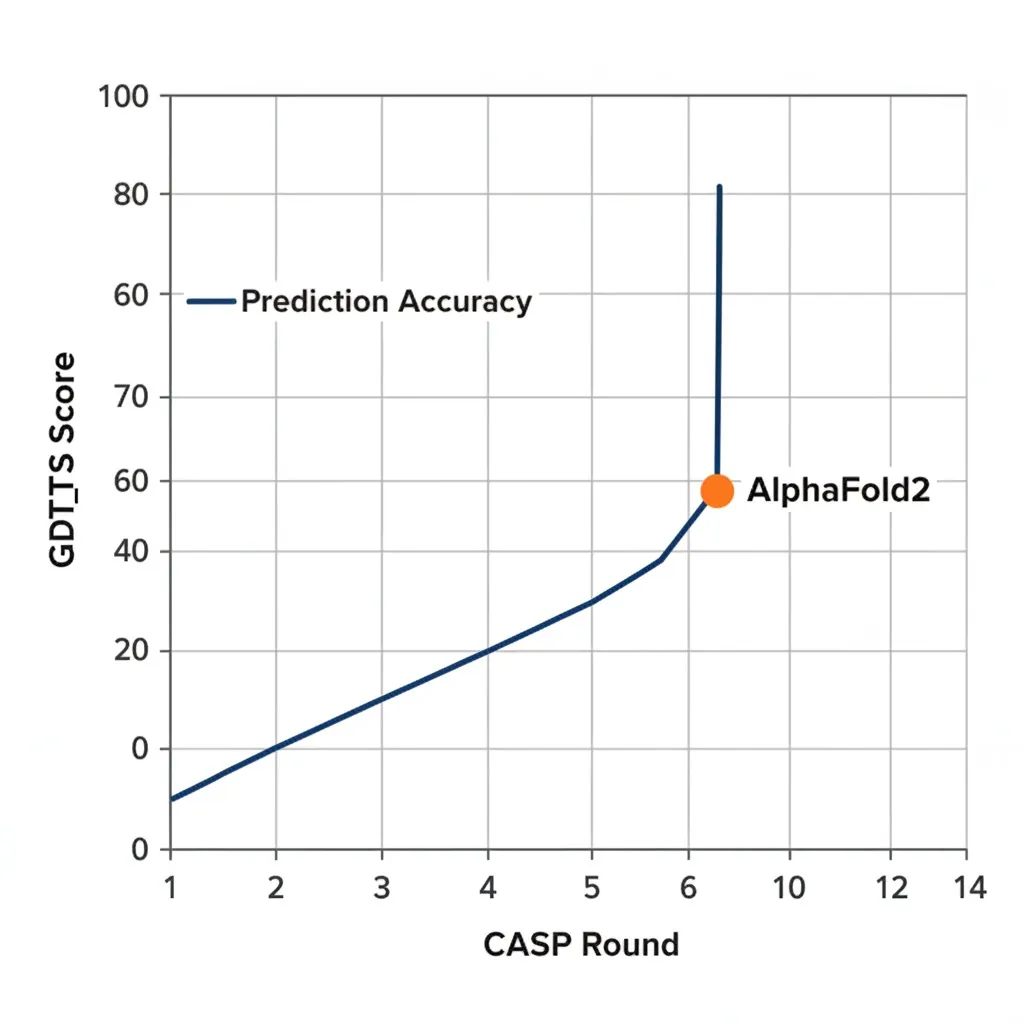
He called it “a little unusual.” He walked through the history slowly, maybe buying time for people to process what they were about to see on the graph. Then he showed it.
“I was in shock. A lot of people were in denial.”
— Mohammed AlQuraishi, systems biologist, Columbia University. His blog post that week: “It feels like one’s child has left home.”Silvio Tosatto, who had competed in CASP since its earliest days, described “a lot of soul searching” afterward. Some structural biologists feared their careers had just been quietly dismantled by a Google subsidiary.
This is not ChatGPT. Not image generation. It’s a protein structure prediction competition that most of the world missed entirely — and it might be the most important AI result in history. I keep coming back to it because the scientists who were actually in the room, people who’d spent careers on this problem, were the ones who went quiet.
The Problem That Took 50 Years
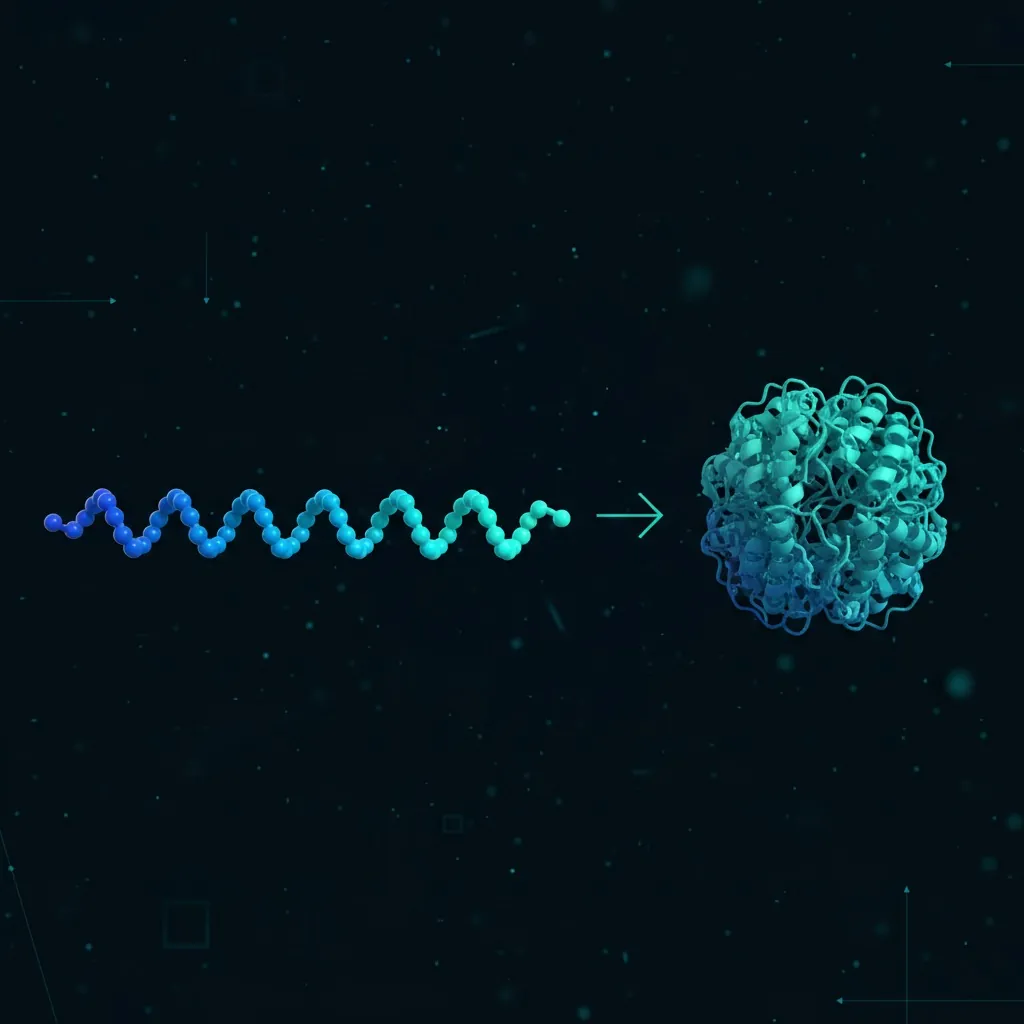
Every protein in your body starts as a chain of amino acids. That chain then folds itself — spontaneously, in milliseconds — into a precise 3D shape that determines everything it can do. The question biologists couldn’t answer was deceptively simple: given the sequence, what shape will it take?
The difficulty is almost impossible to convey without a number. The configurations a protein could theoretically adopt? More than the number of atoms in the observable universe. Levinthal’s paradox, named for physicist Cyrus Levinthal who quantified the gap in 1969, is how you end up with a 50-year open problem despite knowing proteins fold correctly inside your cells in under a second. Established
The experimental alternatives — X-ray crystallography, cryo-electron microscopy — are real but painful. Each structure could take months or years. By 2020, researchers had solved perhaps 170,000 structures this way. Functional proteins in nature number in the hundreds of millions.
CASP, the field’s blind benchmark, has tracked prediction progress since 1994. For 13 consecutive rounds, teams improved. Results were real. But the best scores still hovered between 40 and 70 on the GDT_TS scale (0–100), depending on target difficulty. A score above 90 was considered competitive with experimental accuracy — the gold standard. No team had ever started there.
What the CASP14 Numbers Actually Show
AlphaFold2 scored a median GDT_TS of 92.4 across all 96 targets. The second-place team — David Baker’s lab at the University of Washington, one of the strongest computational biology groups on the planet — scored a z-score of 90.8. AlphaFold2’s total z-score was 244.0. Established
That gap deserves a concrete translation. On the hardest target class, AlphaFold2 regularly scored above 80 (structure mostly correct). The next-best teams were below 60 (overall topology roughly right). This wasn’t a nail-biter.
| Metric | Result | Confidence |
|---|---|---|
| AlphaFold2 median GDT_TS | 92.4 / 100 | Established |
| AlphaFold2 total z-score | 244.0 | Established |
| 2nd place (Baker Lab) z-score | 90.8 | Established |
| Targets reaching experimental accuracy | ~2/3 of 96 | Established |
| Previous CASP best (single team) | ~70 range | Established |
In his closing remarks, John Moult said AlphaFold2 had “largely solved” the protein structure prediction problem for single protein chains. Venki Ramakrishnan, 2009 Nobel Laureate in Chemistry, called it a “stunning advance.” The assessors’ own published report uses the word “astonishingly” to describe the shift in the CASP trend line. John Moult later told MIT Technology Review it was “the first use of AI to solve a serious problem.” Established
What Changed After AlphaFold Won
DeepMind did something unusual for a tech company. They published the full code, released all predictions free of charge, and partnered with EMBL-EBI to run the database permanently. That last part matters — no paywalls, no API credits, no sudden shutdown risk.
The AlphaFold Protein Structure Database launched in July 2021. By 2024 it held over 200 million protein structures — essentially every protein from every sequenced organism on Earth — and had been used by more than 2 million researchers across 190 countries. Established
In October 2024, Demis Hassabis and John Jumper received the Nobel Prize in Chemistry. First Nobel explicitly recognizing AI as the primary tool of a scientific discovery. David Baker shared the prize for parallel work on computational protein design. Established
The practical change wasn’t that experimental biology became obsolete. It’s subtler. AlQuraishi described it plainly: AlphaFold has “turbo-boosted” cryo-EM — researchers now use computational predictions as starting points, arriving at experimental structures faster rather than navigating blind. In June 2022, a Science special issue revealed the near-atomic structure of a human nuclear pore complex — a puzzle that had resisted resolution for decades. AlphaFold predictions filled the critical gaps. Probable
Paul Adams, a structural biologist at Lawrence Berkeley National Laboratory, put it bluntly: “AlphaFold changed everything and nothing.” That’s not a dismissal. That’s actually the most accurate framing I’ve seen. Probable
Key Milestones
The Field in 2025–2026: After the Flood
Since AlphaFold3 dropped in May 2024, the field exploded. Open models — Chai-1 from Chai Discovery and Boltz-1 — have demonstrated near-identical or superior performance on ligand docking (PoseBusters success rate ~77% vs AlphaFold3’s 76%), multimer predictions, and antibody-antigen complexes. Critically, some of these run without multiple sequence alignments, making them faster and more flexible. Probable
Early 2026 benchmarks show combinations of methods achieving 70–80% success under strict criteria for protein-protein and peptide interactions — up from AlphaFold-Multimer’s ~53%. Disordered regions remain the hardest problem across all models. De novo antibody design experiments are reporting hit rates of 16–20%, which sounds modest until you compare it to traditional approaches. Probable
The drug side: Isomorphic Labs unveiled its IsoDDE (Drug Design Engine) in February 2026, claiming it more than doubles AlphaFold3’s accuracy on challenging protein-ligand generalization benchmarks. Partnerships with Eli Lilly, Novartis, and Johnson & Johnson are feeding oncology and immunology candidates into IND-enabling studies. Demis Hassabis announced at Davos in January 2026 that Isomorphic Labs’ first AI-designed drugs are expected to enter Phase 1 human clinical trials by end of 2026 — a delay from the earlier 2025 target, but still the long-awaited translation from structure to medicine. Speculative
No FDA-approved drug has been directly attributed to AlphaFold as of this writing. That’s the honest position. The pipeline is real. The results are not yet. See also: ↗ How AI is reshaping biotechnology timelines.
The RMSD gap is real. The average root-mean-squared difference between AlphaFold predictions and experimental structures was 1.6 Å. Drug design typically wants atomic positions accurate to within 0.3 Å. Some CASP14 targets had backbone RMSD above 2.0 Å — and you can’t identify which ones in advance. Established
Disordered proteins are underserved. Intrinsically disordered proteins — significant portions of the human proteome, often involved in disease — are underrepresented in training data. CASP14 performance on NMR-determined structures was markedly weaker than on crystallographic targets. This isn’t a footnote; disordered regions are where a lot of disease biology lives. Established
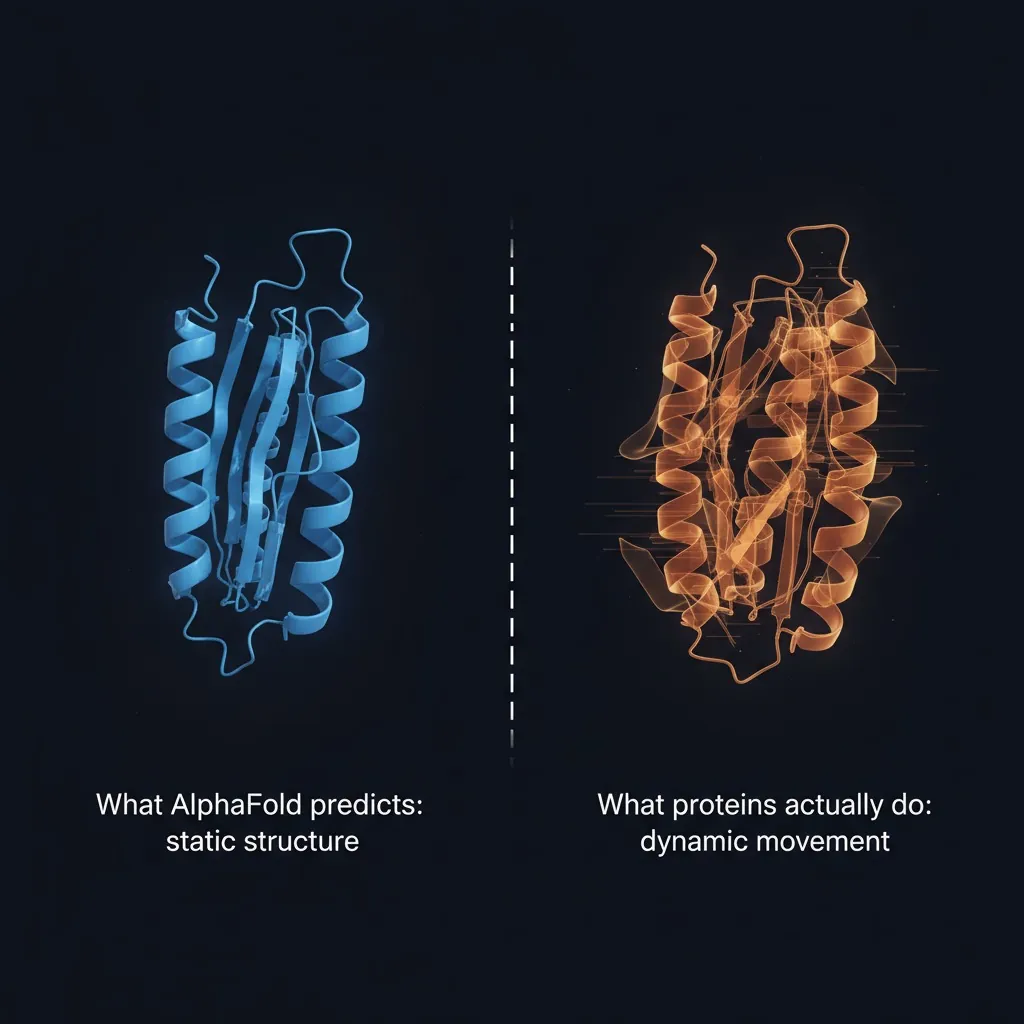
Static ≠ functional. AlphaFold predicts static structures. Proteins in your body flex, shift conformations, and respond to other molecules. That limits direct drug design applications more than the headline GDT_TS numbers suggest. Open research problem. Probable
Drug pipeline: active, unconfirmed. AlphaFold has accelerated target identification. Zero FDA-approved drugs are directly attributable to it as of March 2026. Claims about transforming medicine are plausible near-future outcomes, not current results. Vendor statements about performance (Isomorphic Labs’ IsoDDE claims) are from the company itself — independent validation is still accumulating. Speculative
Frequently Asked Questions
For more on how AI is reshaping scientific timelines, see ↗ The K-shaped economy and what AI disruption really looks like.
AlphaFold didn’t replace the scientists who spent 50 years mapping the problem — it handed them a map of a continent they’d been navigating blind. What they build on it is still entirely up to them.
Primary Sources
- Jumper J. et al. (2021). “Applying and improving AlphaFold at CASP14.” Proteins. → PubMed Established
- Moult J. et al. (2021). “Critical Assessment of Methods of Protein Structure Prediction (CASP) – Round XIV.” Proteins. → PMC Established
- Nobel Committee (2024). “The Nobel Prize in Chemistry 2024.” → NobelPrize.org Established
- Google DeepMind (2020). “AlphaFold: a solution to a 50-year-old grand challenge in biology.” → DeepMind Blog Established
- AlQuraishi M. (2020). “AlphaFold2 @ CASP14: It feels like one’s child has left home.” → moalquraishi.wordpress.com Established
- Quanta Magazine (2024). “How AI Revolutionized Protein Science, but Didn’t End It.” → quantamagazine.org Established
- Montelione G. et al. (2021). “Assessment of prediction methods for NMR structures in CASP14.” Proteins. → PubMed Established
- EMBL (2024). “AlphaFold wins Nobel Prize in Chemistry 2024.” → EMBL.org Established
- Scurry J. (2020). “No, DeepMind has not solved protein folding.” → Occam’s Typewriter — dissenting structural biologist analysis. Established
https://www.futurenow.click/blog/
The 2026 Tri-Fold Foldable Cellphone Nobody Believed Could Exist: Revolutionizing Productivity
5 Weird Lifestyle Experiments That Actually Work