
Neuroscience & Longevity
We Might Not Need Sleep
by 2050 — Here’s Why
The science of slumber is being quietly dismantled. Genetic mutations, military neurotechnology, and a newly mapped brain waste-disposal system are together pointing toward something genuinely radical: a future where eight hours of unconsciousness is a choice, not a biological requirement.
TL;DR – What You Need to Know in 2 Minutes
The question isn’t as absurd as it sounds. Four gene mutations already allow a small fraction of humans to thrive on 4–6 hours of sleep with no measurable cognitive or health penalty. DARPA launched two formal research programs in 2024–2025 to compress military sleep requirements to 3 hours or less. The brain’s glymphatic system — its primary waste-clearance mechanism — was confirmed to operate in living humans for the first time in late 2024, and researchers are now actively studying how to trigger that clearance artificially, without sleep.
- The biology of sleep is more hackable than we thought. Genes like DEC2, ADRB1, NPSR1, and GRM1 prove the system has variable settings, not a fixed floor.
- The glymphatic system is the hardest problem. Sleep’s job of flushing amyloid and tau from the brain is the primary obstacle to any sleep-replacement technology.
- DARPA’s RESTORE program (2025) is funding non-invasive neuromodulation to deliver full cognitive recovery on 3 hours/night.
- Sleep deprivation costs the US economy $411 billion annually — the economic incentive to solve this is enormous.
- Realistic expectation: By 2050, the most plausible outcome isn’t “zero sleep” but dramatically compressed, engineered sleep — perhaps 2–3 highly optimized hours — supplemented by waking interventions that handle the rest.
- The risks are real and not fully mapped. We don’t yet know what decades of shortened sleep does to the immune system, microbiome, or long-term neurological health — even with pharmaceutical or technological assistance.
Why We Sleep (And Why It’s More Complicated Than You Think)
A typical person spends roughly 26 years of their life asleep. Another seven years trying to get there. That’s a third of a human life — unconscious, unproductive, and unavoidable. Or so the story goes.
The science has always been clearer on what happens when you don’t sleep than on precisely what sleep actually does. We know the consequences of deprivation in horrifying detail: after 24 hours without sleep, cognitive performance degrades to the level of someone who is legally drunk. After 72 hours, hallucinations arrive reliably. Rats forced into total sleep deprivation die within two to three weeks, from causes researchers still argue about.
What sleep does at a mechanistic level, though — the precise biological transactions that make it non-negotiable — has only begun to come into focus in the last decade. And as that picture sharpens, something counterintuitive emerges: many of the specific jobs sleep performs can, at least in principle, be performed by other means.
Sleep appears to handle several distinct functions simultaneously. Memory consolidation — the transfer of short-term information into durable long-term storage — happens primarily during slow-wave and REM sleep. Hormonal regulation, particularly growth hormone and cortisol cycling, is tightly coupled to sleep architecture. The immune system, rather quietly, does a great deal of its routine maintenance during the night. And then there is the brain’s plumbing system, which turns out to be the most consequential and the least understood.
Research Context
A 2024 study in Nature Neuroscience found that parts of the hippocampus go electrically silent during sleep, essentially “resetting” neuronal circuits that would otherwise saturate with input. This hippocampal silence appears necessary for the next day’s learning capacity — a mechanism that doesn’t have an obvious waking-state equivalent yet.
But “doesn’t have an obvious equivalent yet” is doing a lot of work in that sentence. Science has a long history of declaring biological functions irreplaceable right up until someone figures out the underlying mechanism. The kidney was once a black box. So was the liver. So was the immune system.
The reasonable question — and the one researchers are now starting to ask seriously — is whether sleep’s constituent functions can be unbundled, and each addressed individually through targeted intervention. The answer, increasingly, looks like a cautious yes.
The Glymphatic System: Sleep’s Real Superpower
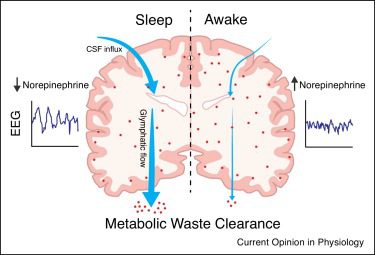
If there’s one discovery that frames the whole debate about sleep’s future, it’s the glymphatic system. Described in detail by neuroscientist Maiken Nedergaard and her team in 2013, it’s a network of perivascular channels through which cerebrospinal fluid flows during sleep, carrying metabolic waste — including amyloid-beta and tau proteins, the hallmarks of Alzheimer’s disease — out of the brain tissue and into the broader lymphatic circulation.
The implications were immediately recognized as enormous. Poor sleep accelerates amyloid accumulation. Even a single bad night measurably increases tau in the cerebrospinal fluid. People with Alzheimer’s and Parkinson’s both show markedly impaired glymphatic function. The pathway between chronic sleep deprivation and neurodegeneration suddenly had a plausible mechanism.
For years, however, the glymphatic system had been demonstrated only in animal models — primarily rodents. That changed in late 2024, when a team at Oregon Health and Science University used contrast MRI in five neurosurgical patients to become the first to definitively visualize the glymphatic network in living human beings, confirming perivascular fluid flow in real time.
“As the brain transitions from wakefulness to sleep, processing of external information diminishes while restorative processes — such as glymphatic removal of waste products — are activated. Yet it is not known what drives brain clearance during sleep.”
— Hauglund et al., Cell, January 2025The follow-up question arrived almost immediately: what exactly powers the system? In January 2025, Nedergaard’s group published in Cell their identification of the mechanism: tightly synchronized oscillations in norepinephrine, blood vessel volume, and cerebrospinal fluid constitute the pump that drives glymphatic clearance during non-REM sleep.1 The brain’s blood vessels rhythmically expand and contract, creating a piston-like pumping action — and this happens because of slow, cyclical fluctuations in norepinephrine released by the locus coeruleus.
This is a significant finding for people interested in bypassing sleep. If the pump is driven by a specific neurochemical oscillation, and that oscillation can be artificially induced while a person is awake, you could theoretically run the brain’s waste-disposal system during waking hours. It hasn’t been done — but it’s no longer merely speculative. Researchers at several institutions are already designing experiments to attempt exactly this, targeting the norepinephrine rhythms pharmacologically and through transcranial stimulation.
Important Caveat
A 2024 study challenged the dominant view, suggesting that glymphatic clearance may actually be faster during waking than during sleep in some conditions. The field is actively debating this. The safest reading as of mid-2026 is that the relationship between sleep and glymphatic function is real but more complex than the simple “sleep cleans the brain” narrative suggests — which paradoxically makes the prospect of engineering around it somewhat more plausible, not less.
The Short Sleeper Genes: Nature’s Proof of Concept
Perhaps the strongest argument that sleep’s minimum requirement is not biologically fixed is the existence of natural short sleepers. Not the person who sets their alarm for 6 a.m. and tells themselves they’re fine — but people with specific inherited mutations who genuinely thrive on dramatically less sleep with no measurable deficit, across their entire lifetime.
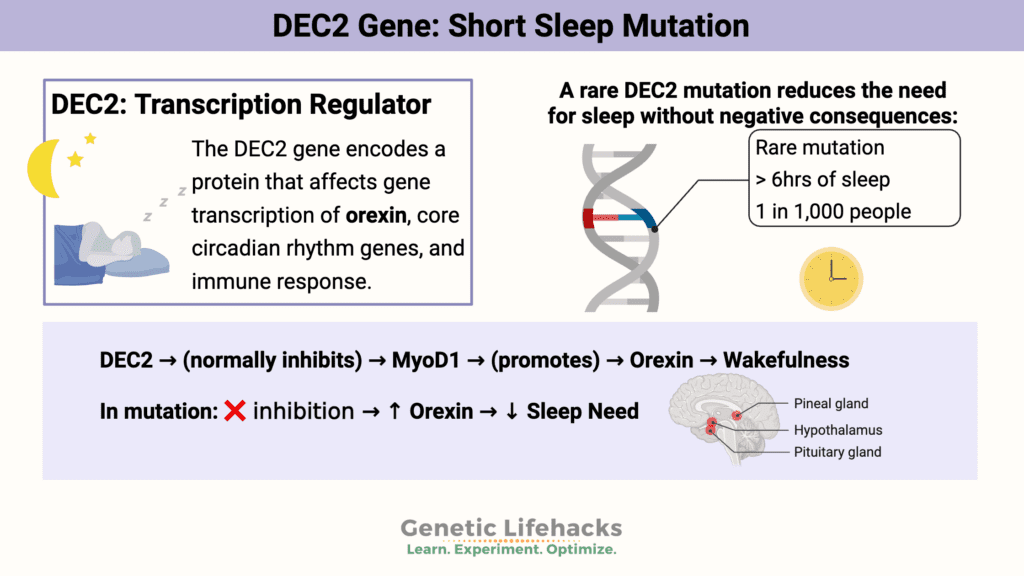
The first breakthrough came in 2009, when Ying-Hui Fu’s laboratory at UCSF identified a mutation in the DEC2 gene (also known as BHLHE41) in a mother and daughter who naturally slept only 6.25 hours per night. Family members without the mutation averaged over 8 hours. The short sleepers showed no daytime fatigue, no cognitive impairment, and no health consequences typically associated with chronic short sleep.2
Since then, researchers have identified four more genetic variants associated with natural short sleep. The list is growing:
| Gene | Avg. Sleep Duration | Key Mechanism | Notable Finding (2024–2025) |
|---|---|---|---|
| DEC2 (BHLHE41) | ~6.25 hrs | Represses orexin expression; P384R mutation releases the brake | DEC2 mutant flies lived significantly longer with improved health metrics3 |
| ADRB1 | ~5.7 hrs | Beta-1 adrenergic receptor; modulates noradrenaline response | Identified in 2019; associated with reduced tau aggregation |
| NPSR1 | ~4.3–5.5 hrs | Neuropeptide S receptor; most aggressive truncation of sleep | Appears to protect against memory impairment from short sleep |
| GRM1 | ~5–6 hrs | Metabotropic glutamate receptor; role in sleep homeostasis | Amyloid/tau protection mechanism not yet investigated |
| SIK3 (SIK3-N783Y) | Variable; active lifestyle | Salt-inducible kinase 3; regulates sleep depth | Newly identified in 2024; documented in a healthy 70-year-old woman |
What’s particularly striking about the DEC2 mutation is its effect on sleep efficiency rather than just duration. The mutation appears to increase the density of restorative processes per hour of sleep, so that six hours of DEC2-mutant sleep delivers roughly the same biological outcomes as eight hours of normal sleep. Three of the four originally identified mutations also appear to suppress amyloid and tau accumulation through independent pathways — meaning they’re not just getting by with less sleep, they’re actively protecting against the neurodegenerative consequences that short sleep typically carries.4
The prevalence of the DEC2 mutation is estimated at roughly 1 in 1,000 people. That’s rare, but it’s not vanishingly rare — and importantly, it proves that human biology can accommodate significantly compressed sleep without apparent harm. The question for researchers isn’t whether such a state is biologically possible (clearly it is), but whether the underlying mechanism can be pharmacologically or genetically induced in people who didn’t inherit the mutation.
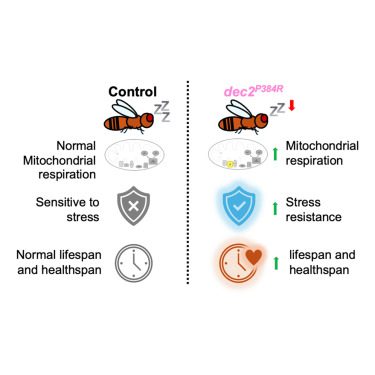
A 2025 paper in Current Biology confirmed that the dec2-P384R mutation extends lifespan and promotes healthy aging in Drosophila models, partly through enhanced mitochondrial fitness and upregulated stress response pathways. This is a model organism, not a human trial — but it’s a meaningful signal that compressed sleep via genetic means carries metabolic advantages, not just neutral tolerance.
DARPA’s Bet: Sleep as an Engineering Problem
Government research agencies don’t often tip their hand about what they think is genuinely achievable versus speculative. So it’s worth paying attention when the Defense Advanced Research Projects Agency — the organisation that funded the precursors to GPS, the internet, and stealth aircraft — launches not one but two formal programs aimed at deconstructing human sleep requirements.
In 2024, DARPA issued a solicitation for the Alert WARfighter Enablement (AWARE) program. The goal: develop a combination of photoswitchable drugs and wearable near-infrared light emitters that boost alertness in sleep-deprived military personnel without the addiction risk or emotional volatility of amphetamines. The target is soldiers who have been awake for 36 or more hours and need to make high-stakes decisions. A 2024 Government Accountability Office report found that 93% of active-duty US service members regularly sleep seven hours or less and report feeling sleep-deprived, with the problem linked to fatal accidents and hundreds of millions of dollars in equipment damage.5
Then, in February 2025, DARPA went further with the Reengineering Enabling Sleep Transitions in Operationally Restrictive Environments (RESTORE) program. This one is more ambitious. RESTORE’s stated goal is to demonstrate “precision control of sleep” sufficient to optimize full cognitive performance following just three hours of sleep per day. The approach focuses on non-invasive neuromodulation — essentially, using external brain stimulation to compress sleep architecture so densely that three hours delivers what eight hours currently provides.
DARPA RESTORE — Technical Approach (2025)
Phase one focuses on identifying the neuromodulatory targets that control transitions between sleep stages. Phase two pursues preclinical safety studies and develops wearable near-infrared devices for human use before seeking regulatory approvals. DARPA is specifically looking for approaches that alter brain activity at a microscopic level — not simply keeping soldiers awake with stimulants, but restructuring sleep itself.
The military context matters for a simple reason: armed forces have the resources, the institutional tolerance for experimental risk, and the operational urgency to push this research faster than civilian health systems would. The US Air Force already routinely provides modafinil to pilots on extended missions — a practice normalized over two decades. The pressure to move beyond modafinil is real, and DARPA is where that pressure usually goes to get solved.
Pharmacology: From Modafinil to Orexin Manipulation
Modafinil is, in some ways, the prototype of what sleep replacement might look like. It promotes wakefulness through a complex mechanism that isn’t fully understood — it’s not simply a stimulant in the amphetamine sense. Studies consistently show it preserves cognitive performance during sleep deprivation better than caffeine or dextroamphetamine, without the cardiovascular stress or addiction liability. The US Air Force has used it operationally since the early 1990s.
But modafinil doesn’t actually replace sleep’s restorative functions — it just delays the cognitive consequences of not sleeping. After two or three days, even modafinil-dosed subjects show significant impairment on tasks requiring complex judgment. It’s a bridge, not a solution.
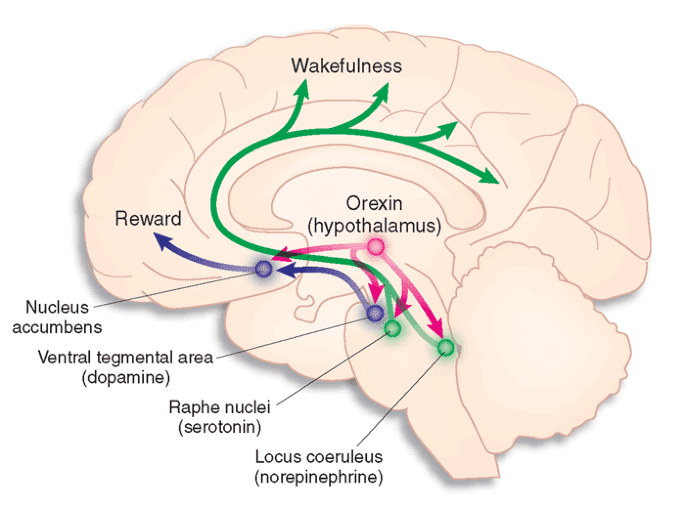
The more promising pharmacological frontier is the orexin system. Orexin (also called hypocretin) is a neuropeptide produced in the hypothalamus that acts as the brain’s primary wakefulness promoter. People with narcolepsy have lost their orexin-producing neurons and collapse involuntarily into sleep — a natural experiment that confirmed orexin’s centrality to conscious wakefulness. The DEC2 short-sleep gene works partly by dysregulating orexin — the mutation removes a brake on orexin expression, which is part of why DEC2 carriers function well on less sleep.
A class of drugs called dual orexin receptor antagonists (DORAs) — suvorexant, lemborexant, and daridorexant — now approved for insomnia, work by blocking orexin’s wakefulness signal at its receptor sites, promoting sleep. The inverse approach — orexin agonists, drugs that amplify orexin signaling — could in theory extend wakefulness while preserving some of sleep’s biochemical maintenance functions. These don’t exist as approved drugs yet, but they’re in early-stage research.6
| Compound / Approach | Current Status | Sleep Role | Limitation |
|---|---|---|---|
| Modafinil | Approved | Delays cognitive degradation from deprivation | Doesn’t restore restorative functions; tolerance builds |
| DORAs (suvorexant, lemborexant, daridorexant) | Approved for insomnia | Facilitate sleep by blocking wakefulness signal | Sedating — opposite of sleep replacement |
| Orexin receptor agonists | Preclinical | Potential extended wakefulness without rebound | No human data; long-term effects unknown |
| Photoswitchable dextroamphetamine (DARPA AWARE) | Phase 0 research | Targeted prefrontal activation via NIR light | Controlled-substance concerns; regulatory pathway unclear |
| GRM1 / NPSR1 modulators | Theoretical | Mimic short-sleep gene effects pharmacologically | Gene targets only recently characterized |
There’s also the separate question of the adenosine system. Adenosine is the chemical pressure that accumulates during waking hours and makes you sleepy — it’s why caffeine works (caffeine blocks adenosine receptors). A drug that could selectively clear adenosine, or prevent its buildup, while separately triggering glymphatic clearance and memory consolidation, would be a closer approximation of what sleep actually does. This is speculative for now, but it’s a coherent target.
Neurostimulation: Inducing Sleep’s Benefits Without Sleep
Pharmacology might not even be the primary route here. Neurostimulation — using electromagnetic fields, ultrasound, or light to alter brain activity non-invasively — is advancing rapidly and, in some respects, offers finer control than drugs.
Transcranial alternating current stimulation (tACS) can entrain the brain into specific oscillatory patterns. Delta frequency stimulation can induce and sustain slow-wave activity — the hallmark of deep sleep — without the person actually being asleep. A 2025 meta-analysis of tACS for chronic insomnia found significant improvements in sleep quality, latency, and total sleep time across randomized controlled trials. That’s using stimulation to improve sleep, not replace it — but the underlying principle is that the brain’s electrical architecture is malleable from the outside.
Transcranial focused ultrasound (TUS) is another candidate. It can reach deep brain structures non-invasively — structures like the locus coeruleus that control the norepinephrine oscillations driving glymphatic clearance. A 2025 review in the Journal of Sleep Research identified TUS and temporal interference stimulation (TIS) as the two technologies most likely to enable real control over deep sleep oscillations in clinical settings within the next decade.7
Transcranial photobiomodulation (t-PBM) — directing specific wavelengths of near-infrared light at brain tissue — is a third avenue. A July 2025 systematic review from NYU and Mount Sinai found evidence that t-PBM increases cerebral mitochondrial activity and blood flow, with downstream improvements in both sleep quality and waking alertness, and tentative evidence of effects on glymphatic function.8
Where We Actually Are
None of these technologies currently delivers full sleep replacement. tACS improves sleep but hasn’t been shown to enable functioning humans without sleep. TUS in deep sleep-control regions is still in animal and early human trials. t-PBM effects are real but modest. The honest assessment is that we’re at early proof-of-concept phase — the equivalent of the 1950s in computing. The pieces exist; the integration is the challenge.
The $411 Billion Incentive
Science follows funding, and funding follows incentive. The economic case for cracking sleep is staggering.
RAND Corporation’s analysis found that insufficient sleep costs the US economy up to $411 billion annually in lost productivity, with Japan losing up to $138 billion and the UK £50 billion. Across just five OECD countries, the Lancet put the 2025 projected figure at up to $718 billion when absenteeism and presenteeism are both counted.9 Sleep deprivation accounts for roughly 1.86–2.92% of Japan’s GDP annually — more, proportionally, than the US.
On the other side of the ledger, the global sleep economy — sleep aids, tracking devices, pharmaceuticals, smart mattresses — is estimated at nearly $600 billion and growing. Venture capital funding for sleep technology roughly doubled between 2017 and 2021. The global sleep tech market is projected to grow from $5.4 billion in 2024 to $9.1 billion by 2030.10
The combination of massive economic loss from bad sleep and a fast-growing commercial interest in solving it creates an unusually well-funded research environment. Unlike, say, curing aging — where the fundamental biology is still poorly understood — sleep manipulation has specific, identifiable molecular targets, several of which have already been validated by genetic evidence. That makes it commercially investable in a way that pure longevity science isn’t yet.
A Realistic 2026–2050 Roadmap
Let’s be specific about what “might not need sleep by 2050” actually means in practice — because the headline is doing some work here that deserves unpacking.
The most extreme reading — complete, permanent elimination of sleep — is almost certainly not where this goes. Sleep is deeply integrated into hormonal rhythms, immune function, memory consolidation, and tissue repair in ways that we can’t yet fully disentangle. Eliminating it entirely without consequence would require essentially reengineering human physiology from the ground up.
What does look achievable, based on the current research trajectory, is a future where sleep is optional in its current form — replaced by shorter, artificially optimized rest combined with waking-hour interventions that handle the specific functions sleep currently monopolizes.
2026–2030
Sleep Compression Phase
DARPA’s RESTORE program delivers first human data on neuromodulation-assisted 3-hour sleep. Orexin agonist compounds enter Phase 1 trials. Closed-loop neurostimulation devices (like the CLAS systems in current sleep research) become available as wearables. First gene therapies mimicking DEC2 mutation tested in rodents. Sleep-tracking AI reaches diagnostic-grade accuracy without clinical polysomnography.
2030–2038
Function Unbundling
Pharmacological protocols emerge that separately address glymphatic clearance (via norepinephrine-mimicking agents or focused ultrasound), memory consolidation (via targeted electrical stimulation during waking), and immune maintenance (via circadian rhythm adjustment). “Designer sleep” — controllable depth, stage, and duration — becomes available to early adopters. Neurological implications of long-term use begin to emerge from population data.
2038–2045
Regulated Sleep Modification
First FDA-equivalent approvals for devices or drug combinations that enable consistent functioning on 3–4 hours of natural sleep supplemented by waking-hour interventions. Military and high-stakes professional users (surgeons, pilots, emergency responders) are early regulated adopters. Long-term safety data accumulates. Gene-based approaches — either germline or somatic — enter clinical trials in jurisdictions with permissive frameworks.
2045–2050
Mainstream Optionality
For a subset of the population — those with access to the technology and the economic incentive — sleep becomes a choice rather than a requirement. The modal outcome is likely 2–3 hours of highly engineered sleep (achieving in that time what currently takes 7–8 hours) combined with daytime glymphatic and cognitive maintenance protocols. A minority may choose biological full-elimination, accepting the as-yet-unknown long-term risks. Most people still sleep, by preference.
This roadmap is optimistic in some respects — it assumes smooth regulatory progress and no catastrophic safety discoveries — but it’s grounded in research programs that actually exist and are funded right now. It’s not science fiction; it’s applied neuroscience with a long development timeline.
What Could Go Wrong: The Honest Counterarguments
Any serious treatment of this subject has to grapple with the objections, and there are genuine ones.
The glymphatic problem may not be solvable
We now know that the glymphatic system is driven by norepinephrine oscillations tied to non-REM sleep physiology. But we also know — from the January 2025 Cell paper — that common sleep aids can disrupt this oscillation, slowing clearance. The drugs we currently use to help people sleep are, in some cases, making the brain’s cleanup less efficient. Engineering around this without disrupting it further will require extraordinary precision.
Immune suppression is underexplored
Sleep deprivation consistently degrades immune function — reducing natural killer cell activity, disrupting cytokine production, and impairing vaccine response. A 2025 study in Sleep Advances from Oregon Health & Science University found that insufficient sleep was the second strongest predictor of reduced life expectancy after smoking — stronger than physical inactivity or social isolation.11 We don’t know whether sleep compression technologies, even sophisticated ones, can fully preserve the immune maintenance functions that natural sleep provides.
Climate is actively making sleep worse
Even as we discuss engineering humans out of their sleep requirement, rising temperatures are eroding sleep quality globally. A 2022 study in One Earth projected that temperature-attributed short nights will increase from roughly 11 per person per year in 2010 to 12 by 2050 under moderate emissions scenarios. A 2025 Nature Communications analysis of 23 million sleep records found that for every 10°C increase in ambient temperature, odds of sleep insufficiency increase by 20.1%.12 The population sleeping badly is growing at the same time the technology to address it is developing — which creates both urgency and risk that interventions will be applied before they’re adequately tested.
The equity problem is real
Every technology of this nature arrives first for the wealthy and well-connected. If sleep compression becomes a competitive advantage — more waking hours, sharper cognition — the pressure to adopt it will be coercive in practice, even if technically voluntary. Workers in high-performance fields will face the same implicit pressure people currently face around using caffeine or smartphones. The gap between those who can afford engineered sleep and those who can’t, or who lack access to the monitoring technology to do it safely, could become a genuine inequality axis.
The Honest Bottom Line on Risk
We’ve been systematically wrong about the long-term effects of lifestyle-altering technologies before. Chronic stimulant use in aviation was normalized for decades before the cumulative cognitive costs became apparent. The history of “this is probably fine” in medicine is humbling. Sleep is entangled with almost every system in the body. Even the most targeted interventions will have second-order effects that take years of population-level data to detect. This is not a reason to stop the research — but it is a reason to be genuinely sceptical of any technology claiming to have fully solved it before long-term data exists.
Frequently Asked Questions
Is “not needing sleep by 2050” actually realistic, or is this speculation?
It’s more than speculation but less than certainty. Specific research programs with real funding exist — DARPA’s RESTORE and AWARE, multiple university labs working on glymphatic stimulation, and pharmaceutical research into orexin modulation. The genetic evidence from short-sleeper mutations proves the biology can accommodate less sleep without harm. By 2050, some form of significantly compressed or supplemented sleep is plausible for early adopters. Complete sleep elimination for the general population is not.
What is the glymphatic system, and why does it matter for this question?
The glymphatic system is a network of channels alongside brain blood vessels through which cerebrospinal fluid flows during sleep, flushing out metabolic waste — including the amyloid and tau proteins associated with Alzheimer’s. It was confirmed to exist in living humans for the first time in late 2024. Its significance is that it may be sleep’s most critical and hardest-to-replicate function. If researchers can learn to trigger glymphatic clearance artificially while awake, one of the primary reasons we need sleep would be addressed.
Do “short sleeper” people really exist, and are they actually healthy?
Yes, they’re real, and yes, by all measures they appear genuinely healthy. Researchers have identified five gene variants (DEC2, ADRB1, NPSR1, GRM1, SIK3) whose carriers sleep 4–6.25 hours without the cognitive impairment, daytime fatigue, or health consequences typically associated with short sleep. Three of these mutations also appear to suppress amyloid and tau accumulation independently. The DEC2 mutation was even associated with extended lifespan in animal models published in 2025. The prevalence is roughly 1 in 1,000 for the DEC2 variant alone.
What is DARPA’s RESTORE program, and what does it actually aim to do?
Launched in February 2025, RESTORE aims to demonstrate “precision control of sleep” sufficient to deliver full cognitive performance following just three hours of sleep per day. It focuses on non-invasive neuromodulation — external brain stimulation that restructures sleep architecture, compressing recovery into a shorter time window. It’s not trying to eliminate sleep; it’s trying to make three hours as restorative as eight. Proposals were due mid-2025 and research is ongoing.
Can’t I just take modafinil to replace sleep?
Not really. Modafinil delays the cognitive consequences of sleep deprivation — it keeps your performance above baseline for longer than it would otherwise fall. But it doesn’t restore the restorative functions of sleep. After 48–72 hours, even modafinil-dosed subjects show significant impairment on complex cognitive tasks. It’s a bridge, useful in emergency situations, not a substitute for sleep’s maintenance functions.
What are the biggest risks if sleep replacement technology becomes available?
Three stand out. First, we don’t yet have long-term data on whether any current approach fully preserves immune function — and emerging research suggests insufficient sleep is the second strongest predictor of reduced life expectancy after smoking. Second, the glymphatic system is more complex than initially understood, and some sleep aids already disrupt it. Third, equity: the technology will arrive first for the affluent and well-connected, potentially creating competitive pressure that makes it effectively mandatory in some fields before safety is fully established.
How does rising global temperature affect this picture?
It complicates it significantly. A 2025 Nature Communications analysis of 23 million nights of sleep data found that a 10°C increase in ambient temperature raises the odds of sleep insufficiency by 20.1% and reduces deep sleep by 2.82% per night. Under high emissions scenarios, annual sleep loss per person could reach 33+ hours by century’s end. The population’s sleep quality is degrading just as the technology to modify sleep is developing — which raises the stakes for getting interventions right.
Will sleep replacement technology be safe enough to use by 2050?
For some applications and some populations, likely yes — with appropriate monitoring. Military and high-stakes professional contexts will have the data and regulatory frameworks first. For general consumer use, 2050 is plausible as an early adopter window, not a mainstream one. Long-term neurological safety data will require decades of use before anyone can honestly claim certainty. Caution is warranted, but so is continued research — the status quo of ubiquitous sleep deprivation is itself causing documented harm.
Could gene therapy eventually give everyone the short-sleeper mutation?
Theoretically, yes. The DEC2-P384R mutation’s mechanism is well-characterized, and somatic gene editing (editing body cells rather than germline cells) is advancing rapidly. However, the mutation’s full effects on every system aren’t yet known — the protection against amyloid/tau accumulation is promising but has only been tested in rodents and flies. This is a decades-long regulatory and safety question, not a near-term option.
What should I actually do right now, given all of this?
Sleep 7–9 hours. The same OHSU research that confirms sleep can be hacked also confirms that insufficient sleep is currently the second strongest predictor of reduced life expectancy, behind only smoking. The technologies discussed in this article don’t exist yet in a form safe enough for personal experimentation. The existing evidence strongly supports prioritizing sleep quality and duration — not because sleep is sacred, but because its absence is measurably dangerous and the alternatives are not ready yet.
What’s the most important research to follow in this space?
Watch three things: the output of DARPA’s RESTORE program (2025–2028), progress in non-invasive glymphatic stimulation research (particularly from Nedergaard’s group at Rochester and collaborating institutions), and the short-sleeper gene literature — specifically any somatic gene therapy trials that attempt to confer DEC2-like effects in adult subjects. These three threads are likely to define the shape of whatever comes next.
Final Thoughts
Sleep is not going anywhere in the next decade. The science that might eventually allow us to compress or supplement it is real, funded, and moving — but it’s also genuinely difficult, and the risks of getting it wrong are high enough that responsible development will take time.
What’s changed in the last five years is the quality of the questions being asked. We used to ask why people need sleep. Now we’re asking which specific molecular processes happen during sleep that can’t happen otherwise — and whether those processes can be triggered without the unconsciousness. That’s a materially more tractable question, and it’s getting resources commensurate with its importance.
By 2050, the most likely outcome isn’t that sleep has been abolished — it’s that the choice of how much to sleep, and in what form, has become genuinely personal rather than dictated entirely by biology. For some that will mean 2 hours of engineered deep rest and a waking maintenance protocol. For others it’ll still be eight hours in the dark, and nobody will judge them for it. The interesting question isn’t whether we’ll need sleep by 2050. It’s who decides — and on what terms.
More from FutureNow.click
Longevity
The Biology of Living to 150: What the Science Actually Says
Neurotechnology
Brain-Computer Interfaces: From Cochlear Implants to Neuralink
Genetics
CRISPR in 2025: Where Gene Editing Actually Stands Right Now
AI & Medicine
How AI Is Changing Drug Discovery — and What It Hasn’t Fixed
Climate & Health
Heat, Sleep, and Cognition: The Hidden Cost of Warming Nights
Future of Work
The 4-Hour Workday: Productivity Research vs. Corporate Reality
The 2026 Smartwatch That Replaces Your Doctor—Shockingly Accurate
How to Hack Your Brain to Learn Faster Than Ever
The Secret Longevity Diet Hacks Billionaires Are Using in 2025-2026
5 Weird Lifestyle Experiments That Actually Work
I Quit the Internet for 30 Days — Here’s What Happened
Why We Dream: 5 Competing Scientific Explanations (And Why None Fully Satisfy)
1 thought on “Could Humans Ever Need Less Sleep?”