


Wearable Health · Evidence Review · Updated October 1, 2026 · By the FutureNow Editorial Team
Quick answer: The Apple Watch ECG is the most rigorously validated consumer heart tool you can wear, but only on recordings the watch can classify. The sleep apnea and hypertension features are real, FDA-cleared screening tools whose silence means almost nothing: they miss roughly one in three apnea cases and nearly six in ten hypertension cases. Calorie burn is off by about 28% on average. The new Series 12 sensors are promising, but I found no independent validation of them yet.
The one idea that changes how you read every alert
Apple’s cleared features are not all tuned the same way. Two of them are built to be right when they speak. Two are built to miss a lot while staying quiet.
That is a deliberate engineering choice, and it has a practical consequence most reviews skip:
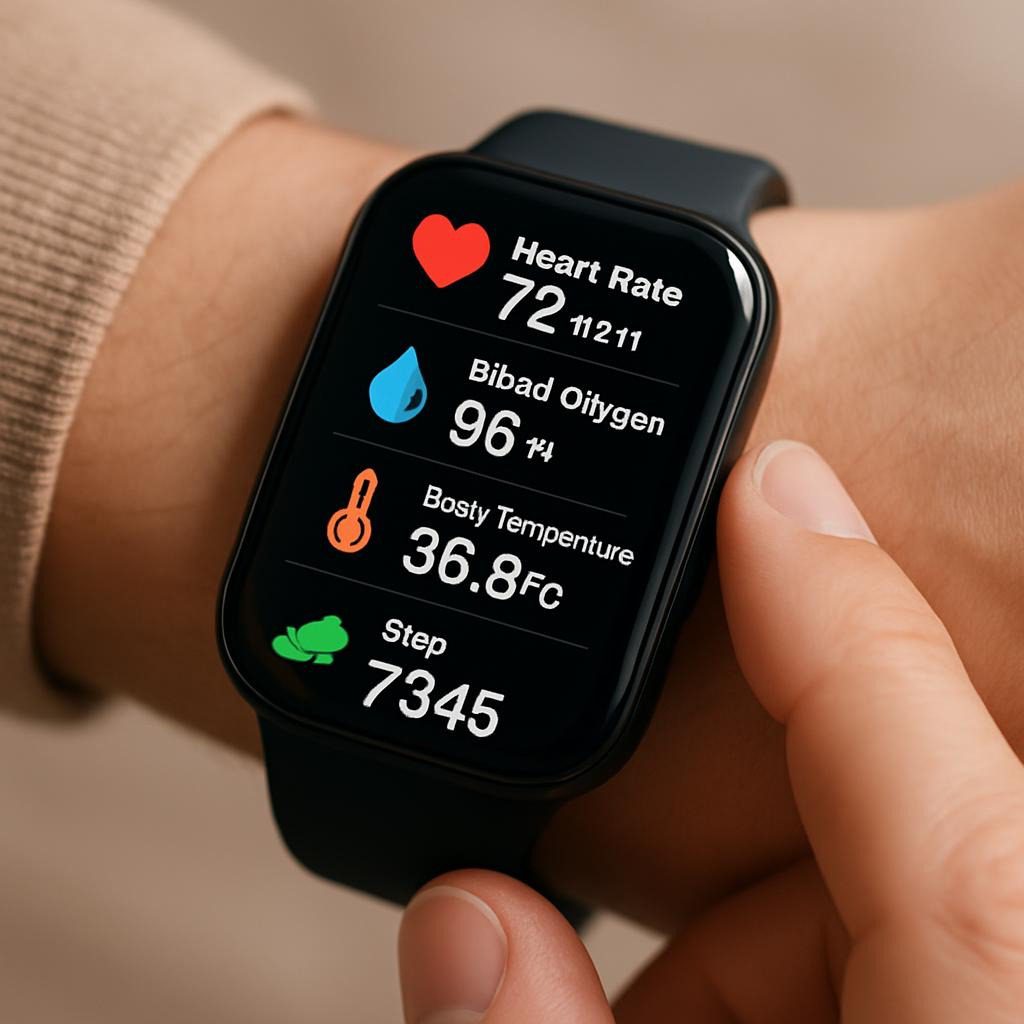
An alert is evidence. Silence is not. If your watch tells you it detected possible sleep apnea or possible hypertension, take it seriously. If it says nothing, you have learned very little.
I rebuilt this guide around that distinction after checking the previous version’s numbers against the primary documents (FDA summaries, Apple’s instructions for use, the New England Journal of Medicine abstract). Several figures did not survive that check. The corrections are folded into the sections below.
What changed since Series 10
This article started as a Series 10 review. The lineup has moved on, so here is the current picture.
| Model | Launch | Health notes |
|---|---|---|
| Series 10 | Sept 2024 | ECG, irregular rhythm, sleep apnea notifications |
| Series 11 | Sept 2025 | Adds hypertension notifications and a sleep score |
| Series 12 | Sept 2026, from $399 | New Health Sensing System, heart rate every 5 seconds, Readiness score |
Series 12 uses a redesigned sensor array that samples heart rate every five seconds and HRV up to 24 times more often than Series 11, according to the5krunner’s spec breakdown. Apple says the heart rate sensing is the most accurate in a wearable, based on a study of more than 1,000 participants. That is a first-party claim. I did not find an independent replication, and I did not audit Apple’s white paper methodology.
Many software features arrive through watchOS 27 on older models too (Series 9 through 11, Ultra 2 and 3, SE 3), per the same source. Check Apple’s compatibility list for your exact model before buying for one feature.
Feature by feature: the numbers, and who produced them
1. ECG and atrial fibrillation: strong, with a footnote
The ECG app records a 30-second single-lead tracing and classifies it as AFib, sinus rhythm, or inconclusive.
In the pivotal study (about 600 people, compared against a cardiologist-read 12-lead ECG), Apple reported 98.3% sensitivity for AFib and 99.6% specificity for sinus rhythm in classifiable recordings, per Apple’s 2018 announcement and the FDA De Novo summary.
The footnote matters: 12.2% of recordings were inconclusive and excluded from those figures, according to Apple’s own instructions for use. The accuracy is real; it just applies to the recordings the watch is willing to call. Take a second reading when you get “inconclusive.”
2. Irregular rhythm notifications: the 84% number is misread
The famous Apple Heart Study (Perez et al., NEJM, 2019; open-access copy) enrolled 419,297 people. The headline is a positive predictive value of 0.84. Here is what that figure does and does not say:
| Question | Answer | Source |
|---|---|---|
| How many people got an irregular pulse alert? | 0.52% (2,161) | HCPLive summary |
| PPV, AFib on patch during the alert | 0.84 | NEJM |
| Notified people with AFib on any later patch reading | 34% | NEJM |
| Patches returned with analyzable data | 450 | ACC journal scan |
The 84% applies when the patch was recording at the same moment as the alert. Only 34% of notified participants showed AFib on later patch wear (applied an average of 13 days afterward), which is partly a limitation of catching intermittent AFib. The study also cannot give a negative predictive value. A quiet watch does not rule out AFib.
3. Sleep apnea notifications: useful flag, high miss rate
The previous version of this article said published sensitivity exceeded 85%. That was wrong.
- FDA validation: 66.3% sensitivity, 98.5% specificity (Healio).
- Apple’s own white paper reports 66.6% and 95.9% on its sequestered algorithm test set (Apple PDF).
These two sources disagree on specificity (98.5% versus 95.9%). They measure different datasets, and I would treat the FDA clinical number as stronger, but both agree on the part that matters: the watch misses about one in three moderate-to-severe cases.
The mechanism: the watch tracks “breathing disturbances” through wrist motion and needs at least 10 recordings in 30 days, with at least half elevated, before it speaks. Apple’s indications for use state that no notification does not indicate the absence of sleep apnea.
4. Hypertension notifications: cleared, but it never shows a number
Introduced with Series 11 and cleared by the FDA in September 2025 for adults 22 and older who are not pregnant and have no prior hypertension diagnosis. It analyzes optical pulse data in 30-day windows and shows no blood pressure readings.
The clinical study (more than 2,000 participants):
- Sensitivity 41.2% (214 of 585 people with BP of 130/80 or above)
- Specificity 92.3%
- Positive predictive value: 70.9% under an assumed one-third prevalence, per Fierce Biotech’s reading of the FDA summary
A February 2026 JAMA modeling study found that the absence of an alert does not meaningfully rule out hypertension, as summarized by Houston Methodist. I read that study only through the secondary summary.
5. Heart rate, calories and steps: where the watch is good and bad
A University of Mississippi meta-analysis of 56 studies reported mean absolute percentage errors of 4.43% for heart rate, 8.17% for steps, and 27.96% for energy expenditure (university release, published in Physiological Measurement). A separate living review in npj Digital Medicine (Lambe et al., March 2025) found a mean heart rate bias near −0.27 bpm. I saw it only through a secondary summary.
My earlier version cited a “−0.12 bpm” bias. I could not trace it to a primary source, so it is gone.
Verdict: trust resting heart rate and use calories as a rough direction. I could not verify the figures the old version gave for sleep stage accuracy or SpO₂ against primary sources, so I have left them out rather than repeat them. Apple labels the blood oxygen feature for wellness use, not medical use.
The calculation that makes the “silence” point concrete
Take the hypertension feature’s published sensitivity (41.2%) and specificity (92.3%). The result depends heavily on how common undiagnosed hypertension is among people wearing the watch, which I do not know. So here is the full range.
| Undiagnosed prevalence | Chance an alert is right (PPV) | Chance silence is right (NPV) |
|---|---|---|
| 10% | 37% | 93% |
| 20% | 57% | 86% |
| 30% | 70% | 79% |
| 40% | 78% | 70% |
My calculation is based on the published sensitivity and specificity; it assumes those figures hold in the general wearing population, which the study does not prove.
Read the 30% row: before the watch says anything, 70% of people in that group are healthy. After a quiet watch, 79% are. Silence moves the needle nine points. An alert at 30% prevalence moves it from 30% to about 70%. The feature is a good tripwire and a poor all-clear.
How the competition compares
The previous table had errors, so I rebuilt it on what I could verify. Cleared claims, not marketing:
| Feature | Apple Watch | Samsung Galaxy Watch | Oura / Whoop / Garmin / Fitbit |
|---|---|---|---|
| FDA-cleared ECG / AFib | Yes | Yes | Varies by product |
| FDA-cleared sleep apnea | Yes (66.3% sens.) | Yes | No clearance found |
| FDA-cleared hypertension alerts | Yes | No | No |
| Blood pressure number | Never shown | Cuff-calibrated, not FDA-cleared | None |
Samsung’s sleep apnea feature is cleared and, per a secondary source, reported 90.8% sensitivity in a July 2026 version, but against polysomnography in 475 subjects. Apple’s study used a home sleep test. Do not compare those two sensitivities head-to-head. Different reference standards produce different numbers. I did not verify clearance status for every Garmin, Oura, and Whoop feature, and product lines change quickly; check the FDA database for your device.
Evidence strength ranking
Not all sources in this article carry equal weight.
- Strongest: FDA clearance summaries and the peer-reviewed NEJM study.
- Strong but conflicted: Apple’s white papers and instructions for use. Primary data, first-party authors.
- Useful, second-hand: University press releases and medical-news summaries of studies I could not open directly.
- Weakest: Review sites and spec aggregators, used here only for product facts like launch dates and sensor specs.
What I could not do: open PubMed directly (blocked during my check), read the JAMA hypertension study, or find independent validation of Series 12’s new sensors. I also did not test a watch myself, so nothing in this article is a hands-on result.
Setting it up so the features work
- Update watchOS first. Features and algorithms ship in software.
- Wear it to bed. Apnea notifications need at least 10 recordings in 30 days.
- Take ECGs seated, arm resting on a table, one finger on the Digital Crown. Repeat any inconclusive result.
- Export for your doctor. The Health app can share ECG recordings as a PDF. Sleep apnea notifications include a three-month breathing disturbance PDF.
- Do not enable the hypertension feature as a replacement for a cuff. If you have been diagnosed with hypertension, you are outside its cleared use. Use a validated upper-arm cuff.
Warning: Chest pain, fainting, severe shortness of breath or stroke symptoms need emergency care, not a watch reading. The ECG app detects AFib and not heart attacks.
Which watch should you buy for health features?
My position: If your priority is the FDA-cleared screening features, the verified evidence does not justify paying extra for Series 12. Everything with a published validation (ECG, irregular rhythm, sleep apnea, hypertension) runs on Series 11 and, depending on the feature, earlier models. Series 12 adds more frequent sensing and a Readiness score. These are interesting, but the claims rest on Apple’s own studies.
| Your situation | Sensible choice |
|---|---|
| Want cleared screening features at the lowest cost | An older model that supports the features you need (verify compatibility on Apple’s site) |
| Over 50 or have cardiovascular risk factors and want the full set | Series 11 or 12 |
| Want training and recovery data | Series 12, but treat Readiness as unvalidated |
| Want to measure blood pressure | A validated cuff, not any watch |
Open question: do these alerts improve outcomes?
Nobody can answer that yet. Evidence shows the alerts detect conditions at stated rates. It does not show that people who receive them end up with better blood pressure control, fewer strokes, or earlier treatment. What would resolve it is a randomized trial comparing notified and non-notified users on confirmed diagnoses and clinical outcomes. I could not find one.
FAQ
Can the Apple Watch detect a heart attack? No. The ECG app classifies AFib versus sinus rhythm. Call emergency services for chest pain.
How accurate is the sleep apnea feature? It caught 66.3% of moderate-to-severe cases in FDA validation, with 98.5% specificity. A notification warrants a doctor visit; silence is not reassurance.
Does the watch measure blood pressure? No. The hypertension feature flags patterns over 30 days. It catches about 41% of undiagnosed cases and displays no reading.
Are calories accurate? No. The best available meta-analysis shows an average error near 28%.
Is Series 12 worth it for health? Only if you want its new sensing and recovery tools. Its validation, so far, comes from Apple.
Should I share watch data with my doctor? Yes, for ECG readings flagged as AFib or inconclusive, irregular rhythm notifications, and apnea reports. Calorie and stress scores are rarely useful clinically.
Bottom line
Use the Apple Watch as a tripwire. When it alerts, act. When it stays silent, remember that silence on the sleep apnea and hypertension features was never designed to be reassuring. And treat calorie numbers as decoration.
This article is for information only and is not medical advice. Talk to a qualified clinician about diagnosis and treatment. Figures were checked against the sources linked above as of October 1, 2026; product details and clearances change, so confirm current status on the manufacturer’s and FDA’s sites.