
Last updated: September 14, 2026
I Tried Mouth Taping for 30 Days — Here’s What Actually Changed
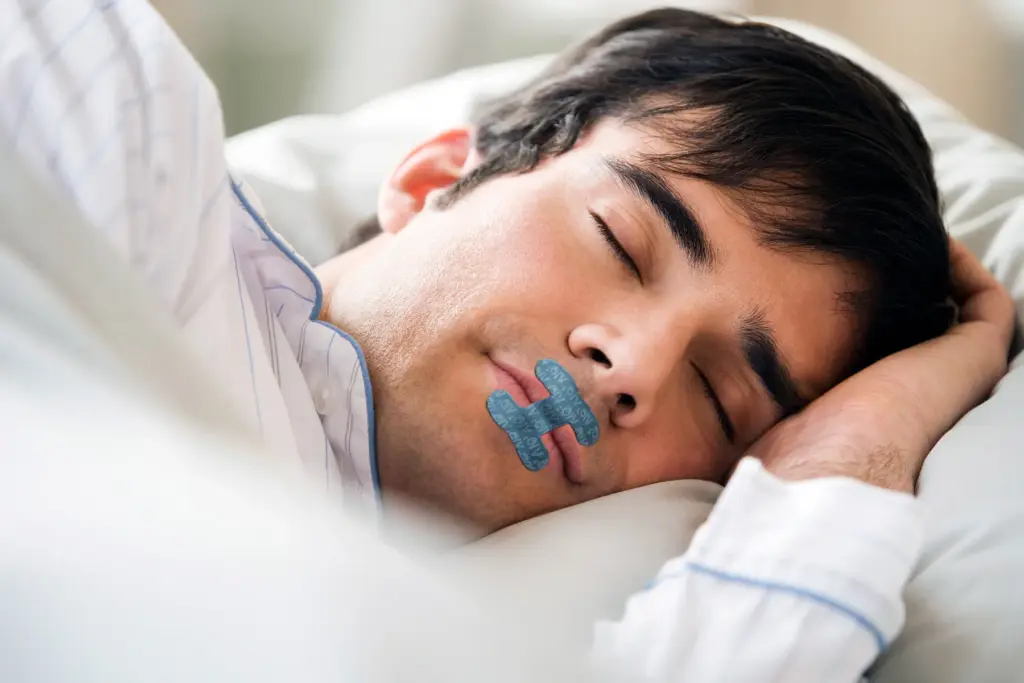
Mouth tape showed up on my nightstand the way most wellness trends do lately — through a friend who swore it fixed her snoring, and a feed full of people posting suspiciously serene morning selfies with a strip of tape across their lips. I gave it thirty nights. This is an honest account of that month, cross-checked against what sleep researchers and dentists actually know about the practice as of mid-2026 — which, spoiler, is a lot less than the internet implies.
Mouth taping is an airway-modifying practice, not a cosmetic one. If you snore loudly, have ever been told you stop breathing at night, wake up gasping, or feel excessively sleepy during the day, the right first step is a sleep study — not tape. Sealing the mouth in someone with undiagnosed obstructive sleep apnea (OSA) can suppress the compensatory mouth-breathing that was keeping oxygen levels up, and clinicians have flagged this explicitly. I did not have diagnosed OSA when I tried this, and that distinction matters enormously for whether any of what follows applies to you.
On this page
Why people tape their mouths shut at night
The underlying logic isn’t fringe. Nasal breathing filters and humidifies air, adds nitric oxide that supports oxygen exchange, and is the breathing pattern the body is built around during sleep. Habitual mouth breathing — often driven by nasal congestion, allergies, or plain habit — is linked to dry mouth, morning bad breath, and in some people, louder snoring. Mouth tape is a blunt-force way of enforcing nasal breathing by removing the alternative. The idea is sound. The execution skips a diagnostic step that separates “helpful nudge” from “risky workaround,” which is the part most influencer content leaves out.
What the research actually shows
I want to be direct about this because most articles on the topic aren’t: the evidence for mouth taping is thin. Not “controversial,” not “still debated” — genuinely limited, mostly small, and largely unblinded.
- A 2022 pilot study in Healthcare followed 30 participants with mild sleep apnea using porous mouth tape and found reduced snoring intensity and frequency, with subjective sleep-quality improvements — but it had no control group and the sample was small.
- A 2023 pilot in the Journal of Clinical Sleep Medicine found a reduction in apnea-hypopnea index (AHI) in people with mild OSA using porous tape, again in a very small cohort, with authors explicitly cautioning against generalizing the result.
- A study of people with asthma found no measurable change in their condition after mouth taping.
- A 2022 study identified a phenomenon researchers call “mouth puffing,” where roughly a third of participants kept attempting to mouth-breathe against the tape — meaning the tape didn’t reliably stop the behavior it’s meant to stop.
- A 2025 systematic review built specifically to evaluate mouth-taping safety and efficacy concluded the evidence base is far behind the social-media hype, and does not support recommending mouth taping for unsupervised, long-term home use.
Professional bodies have taken notice. Jessica Camacho, MD, a board-certified sleep physician at CU Anschutz, put it plainly: “the evidence we have for mouth taping isn’t high quality” — and she notes that’s exactly why the American Academy of Sleep Medicine advises against the practice. Cleveland Clinic pediatric sleep medicine specialist Brian Chen, MD, is similarly direct: “there’s not strong enough evidence to support that mouth tape is beneficial.” As of mid-2026, no mouth-tape product has FDA clearance or approval as a treatment for sleep apnea or any other sleep condition — most are sold as general wellness items, outside device regulation entirely.
One study measured transcutaneous CO₂ levels during mouth taping in people who could breathe normally through the nose and found no significant carbon dioxide buildup. For someone with clear nasal airways and no apnea, the “you’ll suffocate” fear circulating online isn’t well supported. The realistic risk profile is narrower — and different — than the scariest headlines suggest.
My 30 days, honestly
Before starting, I did the thing most people skip: I ruled out sleep apnea. No witnessed pauses in breathing, no gasping, no daytime crashes, and nasal passages clear enough to breathe through comfortably with my mouth closed while awake. That screen is the whole ballgame — it’s the difference between “mild self-experiment” and “genuinely risky.”
- Nights 1–3 — Rough. I woke myself up twice trying to talk in a dream. The tape (a porous, hypoallergenic strip, not standard duct tape — please don’t use duct tape) peeled at the corner by 3 a.m. both times. This tracks with what the research on adaptation calls “mouth puffing” — my body kept trying to use the exit that used to be there.
- Nights 4–9 — Adjustment. Fewer wake-ups. Noticeably less dry-mouth feeling in the morning, which lines up with the plausible mechanism — nasal breathing humidifies air better than mouth breathing does. This is a subjective impression, not a measured outcome; I didn’t run a controlled comparison against untaped nights.
- Nights 10–20 — The plateau. This is where most of the viral testimonials stop posting, and it’s also where the experience got boring in an honestly good way. Falling asleep felt roughly the same. I didn’t notice a dramatic energy shift, which matched my expectation going in — I don’t have diagnosed sleep-disordered breathing, and the studies showing benefit were specifically in people who did.
- Nights 21–27 — A cold, and a lesson. I caught a head cold around night 22 and my nose was partially blocked for about five nights. I stopped taping immediately — this is exactly the scenario clinicians warn about, where a taped mouth combined with a blocked nose restricts airflow. That’s not a hypothetical; it’s the mechanism behind most of the documented safety concerns.
- Nights 28–30 — Back to it, no drama. Once my nose cleared, I resumed and finished the month without incident. No rash, no rebound congestion, no meaningful change in how rested I felt on days I checked a subjective 1–10 grogginess rating each morning.
I almost kept taping through the cold because I didn’t want to “break the streak” for this piece. That instinct — prioritizing a content narrative over an airway that was already partly blocked — is precisely the failure mode that makes mouth taping risky for ordinary people copying a 30-second video. If you take one thing from this diary, take that: stop taping the moment your nose isn’t fully clear, no exceptions.
My honest bottom line, personally: less dry mouth in the morning, no measurable change in daytime energy, and one clear reminder that this isn’t a “just do it” wellness hack — it has an off-switch condition (clear nasal airway, no apnea) that has to be checked every single night, not just once at the start.
The risks nobody puts in the caption
| Risk | Who it applies to | Why it happens |
|---|---|---|
| Worsened oxygen desaturation | People with undiagnosed OSA | Mouth breathing can be a compensatory airway when the nose or throat is partly obstructed; removing it removes the backup route. |
| Airway restriction during illness/allergies | Anyone with a blocked nose that night | Nasal congestion plus a sealed mouth leaves no reliable breathing route. |
| Aspiration risk if vomiting | Anyone prone to reflux, nausea, or who has been drinking alcohol | A taped mouth makes it harder to clear stomach contents; inhaling vomit is a medical emergency. |
| Skin irritation or allergic reaction | Sensitive skin, certain adhesives | Direct adhesive contact with lips and perioral skin overnight. |
| False reassurance | People with real OSA symptoms who use tape instead of getting tested | Reduced snoring volume can mask, rather than treat, an underlying breathing disorder. |
Who this might reasonably help — and who should skip it
| Reasonable to consider | Skip it / see a doctor first | |
|---|---|---|
| Nasal airway | Clear, no chronic congestion | Deviated septum, chronic allergies, current cold |
| Snoring history | Mild, no witnessed pauses | Loud, with gasping or witnessed apneas |
| Daytime symptoms | None | Excessive daytime sleepiness, morning headaches |
| Other conditions | None relevant | Untreated anxiety around restricted breathing, reflux/GERD, alcohol use before bed |
| Goal | Reduce mild habitual mouth breathing, dry mouth | Treat diagnosed sleep apnea (tape is not a substitute for CPAP or any validated treatment) |
If tape isn’t right for you
- Treat nasal congestion first — saline rinses, allergy management, or an ENT evaluation if it’s chronic.
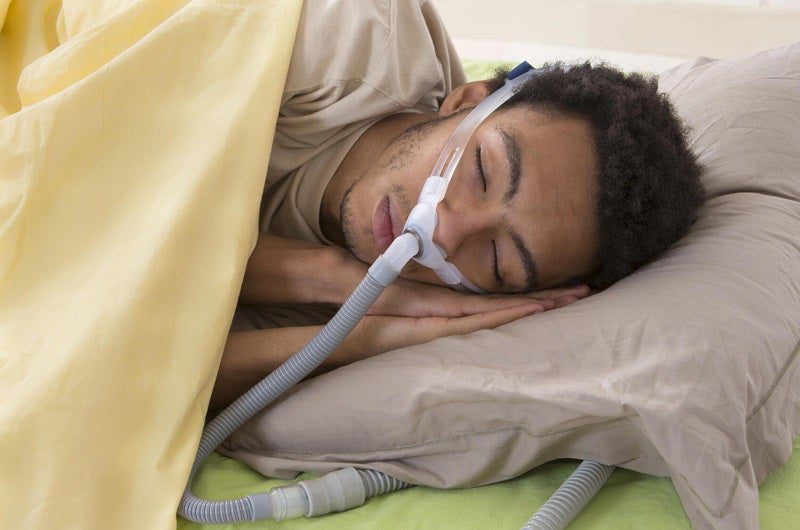
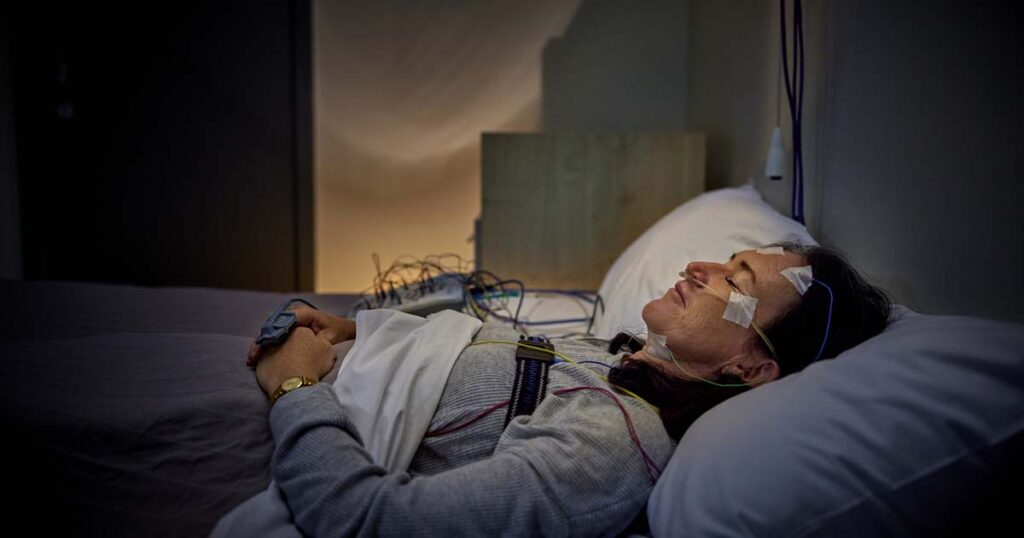
- A sleep study if you have any apnea symptoms — this is the step tape cannot substitute for.
- External nasal strips, which open the nostrils rather than sealing the mouth and carry a different, generally lower risk profile.
- Positional therapy or a fitted oral appliance, prescribed after a proper evaluation, for confirmed mild OSA.
Frequently asked questions
Is mouth tape FDA-approved?
No. As of 2026, no mouth-tape product carries FDA approval or clearance as a treatment for sleep apnea or any sleep disorder. Most are sold as general wellness products, outside medical device regulation.
Can mouth taping cure sleep apnea?
No. It is not a substitute for CPAP or any clinically validated OSA treatment, and using it to suppress mouth breathing in someone with undiagnosed apnea can worsen oxygen levels rather than help.
Is it safe to mouth tape every night?
Only with a clear nasal airway and no sleep apnea, checked every night — not just once. Skip it on nights with congestion, colds, allergies, or after drinking alcohol.
What kind of tape should be used?
Purpose-made, porous, hypoallergenic tape designed for skin contact — never standard duct or packing tape, which can cause skin damage and doesn’t allow any airflow if a seal fails.
Does mouth taping reshape your jaw?
No. It may support nasal breathing habits, which matters for facial development in children, but there’s no evidence it changes adult bone structure.
Will I stop snoring if I tape my mouth?
Small studies show reduced snoring intensity in some mild snorers without apnea, but results are inconsistent and one study of asthma patients showed no change at all. It’s not a reliable fix for everyone.
What is “mouth puffing”?
A pattern documented in a 2022 study where participants kept attempting to breathe through the mouth against the tape, meaning it didn’t reliably enforce nasal breathing for everyone who tried it.
Can mouth taping cause CO2 buildup?
One study measuring transcutaneous CO₂ in people with normal nasal breathing found no significant buildup. The bigger real risk is airway restriction when the nose is already blocked, not gradual carbon dioxide accumulation.
Is mouth taping dangerous if I vomit in my sleep?
Yes, this is a genuine risk. A sealed mouth makes it harder to clear vomit, which raises the risk of aspiration — especially relevant for anyone prone to reflux or who has been drinking alcohol.
Who should never try mouth taping?
Anyone with diagnosed or suspected sleep apnea, chronic nasal obstruction, active congestion, reflux disease, or anxiety around restricted breathing should avoid it or get medical clearance first.
Sources
- Rhee et al., PLOS One (2025) — “Breaking social media fads and uncovering the safety and efficacy of mouth taping,” a PRISMA systematic review of 213 patients across 10 studies
- University of Colorado Anschutz Medical Campus — sleep physician Jessica Camacho, MD, on why AASM advises against mouth taping
- Cleveland Clinic — pediatric sleep medicine specialist Brian Chen, MD, on mouth taping’s evidence and risks
- Journal of Clinical Sleep Medicine — pilot study on porous mouth tape and mild obstructive sleep apnea
- American Academy of Sleep Medicine — clinical practice guidelines for diagnosing sleep-disordered breathing