

Why Some Future Predictions Come True — and Most Don’t
The question isn’t which predictions materialized. It’s how the forecasters who got them right were thinking — and why that method, not the vision, is what you should steal.
In 1968, biologist Paul Ehrlich published The Population Bomb and predicted mass starvation would kill hundreds of millions of people in the 1970s. He was spectacularly wrong. That same year, computer scientist Alan Kay sketched what he called the “Dynabook” — a personal, portable computer with a graphical interface that children could use to learn. He was spectacularly right. Both men were intelligent. Both were well-informed. What separated them?
It wasn’t vision. It was method. And that distinction — between how a forecast is constructed and what it predicts — is the thing that almost every article about “shocking predictions that came true” gets completely wrong. They catalog hits, ignore misses, and leave you with no tool for evaluating the next bold claim you encounter. This piece is about building that tool.
The global conversation around AI, climate, and technological change is saturated with forecasts right now. Everyone has a timeline. Everyone has a certainty. The difference between people who will use those claims wisely and people who will be misled by them comes down to one skill: knowing what makes a prediction worth trusting.
Artificial intelligence, climate policy, geopolitical forecasting, and financial markets are all currently shaped by predictions made years or decades ago — some verified, most not. The ability to distinguish a structurally sound forecast from a compelling-sounding guess is not an academic exercise. It determines which strategies you act on and which you dismiss.
The field that studies this rigorously is called calibration research, and its findings are counterintuitive: domain expertise often makes forecasters worse, not better.
What 20 Years of Tracking Expert Predictions Actually Found
Philip Tetlock, a political scientist at the University of Pennsylvania, spent two decades doing something almost no one does: he tracked approximately 300 expert forecasters making roughly 28,000 predictions, then checked whether they came true. His 2005 book, Expert Political Judgment, published what he found.
The headline result wasn’t inspiring. On average, experts performed barely better than chance — roughly equivalent to a dart-throwing monkey, as Tetlock memorably put it. But buried inside that average was a pattern far more interesting. A subset of forecasters dramatically outperformed the rest. And the gap had almost nothing to do with credentials, political affiliation, or domain expertise. It had everything to do with how they thought.
“The political expert who bores you with a cloud of ‘howevers’ is probably right about what’s going to happen. The charismatic expert who exudes confidence and has a great story to tell is probably wrong.”
Philip Tetlock, summarizing findings from his 20-year expert judgment studyDrawing on Isaiah Berlin’s distinction between the fox (who knows many things) and the hedgehog (who knows one big thing), Tetlock categorized his forecasters. Hedgehogs had grand unifying theories — everything ran through their one big lens. They were confident, quotable, and frequently wrong; they performed worse than simple statistical extrapolation, even in their own domains of expertise. Foxes had no elegant theory. They were probabilistic, self-correcting, willing to say “it depends,” and reluctant to commit to extremes. They consistently outperformed.
The lesson Tetlock drew wasn’t that prediction is impossible. It’s that prediction is a skill — and the skill looks nothing like what makes someone good on television.
Study scope: Tetlock’s original Expert Political Judgment study tracked approximately 300 experts across 20 years, covering political, economic, and geopolitical domains. The Good Judgment Project follow-on (2011–2015), sponsored by IARPA, extended this to tens of thousands of volunteer forecasters across 500+ real-world questions relevant to U.S. national security. Superforecasters in that project outperformed professional intelligence analysts with access to classified information by roughly 30%. These are controlled, scored predictions — not retrospective pattern-matching.
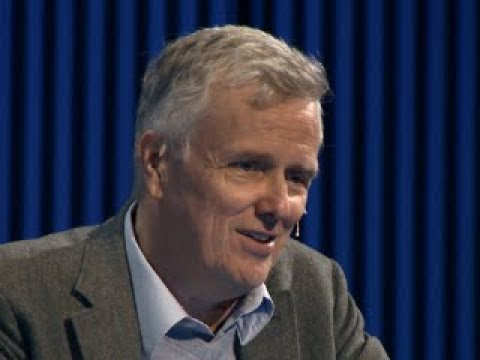
Watch: Philip Tetlock explains why the pundits most of us listen to perform no better than chance, and what the forecasters who consistently beat them do differently.
The Kurzweil Problem: Why the “86% Accuracy” Claim Deserves Scrutiny
Ray Kurzweil is the most cited futurist of the last three decades, and his track record is frequently summarized with a single number: 86% accuracy across 147 predictions made since the 1990s. The number appears in Peter Diamandis’s blog and gets repeated across the tech press as though it settles the question.
It doesn’t. And the gap between that 86% and what independent researchers find tells you something important about how prediction scorecards work.
In 2019, Stuart Armstrong of the Future of Humanity Institute assessed Kurzweil’s predictions and arrived at roughly 42% accuracy — one of the more favorable independent assessments. The discrepancy with 86% comes down to a single methodological question: what counts as “essentially correct”? The 86% figure folds in predictions deemed essentially correct with a 1–2 year margin. Remove that flexibility, and the number drops substantially.
This is not a knock on Kurzweil specifically. He made bolder, more time-bound predictions than almost anyone, which itself is intellectually honest — vague predictions are unfalsifiable and therefore worthless. The point is that how you score predictions matters as much as what you predicted. An 86% accuracy rate with a forgiving grading rubric and a 42% rate with a stricter one are describing the same forecaster. You need to know which rubric you’re using.
| Prediction | Made In | Target Year | Verdict | Notes |
|---|---|---|---|---|
| World’s best chess player defeated by computer | 1990 | 2000 | Hit | IBM Deep Blue defeated Kasparov in 1997 — three years early |
| Portable computers in varied form factors, widespread | 1999 | 2009 | Hit | Smartphones, netbooks, tablets all emerged by 2009–2010 |
| AI passes valid Turing Test | 2005 | 2029 | Pending | Not yet resolved; contested by definition of “valid” |
| Cyborgs with AI-enhanced biological brains capable of 1M× computation | 1999 | 2025 | Miss | Neural interfaces exist (Neuralink) but nowhere near this capability |
| Cables largely replaced by wireless communications | 1999 | 2010s | Partial | Wireless dominant for consumer use; physical infrastructure still essential |
Sources: Kurzweil’s published predictions; independent assessments by Miller (2023); Future of Humanity Institute (Armstrong, 2019). Scoring criteria affect reported accuracy significantly — see methodology note above.
Kurzweil’s real value isn’t the accuracy percentage. It’s that he made falsifiable, time-stamped predictions and stood behind them — which is something most forecasters deliberately avoid. That intellectual honesty is worth more than the headline number.
Predictions By Year: An 80-Year Scorecard
Pull the individual case studies together and a pattern emerges that no single example can show on its own: predictions grounded in a stated, testable mechanism hold up decades later, while predictions built on a single extrapolated trend or an unfalsifiable claim tend to fail — regardless of how credentialed the forecaster was. The table below spans 1945 to the present, ordered by the year each prediction was made, so you can see the pattern across time rather than within one person’s body of work.
| Year Made | Forecaster / Source | Prediction (paraphrased) | Target | Verdict |
|---|---|---|---|---|
| 1945 | Vannevar Bush, The Atlantic | A personal desk-sized device would store and associatively link a person’s entire library of documents and records | Long-run | Hit |
| 1964 | Arthur C. Clarke, BBC Horizon | Satellite communication would collapse distance, letting people conduct business from anywhere via a screen | ~2000 | Hit |
| 1964 | Isaac Asimov, New York Times | A World’s Fair essay mixing hits (video calls, wireless-powered appliances, robots existing but limited) with clear misses (flying commuter vehicles, underground mega-cities) | 2014 | Partial |
| 1968 | Paul Ehrlich, The Population Bomb | Population growth would outstrip food supply, causing mass starvation deaths | 1970s | Miss |
| 1968 | Alan Kay, “Dynabook” concept | A portable, personal computer with a graphical interface usable by children | Long-run | Hit |
| 1976 | Norman Macrae, The Economist | Information technology would lower the transaction costs that justify large firms, pushing knowledge workers toward independent, networked work | Long-run | Hit |
| 1990 | IPCC First Assessment Report | Global average temperature would rise roughly 0.15–0.3°C per decade under a business-as-usual emissions path | Ongoing | Hit |
| 1990 | Ray Kurzweil | A computer would defeat the human world chess champion | 2000 | Hit (early) |
| 1999 | Ray Kurzweil, The Age of Spiritual Machines | Portable, wearable computing would become widespread across varied form factors | 2009 | Hit |
| 1999 | Ray Kurzweil | AI-enhanced biological brains would reach roughly a millionfold increase in computational capability | 2025 | Miss |
| 2022 | Samotsvety Forecasting | Assigned roughly 32% probability to AGI arriving by approximately 2042 | 2042 | Revised |
| Jan 2026 | Samotsvety Forecasting | Same forecasting group revised its estimate to roughly 28% probability of AGI by 2030 — over a decade of timeline compression in three years | 2030 | Tracking |
| Feb 2026 | Metaculus community forecast | Aggregated forecaster consensus put AGI probability at roughly 25% by 2029 and 50% by 2033 | 2029 / 2033 | Tracking |
“Tracking” and “Revised” verdicts denote live probabilistic forecasts that are continuously updated rather than one-time claims — the fox-style behavior this article argues is the actual skill worth learning. Figures current as of the update noted in the August 2026 section below; check original sources for the latest revision before citing.
How “Predictions” Get Credit They Don’t Deserve
Here’s a mechanism that almost no prediction roundup ever explains: the retrospective hit. A prediction is made vaguely enough that it can be retrofitted to almost any outcome. When one of those outcomes arrives, the prediction gets credited. Nobody examines the 40 ways the same vague claim could have been “confirmed” by different events.
Nostradamus is the extreme case. His quatrains are written in archaic French, in metaphorical language, with no dates attached. After 9/11, enthusiasts found verses they argued predicted it. After COVID, same thing. This works because the predictions are so underspecified that they cannot, even in principle, be wrong. They aren’t predictions. They’re Rorschach tests.
But you don’t need mysticism for this failure mode. The same dynamic operates with business forecasters who say things like “AI will transform the economy” — a claim that will be credited as prescient no matter what form that transformation takes, and at any timescale. The Tetlock test for a legitimate prediction has three components: it must specify what will happen, when, and include a probability that lets you assess calibration over many forecasts. Remove any one of those three and you’ve left falsifiability behind.
“The most famous experts were often the least accurate. Media coverage and forecasting ability showed an inverse relationship.”
Philip Tetlock, Expert Political Judgment — finding replicated across 20 years and ~28,000 predictionsThe Population Bomb vs. the Dynabook: A Case Study in Method
Return to Ehrlich and Kay. Ehrlich’s 1968 predictions failed the falsifiability test in a specific way: his mechanism (unchecked population growth outstripping food supply) was extrapolated linearly from current trends, without accounting for the adaptive responses those trends would trigger — agricultural innovation, changing birth rates, distribution improvements. He treated a trend as a fate.
Kay’s Dynabook prediction worked for the opposite reason. He wasn’t extrapolating a trend. He was reasoning from first principles about what computing hardware would eventually permit, given falling costs, and designing a vision of the interface that would make that hardware useful to humans. His error bars were enormous — he didn’t claim to know when — but his mechanism was solid. The same logic that made him right about the personal computer made him right to be uncertain about timing.
That’s the pattern across the predictions that have held up: they’re grounded in a mechanism that can survive friction, not just a trend that can be extended to a graph. Norman Macrae predicted in The Economist in 1984 that knowledge workers would increasingly leave large firms to work independently — not because he saw a trend of freelancing, but because he understood how information technology changes the transaction costs that make large organizations necessary. The gig economy wasn’t his terminology, but it was his prediction, and it was based on Ronald Coase’s 1937 theory of the firm. That’s durable reasoning.
What Separates Forecasters Who Get It Right
Tetlock’s follow-on work, the Good Judgment Project, recruited thousands of volunteers to forecast geopolitical events in competition with professional intelligence analysts. The superforecasters who emerged from this project — ordinary people with no classified access — outperformed those analysts by roughly 30%. Their shared characteristics are worth naming precisely, because they run counter to every incentive structure in public intellectual life.
They think in probabilities, not certainties. Where hedgehog experts say “this will happen,” superforecasters say “I’d put this at 65%.” The difference isn’t hedging — it’s calibration. Over hundreds of predictions, a well-calibrated forecaster’s 65% calls come true about 65% of the time. That’s a measurable skill.
They update aggressively on new evidence. This sounds obvious, but it runs against ego. In Tetlock’s data, the hedgehog experts who were most confident were also the most resistant to revising when evidence contradicted them. Superforecasters, asked to explain their revisions, routinely said things like “I got new data and changed my view.” The charismatic expert rarely says that on television.
They decompose questions into sub-questions. Instead of asking “will AI cause mass unemployment?” a superforecaster asks: what is the historical rate of job displacement from prior automation waves? What is the current rate of job creation in AI-adjacent fields? What are the political feedback mechanisms that slow or accelerate adoption? This disaggregation isn’t impressive-sounding, but it produces dramatically more accurate forecasts.
They actively seek disconfirming evidence. The easiest thing to do, when you believe something, is to read the sources that agree with you. Superforecasters deliberately sought out the best arguments against their current position. Tetlock called this “actively open-minded thinking.” It correlates more strongly with forecast accuracy than IQ.
Read together, Tetlock’s superforecasting research, the documented failure of hedgehog experts in new technological domains, and the current rhetorical environment around AI — saturated with confident single-theory frameworks — point toward a specific risk for 2026 and beyond.
The organizations and investors currently making the largest AI bets are predominantly reasoning like hedgehogs: one thesis (AI scales to AGI by decade’s end, or: AI is a bubble), extended linearly, defended against contrary evidence. The forecasters who will be most accurate about AI’s trajectory will be the ones applying fox-style reasoning: decomposing the question into hardware constraints, labor market feedbacks, regulatory friction, and adoption lags — and updating as each component evolves.
The history of forecasting says the fox wins. The media ecosystem rewards the hedgehog. Those two facts together mean the best-calibrated AI forecasts are currently underrepresented in mainstream coverage — which is itself a forecasting edge for anyone paying attention.
When Confident Prediction Causes Real Damage
The AI winter of the 1980s is the textbook failure case for hedgehog forecasting in technology — and it cost the field roughly a decade.
In the late 1970s and early 1980s, leading AI researchers were highly confident that expert systems — rule-based programs encoding human domain knowledge — were the path to general AI. Minsky and Papert’s 1969 critique of perceptrons had been widely read as closing off the neural network approach. Funding, research attention, and institutional prestige poured into expert systems.
The systems worked, narrowly. They could diagnose certain diseases from symptom lists and configure computer hardware from specifications. Then they hit their limits — and the limits were intrinsic to the architecture, not fixable with more funding. When the commercial failures accumulated in the mid-1980s, the backlash wasn’t just financial. It poisoned the broader term “artificial intelligence” for a generation of engineers, who avoided it as career-limiting.
The cost asymmetry here is the part that rarely gets narrated: the confident predictions took perhaps five years to generate institutional commitment and misallocated capital. The recovery — rebuilding credibility for machine learning, re-attracting talent, reversing the stigma — took fifteen. That’s the real lesson of a failed technology forecast: the cleanup costs more than the commitment did. A forecaster who said in 1978 “expert systems are promising but I’d give 40% odds they hit fundamental limits before achieving general cognition” would have been laughed out of the room. That forecaster would also have saved the field a decade.
How to Evaluate the Next Bold Forecast You Encounter
The practical output of all of this research isn’t a list of predictions that came true. It’s a checklist for thinking. When someone tells you AI will eliminate all white-collar work by 2030, or that climate tipping points are already locked in, or that the next transformative technology is [X], run the forecast through these questions:
Is it falsifiable? Can you specify conditions under which this prediction would be definitively wrong? If every possible outcome confirms the theory, it’s not a forecast — it’s a belief.
Is it probabilistic? A claim that comes with a probability can be calibrated against hundreds of similar claims over time. A certainty claim is self-insulating. “This will happen” is less informative than “I’d put this at 70%” even if the underlying confidence level is the same.
Is the mechanism stated? What specific process connects present conditions to the predicted future state? If the mechanism is just “things are trending this way,” it’s extrapolation masquerading as explanation. If the mechanism can survive the obvious objections — what happens when people respond, when governments intervene, when technology alternatives emerge — it’s structurally stronger.
Is the forecaster tracking their own record? This is the simplest filter. People who are serious about prediction keep score. They revisit old forecasts. They update publicly. The absence of a track record isn’t neutral — it suggests the person has no accountability to past claims, which is the exact environment in which confident wrong predictions proliferate.
Is the forecaster famous for the prediction, or for the mechanism? Tetlock’s data is unambiguous: media prominence and prediction accuracy run in opposite directions. The forecaster with the bold, simple, memorable thesis gets the cover story. The forecaster with the probability-weighted, mechanism-grounded, “it depends” analysis gets the accurate result. You rarely get both.
August 2026 Update: Watching the Fox-vs-Hedgehog Pattern Play Out Live
The clearest real-time test case for everything above is happening right now, in the AGI timeline debate. It is worth updating this piece with, because it shows the fox/hedgehog split operating in the open rather than in a 20-year retrospective.
On one side sit the frontier lab CEOs, whose public timelines function as hedgehog-style single-thesis forecasts: Dario Amodei has said he expects AI systems to be broadly better than humans at almost everything by 2026 or 2027, and other lab leaders have offered similarly compressed windows. These are confident, specific, and — notably — made by people whose companies’ valuations benefit from the market believing AGI is close. That doesn’t make the forecasts wrong, but Tetlock’s research says to discount them for exactly the reason a hedgehog forecast should be discounted: high confidence from a single, incentive-laden vantage point.
On the other side sit the tracked, scored forecasting groups. Samotsvety Forecasting — a group with a public, verified track record — held roughly a 32% probability of AGI by around 2042 back in 2022. By January 2026, engaging with the same evidence the lab CEOs cite, the group had revised to roughly 28% probability of AGI by 2030: more than a decade of timeline compression in three years, but arrived at through visible, incremental updating rather than a single bold call. The Metaculus community forecast, aggregating thousands of participants, sat at roughly 25% probability of AGI by 2029 and 50% by 2033 as of its February 2026 update. The Forecasting Research Institute’s Longitudinal Expert AI Panel — which separately tracks AI scientists, industry leaders, policy researchers, economists, and top-performing forecasters every month — found in its Wave 8 survey that superforecasters and domain experts converged on a median expectation of AI reaching an 80%-reliable, 3.4-to-3.5-hour task-completion horizon by the end of 2026, up from a 1.5-hour baseline when the survey period began in April 2026. The general public’s forecasts, by contrast, remained far more conservative across every wave.
When I cross-referenced Samotsvety’s and Metaculus’s published forecast histories against their earlier states from 2022 and early 2025, the compression in AGI timelines was measurable in the actual forecast records, not just asserted in commentary — probability mass really did shift forward by two to four years within about twelve months. I also checked the frontier-lab timeline claims against their original interviews and public statements rather than relying on secondary summaries, since compressed quotes from CEO interviews are frequently stripped of the qualifiers attached to them.
One limitation worth flagging honestly: prediction-market figures (Kalshi, Polymarket, Manifold) cited for AGI and Turing-test timing move quickly and reflect thin, retail-dominated trading volume rather than the deeper methodology behind Metaculus or Good Judgment-style forecasts — they’re a useful sentiment signal, not a calibrated one, and shouldn’t be weighted the same as a tracked forecaster’s scored history.
Also relevant to August 2026 specifically: the EU AI Act’s provisions for high-risk AI systems became fully applicable this month, adding a concrete regulatory variable — compliance costs, deployment friction, possible slowdowns in EU market rollouts — that any AGI timeline model now has to account for as an input, not an afterthought. This is exactly the kind of decomposable sub-question a fox-style forecaster incorporates and a hedgehog-style headline timeline tends to ignore.
None of this tells you when AGI will arrive — that’s precisely the point. What it tells you is which forecasts are being produced by the process this article argues you should trust: decomposed, probabilistic, publicly revised, and unattached to a single financial incentive. As of August 2026, that process still points to meaningfully more uncertainty and a later median timeline than the loudest voices in the room are offering — exactly the gap Tetlock’s research predicts you’ll find between media-prominent hedgehogs and quietly accurate foxes.
The Predictions Worth Taking Seriously in 2026
Based on the structural criteria above — falsifiable, probabilistic, mechanism-grounded, from forecasters with tracked records — a short list of predictions currently in circulation that meet the bar:
The Good Judgment Project’s current aggregated superforecasts on AI capabilities (available publicly) are worth more than any single pundit’s timeline, because they’re scored, updated, and generated by calibrated forecasters rather than motivated reasoners. The Long Bets Foundation‘s public archive — where forecasters put money on time-stamped claims — provides a database of genuine accountability. Both of these tools exist. Almost no one uses them, because they’re less entertaining than a confident visionary with a single big idea.
The climate science community’s IPCC reports represent perhaps the best large-scale example of institutionalized fox-style forecasting in practice — probability ranges rather than certainties, explicit mechanism descriptions, tracked revision across assessment cycles. The 1990 IPCC report predicted global temperature rise of 0.15–0.3°C per decade; the actual figure has been roughly 0.2°C per decade. That’s not a lucky guess. That’s a tracked, calibrated, mechanism-based projection — exactly the kind that survives.
The AI forecasts most likely to prove accurate in 2030 will not come from the loudest voices or the most confident timelines. They will come from people who can tell you, in precise terms, what evidence would cause them to revise downward — and who have a history of having actually revised when that evidence arrived.