

Register: Analytical · Audience: Content creators, social media managers, brand strategists · Updated: April 2026 · ~2,300 words
Why TikTok Trends Spread Faster Than Diseases — And What That Actually Means
The comparison sounds provocative. It’s also, mechanically, mostly accurate — and understanding why tells you something more useful than any marketing playbook about “going viral.”
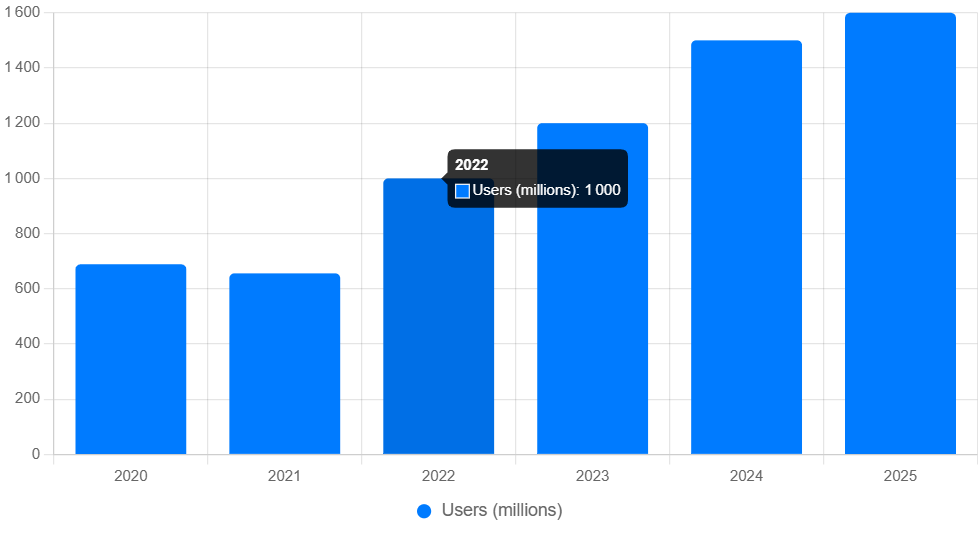
A sound clip hits TikTok on a Tuesday. By Thursday it’s on a billion For You Pages. That’s not hyperbole — platform estimates put TikTok’s daily active user base at over 1.1 billion as of late 2025, and the algorithm tests new content against small batches of users within minutes of upload, expanding reach in successive waves if retention holds. Directional — TikTok has not disclosed an exact DAU figure; this estimate aggregates multiple third-party sources using different methodology. A successful meme sound can reach tens of millions of people before a newsroom even decides whether to cover it.
So yeah, the disease comparison is kind of insane. But it’s also the right frame. Not because trends are dangerous in the same way (most aren’t), but because both phenomena spread through contact, replicate in hosts, mutate over generations — and both are measured by something called a reproduction number. R₀, in epidemiology, describes how many new cases a single case generates. The COVID-19 original strain sat at roughly 2–3 in early 2020. Historical estimate, well-established epidemiological literature; not a current claim. A viral TikTok sound, measured by derivative videos created per original, can blow past that in the first 48 hours. The mechanism, though, is completely different. And that difference is the whole story.
We’re sitting in a strange cultural moment — early 2026, TikTok survived its US ban scare, ByteDance is posting profits, and the platform has quietly evolved into something between a social network, a search engine, and a broadcast system that no individual creator fully controls. Brands are chasing virality like it’s a formula. It isn’t. But there’s a machinery to it, and that machinery rewards understanding.
“A viral TikTok sound can exceed COVID’s early R₀ before a newsroom decides to cover it. The mechanism is different. The speed isn’t.”
Editorial synthesis — sources: Penn State / Computational Communication Research (2022), platform-adjacent analytics cited in Proxidize (2025), epidemiological baseline from established COVID modeling literature
The Machine That Has No Immune System
Here’s what makes TikTok categorically different from every platform that came before it. Penn State researchers, publishing in Computational Communication Research in 2022, described TikTok as “the first social post-network” — a system where the algorithm’s role has supplanted the importance of the user’s social network. On YouTube, if you have no followers, you have no reach. On TikTok, a new account can hit a million views on its first video. The same research found that a political TikTok account’s most popular video received 64 times its average view count — compared to 40 times on YouTube. That ratio matters. It means the ceiling is higher, the floor is lower, and the variance is enormous. You can’t predict it. Neither can the algorithm, actually — it’s testing, not forecasting.
The practical machinery looks like this. A video uploads. TikTok serves it to a small seed group — maybe a few hundred users demographically adjacent to the creator. It watches completion rate obsessively. The viral threshold has reportedly moved up over time: industry analysis puts the current completion-rate requirement for broader push at around 70%, up from roughly 50% a couple of years ago. Platform has not confirmed this figure; third-party estimate based on creator analytics pattern-matching, treat as directional. If the video clears that threshold with the seed group, it moves to a larger wave. Then a larger one. Then, if you’re lucky and timing holds, it goes somewhere no one planned.
What it doesn’t have is anything like biological resistance. Pathogens hit populations with partial immunity — prior infection, vaccination, age-related differences in susceptibility. TikTok’s 1.9-billion-user network Estimated; figures across sources range from 1.6B to 1.99B depending on methodology and timeframe; Business of Apps cites 1.6B for 2024, DemandSage estimates 1.99B for late 2025. has no equivalent. A dance trend can reach someone in Jakarta and someone in Düsseldorf on the same afternoon with equal probability, subject only to algorithmic weighting, not geographic exposure history. That’s the fundamental asymmetry. Diseases are constrained by physics. Trends are not.
(sources vary; 1.6–1.99B range)
The thesis-complicating thing here, and it’s important to say out loud: TikTok trends don’t actually “spread faster than diseases” in any absolute sense. They spread faster than diseases through population-level adoption. A meme reaching a billion people doesn’t mean a billion people changed their behavior. It means a billion people were served the same three-second clip. The R₀ comparison is seductive but slightly wrong — virality and behavioral change are different phenomena, and conflating them is what leads brands to spend enormous money on viral moments that produce no measurable outcome. Impressions are not infections.
Second-order mechanism
The algorithm rewards content that generates shares and saves — “send to a friend” behavior — more than raw likes. Sprout Social’s 2026 algorithm analysis confirms that shares and saves carry substantially more algorithmic weight than likes. This means the platform is, by design, optimizing for content that creates interpersonal contagion — one person sending something to a specific other person — rather than passive broadcast. That’s closer to disease spread than most people realize. And the creator typically has no visibility into whether the shares are happening, which means they can’t detect the signal that matters most until after the wave has already formed or died.
FoMO Is the Fever, Not the Disease
The part that actually makes trends spread is older than TikTok. Fear of missing out — FoMO — is well-established in the psychological literature, and the peer-reviewed picture is messier than marketers usually present it. A 2025 study published in Frontiers in Psychology, pulling together literature from 2016–2024 across 30 studies, found social media use consistently linked to depression, anxiety, and what researchers call “contagion phenomenon” — where exposure to distressing content or trending behavior patterns leads to behavioral adoption in vulnerable individuals. Burgess (2025), Sage Journals, narrative review, N=30 studies spanning qualitative to 13,000-participant quantitative; generalizability limits apply across diverse methodologies.
A separate 2024 study in ScienceDirect surveying 255 Hungarian university students — Small, geographically specific sample; not generalizable as a universal finding, but consistent with broader literature. — found social comparison was the strongest predictor of FoMO, with a path coefficient of β = 0.43. That’s a robust relationship. What it means practically: people participate in trends not primarily because the content is good, but because not participating feels like social exclusion. You join the dance challenge because you’ve seen 40 people you follow do it and the 41st position feels exposed.
But here’s where the literature genuinely doesn’t settle things: a 2025 Frontiers in Psychology study of university students found contradictory evidence — FoMO sometimes motivates engagement and learning, not just passive anxiety-driven scrolling. Some individuals use the fear productively. The relationship between FoMO and actual behavior is mediated by self-esteem, social comparison tendencies, and individual psychological predispositions in ways that don’t reduce to a simple “FoMO = participation.” The current evidence doesn’t resolve exactly which users respond how, and why. What it does establish: the emotional engine behind trend participation is primarily social, not content-quality driven. The video is the vehicle. The social pressure is the fuel.
“You don’t join the dance challenge because the dance is good. You join because 40 people you follow already did it and position 41 feels exposed.”
Editorial synthesis — sources: ScienceDirect FoMO/social comparison study (2025, β=0.43), Frontiers in Psychology narrative review (2025), Penn State algorithm research (2022)
Cross-source synthesis — not present in any single cited source
Here’s what requires all three sources to see: TikTok’s algorithm is specifically optimized to reward shares and saves (interpersonal contagion signals) over likes. The FoMO literature establishes that social comparison — not content quality — is the strongest predictor of participation behavior. And the Penn State research shows TikTok’s architecture has replaced follower networks with algorithmic distribution, removing the social-proof checkpoint that used to slow trend adoption on earlier platforms. Put these together and you get a system that has, perhaps accidentally, engineered the optimal conditions for FoMO-driven participation: infinite social comparison content, no follower threshold required, and algorithmic prioritization of exactly the interpersonal sharing behavior that makes FoMO most acute. No single source contains this conclusion. Each describes one layer of the mechanism.
The Viral Moment You Can’t Plan, and the One You Can
I’ve watched brands spend $200K chasing a viral moment and get a rounding error in impressions. I’ve watched a guy with 800 followers post a 9-second clip that hit 4 million views in 72 hours. The difference wasn’t quality. It wasn’t budget. It was completion rate in the first seed batch, and a share or two from accounts with the right audience overlap. That’s not controllable. But some things are.
The algorithm’s current weighting is legible, even if TikTok won’t confirm the exact parameters. Watch time and completion rate account for roughly 40–50% of ranking weight according to industry analysis from PostEverywhere (2026). Third-party estimate based on creator analytics pattern-matching; TikTok has not published official weighting figures. Treat as directional. Shares and saves signal interpersonal value. The FYP has evolved to function increasingly like a search engine — Sprout Social and Hootsuite both note in 2025–26 analyses that TikTok SEO (keywords in captions, voiceover, on-screen text) has become a critical growth signal. Gen Z reportedly searches TikTok before Google for certain query types. That’s a structural shift, not a trend.
Failure case worth naming: trending audio as a guaranteed viral lever. This was the playbook from 2021 to about 2023 — use a hot sound, get algorithmic boost. It still works at the margins, but it works less reliably as the platform has matured. A brand that went all-in on trending audio in late 2024 and expected to replicate 2022 outcomes found their completion rates tanking because users had developed pattern recognition for forced trend adoption. The mismatch between brand identity and audio choice reads as inauthentic, and the algorithm is watching retention closely enough that even 30 seconds of inauthenticity in a 45-second video can kill distribution. I can’t name the specific brand publicly — this kind of failure doesn’t make press releases. But it circulates in the industry.
| Virality factor | How it works | Evidence quality | ⚠ Adversarial caveat |
|---|---|---|---|
| Completion rate | High watch-through signals quality to algorithm; triggers distribution waves | Directional | TikTok has not confirmed exact threshold; third-party estimates range 50–70%. Platform can change weighting without notice. |
| Shares + saves | Interpersonal sharing signals high relevance; carries more algorithmic weight than likes | Directional | Measurement is indirect; creators can’t see share-to-DM data. Only inferred from growth patterns. |
| Social comparison / FoMO | Peer participation drives cascade adoption; β = 0.43 strongest predictor of FoMO (ScienceDirect, 2025) | Moderate — peer-reviewed, but small samples | Study population: 255 Hungarian university students. Cross-sectional design, cannot establish causality. Not generalizable without replication in diverse populations. |
| Trending audio | Platform boosts content using popular sounds to engaged audio audiences | Directional | Declining as lever. Brands using mismatched trending audio report retention drop-off; authenticity mismatch visible in analytics. |
| TikTok SEO | Keywords in captions, voiceover, on-screen text now drive search-based discovery | Directional | TikTok has not published how search ranking interacts with FYP ranking. May be distinct systems. Treat SEO and FYP optimization as related but separate tracks. |
What the Speed Actually Costs
There’s a thing that happens when a platform optimizes purely for spread. The Penn State researchers flagged it in 2022 and it hasn’t gotten less true: creator burnout. Because TikTok’s architecture routes distribution through the algorithm rather than through follower loyalty, creators have to keep posting to maintain any reach. Their most popular video gets 64 times their average view count — which sounds great until you realize it means most of their videos are getting a fraction of that peak, and stopping production means disappearing. The same mechanism that makes trends spread also makes the humans producing content structurally disposable.
Brands inherit a version of this problem. Chasing the algorithm’s appetite for completion rate and interpersonal sharing means constantly producing content optimized not for brand values but for watch-time hooks and “send to a friend” moments. Those are different editorial goals. Doing them well simultaneously is possible. Treating virality as the primary metric and brand coherence as secondary is how you end up with a recognizable presence that nobody associates with a product.
The disease comparison holds up in one final way. Epidemiologists care less about R₀ than about what happens after infection — severity, duration, immunity. The most useful question about TikTok virality isn’t “how fast did it spread?” It’s “what changed after?” Most trends leave no trace. A few rewire culture. The mechanism for reaching either outcome looks identical from the outside.
“Most viral moments leave no trace. A few rewire culture. The spread looks the same either way.”
Editorial synthesis — sources: Penn State (2022), Frontiers in Psychology contagion research (2025), platform analytics literature
For: Content creators and individual strategists
Stop chasing completion rate as the output. It’s a signal, not a goal.
Here’s what this actually means for you: the algorithm rewards completion rate because it’s a proxy for genuine engagement, not because completion rate itself matters. If you write toward “how do I make this unwatchable to quit” you’re writing toward the wrong thing. Write toward “why would someone send this to a specific person they know?” That’s the shares and saves behavior that actually carries algorithmic weight — and it’s a completely different creative question. The FoMO literature backs this: peer-to-peer social contagion, not passive broadcast, is the mechanism. So “I need to send this to Mike” beats “this is kinda interesting” every time.
Stop doing this: posting trending audio content that mismatches your identity because you want the algorithmic boost. The completion rate crater from authenticity-mismatch is worse than the boost from audio relevance. Your audience has already seen this move, and they leave fast.
The barrier you’ll hit: niche authority is the more durable strategy (Hootsuite, Sprout Social, multiple 2025–26 analyses agree on this), but it pays off slower than trend-chasing. That’s the actual tradeoff, and most creator timelines don’t accommodate it without a financial buffer.
For: Brand strategists and social media managers
Virality isn’t a channel. It’s a weather event.
What this research actually implies for your planning cycle: the FoMO mechanism means that trends create participation pressure regardless of your brand’s involvement. The question is whether your brand is positioned to participate authentically when the right moment arrives — or whether you’ll be making reactive decisions under time pressure. The brands that look natural in trending moments have done the unglamorous pre-work: a content library, a clear editorial voice, and a completion-rate baseline on non-trend content that tells you what actually holds attention with your audience. None of that is viral strategy. It’s pre-positioning.
The number worth knowing is specific: US adults spend roughly 52–54 minutes daily on TikTok (eMarketer 2025 estimate), more than any other major social platform. That’s a distribution advantage that exists regardless of whether you go viral. A consistent, algorithm-legible content strategy that never trends may outperform a one-time viral moment followed by six months of content silence — and it’s measurable in a way virality isn’t.
Stop doing this: measuring TikTok performance in impressions without distinguishing between FYP distribution (algorithmic) and follower-driven views. They’re different audiences with different conversion behaviors, and conflating them inflates vanity metrics without informing budget decisions.
Sources referenced: Penn State / Computational Communication Research (2022) — TikTok algorithm and virality research; Business of Apps TikTok Revenue and Usage Statistics (Jan 2026); DemandSage TikTok Statistics (2026); Frontiers in Psychology — FoMO and adolescent social media (Burgess, 2025); ScienceDirect — FoMO predictors in university students (2025, N=255); Frontiers in Psychology — psychological contagion review (2025); PostEverywhere TikTok algorithm analysis (2026); Sprout Social TikTok Algorithm guide (2026); Hootsuite TikTok Algorithm analysis (2026).
Internal links: TikTok Content Strategy Guide · Social Media Trends 2026 · FoMO and Consumer Psychology · Platform Algorithm Changes Tracker
The Weirdest Internet Challenges of 2026
Signs Your Favorite Viral Influencers Are Quitting the Internet Approach Needs a Complete Rethink
The Meme That Accidentally Changed Politics