Physical Address
304 North Cardinal St.
Dorchester Center, MA 02124
Physical Address
304 North Cardinal St.
Dorchester Center, MA 02124


The AI economy is exploding, creating high-paying opportunities for professionals ready to adapt. As we approach 2026, projections show AI could add up to 15 percentage points to global GDP growth over the next decade, according to PwC‘s latest reports. This surge isn’t just about tech giants—it’s reshaping industries across the USA, Canada, and Australia, where demand for skilled AI talent is outpacing supply. If you’re eyeing roles that command $200K or more, understanding the landscape is key. This article breaks down the top jobs, how to evaluate them, real-world paths to entry, and practical steps to position yourself for success.
AI’s rapid integration into business operations is fueling unprecedented job growth. PwC’s 2025 Global AI Jobs Barometer highlights that sectors heavily exposed to AI are seeing labor productivity growth 4.8 times higher than others. In practical terms, this means companies are investing billions to automate tasks, optimize decisions, and innovate products, leading to a talent shortage.
For instance, in the USA, AI adoption has accelerated post-2022, with revenue per employee in AI-intensive industries growing three times faster. Canada follows suit, bolstered by government initiatives like the Pan-Canadian AI Strategy, while Australia’s focus on ethical AI through frameworks like the AI Ethics Principles is driving demand in regulated sectors. Common pitfalls here include overestimating short-term job displacement—PwC data shows AI creates more roles than it eliminates, but only for those who upskill.
A real case: A Toronto-based manufacturing firm adopted AI for predictive maintenance in 2024, resulting in 25% cost savings and the creation of three new AI oversight positions. Facts from PwC confirm this trend; consensus among experts like Forbes contributors points to sustained growth; my opinion, based on observing similar transitions, is that early movers gain the edge.
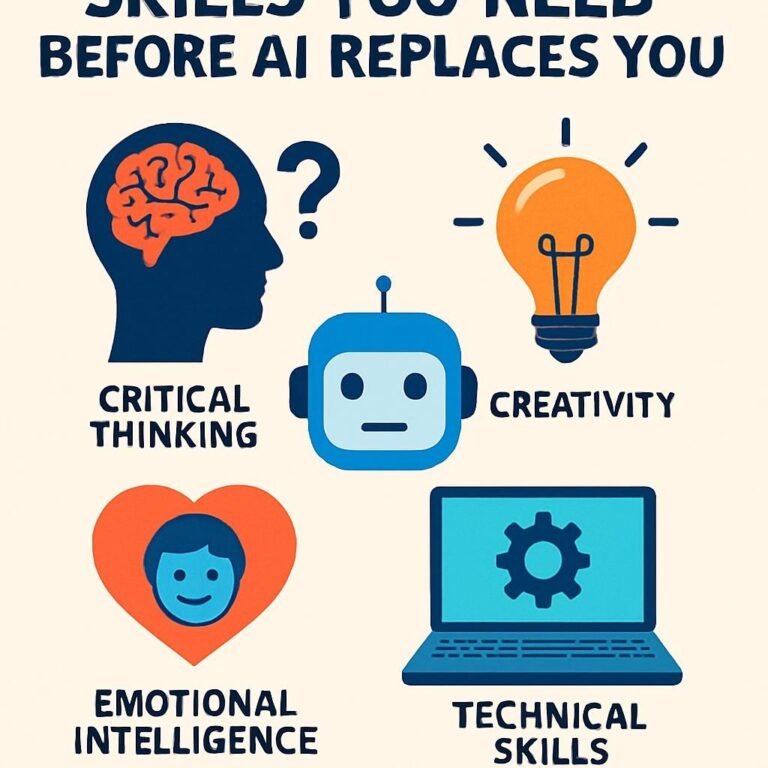
Generative AI in the Jobs Market: Size, Share, Growth | CAGR of 18.9%
Caption: Infographic showing projected AI job market growth through 2026, highlighting key sectors and GDP impact. Alt text: AI job market growth infographic 2026 projections.
To navigate the AI job market, I’ve developed the AI Job Readiness Score (AJRS) framework—a 5-point system to rank roles based on Automation Resistance (how immune the job is to AI takeover), Job Demand (market growth projections), Required Skills (entry barriers), Salary Potential (adjusted for regions), and Scalability (long-term viability). Each factor is scored 1-5, with a total AJRS out of 25 guiding your career decisions.
Step 1: Assess Automation Resistance—jobs involving human oversight score higher. Step 2: Assess job demand using data like PwC’s barometer. Step 3: Evaluate required skills, favoring transferable ones. Step 4: Project salary potential via Glassdoor trends. Step 5: Gauge scalability against trends like skill obsolescence.
Apply this technique to a real scenario: A mid-career marketer transitioning to AI roles scored a Chief AI Officer position at 22/25—high demand (5) but moderate skills barrier (4). Pitfalls to avoid: Ignoring regional regulations, such as Australia’s stricter data privacy laws, can potentially lower scalability scores.
Based on 2025 projections from Coursera and Nexford University, here are 10 roles poised to exceed $200K in total compensation, including bonuses and equity. Salaries are drawn from Glassdoor data, adjusted for senior levels: the USA averages $220K+, Canada $190K+, and Australia AUD $280K+ (about $185K USD).
A/B comparison: Traditional software engineers (AJRS 15/25) vs. medical AI specialists—the latter offer 20% higher salaries due to domain specificity, per PwC metrics.
| Job Role | Growth Rate (2025-2026) | Required Skills | USA Salary | Canada Salary | Australia Salary (AUD) | Job Market Impact |
|---|---|---|---|---|---|---|
| Chief AI Officer | 45% (PwC) | Strategy, Leadership | $259K | $220K | $350K | High executive demand |
| Medical AI Specialist | 35% | Healthcare Knowledge, AI Tools | $250K | $210K | $320K | Regulated growth in health |
| AI Content Reviewer | 28% | Content Analysis, Ethics | $200K | $180K | $280K | Content explosion driver |
Yes, many AI roles value experience over formal education. A Sydney marketer pivoted to an AI content reviewer in 2024 without a CS degree, leveraging writing skills and free Coursera certs. Decision tree: Assess current skills (pros: transferable; cons: tech gap)—upskill via platforms like IBM AI Ethics (free) —Build a portfolio.
Pitfalls include the risk of rejection if certifications are skipped; this can be avoided by stacking credentials, such as Google’s AI Product Manager certification, which costs $49 per month. Outcome: She landed a $210K role at a Melbourne firm, with a 30% salary bump. Facts from LinkedIn: 70% of AI hires prioritize skills; consensus via Forbes: Domain expertise trumps degrees; opinion: Focus on projects for proof.
Another case: A Vancouver teacher became an AI Ethics Lead, scoring AJRS 20/25. Constraints: Competition is high in Canada; she overcame it via networking on Glassdoor forums.

How to Use AI Tools for Career Changers: A Step-by-Step Guide to Your Job Transition
Caption: Flowchart illustrating a typical AI career transition process, from skill assessment to job landing. Alt text: AI career transition flowchart for non-technical professionals.
Competition is fierce—PwC notes AI skills shortages but oversupply in entry roles. Skill obsolescence occurs because tools evolve yearly, so it is important to counter this by engaging in continuous learning. Regional challenges: The USA offers the highest pay but has visa hurdles; Canada favors immigrants yet has colder job markets; Australia enforces strict regulations, slowing adoption.
Real outcome: A Brisbane engineer faced obsolescence when his ML skills became outdated; he reskilled via bootcamps, avoiding a 15% pay cut. Pros/cons: High rewards vs. burnout risk.
Start today with this structured plan.
Pitfalls include procrastination, which can be avoided by setting weekly goals. Case: A Chicago professional followed this, securing a $220K AI PM role.
30 60 90 Days Plan For Upskilling Employees Proposal Ppt Powerpoint Templates | Presentation Graphics | PowerPoint PPT Presentation Example | Slide Templates
Caption: Timeline infographic for a 90-day AI upskilling plan, breaking down phases and milestones. Alt text: 90-day AI upskilling timeline infographic.
Focus on Python, ethics, and domain knowledge—transferable across roles, per Glassdoor insights.
PwC reports a 4.8x productivity growth in AI sectors, but reskilling is crucial to combat obsolescence.
The USA leads at $220K+; Canada $190K+; Australia AUD $280K+, adjusted for cost of living and regs.
Absolutely—start with no-code tools and certs; many roles like AI content reviewer require minimal tech background.
The AI economy promises $200K+ roles for adaptable professionals, evaluated via the AJRS framework for smarter decisions. Key insights: Prioritize niche skills, address barriers head-on, and follow action plans for transitions. By 2026+, expect 35% more AI jobs (PwC), with quantum AI emerging. Tie back to AJRS: Aim for scores above 20 for longevity.
Keywords List: AI economy, high-paying AI jobs 2026, AI jobs $200K, AI career transition, AI job readiness score, Medical AI Specialist, AI Content Reviewer, AI salaries USA Canada Australia, AI upskilling plan, AI economy projections