

Research-backed · Education · Updated April 2026
Old-School Study Hacks in the AI Era: What the Research Actually Shows
86% of schools now use AI. Half of US students say they’ve had zero training with it. Meanwhile, handwritten notes are going viral on TikTok. There’s a reason for that — and it’s not nostalgia.
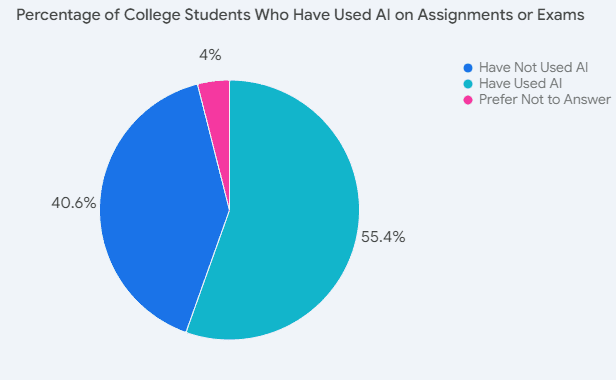
Here’s the weird thing about 2025. AI is everywhere in classrooms — 86% of education organizations now use generative AI, the highest adoption rate of any industry according to IDC research cited in Microsoft’s 2025 AI in Education Report. Student use of AI for school jumped 26 percentage points in one year in the US alone.
And yet. The most-shared study content on TikTok right now features handwritten notes, physical flashcards, analog timers. Not in spite of AI. Alongside it. Sometimes explicitly as a counterweight to it.
That’s not coincidence. It’s a response to something the research predicted and most AI coverage ignored.
Why the Old Stuff Is Back
The core tension is this: AI tools that do cognitive work for you also remove the cognitive load that makes learning stick. That’s not opinion — it’s the mechanism that a decade of note-taking research keeps confirming.
Flanigan et al. published a meta-analysis in Educational Psychology Review in 2024 covering 24 studies on typed vs. handwritten notes. Flanigan et al., Educational Psychology Review, 2024, vol. 36(3). Meta-analysis of 24 studies, college students specifically. DOI confirmed, peer-reviewed. Their finding: handwritten notes produced higher conceptual performance than typed notes, even though typing produces more text volume. The Learning Scientists translated the effect size: roughly 9.5% of handwriters achieved an A in the modeled scenario, compared to 6% of typists. Small advantage. But consistent across study conditions, test delay, and assessment type.
Why? Because when you handwrite, you can’t transcribe fast enough to copy everything verbatim. You’re forced to process — to decide what matters, compress it, restate it in your own shorthand. That constraint is the benefit. Typing removes the constraint. And AI, in its most convenient forms, removes it even more thoroughly: here’s a summary, here’s the key points, here’s the essay draft.
Second-order mechanism
The problem isn’t that AI-generated summaries are wrong. Most of the time they’re accurate. The problem is that reading an accurate summary of something you haven’t processed produces a specific kind of cognitive illusion — you feel like you understand it because the text was clear, not because you engaged with it. This is related to what Bjork calls “desirable difficulties”: the things that make learning feel harder in the moment are often exactly the things that make it stick. Handwriting is a desirable difficulty. AI summarization, used without any follow-up retrieval, is its opposite.
But — and this is the thesis complication — a 2025 RCT published in Frontiers in Psychology (134 teacher-candidate participants, randomized across four note-taking conditions) found something messier: when researchers controlled for motivation and cognitive load, the handwriting advantage largely disappeared. Yıldırım, Frontiers in Psychology, Dec. 2025. DOI: 10.3389/fpsyg.2025.1697151. RCT, 134 participants, primary-level teacher candidates only. Limited generalizability beyond that population. Medium alone, they concluded, is insufficient to explain learning outcomes. Motivated students with high germane cognitive load outperformed in all conditions.
So the honest version of the finding: handwriting creates conditions that tend to produce useful cognitive load. It’s a forcing function. But it’s not magic. An unmotivated student writing notes by hand learns less than a motivated student using AI well. The technique is a tool, not a guarantee.
“Medium alone is insufficient to explain learning outcomes — motivational and cognitive factors may account for variability across note-taking contexts.”
Yıldırım, Frontiers in Psychology, December 2025 — RCT, 134 participants, Cornell/Parallel/Digital/Sentence conditions
(IDC / Microsoft 2025)
(Microsoft 2025 AI in Education Report)
(Ed. Psychology Review, 2024)
The Techniques That Actually Have Evidence Behind Them
Before getting into what to do: most of the ROI numbers circulating on social media — “hybrid learning improves retention by 20%,” “Pomodoro increases productivity by 25%” — are either unverifiable or traced to vendor-funded surveys. I’m not going to use them. Here’s what the research actually supports.
Handwritten notes + review
Flanigan et al. 2024 meta-analysis (24 studies): consistent advantage for conceptual performance. Advantage amplified when students review notes after taking them. Applies to college students specifically — evidence for K-12 is less settled.
Spaced retrieval practice
Decades of robust replication in cognitive psychology. Testing yourself at intervals — with flashcards, practice problems, free recall — produces stronger long-term retention than re-reading. Does not require analog tools; works with digital too. The analog format reduces distraction, not the medium itself.
Pomodoro technique
A 2024 study (MDPI Behavioral Sciences, 94 university students) found no statistically significant difference between Pomodoro, Flowtime, and self-regulated break conditions on task completion. Dizon et al. / MDPI Behavioral Sciences, 2025. RCT, 94 students, authentic study session. Small sample. See PMC12292963. Students preferred Pomodoro’s structure. The productivity benefit appears real for many people but hasn’t been definitively established in controlled settings. Use it if it works for you; don’t assume the 25-minute interval is magic.
Group discussion / peer teaching
The “protégé effect” — explaining material to someone else deepens your own encoding — is well-replicated. Microsoft’s report notes AI is increasingly used as a catalyst for group conversations rather than replacing them. Combining both appears promising but lacks robust trial data.
Analog brainstorming before AI
The idea that handwritten thought maps produce better creative output than digital ones is widely claimed on social media. The research base for this specific claim is thin. The general principle — that generating ideas without autocomplete produces more original outputs — has some support, but not at the effect sizes being cited online.
Physical to-do lists / paper planners
Reduces digital distraction as a side effect. The act of writing a task list by hand may improve commitment to completing it. Evidence is weak and mostly from self-report surveys. The practical benefit for people who struggle with notification-driven distraction is real; the cognitive benefit beyond distraction reduction is unestablished.
The Failure Case: When AI Without Analog Backfire
There’s a specific failure mode that Microsoft’s report documents and almost no coverage engages with honestly. Fifty-two percent of US students have received no formal AI training. Forty-five percent of educators globally have had the same. So what actually happens when untrained users lean heavily on AI for learning tasks?
The Microsoft data doesn’t measure the cognitive outcome directly — it’s a survey, not a trial. But the pattern is consistent with what the cognitive load research would predict: students use AI to skip the processing step. They get summaries instead of engaging with primary sources. They receive essay structures instead of constructing them. The output is plausible. The understanding is shallow. And crucially — this is the second-order problem — they often can’t tell the difference, because the AI output feels like comprehension.
The EdWeek data is blunter: in one documented pattern, students who relied primarily on AI for assignment completion showed decreased critical thinking skills over time. EdWeek reporting on US school data. Survey-based, not a controlled trial. Directional. No DOI available for this specific claim. That finding isn’t surprising if you understand the mechanism. Critical thinking develops through struggle. Remove the struggle and you remove the training ground.
This is why Brisbane Catholic Education’s documented case is interesting. Microsoft’s report cites it as a success: 275% improvement in learner engagement among at-risk students when AI tools were introduced. The critical detail is that their approach explicitly preserved the active learning components — students used AI for scaffolding and feedback, not for bypassing the work itself. That distinction is everything. It’s also the distinction most quick guides skip.
Cross-source synthesis — not visible in any single cited source
The Flanigan 2024 meta-analysis establishes that handwriting’s advantage comes from the cognitive constraint it imposes — forced processing rather than verbatim transcription. The Frontiers 2025 RCT independently establishes that when motivation and cognitive load are held constant, the medium effect diminishes. Microsoft’s 2025 report establishes that 52% of US students are using AI with zero training. None of these three sources makes the following observation: the population most likely to use AI in ways that skip productive cognitive load is the same population that has received no training on when that matters. The “old-school revival” trend on social media is, partly, a self-correction mechanism — learners who noticed their AI-assisted notes weren’t sticking, and went back to handwriting. The research doesn’t say handwriting beats AI. It says handwriting beats passive consumption of AI output without any retrieval or processing afterward.
What This Actually Means for You
Three audiences. Pick yours.
For: Students (secondary + higher education)
Use AI for scaffolding. Do the retrieval yourself.
The reframe: the question isn’t whether to use AI. It’s whether you’re using AI in ways that preserve or bypass the cognitive work that produces understanding. Using AI to explain a concept you don’t understand? Good. Using AI to generate notes you then read passively and call it studying? That’s the pattern that’s failing people.
What you do: After any AI-assisted reading or summary, close the screen and write — by hand — what you actually remember. This is free recall. It’s the single highest-ROI learning technique the cognitive psychology literature has established. The handwriting format helps because you’re slower; you can’t transcribe the AI output. You have to reconstruct from memory. That reconstruction is the learning.
The barrier: it takes longer. Like, notably longer than just re-reading the summary. That’s the point. It’s supposed to feel harder. Studies consistently show that learners rate techniques that produce better long-term retention as feeling less effective in the moment. Your instinct that re-reading feels productive is probably wrong.
Stop doing this: Don’t screenshot AI-generated notes and call it studying. The Flanigan meta-analysis finding holds specifically because writing by hand forces processing that passive reading doesn’t. Screenshots are the worst of both worlds — digital passivity without even the typing speed that at least produces more notes.
For: Educators and instructional designers
Design for productive struggle, not smooth experience
The reframe: “AI-enhanced learning” is not a quality signal on its own. The question is whether the AI integration preserves or eliminates the cognitive load that produces retention. A class that uses AI to scaffold difficult problems and then requires students to work through them still produces learning. A class that uses AI to generate answers students then copy produces the illusion of learning.
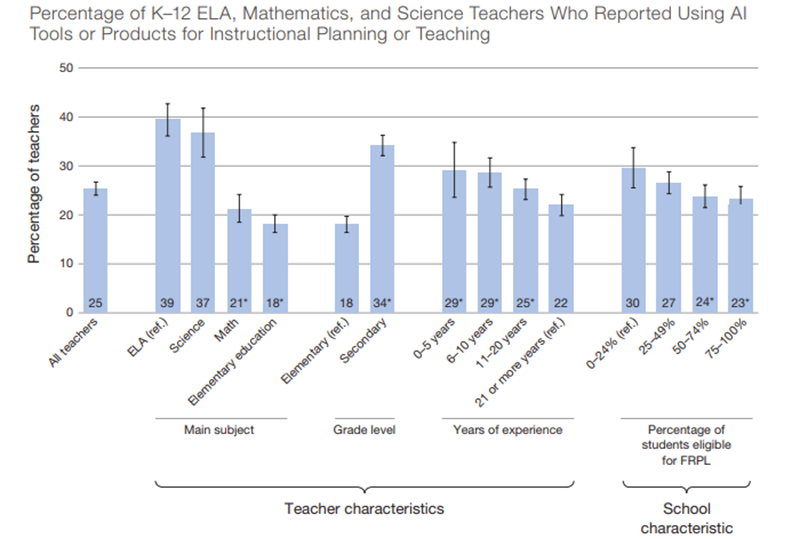
What you do: Audit your AI integrations specifically for whether they remove or preserve retrieval practice. If students use AI to generate a summary and are then tested on the material in closed-book conditions, that’s a productive workflow. If the AI output is the assessment artifact, you’ve eliminated the mechanism that produces understanding. Microsoft’s data shows 45% of educators globally have received no AI training — before designing AI-heavy courses, the minimum viable training is understanding what cognitive load is and why it matters.
Access barrier: institutional pressure to adopt AI for efficiency reasons pushes in the opposite direction from this. Administrators see AI as a time-saver; the research suggests the most valuable applications actually add time to the student workflow. That conflict is real and won’t resolve itself without explicit policy framing.
Stop doing this: Don’t conflate engagement metrics with learning. AI tools consistently produce higher engagement scores — students feel more supported, tasks feel less threatening. That’s genuine value for at-risk students. It’s not the same thing as retention of conceptual material. Brisbane Catholic Education’s 275% engagement improvement is real and worth noting. It’s also a different outcome variable than what Flanigan measured.
The Evidence Table
| Technique | Evidence Base | Effect Size / Finding | Population | ⚠ Limitation |
|---|---|---|---|---|
| Handwritten notes | Flanigan et al. meta-analysis, Ed. Psychology Review, 2024 | Small-to-moderate advantage for conceptual performance over typed notes; consistent across test delay and format | College students, 24 studies | Does not apply to K-12 (not studied); advantage diminishes when motivation/cognitive load controlled (Yıldırım 2025) |
| Spaced retrieval / flashcards | Decades of replication in cognitive psychology; Bjork & Bjork on desirable difficulties | Consistently superior to re-reading for long-term retention across populations | Broad; multiple ages and subjects | Requires initial learning to retrieve from; flashcards without prior engagement produce minimal benefit |
| Pomodoro technique | MDPI Behavioral Sciences RCT, 2024/2025; PMC12292963 | No statistically significant difference vs. Flowtime or self-regulated breaks on task completion; students preferred it structurally | 94 university students, single 2-hour session | Very small sample; single session; subjective preference ≠ performance advantage; break quality (passive vs. active) matters more than interval |
| AI-assisted learning (scaffolded) | Microsoft 2025 AI in Education Report; Brisbane Catholic Education case study | 275% learner engagement improvement (at-risk students, Brisbane Catholic); grade improvement in chatbot trial (Australian university) | K-12 and higher ed; specific institutional contexts | Engagement ≠ retention. Case studies are not RCTs. Brisbane result is not generalizable without replication. Australian chatbot grade improvement was 10% in a single trial. |
| AI summarization (passive use) | Cognitive load theory; Flanigan 2024; Yıldırım 2025 | No direct trials of AI summarization specifically; extrapolation from note-taking literature | Theoretical extrapolation | No RCT directly tests passive AI summarization vs. handwriting on retention. This is a mechanism argument, not a measured effect. Treat as directional inference. |
| Sources: Flanigan et al. (2024) Educational Psychology Review 36(3); Yıldırım (2025) Frontiers in Psychology DOI: 10.3389/fpsyg.2025.1697151; MDPI Behavioral Sciences (2025) PMC12292963; Microsoft 2025 AI in Education Report (IDC/Microsoft, August 2025). Evidence levels: Strong = multiple independent replications. Moderate = limited controlled trials with meaningful populations. Directional = theoretical extrapolation or single study. Trend = social/survey data, no controlled mechanism evidence. | ||||
The AI-in-education story in 2025 isn’t “AI replaces learning” or “old-school beats AI.” Neither of those is what the research shows. What it shows is more specific and less satisfying: the cognitive mechanisms that produce durable understanding require effort, and AI tools can either support or circumvent that effort depending entirely on how you use them.
Handwriting is back because it’s a forcing function that’s hard to game. The Pomodoro timer is back because blocking distraction is useful even if the 25-minute interval isn’t magic. Flashcards are back because retrieval practice works and analog flashcards are harder to cheat than AI-generated ones.
None of that is nostalgia. It’s just a response to tools that make the lazy path too easy.
Why College Degrees Could Become Worthless Soon
Why Futurists Say School Will Disappear by 2040
10 Proven Steps to AI Training Assistants for Peak Job Performance in 2025
Why Students Are Using AI to Cheat (and Win)
Scientists Revived Viruses Frozen for 48,500 Years. Here’s the actual science.
How to Hack Your Brain to Learn Faster Than Ever
Why TikTok Trends Spread Faster Than Diseases: 2025 Best Guide!
Virtual Reality Teacher: The Weirdest Future Career
Meta Knew Instagram Killed Gabby Cusato. The Trial Starts November 2026
How to Actually Talk to Your Teen About Their Online Communities (Without Being Cringe) e)