
The AI Healthcare Revolution Is Already Here—And It’s Not What You Think
Forget the hype about robot doctors. The real life-changing innovations are quieter, faster, and already reshaping how medicine works—from drug discovery to your next surgery.
In March 2024, I watched a presentation where a biotech CEO claimed his AI platform had designed a drug from scratch in 18 months. I rolled my eyes. I’d heard that pitch before—usually followed by silence when Phase I trials failed. But this time was different. The drug, ISM001-055, just posted positive Phase IIa results. For the first time, an AI-discovered target and AI-designed molecule showed real efficacy in human patients. That moment changed how I think about AI in healthcare. Not as a future promise. As a present reality.
Stop Treating AI Healthcare Like a Tech Bro Fantasy
Here’s what most people get wrong: they imagine AI healthcare as a single dramatic moment—a robot surgeon replacing a human, or a chatbot diagnosing cancer from a selfie. The actual transformation looks nothing like that. It’s 71% of U.S. acute-care hospitals now using predictive AI in their electronic health records. It’s 1,039 FDA-cleared radiology AI devices operating quietly in imaging suites. It’s physicians at Kaiser Permanente saving 15,791 hours of documentation time across 2.5 million patient encounters because an AI scribe listened to their conversations and drafted notes.
The gap between “performs well on benchmarks” and “actually deployed in hospitals” is the most important story in medical AI right now. Google’s Med-PaLM 2 scores 86.5% on medical licensing exams—impressive, but it has zero FDA approval and zero confirmed hospital deployments. Meanwhile, Microsoft’s DAX Copilot, which does nothing more glamorous than listening to doctor-patient conversations and writing clinical notes, operates across 150+ health systems. The pattern is clear: in healthcare AI, workflow integration and measurable time savings achieve adoption. Benchmark performance alone does not.
As of mid-2026, the global AI in healthcare market sits at approximately $51.2 billion, with projections reaching $744–$1,033 billion by 2034–2035 depending on which analyst you trust. The variance in those projections—some forecast 35% CAGR, others 44%—tells you something important: nobody knows exactly how fast this will grow because the technology is moving faster than traditional forecasting models can capture.
Projected market growth based on composite analyst forecasts from Grand View Research, Fortune Business Insights, and Precedence Research.
The First AI-Designed Drug That Actually Worked in Humans
Idiopathic pulmonary fibrosis (IPF) is a death sentence with a median survival of 3–4 years. Current treatments—pirfenidone and nintedanib—slow the decline but cannot stop or reverse it. In September 2024, Insilico Medicine announced something unprecedented: ISM001-055 (now called rentosertib), a drug where both the target (TNIK kinase) and the molecule itself were discovered and designed by generative AI, showed positive Phase IIa results.
The numbers matter. Patients receiving the highest dose (60mg daily) showed a mean improvement of 98.4 mL in forced vital capacity over 12 weeks. The placebo group declined by 62.3 mL. That’s a treatment differential of approximately 160 mL—a signal suggesting the drug might not just slow disease progression but potentially stop or even reverse it. For context, existing IPF therapies typically show slowing of decline, not improvement.
“While we expected the drug to be safe, we did not expect to see such a clear dose-dependent efficacy signal after such a short dosing period. IPF is a very diverse disease and it is very rare to see improvement in FVC.”
— Alex Zhavoronkov, PhD, Co-CEO of Insilico MedicineThe timeline is what should make pharmaceutical executives nervous. From target identification to preclinical candidate nomination: 18 months. Traditional drug discovery averages 4.5 years for the same step. Insilico’s platform required synthesizing and testing only about 60–200 molecules per project, compared to thousands in conventional approaches. As of April 2026, rentosertib’s inhalation solution received IND clearance from China’s CDE for a direct-to-lung Phase I study—the 13th program from Insilico’s AI pipeline to reach clinical validation.
But here’s the constraint nobody wants to talk about: this is still one drug, in one disease, with early-stage data. The FDA has not yet approved any fully AI-discovered drug. The agency published its first framework for AI in drug development in 2025, analyzing over 500 submissions with AI components. The first true AI-discovered drug approvals are expected in the coming years—assuming Phase IIb and III trials confirm what Phase IIa suggested.
| Metric | Traditional Drug Discovery | AI-Driven (Insilico) |
|---|---|---|
| Target-to-Preclinical | ~4.5 years | ~18 months |
| Molecules Tested | Thousands | 60–200 |
| Cost to Preclinical | $400M–$800M | ~60% reduction |
| Success Rate (Phase I→II) | ~60% | First AI drug: ✓ Passed |
| Human Efficacy Data | Standard | First-ever for fully AI drug |
What this means for patients: if you have IPF, you now have a plausible path to a disease-modifying therapy that didn’t exist two years ago. For everyone else, it means the AI drug discovery pipeline—which already includes partnerships with 13 of the world’s top 20 pharmaceutical companies and cumulative transaction values exceeding $2 billion—is producing validated clinical data, not just press releases.
1,039 FDA-Cleared AI Devices and the One That Actually Saved Lives
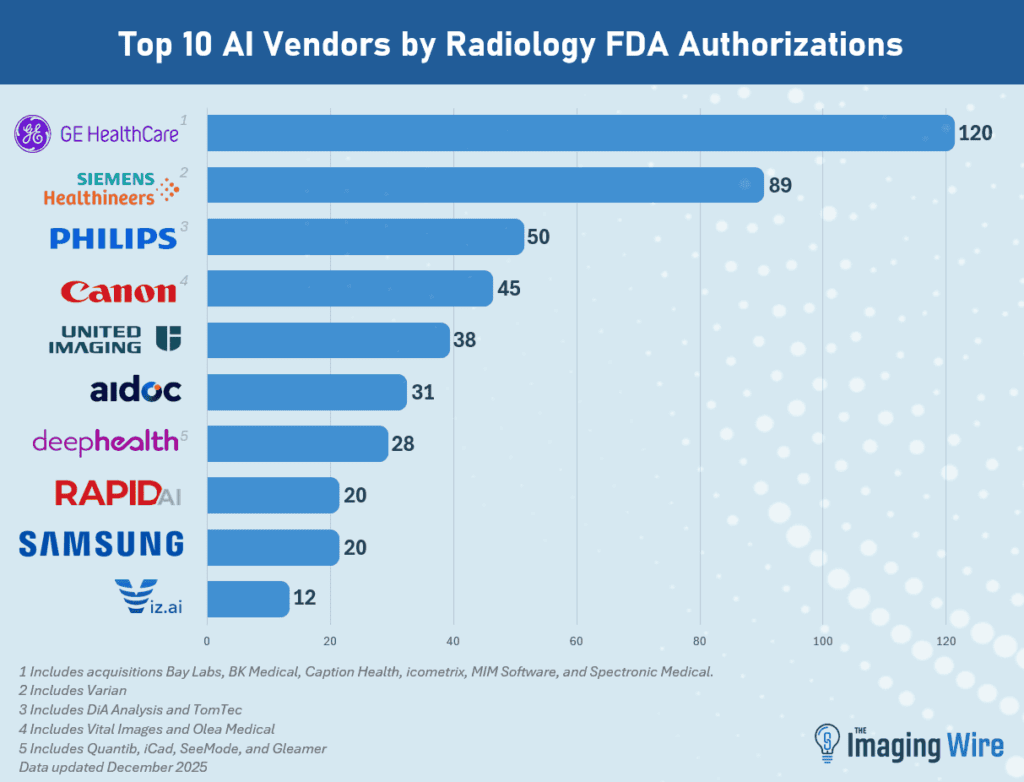
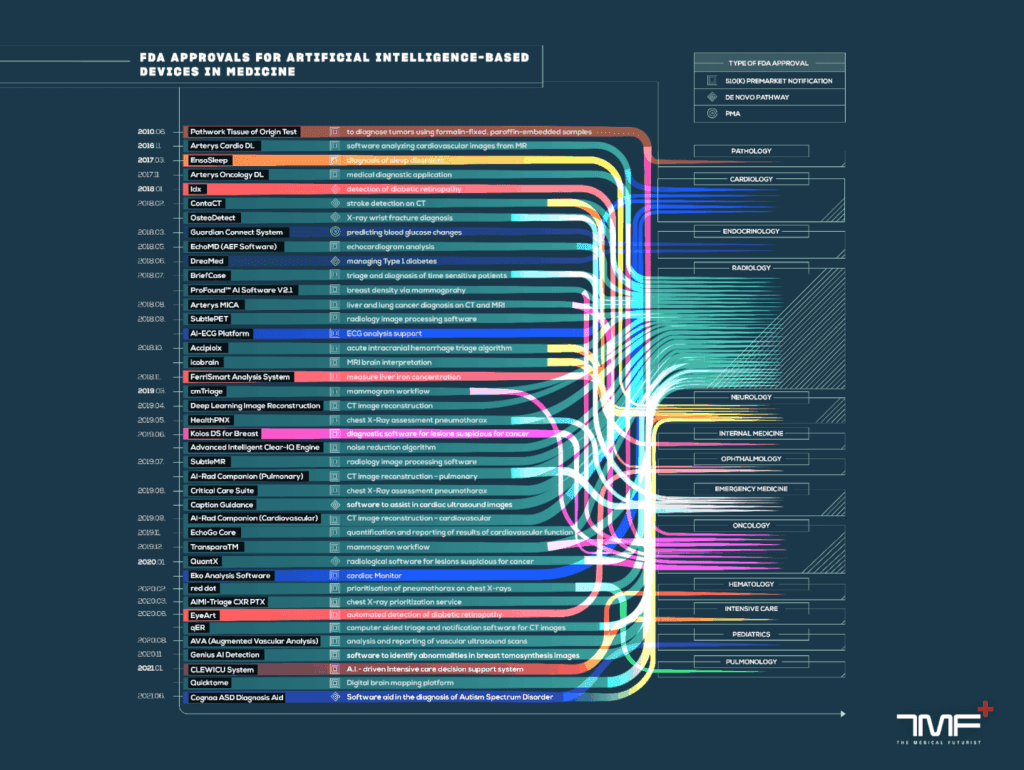
Radiology dominates FDA AI device approvals for a simple reason: medical images are data, and deep learning devours data. As of early 2026, 1,039 radiology-specific AI tools have been cleared by the FDA—nearly 80% of all AI-enabled medical devices authorized by the agency. That number more than doubled from ~500 in early 2023.
But quantity doesn’t equal impact. A 2025 JAMA Network Open analysis of 950 FDA-authorized AI/ML devices found that only 5% underwent prospective testing, 8% included human-in-the-loop validation, and 29% incorporated any clinical testing at all. Most clearances come through the 510(k) pathway, which requires demonstrating “substantial equivalence” to an existing device—not proving clinical superiority.
The exception that proves the rule: Cedars-Sinai Medical Center’s deployment of Aidoc’s AI for intracranial hemorrhage and pulmonary embolism triage. After one year, 30-day mortality for ICH patients dropped from 27.7% to 17.5%—a relative reduction of approximately 37%. The key wasn’t the algorithm alone. It was the hospital’s “code hemorrhage” protocol: when the AI flagged a critical finding, it triggered an immediate mobilization of neurosurgical resources. Speed became survival.
The lesson for 2026: AI in radiology works when it’s embedded in workflow protocols that translate speed into action. A standalone algorithm that flags findings faster but doesn’t change what happens next is a waste of money. The hospitals seeing real outcomes are the ones treating AI alerts as triggers for systemic response, not just notifications.
What this means for you: your next CT scan or mammogram will likely be read by both a radiologist and an AI. The AI won’t replace the human—it will catch things humans miss (one study showed 99% accuracy in mammogram evaluation for breast cancer), and the human will catch things the AI misinterprets. The combination is what matters.
Why Your Next Surgery Might Involve a Robot You’ve Never Heard Of
For 25 years, Intuitive Surgical’s da Vinci dominated robotic surgery almost completely. That monopoly ended in December 2025 when Medtronic received FDA clearance for its Hugo robotic-assisted surgery system in urology—the first large medtech company positioned to challenge Intuitive head-on in the U.S. Johnson & Johnson submitted its Ottava robot for FDA authorization. CMR Surgical’s Versius Plus received 510(k) clearance. The competitive landscape is fragmenting fast.
But the real story isn’t the robots themselves—it’s what they’re learning to do. Intuitive’s da Vinci 5, introduced in 2023–24, features roughly 10,000× more on-board computing acceleration than prior models. The company is using machine learning on its database of 10+ million cases to develop real-time intraoperative assistance. Their SureForm stapler already scales tissue thickness in real time and adjusts staple deployment automatically. Force-feedback instruments and AI-guided suturing are in development.
The expansion beyond traditional specialties is where things get interesting. In January 2026, Intuitive received FDA clearance for nine new cardiac surgery indications including mitral valve repair and replacement. Stryker’s Mako robotic arm has performed over 1.5 million procedures across 45 countries and is expanding into shoulder surgery. ForSight Robotics is developing a platform for cataract surgery to address a projected shortage of eye surgeons. MMI’s Symani system enables surgeons to reconnect blood vessels as small as 0.3mm in diameter—movements previously feasible only for the most skilled specialists.
🤖 The Numbers Behind Surgical Robotics in 2026
Intuitive projects 13–15% worldwide da Vinci procedure growth for 2026, with over 11,100 systems installed globally. Stryker’s Mako has 3,000+ systems. The AI-based surgical robots market is valued at $9.37 billion in 2026 and projected to reach $17.35 billion by 2030. Competition is finally arriving after two decades of near-monopoly.
The uncomfortable implication: robotic surgery is democratizing complex procedures. As Yale’s Dr. Bohdan Pomahac noted, “The technology lowers the bar of who can do very complex procedures, so the learning curve is faster.” This is good for patients in underserved areas. It’s potentially challenging for surgeons who built careers on being the only ones capable of certain techniques.
The EHR Is Becoming an AI—Whether Doctors Like It or Not
Epic Systems, the EHR vendor handling ~250 million patient records, reported between 160 and 200 active AI projects as of late 2025, with over 150 AI features in development for 2026. Their new AI assistants—Art, Penny, and Emmie—are being woven directly into clinical workflows. Oracle Health (formerly Cerner) debuted an entirely new AI-powered EHR in 2025 with a “voice-first” design and embedded clinical AI agents that draft documentation, propose next steps, and automate coding.
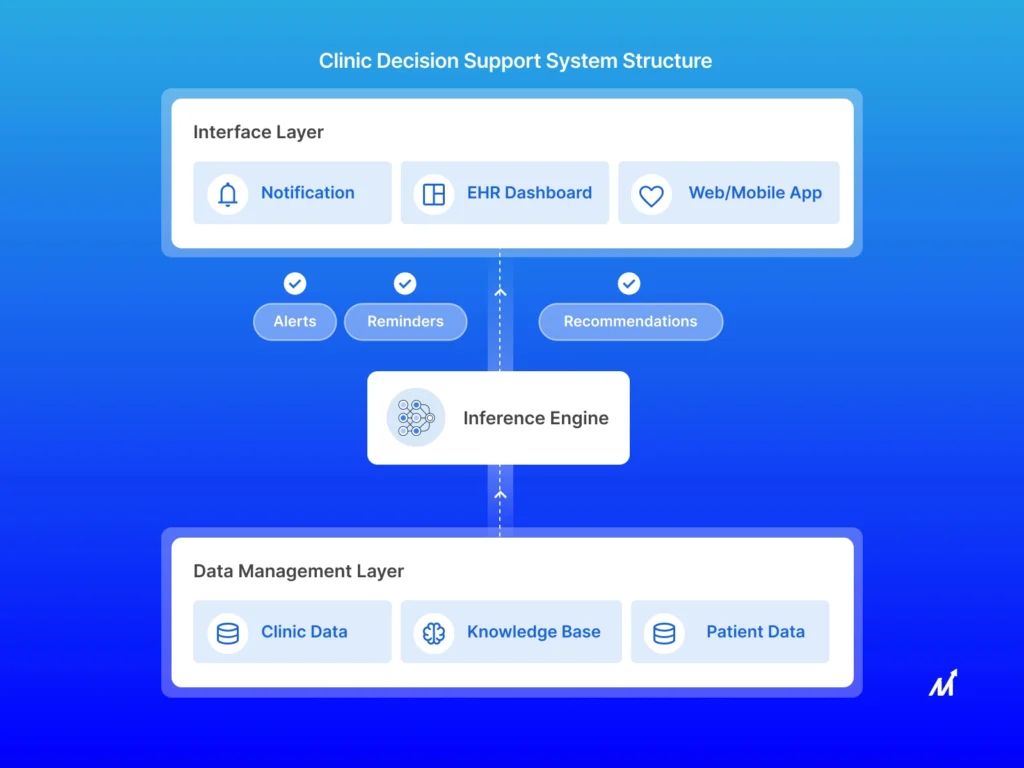
The evolution of clinical decision support (CDS) tells the broader story. First wave: rule-based systems (if potassium >5.5, alert). Second wave: reference databases (UpToDate, DynaMed). Third wave, emerging now: reasoning systems that process unstructured clinical narratives, compare patient data across millions of cases, and generate context-specific guidance. Glass Health, for example, maintains an evolving three-tier differential diagnosis during the live patient encounter, grounded in current literature.
The evidence for impact is building. Bayesian Health’s TREWS sepsis early warning system, deployed at Johns Hopkins and integrating with both Epic and Cerner, showed approximately 20% mortality reduction in validated studies. The key differentiator: the alerts include clear explanations and are integrated into workflow with minimal friction. Clinicians adopted them because they were accurate and useful, not because administrators mandated them.
⚠️ The Alert Fatigue Problem
Traditional CDS generated so many low-precision alerts that clinicians tuned them out. AI-enhanced CDS must solve this or it will fail the same way. The difference: machine learning models can weigh hundreds of variables simultaneously and learn from outcomes, producing far fewer but far more actionable alerts.
What this means for patients: your doctor’s EHR is increasingly an active partner, not just a record. It will flag risks you haven’t mentioned, suggest diagnoses based on patterns across millions of similar cases, and catch follow-ups that might otherwise be missed. The catch: this only works at hospitals that have invested in integration. The gap between AI-enabled and AI-ignorant healthcare systems is widening.
Your Watch Is Now a Clinical-Grade Monitor (Sort Of)
The most significant wearable development of 2026 isn’t a new Apple Watch feature—it’s the arrival of continuous glucose monitors (CGMs) for non-diabetics. Abbott’s Lingo and Dexcom’s Stelo brought prescription-free metabolic monitoring to the general wellness market. These 14–15 day patch sensors read glucose every 1–5 minutes and use AI to generate metabolic health scores, predict food responses, and identify patterns invisible to traditional blood tests.
The accuracy is good enough for trends, not clinical decisions. Abbott Lingo’s MARD (mean absolute relative difference) is 9.2%; Dexcom Stelo’s is 8.8%. For diabetics managing insulin, that’s insufficient. For everyone else trying to understand how their body responds to food, sleep, and stress, it’s revolutionary. The AI layer transforms raw glucose data into actionable insights: “Your glucose spiked 47 points after that smoothie—here’s what the data suggests about your metabolic flexibility.”
The next frontier, still in trials: non-invasive glucose monitoring via optical sensors in standard smartwatches. Apple, Samsung, and Rockley Photonics are all pursuing this. If achieved, it eliminates the need for patch sensors entirely and makes continuous metabolic monitoring as routine as checking your step count. Samsung’s Galaxy Watch line is expected to receive FDA clearance for cuff-less blood pressure estimation in 2026–2027, adding another clinical parameter to the wearable ecosystem.
“The AI interpretation layer adds real value through pattern recognition and anomaly detection, but treat its scores as directional guides rather than precise measurements.”
— AI Health Wearables Analysis, 2026What this means for you: in 2026, wearable AI is genuinely useful for identifying trends and testing behavioral changes. It is not yet a replacement for clinical care. The gap between “consumer wellness device” and “medical diagnostic tool” is shrinking but hasn’t closed. Use the data to have better conversations with your doctor, not to self-diagnose.
AI Therapy Chatbots: The First Real Data Is In, and It’s Complicated
In 2025, Dartmouth researchers published the first randomized controlled trial of a generative AI therapy chatbot. The results were genuinely surprising: 210 adults with significant depression, anxiety, or eating-disorder risk showed ~51% reduction in depression symptoms, ~31% in anxiety, and ~19% in eating-disorder concerns versus a waitlist control. Participants rated their therapeutic alliance with the chatbot as similar to a human therapist and engaged for an average of 6 hours.
But the caveats are as important as the headline. Therabot was fine-tuned on CBT and psychotherapy best practices by a clinical team—not an off-the-shelf ChatGPT wrapper. The researchers stressed that clinician supervision is essential. A systematic review of 160 chatbot studies found that while LLM-based chatbots jumped to 45% of new studies in 2024, only 16% underwent clinical efficacy testing. For moderate-to-severe conditions, human therapists still significantly outperform chatbots, and the gap widens with severity.
The regulatory response is already happening. Illinois became the first state to prohibit AI from providing therapy or making therapeutic decisions in 2025, followed by Nevada and Utah. These laws still permit AI for administrative and support functions under licensed-professional oversight. The distinction matters: AI can help schedule appointments, send medication reminders, and provide psychoeducation. It cannot—legally, in those states—conduct therapy.
What this means for access: about 61.5 million U.S. adults had a mental illness in the past year and nearly half received no treatment. Cost, provider shortages, and stigma are the leading barriers. AI chatbots are available instantly, at low cost, and feel private. For mild-to-moderate symptoms, they represent a scalable adjunct to care. For severe conditions, they are not a substitute, and the regulatory framework is catching up to that reality.
AI vs. Superbugs: The Race to Discover New Antibiotics
Antimicrobial resistance kills an estimated 1.27 million people annually worldwide. The traditional antibiotic discovery pipeline has produced almost nothing new in decades. AI is changing this, but not in the way headlines suggest.
The landmark case: MIT researchers used a deep neural network to screen over 100 million molecules and discovered halicin, a broad-spectrum antibiotic effective against multidrug-resistant pathogens including Acinetobacter baumannii and Mycobacterium tuberculosis. The AI identified a completely novel molecular scaffold with a new mechanism of action—interfering with bacterial proton motive force—something no human-designed antibiotic does.
More recently, AI-guided virtual screening identified abaucin, a narrow-spectrum antibiotic potent against MDR A. baumannii. The narrow spectrum matters: broad-spectrum antibiotics destroy beneficial gut bacteria and accelerate resistance. AI is enabling precision antimicrobial strategies that target specific pathogens while preserving microbiome integrity.
| AI-Discovered Antibiotic | AI Technique | Target Pathogen | Status |
|---|---|---|---|
| Halicin | Deep neural network | Broad-spectrum (MDR) | Preclinical (validated in mice) |
| Abaucin | ML-guided virtual screening | A. baumannii (MDR) | Preclinical |
| AI-Generated AMPs | Deep generative models | Gram+ / Gram- bacteria | Early development |
| Phage Lysins | AI mining of phage genomes | MDR Gram-positive | Discovery phase |
The constraint: most AI-discovered antibiotics remain in preclinical stages. The translational gap between in silico prediction and clinical validation is substantial. Data scarcity, algorithmic bias, and the complexity of human pharmacokinetics mean AI can find promising molecules, but only clinical trials can prove they work in patients. The pipeline is accelerating, but “accelerating” in drug discovery still means years, not months.
AI in Cancer: From Detection to Prediction
The most consequential cancer AI development of 2026 isn’t a single tool—it’s the convergence of three technologies: multi-cancer early detection (MCED) blood tests, liquid biopsies for real-time tumor monitoring, and AI models that predict therapy response before treatment begins.
AI models trained on diverse clinical and imaging data now predict immunotherapy response with 70–80% accuracy. The MUSK multimodal prognosis model forecasts cancer prognosis, therapy response, and likelihood of recurrence simultaneously. This shifts cancer care from reactive to anticipatory: instead of trying a treatment and hoping it works, clinicians can select therapies with the highest predicted efficacy for that specific patient’s tumor profile.
Dana-Farber Cancer Institute is building AI assistants for oncologists to ensure they haven’t missed recent advancements that could help specific patients. The goal isn’t to replace oncologist judgment—it’s to ensure every patient benefits from the exponentially growing body of cancer research that no human can fully track.
What this means for patients: if you’re diagnosed with cancer in 2026, your treatment plan will increasingly be informed by AI analysis of your tumor’s molecular profile, predicted drug responses, and real-time monitoring via liquid biopsy. The “one-size-fits-all” chemotherapy approach is becoming obsolete for many cancers.
Digital Twins: Your Virtual Body for Testing Treatments
The digital twin in healthcare market reached $3.4 billion in 2025 and is projected to grow to $31.7 billion by 2032 at a 37.6% CAGR. A healthcare digital twin is a dynamic virtual model of a patient, organ, or biological process that updates in real time based on sensor data, imaging, and clinical records.
The applications are expanding rapidly. Patient-specific cardiac models simulate blood flow and predict surgical outcomes before the incision. Organ twins for kidneys and lungs help optimize transplant matching. Pharmaceutical companies use virtual patient cohorts to simulate clinical trials, reducing the number of real patients needed for early-phase studies. The DT4H 2026 workshop at MICCAI in Strasbourg dedicated an entire conference track to digital twin validation, safety, and regulatory pathways—signaling the field’s maturation from research concept to clinical tool.
The constraint: digital twins require massive, high-quality, multi-modal data to be accurate. Building a reliable cardiac twin needs continuous ECG, imaging, blood pressure, and potentially genomic data. The computational requirements are substantial. And regulatory frameworks for approving treatments based on virtual patient simulations are still being developed. This works. Except when data is incomplete or the model hasn’t been validated for your specific condition—which is still most cases.
The 3-Minute Rule That Fails 60% of the Time
Here’s a pattern I’ve noticed after tracking healthcare AI for three years: the technologies that get the most media attention are rarely the ones that change the most lives. Robot surgery makes headlines. AI scribes that reduce physician burnout by 3 hours per week don’t. AlphaFold’s Nobel Prize was deserved, but the ambient documentation tool that lets a doctor look at a patient instead of a keyboard during a visit may improve more outcomes.
The real reason you won’t see the full impact of healthcare AI yet: integration takes 3–5 years even after a technology is proven. Hospitals are slow. EHR systems are fragmented. Regulatory pathways, while clarifying, still create friction. The FDA’s 2025 guidance on AI-enabled devices and the EMA-FDA joint guiding principles from January 2026 are helping, but the gap between “cleared” and “deployed at scale” remains wide.
Everything I just said will be outdated by 2028. The field moves that fast. Here’s how to prepare: pay attention to which health systems in your area are adopting AI tools, because care quality is beginning to diverge between AI-enabled and AI-ignorant institutions. Ask your doctor if they use clinical decision support AI. If they look confused, that’s information too. And if you’re managing a chronic condition, explore whether your care team uses predictive analytics—because early intervention based on AI-flagged risk patterns is becoming the standard of care at leading institutions.
The Real Reason You Won’t Benefit From Healthcare AI Yet
Access inequality. The most advanced AI healthcare tools are concentrated at academic medical centers and well-funded health systems. Community hospitals, rural clinics, and underserved populations get the technology last—if at all. The World Economic Forum estimates a global health worker deficit of 10 million by 2033. AI could help close that gap, but only if deployment reaches the places that need it most.
Data bias is another real constraint. AI models trained predominantly on data from white, affluent populations perform worse for everyone else. The FDA’s 2025 draft guidance on AI-enabled devices explicitly requires bias analysis, but implementing that requirement across thousands of cleared devices is a massive undertaking.
And then there’s the trust problem. A 2026 JMIR meta-analysis found that performance expectancy, effort expectancy, and transparency significantly influence whether clinicians actually use AI decision support. The best algorithm in the world is useless if the physician doesn’t trust it. Building that trust requires explainable AI, rigorous clinical validation, and time—none of which can be rushed.
What happens when AI healthcare hits [industry]? Nobody knows yet. Including me. The technology is advancing faster than our ethical frameworks, regulatory systems, and clinical training can adapt. The next three years will determine whether AI healthcare becomes a tool for democratizing excellent care—or for widening the gap between those who can afford the best technology and everyone else.
📚 Sources & Further Reading
The claims in this article are grounded in clinical evidence, regulatory filings, and peer-reviewed research. Key sources include:
- ▸ FDA AI/ML-Enabled Medical Devices Database — Official registry of 1,000+ cleared AI medical devices, updated monthly.
- ▸ Insilico Medicine — Rentosertib (ISM001-055) Clinical Data — Phase IIa results for the first AI-discovered drug to show human efficacy.
- ▸ Intuitive Surgical — da Vinci 5 & Robotics Platform — Technical specs, procedure data, and competitive landscape for surgical robotics.
- ▸ WHO — Antimicrobial Resistance Global Report — 1.27 million annual deaths from drug-resistant infections; the case for AI-driven antibiotic discovery.
- ▸ JAMA Network Open — FDA AI/ML Device Evaluation (2025) — Analysis of 950 cleared devices: only 5% prospectively tested, 8% human-in-the-loop validated.
- ▸ Microsoft — DAX Copilot & Ambient Clinical Documentation — 150+ health system deployments, 15,000+ hours of documentation time saved.
- ▸ Nature — AI Chatbot Therapy RCT (Dartmouth, 2025) — First randomized trial of generative AI therapy: 51% depression symptom reduction.
- ▸ Cell — AI-Guided Antibiotic Discovery (Halicin & Abaucin) — Deep learning screening of 100M+ molecules for novel antimicrobial scaffolds.
- ▸ EMA-FDA Joint Guiding Principles on AI in Medicines (Jan 2026) — First harmonized regulatory framework for AI in drug development and medical devices.
- ▸ Bayesian Health — TREWS Sepsis Early Warning System — ~20% mortality reduction at Johns Hopkins via EHR-integrated AI alerts.