
The Ethics Gap: Why 2026 Is the Year AI Restraint Becomes a Strategic Necessity
Agentic systems are making decisions without clinicians. Deepfakes scammed $5.3 billion from fans. The EU’s transparency deadline is 47 days away. The gap between AI capability and ethical readiness has never been wider.
On July 8, 2025, an unknown actor used Senator Marco Rubio’s voice and writing style to contact five senior US government officials. The incident wasn’t a prank. It was a signal. By the time 2026 arrived, AI-generated scams had already extracted $5.3 billion from pop music fans alone. The tools that power these attacks are now being embedded into healthcare workflows, financial underwriting, and criminal justice decisions. The question is no longer whether AI ethics matters. It’s whether any institution is prepared for what comes next.
The Enforcement Year: When Regulation Stopped Being Theoretical
2025 was the pivot. Generative and agentic systems stopped being experiments and became infrastructure. The EU AI Act entered its enforcement phase in June 2025, requiring organizations to categorize systems by risk level, conduct red-team tests, and publish transparency information. High-risk systems in employment, credit, education, and public services now face strict conformity assessments and ongoing post-market monitoring. The ACM U.S. Technology Policy Committee issued formal recommendations for documentation practices, evaluation standards, and public accountability.
In the United States, the landscape fractured. The Trump administration overturned Biden’s 2023 Executive Order on Safe, Secure, and Trustworthy AI, prioritizing deregulation and fast innovation. Meanwhile, 38 states adopted or enacted around 100 AI-related measures. Colorado’s comprehensive AI Act, originally set for 2024, was delayed to June 2026. California’s frontier AI safety bill was vetoed by Governor Newsom. The result is a regulatory patchwork where compliance in one jurisdiction means non-compliance in another.
The 2026 Regulatory Landscape at a Glance
This isn’t a story about regulation catching up with technology. It’s a story about technology outpacing the very concept of governance. As the ACM SIGAI Ethics & Policy Column noted in January 2026, “AI capabilities advanced faster than institutions, labor markets, and governance frameworks could adapt, exposing a growing gap between reassuring narratives and real-world results.”
Figure 1: Critical regulatory milestones for 2026. Circle size indicates impact severity. Data synthesized from EU Commission, ACM USTPC, and state legislative trackers.
Challenge 1: Agentic AI and the Collapse of Human Oversight
In March 2025, Epic Systems launched its Cognitive Automation Agent, a platform that independently manages clinical workflows in the US. It doesn’t just suggest actions. It initiates them. This is one of the first agentic systems deployed in a high-stakes environment where the AI operates independently of human clinicians.
The ethical implications are structural, not incremental. Traditional AI ethics focused on predictions: Will this loan default? Is this image a tumor? Agentic systems focus on actions: Schedule this surgery. Adjust this medication. Release this patient. When an AI initiates actions, the locus of moral responsibility shifts from the human operator to the system itself, and accountability becomes diffuse.
The “vibe coding” phenomenon compounds this. Developers now generate, refine, and debug code through iterative interaction with LLMs, effectively delegating design and implementation decisions to AI agents. Collins Dictionary named it Word of the Year for 2025. The practice raises familiar questions about accountability and oversight, but at a scale where millions of developers are delegating critical architectural decisions to systems they don’t fully understand.
If you’re building systems that touch human lives, the question isn’t whether to use AI. It’s whether your governance structure can survive the moment when the AI makes a decision your team disagrees with. For more on building resilient AI governance, see our analysis at FutureNow.
Figure 2: The AI Ethics Gap. Threat severity vs. institutional readiness across eight critical domains. Data synthesized from ACM USTPC, EU AI Act enforcement timelines, and Q1 2026 policy reviews.
Challenge 2: The Transparency Paradox of Article 50 II
On August 2, 2026, Article 50 II of the EU AI Act enters full force. It mandates dual transparency for AI-generated content: outputs must be labeled in both human-understandable and machine-readable form for automated verification. The requirement sounds straightforward. It is structurally impossible with current technology.
A research paper from Technical University Berlin and DFKI, published in March 2026, identified three structural gaps that make compliance impossible through post-hoc labeling alone:
- Absent cross-platform marking formats: When human and AI contributions are interleaved, no current standard can represent provenance. In automated fact-checking pipelines, journalist editorial review destroys the provenance chain that machine-readable marking requires.
- Misalignment between legal and technical reliability: The regulation demands “reliable” transparency, but generative AI outputs are probabilistic and non-deterministic. The same prompt produces different outputs. Reliability in a legal sense cannot be mapped to technical behavior.
- Missing guidance for heterogeneous users: Post-hoc explainability methods like LIME or SHAP are inaccessible to non-technical users. Natural-language LLM explanations are accessible but introduce “explanation-induced overreliance,” where fluent but incorrect rationales increase trust without improving decision quality.
The Synthetic Data Paradox
In synthetic data generation, persistent dual-mode marking is paradoxical: watermarks designed to survive human inspection risk being learned as spurious features during model training, while marks suited for machine verification are fragile under standard data processing. The regulatory requirement for persistent labeling directly contradicts the technical need for clean, unadulterated training data.
The paper’s conclusion is unambiguous: “Compliance cannot be reduced to post-hoc labeling.” Transparency must be treated as an architectural design requirement, not a metadata add-on. The research agenda needed to close these gaps requires coordinated work across legal semantics, AI engineering, and human-centered design. The deadline is 47 days away.
The intersection of AI capability and ethical governance is not a design problem. It’s an architecture problem.
Challenge 3: Deepfakes, Digital Trust, and the $5.3 Billion Lesson
The global election cycles of 2024-2025 created a pressure test for information ecosystems. Highly convincing deepfakes, synthetic news, fraudulent political ads, and automated persuasion tools spread at scale. The Marco Rubio impersonation wasn’t an outlier. It was a prototype.
By mid-2025, AI impersonations of pop stars had reportedly scammed fans out of $5.3 billion for concert tickets and VIP experiences that did not exist. These incidents didn’t just cause financial harm. They marked a structural decline in digital trust. Governments, platforms, and researchers adopted provenance metadata, watermarking, and digital signature technologies, but the effectiveness varies by platform, and watermarks can be altered or removed.
| Domain | Deepfake Impact | Current Mitigation | Readiness Gap |
|---|---|---|---|
| Political | Impersonation of officials, synthetic campaign content | C2PA metadata, platform policies | Critical |
| Financial | Voice-cloning scams, synthetic identity fraud | Biometric verification, liveness detection | Critical |
| Healthcare | Fake medical advice, synthetic patient data | Provider verification, clinical validation | High |
| Education | Synthetic academic content, credential fraud | Institutional verification, plagiarism detection | High |
| Entertainment | Unauthorized likeness use, synthetic performances | Right of publicity laws, platform takedown | High |
By 2026, “AI-generated” labels may give way to verifiable provenance signals that can be shared across platforms. But as the EU research shows, the technical infrastructure for this doesn’t exist yet. Regulators could strengthen enforceable duties around verification, rapid takedown, and auditing. The question is whether they can do it before the next election cycle.
Challenge 4: Training Data Rights and the Copyright Cliff
In June 2025, Reddit and the BBC took legal action against Perplexity AI for unauthorized content scraping. They weren’t alone. Lawsuits related to large-scale web scraping, unauthorized use of copyrighted materials, and biometric data collection multiplied throughout the year. Courts and regulators made uneven progress on whether training generative AI models on copyrighted works qualifies as fair use.
The stakes are existential for the AI industry. Depending on the outcome of these cases, the only legal generative AI systems in the US may be those trained on public-domain works or under explicit licenses. As Publishers Weekly reported in late 2025, major publishers and AI developers are in disputes that highlight unresolved questions about who is entitled to compensation.
The EU and UK moved faster. Developers now face obligations to document training data sources and justify the inclusion of copyrighted or sensitive material. These requirements are expected to expand significantly during 2026-2027. For organizations building AI systems, the message is clear: the free-data era is ending. The cost of training data is about to become a line item, not an assumption.
Understanding how data provenance affects model behavior is critical for compliance. Our data governance framework covers the technical and legal requirements for 2026.
The Environmental Cost Nobody Talks About
Google released a report on Gemini’s energy use: a single prompt emits 0.03 grams of CO2, consumes 0.26 milliliters of water (about five drops), and has an energy impact equivalent to watching TV for nine seconds. These numbers sound trivial until you scale them. Gemini powered 5.9 trillion Google searches in 2025.
Data centers currently account for 4.4% of US energy demand. Projections estimate this will triple by 2028. The efficiency gains are real, a 44-fold decrease in carbon footprint per prompt, but the absolute consumption is still growing faster than the efficiency improvements.
The Scale Problem
The ethical question isn’t whether AI is efficient. It’s whether efficiency at scale is enough. When data center construction triggers community protests and water rights disputes, the environmental impact of AI becomes a justice issue, not just a technical one. The Conference Board called for sustainable AI practices, increased efficiency incentives, and broader environmental disclosure requirements in 2025. In 2026, those disclosures may become mandatory.
Challenge 5: The Workforce Transformation Nobody Planned For
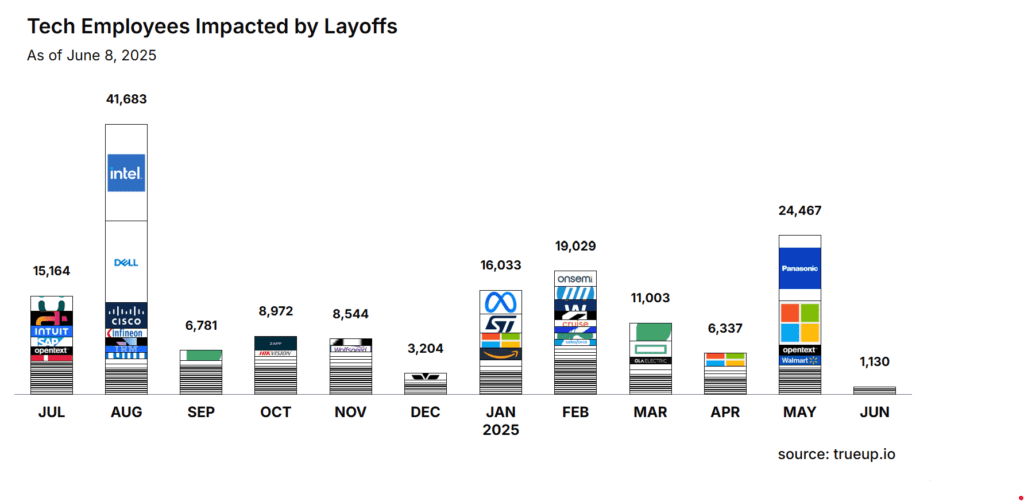
In March 2025, JP Morgan rolled out its own coding assistant for software engineers. Productivity increased 10-20%. The same month, the global tech sector surpassed 200,000 layoffs. The pattern is clear: AI copilots and agentic assistants alter workflows rapidly but unevenly. Some industries experience major gains. Others face displacement or widening skill gaps.
The ACM USTPC’s recommendations on AI literacy, reskilling, and fair workforce development emphasize that increased national investment in education and training is vital for reducing disparities. But investment takes time, and the displacement is happening now. The IMF and Bank of England both warned in 2025 that an AI-led market bubble could burst, with broader economic consequences affecting investment patterns, labor markets, and innovation strategies.
The ethical failure here isn’t the technology. It’s the assumption that workers will naturally adapt. They won’t. The transition from “working with AI” to “competing with AI” requires structural support that most governments haven’t built. The 200,000 tech layoffs of 2025 are a preview of what happens when capability outpaces adaptation.
Challenge 6: Algorithmic Bias That Refuses to Die
Despite advances in dataset auditing and fairness tools, algorithmic discrimination remained a significant challenge in 2025. Models used for hiring, credit, public benefits, and education continue to mirror historical inequalities. The USTPC reaffirmed its long-standing stance, calling for a pause on facial recognition deployments in high-risk settings where civil rights impacts are foreseeable.
The problem isn’t technical. It’s epistemological. Bias audits catch statistical disparities. They don’t catch the structural assumptions embedded in the data collection process itself. When a hiring algorithm trained on historical employment data passes on gender and racial biases, the bias isn’t in the model. It’s in the history the model learned from.
Policymakers increasingly adopt risk-based frameworks that combine socio-technical analysis with technical audits. But the gap between “auditing for fairness” and “achieving fairness” remains wide. In 2026, the question isn’t whether bias exists. It’s whether organizations have the incentive to find it before regulators do.
Challenge 7: Children, Chatbots, and the Manipulation We Didn’t See Coming
A significant digital trust challenge emerging in 2025 involves the intersection of children’s rights and democratic integrity. Generative AI chatbots increasingly mediate social, educational, and political information for young users. The USTPC warned about the manipulative potential of chatbots interacting with minors, highlighting broader democratic risks posed by generative misinformation at scale.
UNICEF shared this concern, emphasizing that AI systems impacting children must be designed with explicit safeguards, transparency, and accountability to prevent exploitation and undue influence. The issue isn’t just content filtering. It’s the design of systems that are inherently persuasive, trained on engagement optimization, and deployed to audiences with underdeveloped critical reasoning skills.
In 2026, international action on likeness and consent rights may accelerate, making unauthorized use of synthetic identities a distinct civil offense. But the deeper question is whether any regulatory framework can keep pace with the speed at which AI systems adapt to circumvent protections.
The Uncomfortable Truth: Restraint as Strategy
Dario Amodei, CEO of Anthropic, called for clear rules and responsible scaling in 2024, framing ethics as a core engineering constraint rather than an after-the-fact safeguard. His contribution shaped subsequent discourse. In 2026, that framing is becoming operational.
The major questions are no longer abstract. When and where should generative AI be used? Who benefits from its use? Under which conditions should it be restricted? A widely articulated perspective emphasizes that GenAI should assist, not replace, human judgment, with accountability firmly placed on institutions rather than automated systems.
Societal responses are becoming visible. Communities express “digital backlash” against algorithmic technologies through protests over data center projects, student-led petitions, app deletions, industry open letters, and academic position papers. Educators, technologists, policymakers, artists, labor unions, and community groups increasingly oppose AI systems perceived as harmful, exploitative, environmentally damaging, or socially unjust.
Supporting resistance, refusal, reclamation, and reimagining AI remains an essential ethical goal, even as some “responsible AI” narratives suggest opposition is futile. The coming year will test whether global AI governance can keep pace with innovation while protecting democratic values, social trust, and human well-being.
What Happens Next: Three Scenarios for 2026
| Scenario | Trigger | Outcome | Likelihood |
|---|---|---|---|
| Fragmented Governance | EU enforces strictly; US deregulates further; China advances state-controlled AI | Incompatible trust frameworks, regulatory arbitrage, global AI divide | High |
| Restraint Consensus | Major AI incident triggers multilateral agreement on deployment limits | Slower innovation but higher trust; responsible scaling becomes standard | Medium |
| Market Correction | AI bubble bursts under regulatory and economic pressure | Consolidation of AI providers; reduced investment; slower but more sustainable growth | Medium |
Ultimately, 2026 should reveal whether adherence to emerging frontier and general-purpose AI standards effectively influences real-world behavior or merely becomes a box-checking exercise. We will observe whether trust frameworks unify globally or fragment into regional systems with incompatible rules and technologies.
For organizations navigating this landscape, the imperative is clear: ethics is not a compliance function. It’s a survival function. The institutions that treat it as such will be the ones still standing in 2027. For ongoing analysis of AI policy developments, bookmark FutureNow.
The balance between AI capability and ethical governance is not a destination. It’s a continuous negotiation.
The Real Reason This Matters
Everything I just described will be outdated by 2027. The models will be more capable. The scams more sophisticated. The regulations more fragmented. The environmental costs more visible. The only constant is the gap between what AI can do and what we’ve prepared for.
The real reason you won’t act on this: it requires admitting that the systems you’ve already deployed might be wrong. That the productivity gains came with ethical debts. That “move fast and break things” was a strategy for software, not for societies. Only you know if that’s acceptable.