


Micro-Habit Engineering:
11 Facts That Will Change How You Approach It
The science of designing tiny, repeatable behaviors that quietly compound into the life you’ve been trying to build — and why most people get it backwards before they even begin.
Most people who try to change their lives make the same mistake. They aim too high, too fast, and collapse somewhere around day nine. Then they try again six months later with even more ambition, and collapse even faster. The cycle is familiar, almost universal — and it has almost nothing to do with willpower or discipline.
The people who actually shift things — the ones who, two years from now, look genuinely different in how they work, feel, and relate to the world — usually started with something embarrassingly small. A single pushup. One sentence in a notebook. Thirty seconds of deep breathing while the coffee brews. The gap between those people and everyone else isn’t genetics or motivation. It’s a system. Specifically, it’s what behavioral scientists now call micro-habit engineering: the deliberate design of tiny, context-bound behaviors that become automatic through repetition and gradually compound into meaningful, durable change.
This isn’t motivational content. What follows is the actual science — uncomfortable in places, counterintuitive in others — plus the frameworks, real-world cases, and practical architecture you need to stop cycling through failed attempts and start building something that actually lasts.
— Duke University, Wood et al.
— UCL, Lally et al. 2010
— 2025 leadership habits study
— James Clear, Atomic Habits
The 21-Day Myth Is Genuinely Harmful — and It’s Been Debunked for 15 Years
Ask almost anyone how long it takes to form a habit, and they’ll say 21 days. It’s perhaps the most repeated piece of self-help folklore in existence. The number came from a 1960 observation by plastic surgeon Maxwell Maltz, who noticed his patients seemed to need about three weeks to mentally adjust to their altered appearance. At no point was this a controlled study of habit formation. At no point did Maltz intend it to be a universal rule. And yet here we are, six decades later, with an entire industry built on 21-day challenges.
The actual research tells a more complicated — and ultimately more useful — story.
Lally et al. (2010), European Journal of Social Psychology — doi: 10.1002/ejsp.674
96 participants at University College London chose one new eating, drinking, or activity behavior and repeated it daily for 12 weeks while tracking their own “automaticity” — the sense that the behavior happened without thinking. The average time to reach peak automaticity was 66 days. But the range ran from 18 days on the short end all the way to 254 days for more complex habits.
Dr. Phillippa Lally, now at the University of Surrey, has been careful to point out that the 66-day figure is a statistical average, not a target. “What we really showed,” she’s noted, “is that how long habit formation takes is highly variable.” Simple habits like drinking a glass of water formed faster. Exercise routines took considerably longer. The shape of the curve mattered too: automaticity grew quickly at first, then slowed as it approached a plateau.
Why does the 21-day myth matter so much? Because people who believe it tend to quit around day 22, convinced they’ve failed. In reality, they may have been days or weeks away from crossing into genuine automaticity. The myth sets expectations that almost guarantee abandonment at precisely the wrong moment.
The myth: Habits form in 21 days, and if yours hasn’t stuck by then, you lack willpower.
The reality: Simple habits might form in under three weeks; complex behavioral routines can take eight months. The right question isn’t “is it a habit yet?” but “am I still doing it consistently enough to let automaticity develop?”
Your Brain Has a Dedicated Habit Engine — and It Runs on Repetition, Not Decisions
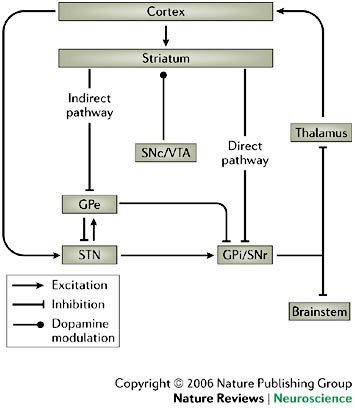
The reason habits feel automatic eventually isn’t discipline. It’s that a specific part of your brain — the basal ganglia, and particularly the striatum — literally takes over the execution of repeatedly-performed behaviors, freeing up your prefrontal cortex for things that actually require conscious thought.
When you first try a new behavior, the prefrontal cortex — the brain’s “executive” region, responsible for planning, decision-making, and inhibitory control — has to work hard. Every step feels deliberate. But with consistent repetition in a stable context, the basal ganglia starts encoding the behavioral sequence as a compressed neural pattern. The prefrontal cortex gradually disengages. What once required intention becomes reflex.
Neuroimaging research has confirmed this mechanically: habitual actions show increased basal ganglia activity and decreased prefrontal cortex engagement compared to the same actions performed consciously. (Levy & Dubois, 2006; reviewed in Barnes et al., PMC)
Dopamine plays a central role here — not just as a “reward” signal, but as reinforcement that strengthens the neural pathway each time the behavior-reward loop completes. The ventral striatum consolidates the association; the dorsolateral striatum handles the automatic execution once the habit is formed.
The practical implication is significant: context stability matters as much as repetition. The basal ganglia learns cue-behavior pairings. If you practice a behavior in different contexts, at different times, without a reliable trigger, the neural encoding is slower and less stable. The habit system needs a consistent “if this, then that” structure to latch onto.
This is also why habits are so sticky once formed — in both directions. The neural pathway built through years of a bad habit doesn’t disappear when you stop; it becomes dormant. This is why cue exposure (walking past a bakery, smelling cigarette smoke) can trigger old cravings in people who’ve quit for years. The habit structure is encoded, just not currently dominant.
“The basal ganglia compresses behavioral sequences into chunked routines. Once encoded, the sequence runs as a unit — initiation is automatic once the cue appears.”
— Ann Graybiel, MIT McGovern Institute for Brain ResearchMotivation Is the Wrong Foundation for Any Habit You Actually Want to Keep
Here’s the thing about motivation that behavior scientists have been saying for years but that hasn’t quite filtered into mainstream self-help: it fluctuates. Predictably, inevitably, structurally. It’s not a personality defect when you lose motivation. It’s what motivation does. It rises with novelty, excitement, and external rewards, then falls with familiarity, difficulty, and the absence of quick results. Banking your behavior change on sustained high motivation is, statistically, a losing strategy.
BJ Fogg, who founded the Behavior Design Lab at Stanford University, spent years coaching tens of thousands of people through habit change. His central finding was counterintuitive in the best possible way: the size of a habit matters far more than the strength of your motivation to do it. When you make a behavior genuinely tiny, motivation becomes largely irrelevant — because even on bad days, the habit is achievable.
Fogg’s foundational model states that behavior (B) occurs when Motivation (M), Ability (A), and a Prompt (P) all converge at the same moment. Most people try to maximize motivation. Fogg’s insight was that increasing ability — making the behavior easier — is actually more reliable and more controllable than trying to boost motivation, which you can’t directly command.
Behavior = Motivation × Ability × Prompt
When Ability is high (behavior is easy), even low Motivation can produce the behavior.
Source: BMC Public Health scoping review of the Fogg Behavior Model, 2025
In practice, this means the question to ask when designing a micro-habit isn’t “how motivated am I to do this?” but “how small can I make this so that I’d still do it feeling terrible on a Tuesday?” A habit designed to survive your worst days is one that compounds through every day.
A 2025 study in leadership development found that participants who began with what researchers called “minimal viable habits” — deliberately trivial, scaled-down versions of their target behaviors — were 2.7 times more likely to maintain those habits long-term than participants who started with more ambitious initial targets. The finding held across different habit domains: physical activity, professional development, and relationship maintenance.
The “If-Then” Format Nearly Doubles Follow-Through — and Most People Never Use It
In 1999, psychologist Peter Gollwitzer introduced the concept of implementation intentions — a deceptively simple planning format that consistently outperforms vague goal-setting. The structure is: “When situation X arises, I will perform behavior Y.” Or in its more actionable form: “If [cue], then [behavior].”
It sounds almost too simple to matter. It isn’t.
Gollwitzer & Sheeran (2006): A meta-analysis of 94 experiments involving over 8,000 participants found that implementation intentions produced a medium-to-large effect (d = 0.65) on goal achievement compared to simple goal intentions alone. (NCI review)
Sheeran et al. (2024): A comprehensive analysis of 642 independent tests found implementation intentions effective across cognitive, affective, and behavioral outcomes, with effect sizes ranging from d = 0.27 to d = 0.66. Contingent (if-then) format and rehearsal increased effectiveness. (European Review of Social Psychology)
Why does the format work so well? The mechanism is neural: specifying the exact cue that will trigger the behavior essentially pre-loads the response into your working memory, creating a conditional link that partially automates the initiation. When the situation arises, the behavior fires more automatically because you’ve already decided — in a calm, deliberate moment — exactly what you’ll do and when.
Crucially, Bari and Robbins (2024) demonstrated that implementation intentions with precise contextual cues accelerate striatal habit encoding — meaning they speed up the very neural process that turns behaviors into habits. This isn’t just better planning. It’s a direct shortcut into the brain’s habit formation system.
Don’t write “I’ll meditate more.” Write: “After I pour my morning coffee, I will sit down and take five deep breaths before opening any screen.” The specificity of time, location, and preceding action is what creates the neural trigger. Vague intentions stay intentions. Specific if-then plans become behaviors.
| Vague Goal | Implementation Intention (If-Then) | Why It Works Better |
|---|---|---|
| “Exercise more” | “After I wake up and put on the coffee, I’ll do 5 minutes of movement” | Stable cue, low effort, exact timing |
| “Read more books” | “When I get into bed, I’ll read one page before turning off the light” | Piggybacks on existing routine, zero barrier |
| “Eat healthier” | “Before opening my lunch bag, I’ll eat one piece of fruit first” | Sequenced, concrete, self-monitored |
| “Be more grateful” | “After I brush my teeth in the morning, I’ll name one specific thing I’m grateful for” | Anchor behavior established, <30 seconds |
| “Save money” | “When I receive any payment, I’ll immediately transfer €5 to savings” | Event-triggered, amount is trivially small |
Habit Stacking Borrows Neural Credit From Behaviors You’ve Already Automated
You have dozens — probably hundreds — of behaviors so deeply encoded that you do them without thinking. The morning coffee ritual. Checking your phone when you sit down. Locking the car. These established habits already have reliable cue-response loops wired into your basal ganglia. Habit stacking, popularized by James Clear but grounded in decades of behavioral research, is the practice of deliberately anchoring a new micro-habit to one of these existing automated behaviors.
The formula: “After [existing habit], I will [new micro-habit].”
The reason this works so reliably isn’t just about memory or reminder. It’s neural economics. The existing habit has an established dopaminergic pathway. By coupling your new behavior to the moment immediately after, you’re borrowing the attentional salience and contextual stability of the existing sequence. The brain processes them as linked rather than separate. BJ Fogg calls these existing behaviors “anchor moments” — and his Tiny Habits method is largely built on identifying and using them deliberately.
Habit stacking aligns with what neuroscience calls “chunking” — the basal ganglia’s tendency to process behavioral sequences as single compressed units. When you consistently perform behavior B after behavior A, the brain begins to encode the AB pair as a chunk, reducing the cognitive cost of initiation for B. (Graybiel, MIT Neuroscience; reviewed in Balleine & O’Doherty, Duke)
- After I pour my morning coffee → I write tomorrow’s single most important task on a Post-it
- After I sit down at my desk → I spend 90 seconds reviewing my three priorities for the day
- After I finish lunch → I take a 5-minute walk before returning to the screen
- After I get into the car → I state one thing I want to be intentional about today
- After I close my laptop at day’s end → I write one sentence about what went well
- After I brush my teeth at night → I lay out tomorrow’s workout clothes
The selection of anchor behaviors matters. Good anchors are: done daily without exception, completed in roughly the same physical location, and have a clear natural endpoint (the moment “after” which your new habit slots). The more stable the anchor, the faster the new habit encodes.
Environment Design Beats Willpower Every Single Time
This might be the most practically useful insight in the entire field of behavioral science: the arrangement of your physical environment shapes your behavior more reliably than your intentions do. The phone on your nightstand. The fruit bowl on the counter versus the chips in the cabinet. The running shoes beside the door versus buried in the closet. These are not trivial details. They are behavioral architecture.
Wendy Wood, a behavioral psychologist at USC who has spent 30 years studying habits, describes the environment as the “silent autopilot” of behavior. Her research shows that roughly 40% of human daily behavior is performed habitually — and that those habits are primarily triggered by contextual cues in the environment rather than conscious intentions. You don’t eat the chips because you decided to. You eat them because they’re visible, within reach, and associated with the context of sitting on the couch.
Research compiled in leadership development programs in 2025 found that participants who deliberately modified their physical environments to support target habits reported 58% higher success rates than those who relied on motivation and intention alone. Simple changes — placing workout clothes visibly, removing distracting apps from the phone home screen, keeping a glass of water on the desk — produced measurable behavioral differences.
The Friction Architecture Principle
The core framework is simple: reduce friction for desired behaviors, increase friction for undesired ones. James Clear calls this the “Two-Minute Rule” in its positive direction — if a habit takes less than two minutes to start, it removes the initiation barrier almost entirely. But the environmental design side is what sustains it.
The 1% Compounding Math Is Real — But It Requires Honest Application
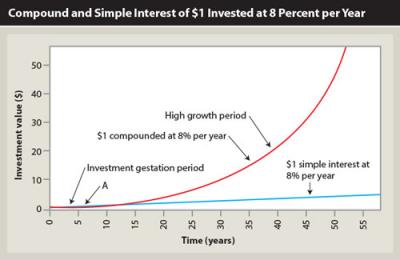
James Clear’s formulation in Atomic Habits has become genuinely famous: if you get 1% better every day for a year, you’ll be 37 times better by year’s end. The math checks out — (1.01)^365 = 37.78. Conversely, 1% worse every day yields approximately 0.03 of your starting point: near-total erosion.
But there are a few things worth being honest about here, because the metaphor gets applied sloppily in a lot of self-help content.
First, the 1% improvement isn’t literal. Clear is describing a directional principle, not a measurable daily metric. The compounding logic is meant to illustrate why small, consistent habits ultimately produce dramatic outcomes — not to suggest you can actually quantify daily 1% gains in most areas of life. Treat it as a mental model, not a measurement system.
Second, the compounding dynamic requires both time and consistency. The famous “plateau of latent potential” — Clear’s observation that habits often seem to produce nothing for a long time before suddenly yielding visible results — reflects something neurologically real. The brain’s habit encoding doesn’t produce overnight behavioral shifts; it’s gradual consolidation that eventually crosses a threshold into reliable automaticity.
“Habits are the compound interest of self-improvement. The same way that money multiplies through compound interest, the effects of your habits multiply as you repeat them.”
— James Clear, Atomic Habits (2018)The compounding principle also has a dark side that’s worth naming: bad habits compound too. The cigarette that feels harmless today, the night of poor sleep dismissed as a one-off, the hour of scroll-time that quietly adds up — all of these produce cumulative effects that only become visible in hindsight. The same mathematical logic that makes good habits powerful makes bad ones genuinely expensive over time.
Where the compounding model is most concretely supported by evidence is in skill development and physical health. A runner who adds 30 seconds to their daily run each week compounds into a marathon runner within a year or two. A writer who produces 200 words daily has a finished book in under six months. A person who invests €5 more per month every quarter sees portfolio growth that dramatically outperforms both the saver who started big-then-quit and the one who never started.
Missing One Day Rarely Matters — Missing Two in a Row Usually Does
One of the more reassuring findings from Lally’s UCL habit research was that missing a single day of a habit in formation didn’t meaningfully disrupt the trajectory toward automaticity. The habit kept consolidating. The plateau was reached on roughly the same schedule as participants who maintained perfect streaks.
What does derail habit formation is missing multiple consecutive days. Two days off doesn’t just double the interruption — it breaks the contextual cue-behavior association that’s still forming. The situational trigger loses salience. The mental framing of “I am someone who does this” starts to wobble. Research on performance habits suggests the critical threshold is somewhere around two consecutive missed days, though this varies by habit complexity and how established the habit already is.
Never miss twice. This is one of the most empirically grounded pieces of advice in the habit literature. Miss once — life happens. But treat the second consecutive miss as a categorical emergency. Do a scaled-down version if necessary (one pushup instead of thirty, one sentence instead of a full journal entry), but don’t let the chain break twice. The reduced version preserves the cue-behavior link even when full execution isn’t possible.
This also points to the importance of having “minimum viable versions” of your habits built into the design from the start. If your meditation habit is “10 minutes,” you have a binary — did it or didn’t. If you’ve also defined a fallback version — “at minimum, one conscious breath after I sit at my desk” — you almost never technically miss, which means the cue-behavior link never fully breaks.
The psychological mechanism at work is also worth understanding: streaks produce what behavioral economists call “loss aversion pressure.” Keeping a streak going becomes motivating not because of anticipated reward, but because breaking it feels like a loss. Habit tracking apps exploit this deliberately. It’s worth using it consciously.
Identity-Based Habits Are Dramatically More Durable Than Outcome-Based Ones
There’s a meaningful difference between “I want to run a marathon” and “I’m becoming a runner.” The first is an outcome you’re pursuing. The second is an identity you’re inhabiting. And the research suggests this distinction matters enormously for long-term habit adherence.
James Clear made this the philosophical center of Atomic Habits: every habit is a vote for a particular kind of person. The goal isn’t to complete a behavior; it’s to accumulate evidence that you’re the kind of person who does that behavior. Over time, the identity reinforces the habit, and the habit reinforces the identity.
Research published in the Journal of Personality and Social Psychology in 2024 found that framing new habits in terms of identity — “I am a person who prioritizes sleep” rather than “I want to sleep better” — increased habit adherence by 32% over a 12-week period. The researchers attributed this to identity-framing creating a motivational floor: when a behavior is part of how you define yourself, inconsistency creates psychological dissonance that itself becomes a motivator for return.
Interestingly, the identity shift doesn’t need to come first. This is where people sometimes get stuck — they think they need to “become” a runner before they can start running habits. Fogg and Clear both argue the opposite: the identity emerges from the behavior, not before it. You do the micro-habit first, consistently enough that the identity claim starts to feel true, and then the identity sustains the habit through difficult periods.
This is also why the framing of early, tiny habits matters. “I did one pushup” is a small behavioral fact. “I’m someone who exercises daily” is an identity statement that one pushup begins to make true. The narrative you build around your micro-habits shapes whether they become part of how you see yourself — which is ultimately what determines whether they last years rather than months.
Immediate Celebration Is Neurologically Non-Negotiable — Not Optional Encouragement
This is perhaps the most counterintuitive and most consistently under-used element of effective micro-habit design. When you complete a new habit, particularly in its early weeks, you need to generate a positive feeling immediately afterward. Not because it’s nice to feel good about yourself, but because of a specific neurological process: dopaminergic reinforcement of the behavior-reward sequence.
Dopamine isn’t just released in response to rewards. It’s released in anticipation of them, and its role in encoding behavior is bidirectional — the strength of dopamine signaling when a behavior completes directly influences how durably the behavior-outcome association is encoded in the striatum. If a behavior produces no felt reward, the basal ganglia has less biochemical reason to encode it as something worth repeating automatically.
BJ Fogg is quite direct about this in his work: the emotion generated at the moment of completion is what cements the habit. He calls it “Shine” — a felt sense of positive emotion immediately following the behavior. This doesn’t need to be grand. A genuine internal “yes, I did that,” a small fist pump, a moment of felt satisfaction — these aren’t silly. They’re neurochemically meaningful.
When designing a micro-habit, deliberately plan the celebration. What will you do or think in the two seconds immediately after completing it? This step is consistently skipped because it feels awkward or unnecessary. The research suggests it’s actually the element most responsible for whether a new habit survives its first 30 days. Make it specific and make it immediate.
For habits that don’t carry inherent pleasure — flossing, certain types of administrative work, cold-call prospecting — the “temptation bundling” technique provides an alternative dopamine pathway. Pair the neutral habit with something genuinely enjoyable: a specific playlist you only hear during that habit, a podcast episode you save for that activity, a favorite beverage that accompanies the task. The pairing eventually transfers some of the reward response to the habit itself.
Complexity Is the Silent Killer — One Habit at a Time Isn’t Advice, It’s Biology
If you’ve ever started a “total life overhaul” — new sleep schedule, new diet, new exercise routine, new meditation practice, new reading habit, new journaling practice, all at once — and wondered why everything collapsed within a fortnight, the answer isn’t that you’re undisciplined. It’s that you ran out of cognitive resources.
The prefrontal cortex, responsible for maintaining new behaviors before they automate, operates on a finite resource pool. Every new behavior you’re consciously managing draws from that pool. Stack too many simultaneously and the system degrades: decision fatigue sets in, willpower thins, and the cascade of collapse follows. This isn’t metaphor; it’s been demonstrated in cognitive psychology studies on ego depletion and self-regulatory resource models since Roy Baumeister’s foundational work in the 1990s.
The practical implication is blunt: one new micro-habit at a time, consolidated toward automaticity before adding the next. This feels frustratingly slow when you have a list of things you want to change. But the research consistently shows that habits installed sequentially, in full, last significantly longer and produce greater cumulative change than habits installed in parallel batches.
One more honest note on complexity: the habits that matter most are rarely the obvious, dramatic ones. The person who meditates for two minutes every morning after making coffee, writes one reflective sentence nightly, moves their body in some small way before every lunch, and invests 15 minutes in deliberate learning three times a week — that person, two years from now, looks genuinely different in ways that matter. Not because any single habit was impressive, but because the compounding is real and the installation was done correctly.
Tiny is not a consolation prize for insufficient ambition. Tiny is the actual mechanism.
The Bottom Line: Engineer the System, Not the Motivation
What makes micro-habit engineering different from the usual self-improvement advice is that it doesn’t ask you to try harder or want it more. It asks you to design better. The behaviors, the environment, the timing, the anchors, the rewards — these are design decisions, not character tests.
The neuroscience is settled: your brain will automate whatever you do consistently in stable contexts. The only question is whether you’re being intentional about what gets automated. Most people drift — their habits form around convenience, stress, and social pressure, not deliberate design. Micro-habit engineering is the practice of choosing otherwise, in the smallest, most sustainable increments possible.
That’s not a small ambition. Managed consistently over years, it’s about as large an ambition as there is.
Micro-Habit Engineering: Quick Reference
| Principle | What It Means in Practice | Source / Evidence |
|---|---|---|
| Forget 21 days | Expect 18–254 days depending on complexity; average is 66 | Lally et al., UCL, 2010 |
| Make it tiny | Design for your worst day; if that day can produce it, every day can | Fogg, Stanford Behavior Design Lab |
| Use if-then format | Specify exact cue + behavior; effect size d=0.65 vs. vague goals | Gollwitzer & Sheeran, 2006; Sheeran et al., 2024 |
| Anchor to existing habits | “After [X], I will [Y]” borrows neural pathways already established | Behavioral chunking research; Clear, 2018 |
| Redesign the environment | Reduce friction for good habits, increase it for bad ones; 58% higher success | Wood, USC; 2025 leadership study |
| Celebrate immediately | Generate positive emotion within 2 seconds of completion | Fogg Tiny Habits method; dopaminergic reinforcement research |
| Never miss twice | One miss is acceptable; two consecutive misses breaks cue-response encoding | Lally et al., 2010; practical habit persistence research |
| Identity over outcome | Frame as “I am” not “I want”; 32% higher adherence at 12 weeks | JPSP, 2024; Clear, 2018 |
| One at a time | Sequential installation prevents cognitive resource depletion | Self-regulatory resource models; Baumeister et al. |
- Lally, P., et al. (2010). How are habits formed: Modelling habit formation in the real world. European Journal of Social Psychology, 40(6), 998–1009. doi:10.1002/ejsp.674
- Fogg, B.J. (2019). Tiny Habits: The Small Changes That Change Everything. Houghton Mifflin Harcourt. tinyhabits.com
- Gollwitzer, P.M. & Sheeran, P. (2006). Implementation intentions and goal achievement: A meta-analysis of effects and processes. Advances in Experimental Social Psychology, 38, 69–119.
- Sheeran, P., et al. (2024). The when and how of planning: Meta-analysis across 642 tests. European Review of Social Psychology. doi:10.1080/10463283.2024.2334563
- Clear, J. (2018). Atomic Habits: An Easy and Proven Way to Build Good Habits and Break Bad Ones. Avery. jamesclear.com
- BMC Public Health (2025). Behavioral science meets public health: a scoping review of the Fogg behavior model. Springer Link
- Baretta et al. (2025). HabitWalk: A micro-randomized trial to understand habit formation in physical activity. Applied Psychology: Health and Well-Being. Wiley Online Library
- University of Surrey (2025). Does it really take 66 days to form a habit? Interview with Dr. Pippa Lally. surrey.ac.uk
More From FutureNow
15 Behavioral Nudging Mistakes Silently Destroying Your Results
Will Humans Really Live on Mars by 2035?