

Creepy Real-Life Experiments That Went Terribly Wrong
The full, disturbing record — from CIA mind-control labs to wartime vivisection chambers. Every case verified, every claim sourced.
TL;DR — What You Need to Know in 2 Minutes
- This isn’t a horror list — it’s a documented historical record. Every experiment covered here is confirmed by government investigations, declassified files, Senate hearings, peer-reviewed journals, or court proceedings.
- The common thread isn’t mad scientists in basements. Most perpetrators were credentialed researchers at respected universities and government agencies. That’s what makes this disturbing at a systemic level.
- Scale matters. Unit 731 likely killed between 10,000 and 250,000 people. The Tuskegee study ran for 40 years. MKUltra operated at over 80 institutions. These weren’t aberrations — they were programs.
- Most perpetrators faced no consequences. Unit 731’s leaders were given immunity by the US in exchange for research data. MKUltra’s architect Sidney Gottlieb destroyed most records in 1973 and retired quietly. Aubrey Levin of the Aversion Project later moved to Canada and practiced psychiatry for years.
- These cases directly produced modern bioethics. The Nuremberg Code (1947), the Belmont Report (1979), and the Declaration of Helsinki all trace directly to atrocities documented here.
- New documents continue to surface. A collection of 1,200+ declassified MKUltra files was published by the National Security Archive in December 2024.
- Realistic expectation: Some sections are deeply upsetting. The cases involving Unit 731 in particular contain descriptions of what can only be called torture. They’re included because the historical record demands it.
- Why These Experiments Still Matter
- Unit 731 — Japan’s House of Horrors (1932–1945)
- The Tuskegee Syphilis Study (1932–1972)
- Project MKUltra — The CIA’s War on the Human Mind (1953–1973)
- Ewen Cameron and the Montreal Experiments
- The Stanford Prison Experiment (1971)
- The Milgram Obedience Studies (1961–1962)
- The Guatemala Syphilis Experiments (1946–1948)
- The Aversion Project — South Africa (1969–1987)
- The Monster Study (1939)
- US Radiation Experiments — Cold War Human Testing
- The Aftermath: How These Cases Changed Research Ethics
- FAQ
- Final Thoughts
Why These Experiments Still Matter
There’s a version of this topic that gets written as entertainment — a listicle of creepy facts to scroll past between memes. This isn’t that. What follows is a serious accounting of moments when the scientific enterprise completely abandoned its own ethical foundations, often with the explicit backing of governments and institutions, always at tremendous human cost.
The reason to revisit these cases isn’t prurience. It’s that they remain the primary reason modern research ethics exist at all. Every time a clinical trial participant signs an informed consent form, every time an IRB reviews a proposed study, every time a researcher pauses to consider whether a subject might be harmed — that pause exists because of the cases below.
Understanding what actually happened — not the sanitized summaries, but the documented details — is part of what it means to take human dignity seriously. That’s the spirit in which this is written.
Sources: CDC / Tuskegee University records; National Security Archive, Dec. 2024; Pacific Atrocities Education; PBS Newshour Classroom, Jan. 2025
Unit 731 — Japan’s Biological Warfare Laboratory
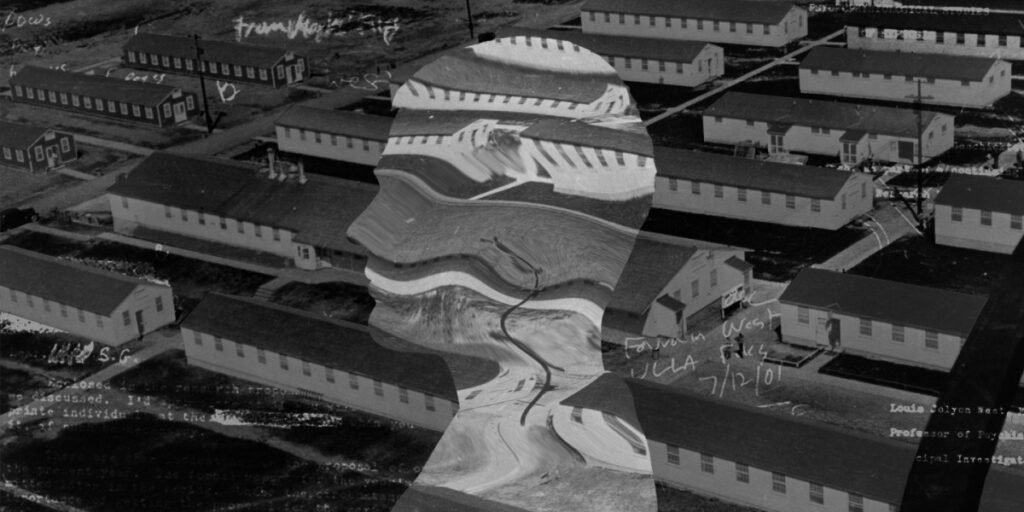
Pingfang, Manchuria · 1932–1945If you’re searching for the single darkest chapter in the history of scientific experimentation, this is probably it. Unit 731 was a covert research program of the Imperial Japanese Army’s Kwantung Army, established in 1932 under the command of Lieutenant General Shirō Ishii, a physician and medical officer who had developed an almost fanatical interest in biological weapons.
The facility at Pingfang, near Harbin in Japanese-occupied Manchuria, covered more than six square kilometers. It had its own rail line, its own airstrip, its own power plant, and its own prison. The prisoners — Chinese civilians, Russian POWs, Korean and Mongolian captives — were referred to by staff as maruta: “logs of wood.” That dehumanization was not incidental. It was policy.
Source: Dr. Sheldon Harris, Factories of Death, 1994; Atomic Heritage Foundation; Pacific Atrocities Education
The experiments conducted there defy easy categorization because they were so varied in their cruelty. Subjects were deliberately infected with plague, typhoid, cholera, dysentery, and anthrax — then denied treatment so researchers could document the disease’s progression. Physiologist Yoshimura Hisato ran frostbite experiments by submerging prisoners’ limbs in ice water until they froze solid, then testing different rewarming methods. Surviving witnesses later testified that frozen limbs made a sound like wood when struck.
Vivisections — surgical procedures performed on living, conscious subjects with no anesthesia — were carried out to study the effect of various pathogens on internal organs in real time. Surgeons trained in this facility reported that the “specimens” were sometimes still alive and screaming when their organs were removed.
“It’s all right to kill me, but please spare my child’s life.” — Testimony of a pregnant subject, vivisected while conscious, as reported by a Pingfang physician in post-war testimony
None of the mothers’ last requests were honored. The researchers wanted their data.
Perhaps the most legally extraordinary aftermath: the United States government, upon learning of the scale and sophistication of Unit 731’s research, struck a secret deal with Ishii and his key scientists. In exchange for sharing the biological weapons data, the researchers were granted immunity from prosecution at the Tokyo War Crimes Tribunal. The deal was confirmed in declassified US documents. Shirō Ishii died peacefully in Tokyo in 1959.
The Tuskegee Syphilis Study
Macon County, Alabama · 1932–1972The Tuskegee study is probably the most frequently cited example of research ethics failure in American medicine — and it deserves every citation it gets, because what the US Public Health Service did over four decades is almost incomprehensible in its sustained, deliberate cruelty.
In 1932, USPHS researchers enrolled 600 Black men from Macon County, Alabama: 399 who had been diagnosed with syphilis, and 201 as a control group. The men were told they were being treated for “bad blood” — a local term that covered a range of conditions. They were told treatment would be provided. Neither of those things was true.
The researchers’ actual aim was to observe the “natural progression of untreated syphilis in the Negro male” — a question with deeply racist embedded assumptions about whether the disease manifested differently across racial lines. The subjects received placebos. The syphilis was never treated. When penicillin was confirmed as a highly effective treatment in 1947 — more than a decade into the study — it was deliberately withheld from the participants.
Source: CDC Tuskegee Records; Reverby, S. (2009). Examining Tuskegee: The Infamous Syphilis Study and Its Legacy. University of North Carolina Press.
The study ran until 1972, when a USPHS venereal disease investigator named Peter Buxtun leaked the details to journalist Jean Heller at the Associated Press. The subsequent public outcry led to the study’s immediate termination and, eventually, a formal apology from President Bill Clinton in 1997 — a quarter-century after the program ended.
The study’s impact on Black Americans’ trust in the medical establishment persists to this day. Multiple studies have linked the Tuskegee disclosure to measurable declines in healthcare engagement among Black men in subsequent decades. A 2016 paper in the Journal of Political Economy found that after the 1972 revelations, Black men’s interactions with physicians declined significantly, with estimated life expectancy losses of roughly 1.4 years in heavily impacted counties.
Source: Alsan, M. & Wanamaker, M. (2016). “Tuskegee and the Health of Black Men.” The Quarterly Journal of Economics, 133(1), 407–455. doi.org/10.1093/qje/qjx029
Project MKUltra — The CIA’s War on Human Cognition
United States, Canada, Europe · 1953–1973MKUltra is the experiment that most people think they know about — and that almost everyone significantly underestimates. The pop culture version involves LSD and hippies. The actual documented record involves electroshock therapy on psychiatric patients, hypnosis on prisoners who didn’t consent, sensory deprivation chambers, psychological torture lasting months, and at least one confirmed death from unwitting drug administration.
The program was launched in April 1953 under CIA Director Allen Dulles, driven by Cold War fears that the Soviet Union and China had developed effective “brainwashing” techniques. Its operational chief was Sidney Gottlieb, a chemist and CIA officer who spent two decades running experiments that, in his own later admission, “made little scientific sense.”
Source: National Security Archive, December 2024; Senate Select Committee on Intelligence hearings, 1977
The program operated across more than 80 institutions — universities, hospitals, prisons, and CIA “safehouses” — in the United States, Canada, and beyond. Many subjects had no idea they were in an experiment. Federal narcotics agent George White, working as a CIA contractor, ran “Operation Midnight Climax” in San Francisco safehouses where unsuspecting men were given LSD in their drinks and observed through one-way mirrors. The agency funded a wing of Georgetown University Hospital, with the agreement that one-sixth of the space could be used for “experimental use” of patients who hadn’t been told.
The most publicly documented victim was Frank Olson, a civilian Army biochemist. In November 1953, Olson was secretly given LSD in his drink during a CIA work retreat. Nine days later, he fell from a tenth-floor window of the Statler Hotel in New York City. It was ruled a suicide at the time. When MKUltra was disclosed in the late 1970s, Olson’s family received a settlement and a personal apology from President Ford. In 1994, Olson’s family had his body exhumed; forensic pathologist James Starrs found evidence of blunt-force trauma to the skull before the fall, suggesting possible homicide. The case was never formally resolved.
“We don’t know how many people died, but a number did, and many lives were permanently destroyed.” — Stephen Kinzer, journalist and author of Poisoner in Chief: Sidney Gottlieb and the CIA Search for Mind Control (2019), speaking to NPR
In December 2024, the National Security Archive and ProQuest published a new scholarly collection of over 1,200 declassified documents on CIA behavior control programs — the most comprehensive release to date. The documents confirm the program’s scope extended well beyond LSD tests and included experiments in “erasing and reprogramming the human mind” at institutions including Georgetown University Hospital.
Ewen Cameron and the Montreal Experiments (MKUltra Subproject 68)
Allan Memorial Institute, Montreal · 1957–1964Donald Ewen Cameron was not a fringe figure. He was president of both the American Psychiatric Association and the World Psychiatric Association. He was chairman of the scientific committee of the American Mental Health Foundation. He was, by every conventional measure, at the absolute top of his profession.
He was also conducting some of the most disturbing experiments on psychiatric patients in recorded history, funded in part — without their knowledge — by the CIA under MKUltra Subproject 68.
Cameron’s theory was that mental illness could be treated by first “depatterning” a patient — effectively destroying their existing personality through intensive electroconvulsive therapy, drug-induced sleep lasting months, and sensory deprivation — and then “psychically driving” new, healthier behaviors through endlessly repeated taped messages. The theory had essentially no scientific basis. The results were catastrophic.
Patients admitted for relatively mild conditions — depression, anxiety, mild schizophrenia — emerged with profound amnesia. Many forgot their names, their families, their entire histories. Some lost the ability to perform basic functions like feeding themselves. Several became permanently institutionalized as a direct result of the “treatment” they received.
Source: Montreal Experiments (Wikipedia, sourced from Senate hearings); Anne Collins, In the Sleep Room, 1988
In 1992, the Canadian government acknowledged its role (through domestic funding that ran parallel to CIA funding) and paid compensation to 77 survivors. Ewen Cameron died in 1967, before any of this came to light. He was never held accountable.
The Stanford Prison Experiment
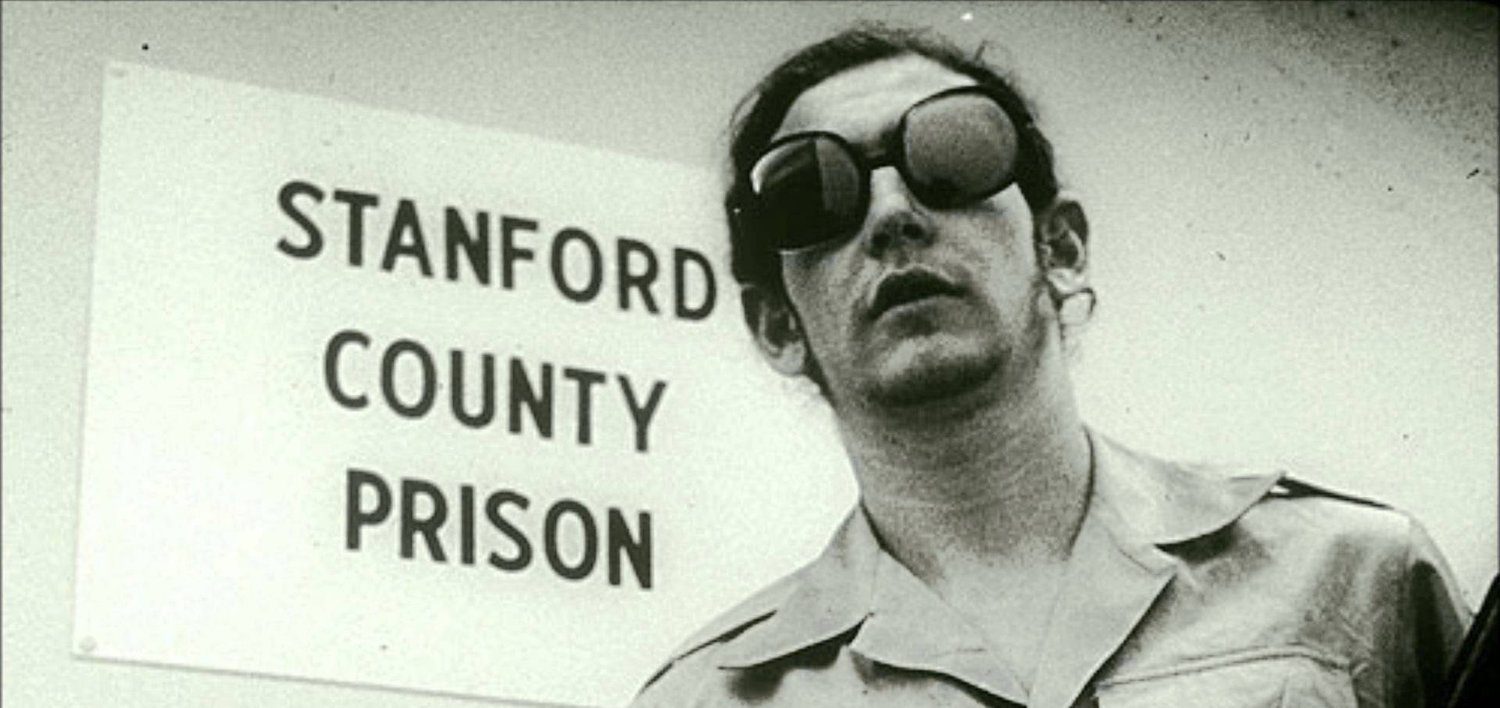
Stanford University, California · August 1971Philip Zimbardo’s prison experiment has been cited in introductory psychology textbooks for over fifty years as proof that ordinary people will behave monstrously when placed in positions of authority. That conclusion turns out to be significantly more complicated than the textbooks suggest — but the ethical catastrophe of the experiment itself is not in dispute.
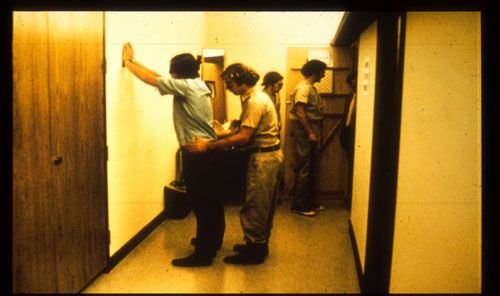
In August 1971, Zimbardo recruited 24 male college students, divided them randomly into “guards” and “prisoners,” and set them up in a mock prison in the basement of Stanford’s psychology department. The experiment was supposed to run for two weeks. It was halted after six days.
Within that time, guards had begun psychological abuse: sleep deprivation, humiliation, stripping prisoners of their names (replacing them with numbers), forcing them into stress positions, and using fire extinguishers on them. Three “prisoners” suffered acute emotional breakdowns and had to be removed from the study. One went on a hunger strike. Zimbardo himself became so absorbed in his role as “prison superintendent” that he initially failed to halt the abuses — it took his girlfriend (and later wife), psychologist Christina Maslach, visiting the basement and confronting him directly, to shut it down.
The science has since been substantially disputed. Investigative journalist Ben Blum obtained audio recordings in 2018 showing that the “guards” had been actively coached by Zimbardo and research assistants to behave more aggressively. The participants weren’t simply succumbing to situational pressure — some were actively encouraged to escalate. The BBC Prison Study (2006), conducted by psychologists Steve Reicher and Alex Haslam, found that when researchers were not pushing for escalation, participants organized resistance rather than automatically deferring to authority.
Nevertheless, the experiment produced lasting harm to participants without adequate informed consent about what it might involve psychologically, and was never reviewed by an independent ethics board before it began.
The Milgram Obedience Studies
Yale University, New Haven · 1961–1962Stanley Milgram’s obedience experiments are, in a sense, the most important psychological studies of the twentieth century. They’re also ethically troubling — though considerably less so than most other entries on this list, which is worth acknowledging clearly.
Milgram, a Yale social psychologist working in the aftermath of the Nuremberg trials, wanted to understand how ordinary Germans had followed orders to participate in atrocities. His experimental design was ingenious and disturbing in equal measure: a subject was instructed by an authority figure in a lab coat to administer what they believed to be electric shocks to a “learner” (actually an actor) whenever the learner gave a wrong answer. The shocks appeared to escalate to 450 volts — labeled “XXX” on the control panel — accompanied by increasingly anguished cries from the learner behind a partition.
In Milgram’s original series, approximately 65% of subjects administered what they believed to be the maximum, potentially lethal shock. They did so not because they were sadistic, but because an authority figure told them it was necessary for the research, and because the social context made stopping feel difficult.
The ethical problem: participants showed clear signs of extreme distress — trembling, stuttering, sweating, laughing nervously. They were being pushed through a genuinely traumatic experience under false pretenses, with no adequate prior informed consent. Post-experiment debriefs reduced but couldn’t eliminate the psychological harm. Milgram was criticized by the American Psychological Association for years afterward, and the study helped precipitate the modern IRB review system.
Source: British Psychological Society, Research Digest; Milgram, S. (1963). “Behavioral Study of Obedience.” Journal of Abnormal and Social Psychology, 67(4), 371–378.
The Guatemala Syphilis Experiments
Guatemala City · 1946–1948This one is less famous than Tuskegee, in part because it wasn’t publicly disclosed until 2010 — when medical historian Susan Reverby, while researching the Tuskegee study, found detailed records in the archived papers of John Cutler, one of the study’s lead researchers. The records showed what Cutler had concealed for six decades.
Between 1946 and 1948, US government-funded physicians deliberately infected more than 1,300 people in Guatemala — psychiatric patients, prisoners, soldiers, and commercial sex workers — with syphilis, gonorrhea, and chancroid. The purpose was to test whether penicillin could prevent infection after exposure. None of the subjects gave informed consent. Many were already vulnerable due to institutionalization or incarceration.
Source: PBS NewsHour Classroom, January 2025; Presidential Commission for the Study of Bioethical Issues Report, 2011.
President Obama formally apologized to Guatemalan President Álvaro Colom in 2010. Secretary of State Hillary Clinton called the experiments “clearly unethical.” The Presidential Commission for the Study of Bioethical Issues concluded in 2011 that the experiments were “clearly unethical even by the standards of the time.”
The same John Cutler had previously worked on the Tuskegee syphilis study. The same basic logic — that poor, institutionalized, or racialized populations were acceptable experimental subjects with no meaningful right to consent — ran through both programs, separated by geography and paperwork, nothing more.
The Aversion Project — South Africa’s Conversion Program
1 Military Hospital, Pretoria · 1969–1987Apartheid South Africa’s Aversion Project is less well-known outside southern Africa, and that relative obscurity is itself a form of injustice. What happened at Ward 22 of the 1 Military Hospital in Voortrekkerhoogte was medical torture, documented and acknowledged as such in the records of the Truth and Reconciliation Commission.
The program was established in 1969 under psychiatrist Aubrey Levin, who claimed to have a “cure” for homosexuality. Gay and lesbian conscripts identified during military service — often through informants or chaplaincy interviews — were referred to Ward 22, where they underwent forced “aversion therapy”: electric shocks administered while viewing same-sex imagery, combined with rewards when shown opposite-sex imagery. When these methods failed, the program escalated to chemical castration through hormonal drugs and, in some documented cases, involuntary gender reassignment surgery.
Source: Kaplan R., South African Medical Journal, 2001; PMC Archives; TRC submissions, 1999
Victims were discharged from the military with no support, in many cases with incomplete or botched surgical procedures. The South African Medical Association issued a public apology in 1995. Aubrey Levin emigrated to Canada, where he worked as a forensic psychiatrist — treating sex offenders, with a certain grim irony — until he was arrested in 2010 for sexually assaulting a patient. He was convicted in 2013 and sentenced to five years in prison. His crimes in South Africa were never prosecuted.
The Monster Study
Iowa City, Iowa · 1939The name was coined by the research team themselves, which tells you something. In 1939, University of Iowa graduate student Mary Tudor conducted a study under the supervision of well-known speech pathologist Wendell Johnson to test the theory that stuttering was caused by environmental labeling rather than innate neurological factors.
Tudor took 22 orphaned children from the Iowa Soldiers’ Orphans’ Home and divided them into two groups. The control group received positive, encouraging feedback about their speech. The experimental group — including 10 children who had normal speech — were told repeatedly that they had “very bad” speech, that they were stuttering, and that they should stop speaking until they could do so correctly. The intent was to artificially induce stuttering in normal-speaking children by making them self-conscious and afraid of speaking.
Several of the children who received negative feedback developed lasting speech problems. Some withdrew socially. The study was never published in Johnson’s lifetime — reportedly because of embarrassment about the methods — but internal records were discovered by journalist Jim Dyer in 2001, who broke the story in the San Jose Mercury News.
In 2007, the University of Iowa reached a settlement with six surviving subjects, paying each between $60,000 and $150,000 in damages. The university publicly apologized, acknowledging that the study “caused significant psychological harm to some of the participants.”
Source: Dyer, J. (2001). “Ethics and Orphans: The ‘Monster Study.'” San Jose Mercury News, June 10, 2001; Reynolds, G. (2003). “The Stuttering Doctor’s ‘Monster Study.'” New York Times Magazine, March 16, 2003.
US Cold War Radiation Experiments
United States · 1944–1974Between the end of World War II and the early 1970s, the United States government conducted or funded hundreds of radiation experiments on human subjects — many of whom had no idea what was being done to them. The scale was revealed only in 1993, when Energy Secretary Hazel O’Leary declassified tens of thousands of related documents in response to investigative journalism by Eileen Welsome of the Albuquerque Tribune, who later won a Pulitzer Prize for the reporting.
The experiments ranged across a disturbing spectrum. Plutonium was injected into 18 patients, many of them terminal cancer cases — though in at least some cases, the patients’ prognoses were apparently overstated to make them suitable subjects. Prisoners in Oregon and Washington state had their testes irradiated to test radiation’s effect on human fertility. Children at the Fernald School for the mentally retarded in Massachusetts were fed radioactive iron and calcium in their breakfast cereal, with parental consent obtained through a letter that described the study only as “special diet research.” People were exposed to whole-body radiation at high doses. Patients with brain tumors were injected with uranium salts.
Source: Advisory Committee on Human Radiation Experiments (ACHRE) Final Report, 1995. US DOE Office of Human Radiation Experiments
The Advisory Committee on Human Radiation Experiments (ACHRE), convened by President Clinton in 1994, spent 18 months reviewing the documents and published its final report in 1995. The committee found that while some experiments met ethical standards, a significant number did not — including cases where subjects were used without informed consent, and cases where vulnerable populations were deliberately targeted because they were less able to refuse.
Comparative Overview: Scale, Duration, and Accountability
| Experiment | Period | Est. Victims | Perpetrators prosecuted? | Ethics law it helped create |
|---|---|---|---|---|
| Unit 731 | 1932–1945 | 10,000–250,000+ | No (immunity granted by US) | Nuremberg Code (1947) |
| Tuskegee Syphilis Study | 1932–1972 | 128+ direct deaths | No | National Research Act (1974); Belmont Report (1979) |
| MKUltra | 1953–1973 | Unknown (records destroyed) | No | Federal ethics guidelines, IRB reform |
| Montreal Experiments | 1957–1964 | ~100+ severely harmed | No (Cameron died 1967) | Influenced Canadian research ethics law |
| Guatemala Syphilis | 1946–1948 | 1,308 infected; 83+ deaths | No | Highlighted gaps in international ethics oversight |
| Aversion Project | 1969–1987 | ~900 subjected to torture | No criminal prosecution for SA crimes | TRC proceedings; South African medical ethics reform |
| US Radiation Experiments | 1944–1974 | 16,000+ subjects | No | ACHRE report; strengthened informed consent rules |
| Stanford Prison Experiment | 1971 | Psychological harm, 24 participants | N/A | IRB review requirements tightened |
| Monster Study | 1939 | Up to 10 children with lasting harm | No (civil settlement, 2007) | Child participant protections strengthened |
The Aftermath: How These Cases Changed Research Ethics
One of the harder truths of this history is that every major reform in research ethics came not from the scientific community policing itself, but from external pressure: journalists, politicians, lawyers, and the survivors and families of victims who refused to let the stories stay buried.
The timeline of reform reflects this:
The Nuremberg Code is established following the Doctors’ Trial. Ten principles governing human experimentation, with voluntary consent as the cornerstone. It was the first international standard — created explicitly in response to Nazi and Japanese war crimes.
The Declaration of Helsinki is adopted by the World Medical Association, building on the Nuremberg Code and introducing protections specifically for research on patients, where the power imbalance between doctor and subject is most acute.
The National Research Act passes in the US, directly in response to the Tuskegee disclosures. It establishes the requirement for Institutional Review Boards (IRBs) to independently review research involving human subjects before it begins.
The Belmont Report is published, establishing three core principles — respect for persons (informed consent), beneficence (do no harm), and justice (fair distribution of research burdens and benefits) — that remain the foundation of US research ethics today.
The Common Rule is adopted, codifying federal protections for human subjects across 15 federal agencies. Updated in 2018 to address new research contexts including big data and biospecimen research.
The National Security Archive releases 1,200+ declassified documents on CIA behavior control programs, adding substantially to the documented record of MKUltra’s scope and confirming involvement of major medical institutions.
Frequently Asked Questions
Some produced data that informed later medicine, but “useful data” does not retroactively justify the methods. Unit 731’s hypothermia data was shared with Western researchers post-war, and some of it appeared in medical literature for years before its origins were questioned. The Guatemala syphilis experiments did generate findings about penicillin’s prophylactic properties. But the Presidential Commission’s conclusion in 2011 stands: the experiments were “clearly unethical even by the standards of their time.” Usefulness and ethics are separate questions.
The structural safeguards — IRBs, the Common Rule, informed consent requirements, FOIA access, independent ethics boards — make a program of that scale harder to hide. But they don’t make unethical research impossible. The history of research ethics is a history of reforms chasing abuses, not preventing them. Vigilance, transparency, and independent oversight remain essential precisely because institutional pressure to cut ethical corners hasn’t disappeared.
Several converging factors: secrecy (records were often classified or destroyed), the institutional protection of universities and government agencies, Cold War political considerations (Unit 731’s immunity deal), and the simple passage of time. By the time many of these programs were publicly disclosed, the key perpetrators had died, retired, or moved jurisdictions. The Aversion Project’s Aubrey Levin is unusual in that he did face prosecution — but for crimes committed in Canada, not South Africa.
An Institutional Review Board is an independent committee required by federal law (the National Research Act, 1974) to review research involving human subjects before it begins. The IRB’s job is to assess whether the study’s risks are proportionate to its potential benefits, whether informed consent procedures are adequate, and whether vulnerable populations are appropriately protected. It exists because the alternative — letting researchers self-regulate — produced Tuskegee, MKUltra, and the Monster Study.
Largely no, at least not in the form Zimbardo originally claimed. The discovery that guards had been coached to be aggressive significantly undermines the “power of the situation” argument. The BBC Prison Study, designed partly to correct for Zimbardo’s methodological problems, found that participants organized collective resistance rather than automatically deferring to authority. The experiment remains important as a historical event and an ethical case study, but its specific empirical claims should be treated skeptically.
The lower figure (10,000–12,000 at the Pingfang facility specifically) comes from historian Sheldon Harris’s 1994 book Factories of Death, based on testimony, survivor accounts, and documentary evidence. The higher figure (up to 250,000) accounts for field tests of biological weapons in Chinese cities, which is harder to document precisely because Japan destroyed most Unit 731 records at the war’s end. The 2002 Tokyo District Court ruling acknowledged that germ warfare experiments were conducted, even while denying compensation claims. The range reflects the limits of the surviving evidence, not uncertainty about whether the atrocities occurred.
The Nuremberg Code (1947) is a set of 10 research ethics principles developed after the Doctors’ Trial following World War II. Its central requirement is voluntary informed consent. In the US, it’s not directly enacted into law, but its principles are incorporated into the Common Rule, the Belmont Report, and FDA regulations. Internationally, it’s been substantially superseded by the Declaration of Helsinki (1964, updated multiple times since), which is binding on World Medical Association members and referenced in most national research ethics frameworks.
The primary researcher, John Cutler, never published it — apparently because even in the ethical environment of the 1940s, some colleagues had expressed discomfort. Cutler’s files were archived after his death and sat unexamined until historian Susan Reverby stumbled onto them while researching the Tuskegee study. There was no active cover-up in the final decades, just institutional neglect and the absence of anyone looking. The 2010 disclosure came from a historian, not a whistleblower or government review.
Milgram’s finding — that about 65% of subjects administered what they believed to be maximum voltage — was real and consistently replicated. But the popular interpretation (“ordinary people will follow orders to commit atrocities”) is considerably more complex than that. Later analysis by social psychologist Gina Perry found that many subjects suspected the setup was fake. And the results varied significantly depending on framing: when subjects were told they were “responsible” for any harm, compliance dropped sharply. The experiments showed that situational pressure matters — not that humans are helplessly obedient.
Several of the children who received negative feedback developed lasting speech problems and social withdrawal. Because they were orphans with no family advocates, the psychological damage went largely unaddressed for decades. The University of Iowa settled with six surviving subjects in 2007, paying between $60,000 and $150,000 each, and issued a formal public apology. Wendell Johnson, the supervising researcher, built his reputation on the theory of “diagnosogenic” stuttering — that stuttering is caused by labeling — but never acknowledged the harm done in the study that helped develop that theory.
There have been notable cases, though nothing of the scale documented here. Facebook’s 2014 “emotional contagion” experiment, in which the company manipulated the news feeds of 700,000 users without their knowledge to study emotional responses, drew significant ethical criticism. Overseas clinical trials in low-income countries have faced ongoing scrutiny for inadequate consent procedures. The CRISPR baby scandal (2018), in which Chinese researcher He Jiankui created the first genetically edited human embryos without adequate ethical oversight, led to his criminal conviction in China. The framework has improved — but the temptation to cut corners hasn’t disappeared.
Several excellent archives exist: the National Security Archive at George Washington University (MKUltra documents, including the 2024 release); the CDC’s Tuskegee records; the US Department of Energy’s Office of Human Radiation Experiments archive (ACHRE final report); the TRC submission database for South Africa’s Aversion Project. Most can be accessed freely online. The Princeton Special Collections published a detailed MKUltra analysis in October 2025 drawing on recently declassified records.
Final Thoughts: What the Record Actually Demands
Reading through all of this in one sitting is genuinely difficult, and I won’t pretend otherwise. What strikes me most, looking across the full sweep of it, isn’t the individual monsters — it’s the systems. The institutions. The normal people who showed up to work, wrote grant applications, attended conferences, and collected their salaries while presiding over atrocities.
Ewen Cameron was president of the American Psychiatric Association. The Tuskegee study was government-funded and published in journals. Unit 731’s scientists returned to Japanese universities and medical schools after the war, their reputations intact because the deal that covered their crimes was secret. The Aversion Project ran at a military hospital with peer review and institutional backing.
The disturbing implication isn’t that evil is rare and comes from outside respectable institutions. It’s that respectable institutions, under sufficient pressure and with insufficient oversight, are capable of producing evil at scale. That’s the actual lesson — not “science went wrong,” but “institutions without adequate external accountability eventually do.”
The reforms that followed — IRBs, informed consent requirements, the Belmont Report, the Common Rule — are imperfect. They’re also genuinely essential. Every one of them was built on the wreckage of something documented here.
Knowing this history, in detail, matters. Not as a kind of horror tourism, but because the pressures that produced these programs — nationalism, institutional self-interest, racialized dehumanization, Cold War fear, the perceived importance of the research question — aren’t historical artifacts. They’re still operative. The only difference is that now, at least in principle, we have rules.
Key Sources & References
- National Security Archive. (2024, December 23). “CIA Behavior Control Experiments Focus of New Scholarly Collection.” nsarchive.gwu.edu
- Harris, S. (1994). Factories of Death: Japanese Biological Warfare 1932–45 and the American Cover-Up. Routledge.
- Reverby, S. (2009). Examining Tuskegee: The Infamous Syphilis Study and Its Legacy. University of North Carolina Press.
- Advisory Committee on Human Radiation Experiments (ACHRE). (1995). Final Report. US Government Printing Office. DOE archive
- Alsan, M. & Wanamaker, M. (2018). “Tuskegee and the Health of Black Men.” Quarterly Journal of Economics, 133(1). doi:10.1093/qje/qjx029
- Presidential Commission for the Study of Bioethical Issues. (2011). “Ethically Impossible”: STD Research in Guatemala from 1946 to 1948. Georgetown Bioethics Archive
- Kaplan, R. (2001). “The Aversion Project — Psychiatric Abuses in the South African Defence Force During the Apartheid Era.” South African Medical Journal, 90(3), 216–217. PMC
- Collins, A. (1988). In the Sleep Room: The Story of the CIA Brainwashing Experiments in Canada. Key Porter Books.
- Kinzer, S. (2019). Poisoner in Chief: Sidney Gottlieb and the CIA Search for Mind Control. Henry Holt.
- Milgram, S. (1963). “Behavioral Study of Obedience.” Journal of Abnormal and Social Psychology, 67(4), 371–378.
- British Psychological Society. (2025). “The 10 Most Controversial Psychology Studies Ever Published.” bps.org.uk
- PBS NewsHour Classroom. (2025, January). “Review Highlights Unethical Moments in Medical Research History.” pbs.org
- Princeton Special Collections. (2025, October). “The CIA’s Quest for Mind Control: MK-Ultra and Its Princeton Connections.” Princeton.edu
More from FutureNow
About
What If AI Became President?