
This Wearable Translates in Real Time — And It’s Wild
Earbuds that interpret live speech in 40+ languages, bone-conduction sensors that hear through your skull, and a $14.8 billion market quietly reshaping how humans talk to each other. Here’s what these devices actually do — and where they still fall embarrassingly short.
Hearing a stranger’s words translated into your ear — live — before they’ve even finished the sentence. That’s where we are now.
TL;DR — What You Need to Know in 2 Minutes
- The technology is real and usable today. Dedicated translation earbuds like the Timekettle W4 Pro and W4 achieve 95–98% accuracy in common language pairs under controlled conditions, with latency as low as 0.2 seconds from speech to ear.
- The big platforms have entered the space. Apple AirPods Pro 3, Google Pixel Buds Pro 2, and Samsung Galaxy Buds 3 Pro all offer built-in live translation as of late 2025. Google extended real-time translation to any Android headphones in December 2025 via a Gemini 2.5-powered update.
- The market is growing fast. The AI translator device market was valued at $4.2 billion in 2025 and is projected to reach $14.8 billion by 2034 (CAGR 15.1%), per DataIntelo research.
- It still stumbles on real-world complexity. Idioms, strong accents, technical jargon, overlapping speech, and loud environments all degrade accuracy meaningfully. This is not a universal interpreter yet — don’t rely on it for medical or legal conversations.
- The best dedicated device right now is the Timekettle W4 Pro for professionals, and the W4 (base model) for casual travelers — though Google’s new Gemini-powered update makes the Pixel Buds Pro 2 a compelling all-in-one for Android users.
- Bone-conduction voice capture is the most interesting development of the past 12 months — it lets the device hear your voice through skull vibrations, cutting through ambient noise at levels up to 100dB.
- One realistic warning: all tested devices still require a paired smartphone with the vendor’s app. Fully standalone translation earbuds remain elusive.
The Moment It Stops Feeling Like a Gimmick
There’s a specific second — and once you’ve experienced it, you remember it — when real-time translation earbuds stop feeling like a tech novelty and start feeling like something fundamental has shifted. You’re standing in front of someone who speaks no language you share, and you hear their words in your ear, in your own language, a fraction of a second after they’ve finished speaking. Not a phone passed back and forth. Not an awkward pause while an app spins. Just… speech, translated, in your ear.
That experience has been theoretically possible for several years. The issue was always the gap between the demo and the real world. Early translation earbuds had latency measured in uncomfortable seconds, stumbled on accents, and produced outputs that ranged from roughly intelligible to genuinely confusing. The category got a reputation — fair at the time — as a solution looking for a problem.
That reputation is now out of date. It’s worth being specific about why.
The Timekettle W4, released in 2025, introduced bone-conduction voice capture to consumer translation earbuds — a sensor that detects your voice through the vibrations in your skull and jaw rather than ambient microphones. The practical difference: in environments as loud as 100dB (a rock concert, a construction site, a crowded tradeshow floor), the device can still isolate your voice and achieve up to 98% translation accuracy, according to Timekettle’s published specifications. Separately, Google rolled out a Gemini 2.5-powered upgrade in December 2025 that extended live audio translation to any connected headphones on Android — not just Pixel Buds — with support for 70+ languages.
These two events, arriving within months of each other, mark a genuine threshold. The hardware got meaningfully better. The platform got dramatically more accessible. It’s worth taking seriously what that combination actually means.
How Real-Time Translation Actually Works
There’s a lot of marketing language floating around this space — “AI-powered,” “neural,” “instant” — that doesn’t explain much. The actual pipeline is more interesting than the buzzwords suggest, and understanding it helps you predict where a given device will succeed or fail.
The Three-Step Pipeline
Every real-time speech translation system, whether it’s in an earbud, a phone app, or a handheld device, runs through the same three stages: automatic speech recognition (ASR), neural machine translation (NMT), and text-to-speech synthesis (TTS). Your spoken words are captured by microphones, converted to text by ASR, that text is translated by an NMT model, and the translated text is converted back to speech and played in your ear. That whole loop typically takes between 0.2 and 3 seconds depending on the device, the languages involved, and network conditions.
The weakest link has historically been ASR — converting imperfect real-world speech into text accurately enough for the NMT model to work with. Accents, background noise, speech disfluencies, and overlapping voices all create errors at this stage that cascade forward. A mistranscribed word going into a translation engine often produces something that’s not just wrong but confusingly wrong.
Edge vs. Cloud Processing
The other key architectural decision is where the heavy computation happens. Most high-end dedicated earbuds (including the Timekettle line) handle ASR partly on-device or on a connected phone, then send text to cloud-based NMT engines — typically a combination of DeepL, Google Translate, and Microsoft Translator — for translation. This hybrid approach balances accuracy (cloud NMT models are vastly more capable than anything that fits on a wearable chip) with latency and privacy concerns.
A September 2025 research paper published in the International Journal of Research and Analytical Studies (IJRASET) studied this architecture systematically. The researchers found that a hybrid edge-cloud system could achieve end-to-end translation latencies of approximately 2–3 seconds for common language pairs, while maintaining translation quality “comparable to established NMT benchmarks.” The key innovation in their framework was three-tier processing: the wearable handles audio capture and basic ASR chunking, an edge server handles the heavier lifting, and the cloud handles final NMT and contextual refinement.
“The design leverages TensorFlow Lite for on-device inference, optimized transformer architectures with model compression, and adaptive audio processing to accommodate variable acoustic conditions.” — IJRASET, September 2025, “Real-Time Speech Translation for Wearable Devices”
Bone Conduction: The Genuinely Interesting Hardware Story
Bone-conduction technology isn’t new — it’s been used in hearing aids and specialized military headsets for years. What’s new is its application specifically to translation accuracy in consumer earbuds. When you speak, your voice travels through the air (captured by conventional microphones) but also creates vibrations that propagate through the bones of your skull and jaw. A bone-voiceprint sensor picks up those vibrations, which are unique to your voice and completely unaffected by ambient noise.
The Timekettle W4 uses a hybrid pickup system: one bone-conduction sensor plus two conventional directional microphones, with vector noise cancellation (VNC) processing the combined signal. The result, at least in published testing, is voice isolation in environments where conventional microphones would fail completely. This matters in real translation contexts — conferences, restaurants, markets, airports — because those are exactly the environments where people actually need real-time interpretation.
The Devices Worth Your Attention in 2026
The market has split into two distinct categories: dedicated translation devices (purpose-built primarily for language interpretation, with regular earbuds as a secondary function) and mainstream earbuds with translation layered on top. They serve different users and have different tradeoffs worth understanding before you spend money.
| Device | Languages | Latency | Offline | Price (approx.) | Best For | Category |
|---|---|---|---|---|---|---|
| Timekettle W4 Pro | 40 languages, 93 accents | ~0.2s | Yes (13 packs) | ~$449 | Business, professionals, calls | Dedicated |
| Timekettle W4 (base) | 43 languages, 96 accents | ~0.2–1s | Yes (13 packs) | ~$199–$250 | Travel, face-to-face casual | Dedicated |
| Anfier M3 | 144 languages | 1–3s | Yes (8 major languages) | ~$129–$179 | Budget travelers, wide language coverage | Dedicated |
| Google Pixel Buds Pro 2 | 70+ (via Gemini/Google Translate) | 1–2s | Yes (Tensor chip) | ~$229 | Android ecosystem users | Mainstream |
| Apple AirPods Pro 3 | Limited (growing) | 1–2s | Limited | ~$249 | iPhone users wanting all-in-one | Mainstream |
| Samsung Galaxy Buds 3 Pro | Via Galaxy AI | 1–3s | Partial | ~$229 | Samsung Galaxy ecosystem | Mainstream |
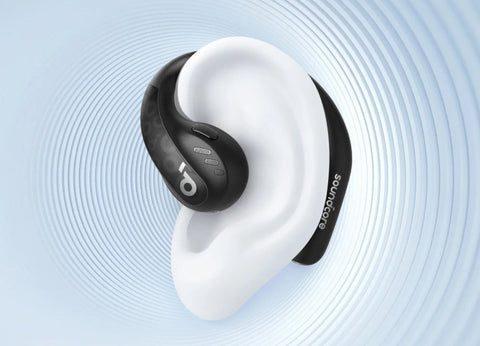
| Soundcore Aerofit 2 AI | 100 languages | 1–2s | Partial | ~$99–$149 | Comfort-focused, long wear | Dedicated |
| Vasco E1 | 51 languages | 1–3s | Very limited | ~$299 | Users prioritizing privacy | Dedicated |
Prices are approximate as of May 2026 and subject to change. Accuracy figures are based on published manufacturer claims and independent reviews from SoundGuys, CyberNews, and Gear Diary; real-world performance varies by language pair, speaker, and environment.
The Dedicated vs. Mainstream Tradeoff
If translation is a primary requirement — say you work with international clients, travel frequently to non-English-speaking countries, or are part of a multilingual family — a dedicated device like the W4 Pro genuinely outperforms mainstream earbuds in conversation flow and bidirectional accuracy. The one-on-one mode, where both speakers each wear one earbud, is the headline differentiator: conversations develop a natural rhythm that you simply cannot replicate with a phone screen between you.
If translation is occasional — navigating a foreign city once or twice a year, ordering food, asking directions — the Pixel Buds Pro 2 or AirPods Pro 3 are more practical. You’re not buying a single-purpose device, the language support is broad, and you’re already carrying the phone anyway. The tradeoff is that translation feels like a feature, not the core experience.
Timekettle W4 Pro
Simultaneous interpretation mode, professional transcription, phone call translation, and the most natural two-way conversation flow tested. The standout for serious users.
Timekettle W4
Bone-conduction accuracy without the professional-tier price. Face-to-face translation only (no call translation), but excellent for travel and casual multilingual situations.
Google Pixel Buds Pro 2
Deep Gemini integration, 70+ languages, offline capability via Tensor chip. Requires a Pixel phone for best performance, but the ecosystem integration is seamless.
Apple AirPods Pro 3
Live Translation needs refinement but works. If you’re already in Apple’s ecosystem and want translation layered onto excellent ANC and sound quality, this is the practical choice.
Google’s December 2025 Move Changed Everything
In December 2025, Google did something that got less attention than it deserved. The company pushed a Gemini 2.5 Flash Native Audio-powered upgrade to the Google Translate app that extended real-time audio translation to any connected Bluetooth or wired headphones on Android — not just Pixel Buds. The feature launched in beta for users in the US, Mexico, and India, with plans to expand globally and to iOS in 2026.
The upgrade is notable on two levels. First, it democratized a capability that had previously required either dedicated hardware or specific Google earbuds. A $20 pair of headphones can now, theoretically, function as a real-time interpreter. Second, and more significantly, Google stated explicitly that the system doesn’t just translate words — it interprets intent, preserves the tone, emphasis, and cadence of each speaker. That’s a qualitative shift, not just a quantitative one. The system is attempting to carry something closer to meaning across languages rather than just mapping words.
The competitive implications are significant. Dedicated translation device makers now face a situation where the software layer — previously a moat for companies like Timekettle — is increasingly commoditized. Their durable advantage is hardware: the bone-conduction sensors, the bidirectional conversation modes, the purpose-built interaction design. That’s worth paying for if translation is a core need. For casual users, Google’s move may have shifted the math considerably.
The Accuracy Question — Honest Numbers
Translation accuracy figures are everywhere in this category, and they need some unpacking before you take them at face value. “95–98% accuracy” sounds impressive until you ask: accuracy on what, tested by whom, under what conditions?
Most published accuracy figures — including Timekettle’s own 98% claim for the W4 — are measured in relatively controlled environments using common phrases in major language pairs (English-Mandarin, English-Spanish, English-French). These are the optimal conditions for neural machine translation: high-resource language pairs with abundant training data, clear speech, minimal background noise, and grammatically complete sentences.
In real-world conditions, performance degrades. Testing by Certified Languages International (cited in Digital Digest’s January 2026 analysis of wearable tech trends) found that models including the Timekettle M3 and Anfier M3 “often stumble on complex sentences, idioms, or fast-paced dialogue,” with background noise making things meaningfully worse. The W4 Pro’s bone-conduction technology partially addresses the noise problem, but the linguistic complexity challenges remain. Idiomatic expressions, regional dialects, technical vocabulary, and rapid conversational back-and-forth all reduce accuracy below the headline figures.
A reasonable working estimate based on cross-referencing multiple independent reviews: 90–95% accuracy for clear, structured speech in major language pairs under moderate noise conditions. Drop that to 75–85% for strong accents, uncommon language pairs, fast casual conversation, or specialized vocabulary. Offline mode typically performs 5–10 percentage points lower than online mode due to the smaller models used.
“Accuracy can vary with complex sentences, heavy accents, specialized jargon, or very noisy environments. They are excellent for everyday conversations, travel, and basic business communication but may not be suitable for highly technical discussions.” — Soundcore, Translation Earbuds Guide, March 2026
For the W4 Pro specifically, multiple independent reviewers including CyberNews (April 2026) and Gear Diary (October 2025) found accuracy “around 95%” in practical testing — slightly below the manufacturer’s claimed figure but still genuinely impressive for conversational use. Latency in the W4 Pro is consistently reported below 0.5 seconds in online mode, with some reviewers noting sub-0.2s response times for common phrases.
The latency picture deserves a separate note. A 1–3 second delay, reported for some devices and some language pairs, is more disruptive to conversation than it sounds. Human conversation operates on rhythm, and a 2-second gap between utterance and response is enough to break that rhythm, making dialogue feel stilted and artificial. The best devices — the W4 Pro in particular — consistently stay below 0.5 seconds in online mode, which is near the threshold for natural conversational flow.
Where It Actually Performs Well (and Where It Doesn’t)
The honest answer is that real-time translation earbuds are genuinely excellent for a specific range of situations and genuinely inadequate for others. Matching the device to its actual use case matters a lot more than the raw specs suggest.
Where It Excels
Structured business conversations — meetings with international partners, client calls, negotiations with clear turn-taking — are where these devices perform closest to their marketed potential. Speech is deliberate, vocabulary is predictable, and the back-and-forth rhythm works well with sub-second latency. The W4 Pro’s simultaneous interpretation mode and automatic meeting transcription are genuinely useful features here, not just box-ticking specs.
Travel navigation — ordering food, asking for directions, hotel check-in, transit questions — is the other strong use case. Sentences are short, the vocabulary is common, and the stakes for occasional errors are low. This is where the Anfier M3’s 144-language coverage (including less common languages) becomes more valuable than the W4’s superior accuracy in common pairs.
Healthcare settings — which DataIntelo’s March 2026 market report identifies as a major growth driver — are increasingly using translation earbuds for clinician-patient consultations in multilingual communities. The privacy-preserving aspect (no interpreter in the room, no phone passed between people) and the naturalistic conversation flow both matter here. That said, medical accuracy requirements are extremely high, and no device has been validated for clinical use as of mid-2026.
Where It Falls Short
Idiomatic speech and cultural nuance remain genuinely hard. A Spanish speaker’s “no hay mal que por bien no venga” isn’t going to come back as a clean English proverb. You’ll get something approximately correct but linguistically flat.
Multi-person group conversations — more than two speakers, overlapping dialogue, people talking over each other — quickly overwhelm current systems. Most devices are optimized for two-person bidirectional conversation, and group scenarios with three or more speakers in multiple languages aren’t reliably handled.
Legal, medical, and high-stakes contexts requiring certified accuracy are not appropriate for any current wearable translation system. The 5–10% error rate that’s acceptable for ordering dinner is not acceptable for a consent form or a contract clause.
Limitations They Don’t Put on the Box
⚠ Honest Limitations — Read Before Buying
- Smartphone dependency: Every tested device requires a paired smartphone running the vendor’s app. Fully standalone real-time translation earbuds do not exist in consumer form as of mid-2026. If your phone dies or loses connectivity, most functionality goes with it.
- Online requirement for full performance: Offline translation modes support only a subset of languages (typically 8–13 language pairs) and perform meaningfully less accurately than online mode. In areas with poor connectivity, expect degraded performance at exactly the moment you most need the device.
- Battery constraints: The W4 Pro offers six hours of continuous translation. Longer trips, full travel days, or extended meetings will require recharging from the case, which is manageable but not irrelevant for heavy users.
- Conversation rhythm disruption: Even the best devices introduce some degree of conversational pause. Rapid-fire banter, interruptions, and finishing each other’s sentences don’t work well. Natural overlap is not supported.
- Privacy concerns with cloud processing: Your spoken conversations are being sent, as text at minimum, to cloud translation APIs. For sensitive business discussions, this is worth considering carefully. Some devices (Vasco line) emphasize local processing as a differentiator precisely for this reason.
- App quality varies significantly: The hardware quality of Timekettle devices is consistently praised; the companion app receives mixed reviews for interface design and occasional connectivity issues in long-term use.
- Not suitable for legal, medical, or safety-critical interpretation: This should be obvious but isn’t always stated clearly enough in marketing. These devices are consumer tools, not professional interpreting services. Error rates that are fine for casual conversation are not acceptable in contexts where accuracy is legally or medically consequential.
What Comes Next: Voice Cloning, Neural Interfaces, AI Context
The translation wearable space is developing unusually quickly right now, which means the landscape in 2027 will look meaningfully different from 2026. A few developments are worth watching specifically.
AI Voice Cloning
Timekettle has confirmed an AI Voice Clone feature planned for 2026 deployment to W4 devices as a free update. The feature will replicate the wearer’s voice characteristics and deliver translated speech in a voice that sounds like them rather than a generic TTS voice. The psycholinguistic implications are interesting — a translated voice that still sounds like you may make conversations feel more genuinely personal, reducing the uncanny-valley quality that current TTS outputs sometimes produce.
Multi-Language Group Conversations
Several manufacturers have stated multi-speaker, multi-language group conversation support as a near-term development target. The technical challenge is significant: speaker diarization (identifying who is speaking) plus per-speaker language identification plus simultaneous multi-stream NMT is computationally demanding and latency-sensitive. It’s plausible by late 2026 or 2027 for structured scenarios (meetings with defined speakers) before it works for unstructured group conversation.
Contextual AI Understanding
The Gemini 2.5-powered upgrade Google deployed in December 2025 is an early signal of a broader shift: translation systems that understand context across a conversation, not just sentence by sentence. A human interpreter remembers what was discussed twenty minutes ago and uses that context to disambiguate ambiguous terms. Current machine systems don’t, reliably. Applying large language model context windows to translation — maintaining conversational state across an entire meeting — would be a meaningful accuracy improvement, especially for technical conversations where terminology is established early and referenced later.
Neural Interface Research
DataIntelo’s March 2026 market report flags brain-computer interface research as a “long-term frontier for wearable translation, with early-stage projects exploring direct neural-to-language translation that could eventually complement or supplement acoustic input methods.” This is very early-stage — we’re talking research labs, not products — but the direction is being seriously explored. The idea of a system that picks up intended speech rather than produced speech would eliminate the acoustic noise problem entirely. That’s a 10-year horizon, not a three-year one, but it’s worth knowing the research exists.
The Market Behind the Technology
It’s worth grounding all of this in the commercial context, because the scale of investment flowing into this category explains why development is accelerating so quickly.
The global language translation device market was valued at $1.9 billion in 2025, growing to an estimated $2.1 billion in 2026, with a trajectory to $3.8 billion by 2031 and $6.5 billion by 2035, at a compound annual growth rate of 13.5%, according to Global Market Insights’ February 2026 report. The AI translator device market specifically (a broader category including software) was valued at $4.2 billion in 2025 and is projected to reach $14.8 billion by 2034 (CAGR 15.1%), per DataIntelo’s March 2026 analysis.
The wearable segment is growing fastest within that market — up 15.3% annually — driven by demand for hands-free, context-appropriate translation in enterprise, healthcare, and consumer travel. Three forces are simultaneously pushing adoption: post-pandemic cross-border business revival, the improvement in neural machine translation models (which reduced the minimum viable hardware requirement), and the entry of major consumer electronics brands (Apple, Google, Samsung) legitimizing the category for mainstream buyers who wouldn’t have considered a dedicated translation device.
FAQ — 13 Real Questions, Honest Answers
Do real-time translation earbuds actually work, or is this mostly marketing?
They work — meaningfully better than two years ago — but with real limitations. For structured conversations in major language pairs (English-Spanish, English-Mandarin, English-French), dedicated devices like the Timekettle W4 Pro achieve approximately 90–95% accuracy in real-world conditions. That’s genuinely useful for travel and business. For idioms, technical jargon, strong regional accents, or noisy environments, performance degrades noticeably. The marketing claims of “instant, perfect translation” are overstated. The reality is useful, not miraculous.
What’s the difference between the Timekettle W4 and W4 Pro?
The W4 (base model) is designed for face-to-face translation — one-on-one conversations in person. The W4 Pro adds phone call translation, remote meeting translation, multimedia translation (subtitling video content), and AI semantic segmentation designed for business contexts. The W4 Pro costs significantly more (~$449 vs. ~$200–250 for the W4). For casual travelers, the W4 is the better value. For professionals who need translation across meetings, calls, and media content, the W4 Pro justifies the premium.
Can I use regular earbuds for real-time translation, or do I need specialized hardware?
Since December 2025, yes — Google extended real-time translation to any Bluetooth or wired headphones on Android via the Translate app (powered by Gemini 2.5). This makes real-time translation accessible without dedicated hardware. However, specialized earbuds offer advantages in noise handling, bidirectional conversation mode, and conversation flow that generic headphones can’t replicate. For occasional use, your existing headphones are probably fine. For regular multilingual conversations, dedicated hardware is worth considering.
What’s the best translation earbud for travelers?
For most travelers, the Timekettle W4 hits the best balance of accuracy, language coverage, price, and portability. The Anfier M3 is worth considering if you’re traveling to regions with less common languages, given its 144-language support. If you’re already an Android user with a Pixel phone, the Google Pixel Buds Pro 2 may be the most convenient option given the deep Gemini integration and offline capability via the Tensor chip.
Do these work without an internet connection?
Most devices offer limited offline modes. The Timekettle W4 and W4 Pro support offline translation in 13 language pairs (you download packs in advance). The Google Pixel Buds Pro 2 has offline capability powered by the Tensor chip in Pixel phones, which is among the more capable offline options. Offline accuracy is meaningfully lower than online, and language coverage is significantly reduced. Don’t rely on offline mode for anything beyond basic communication in a handful of pre-downloaded language pairs.
How accurate is bone-conduction translation really?
Timekettle claims up to 98% accuracy in 100dB environments using the W4’s bone-voiceprint sensor. Independent testing (Gear Diary, October 2025) found translations “accurate” and noted that “the translation simply seems to happen in real time” — broadly confirming the system works as advertised in ideal conditions. The 98% figure is specifically for the voice isolation capability in noise — it shouldn’t be conflated with overall translation accuracy across all languages, which sits around 90–95% in real-world use.
Are these suitable for medical or legal interpreting?
No, not reliably. A 5–10% error rate is acceptable for ordering food or navigating a city; it’s not acceptable for a medical consent conversation, a legal document review, or any situation where a translation error has serious consequences. No current wearable translation device has been validated for clinical or legal use. For those contexts, use a certified human interpreter.
What’s the battery life like in practice?
The Timekettle W4 Pro offers approximately six hours of continuous translation and twelve hours of audio playback per charge, with the case providing additional charges. In heavy use, that means you’ll likely be recharging mid-day for travel. For occasional translation use within an otherwise normal day of music and calls, battery life is less of a constraint. Larger dedicated translator devices (like the Pocketalk S Plus) offer more continuous battery but sacrifice the form factor of earbuds.
What’s the latency like in real conversation?
The Timekettle W4 Pro is consistently reported at approximately 0.2–0.5 seconds latency in online mode — close enough to natural conversation that the rhythm isn’t heavily disrupted. Mainstream earbuds like the Pixel Buds Pro 2 and AirPods Pro 3 tend to run 1–2 seconds. Offline modes and less common language pairs typically add 1–2 seconds over online mode. Sub-1-second latency is important for natural conversation flow; 2+ seconds noticeably disrupts dialogue rhythm.
Is my conversation being recorded and stored?
This depends on the device and its cloud processing architecture. Devices that route translation through third-party APIs (DeepL, Google Translate, Microsoft Translator) are sending your speech — at minimum as text after ASR — to those cloud services, subject to their privacy policies. Timekettle states that conversation data is not stored long-term, but you should review current privacy policies for any device before using it for sensitive conversations. Local processing devices (like Vasco’s lineup) are designed specifically for users with stronger privacy requirements.
Which language pairs work best?
English to/from Spanish, Mandarin Chinese, French, German, Japanese, and Korean are the strongest performing pairs on virtually every device — these are high-resource language pairs with the most training data. Arabic, Portuguese, Hindi, and Russian perform well on the major platforms. Less common languages, regional dialects, and language pairs that don’t route through English (e.g., Japanese to Turkish) vary significantly by device. Always check whether your specific language combination is explicitly supported, not just the headline language count.
Will AI voice cloning make translated conversations feel more natural?
Potentially, yes. Timekettle has announced an AI Voice Clone feature for the W4 that will replicate the user’s voice characteristics in the translated output — so the other person hears a translated voice that sounds like you, not a generic TTS system. This is planned as a free update in 2026. The psycholinguistic impact of hearing someone’s actual voice speaking your language (rather than a robotic substitute) could meaningfully increase the naturalness of translated conversations. This is early-stage functionality and warrants independent testing before drawing strong conclusions.
Is it worth buying a dedicated translation device, or should I just use my phone?
For occasional use (a trip or two per year, basic navigation), your phone with Google Translate or the new Gemini-powered Live Translate is probably sufficient and costs nothing beyond the phone you already own. For regular multilingual communication — frequent international travel, working with overseas clients, multilingual family — dedicated hardware genuinely improves the conversation experience. The hands-free, screen-free bidirectional conversation mode of devices like the W4 Pro produces a qualitatively different (and better) interaction than passing a phone back and forth or both staring at a screen.
Final Verdict
Here’s what I’d tell someone trying to decide whether to take this technology seriously: the threshold has been crossed. Real-time translation earbuds are no longer a curiosity or a party trick. In the right conditions, for the right use cases, they work well enough to meaningfully change how you communicate across language barriers.
That said, “meaningfully change” is not the same as “solve.” The technology still has genuine limitations — sensitivity to noise, struggles with idioms and accents, smartphone dependency, and the inherent awkwardness of any latency in a naturally-paced conversation. The 2026 version of this technology is better compared to a very good first draft than to a finished product.
The Timekettle W4 Pro is the best dedicated device right now for anyone with serious multilingual communication needs. Google’s December 2025 platform update made real-time translation accessible to virtually any Android user with headphones — which is a genuine structural shift for casual users. Apple will presumably close the gap on iOS in 2026.
The category is worth watching closely over the next 18 months. Voice cloning, multi-speaker support, contextual AI, and continued NMT improvements are all converging. The version of this technology that exists in late 2027 will likely be the one that mainstream adoption actually hinges on. We’re in the last lap of the prototype era.
Until then: if you need it, it works well enough. Just go in with accurate expectations rather than the ones the marketing materials want you to have.
More From FutureNow
The Smartest Side Hustle for the AI-Driven World
The Flying Bike Shocking the World in 2026
The 2026 Tri-Fold Foldable Cellphone Nobody Believed Could Exist: Revolutionizing Productivity
5 Crazy Gadgets That Will Rule 2026: Revolutionary Tech to Supercharge Productivity and Innovation