
By Derek Chen · Published September 25, 2026 · Updated October 30, 2026 · 9 min read
Short answer: No. As of October 30, 2026, no laptop-class rollable device that fits in a pocket has been sold or even demonstrated. Exactly one rollable laptop is on sale, Lenovo’s ThinkBook Plus Gen 6 Rollable, and it is a full 14-inch business notebook. Every newer rollable laptop shown since is a concept, and every one is a normal-sized laptop whose screen rolls out larger. None is a device that shrinks.
Key facts at a glance
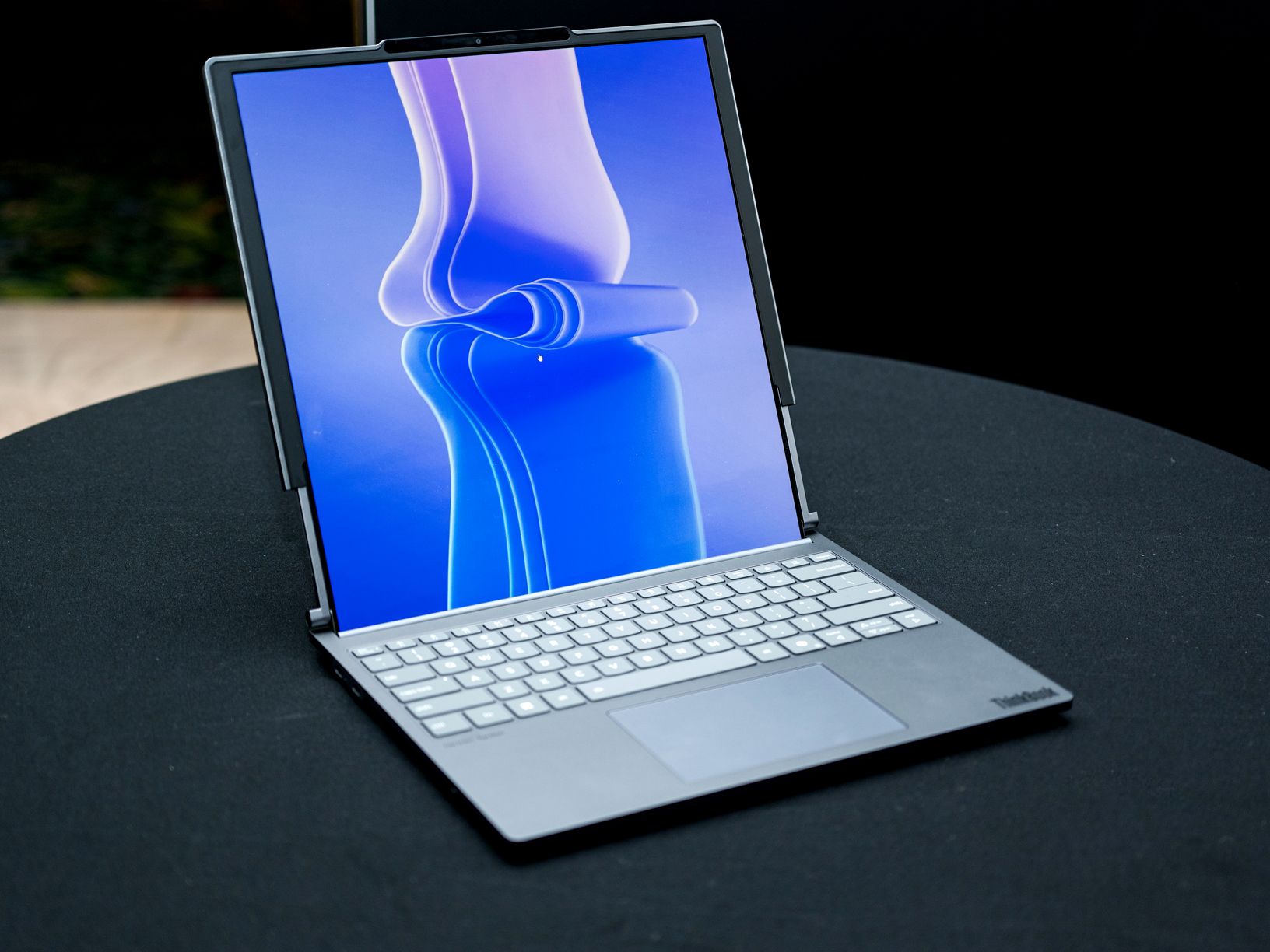
- On sale: only the ThinkBook Plus Gen 6 Rollable, shipping since June 19, 2025. It grows from 14 to 16.7 inches.
- Price: Lenovo and Intel announced, “from $3,499.” By late July 2025, Lenovo’s own US store listed it at $3,299. Check the current price before you buy.
- Concepts only: the ThinkPad Rollable XD and Legion Pro Rollable (CES 2026) and Project Swan (IFA 2026). None has a price or release date.
- Pocket-scale rollable: only Motorola’s Rizr phone concept (2023). It never shipped, and no rollable phone has ever been sold commercially.
- Closest real pocketable computers: a fold-based phone (Galaxy Z TriFold) and a tiny clamshell (GPD Pocket 4). Neither is a rollable.
Type “rollable laptop pocket” into a search engine, and you will find roundups that imply this product exists or is one launch away. It isn’t. This guide maps what has shipped, what has only been shown, and why pocket size is a different problem from the one rollable screens are currently solving. Everything below is based on published reporting and reviews. FutureNow has not tested these devices, and I say where a claim rests on someone else’s testing.
Rollable and near-pocket devices compared (October 2026)
| Device | Status | Screen (diagonal growth) | Price | Fits a pocket? |
|---|---|---|---|---|
| Lenovo ThinkBook Plus Gen 6 Rollable | On sale since June 2025 | 14″ → 16.7″ vertical (+19%) | $3,499 announced; $3,299 on Lenovo’s US store in mid-2025 | No. 14″ clamshell, 1.7 kg |
| Lenovo ThinkPad Rollable XD Concept | Concept (CES 2026) | 13.3″ → about 16″ (about +20%), plus a small rear screen | None announced | No |
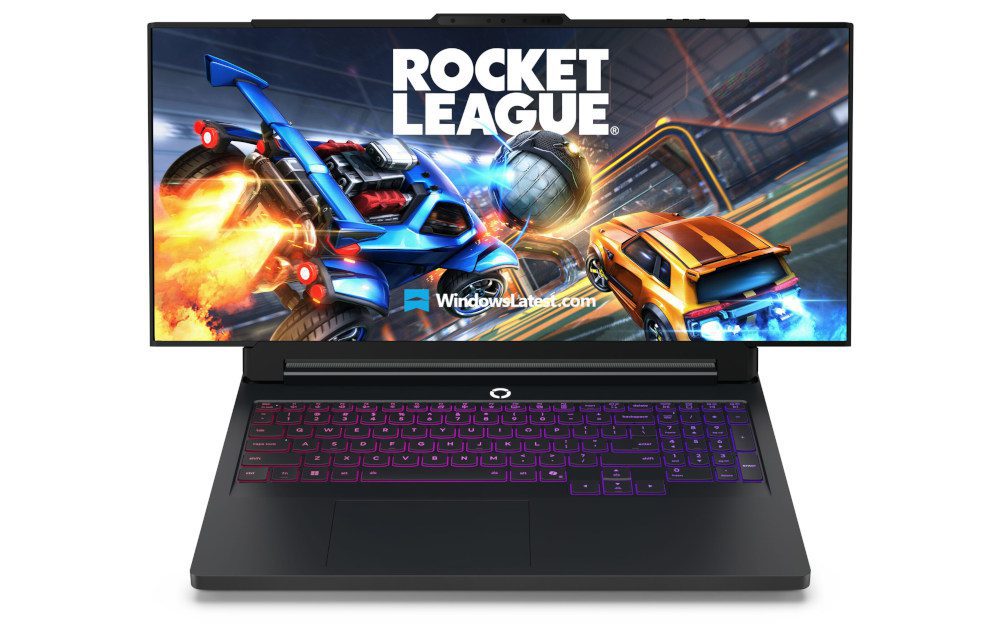
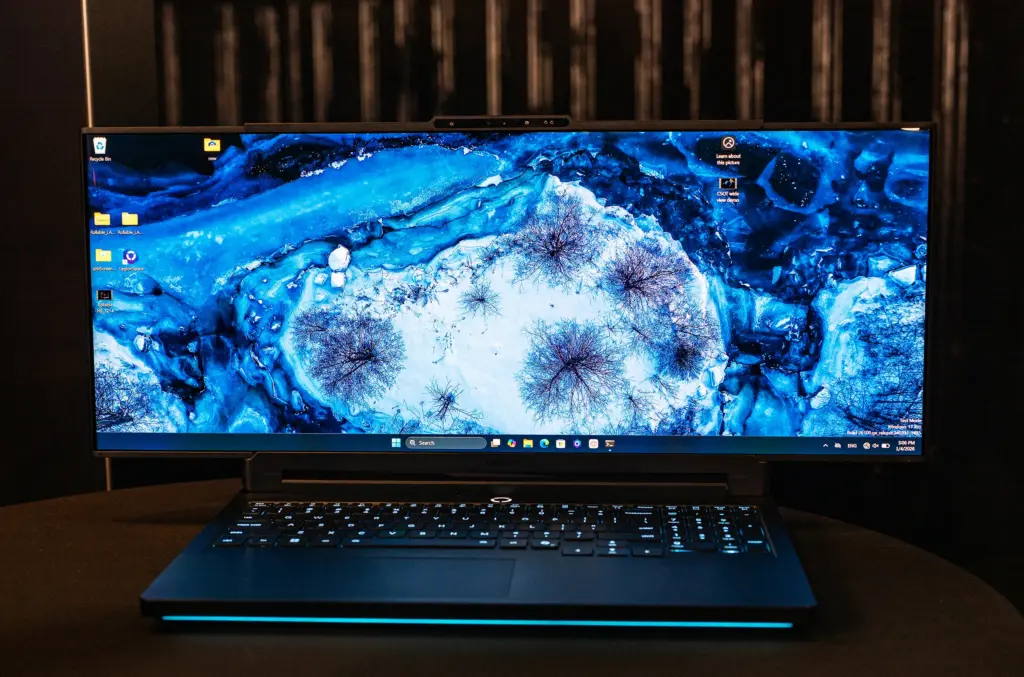
| Lenovo Legion Pro Rollable Concept | Concept (CES 2026) | 16″ → 21.5″ → 24″ horizontal (+50%) | None announced | No |
| Lenovo ThinkBook “Project Swan” | Concept (IFA 2026) | 14″ → 17″ horizontal (+21%) | None announced | No. 1.6 kg |
| Motorola Rizr | Phone concept (MWC 2023) | 5″ → 6.5″ (+30%) | Never officially priced | Yes, but it’s a phone and was never sold |
| Samsung Galaxy Z TriFold | On sale (US since Jan 30, 2026) | 6.5″ cover → 10″ inner (fold, not roll) | $2,899 | Phone-sized when closed; phone/tablet, not a laptop |
| GPD Pocket 4 | On sale | 8.8″ fixed | About $830–$1,470 at 2024 launch | Coat pocket, not back pocket. About 770 g |
Diagonal growth is calculated from manufacturer-stated sizes. It is not area growth.
The one rollable laptop you can actually buy
Lenovo showed the idea as a concept in 2022, put a near-final version on the CES 2025 stage, and began selling the ThinkBook Plus Gen 6 Rollable in the US on June 19, 2025. The original target was Q1 2025, so it slipped about five months.
| Spec | Detail |
|---|---|
| Display | Flexible OLED, 120 Hz. 14″ at 2000 × 1600; extended 16.7″ at 2000 × 2350 |
| Extension | Motorized, about 10.5 cm, about 5 seconds, via a dedicated key or webcam gesture |
| Processor/memory | Intel Core Ultra 7 258V (Lunar Lake); up to 32 GB LPDDR5x, soldered |
| Storage | Up to 1 TB; only short M.2 2242 drives fit |
| Battery | 66 Wh |
| Ports | 2 × Thunderbolt 4, 3.5 mm audio; Wi-Fi 7, Bluetooth 5.4 |
| Size/weight | 303.5 × 230.6 × about 19 mm; 1.69 kg (3.73 lb) |
| Durability rating | “At least” 20,000 rolls, per Intel as reported by Notebookcheck |
Specs from Notebookcheck’s full review and the Intel/Lenovo launch announcement.
What the review found. Notebookcheck scored it 84% and called it a crazy concept that is actually useful. Its main praise is that you get one large 16.7-inch screen in a familiar 14-inch clamshell, with no stands or accessories. Its measured display averaged about 393 nits and covered about 99% of DCI-P3.
The same review lists real drawbacks:
- Extended mode works in portrait orientation only.
- There is no touchscreen.
- The hinge opens to only about 120°, which makes lap use awkward when extended.
- The extended screen has a visible crease near the center.
- At 1.7 kg, it is heavier than thin 14-inch rivals, which Notebookcheck lists at 1.2–1.3 kg.
- It has only two ports.
- The US warranty is a standard 12 months.
- The OLED lacks Gorilla Glass, so the lid is more prone to flex.
On that 20,000-roll rating: extending the screen 10 times a day would take about five and a half years to reach 20,000 rolls. That is my arithmetic, not Lenovo’s claim. It is a manufacturer rating, not independent long-term data. No multi-year durability testing has been published.
On price: the $3,499 figure came from the CES and Intel announcements. Lenovo’s own store then listed the single US configuration at $3,299. Regional pricing differs. For example, CES coverage cited €2,799 for Europe. Older “$2,999” and “$5,000” figures circulating online do not match any source I could confirm.
The concepts since 2025, and what they have in common
Lenovo has kept the idea moving:
- ThinkPad Rollable XD Concept (CES 2026): a 13.3-inch screen that expands to about 16 inches, with a smaller rear screen for collaboration.
- Legion Pro Rollable Concept (CES 2026): a gaming laptop built on the Legion Pro 7i. Its 16-inch OLED unrolls from both ends to 21.5 or 24 inches using a dual-motor, tension-based system. Pre-show reports pointed to an RTX 5090, but treat the exact GPU as unconfirmed. Lenovo has not given a price or retail date.
- Project Swan (IFA 2026, Berlin): a 14-inch ThinkBook prototype whose screen rolls sideways to a 17-inch 16:9 display. PCWorld reports an effective resolution going from 2,258 × 1,672 to 2,850 × 1,672. It is 17.9 mm thick and weighs 1.6 kg. Android Authority notes there is no price or date and that durability and battery questions remain. Windows Central’s hands-on called it the first rollable concept that feels like something people might actually buy.
The pattern is clear: each concept starts from a normal laptop and makes the screen bigger. The pitch is a larger workspace without carrying a second monitor. Nobody is pitching a smaller computer.
Why “pocket-sized” isn’t just a matter of time
None of the following comes from a manufacturer statement. It is my reading of the published specs.
- The size gap is large. The ThinkBook Plus Gen 6 has a footprint of 303.5 × 230.6 mm. The GPD Pocket 4, a real pocket-class laptop, measures 207 × 145 mm. That makes the ThinkBook about 2.3 times the footprint and about 2.2 times the weight (1.69 kg vs. about 0.77 kg).
- The chassis is already full. Notebookcheck says the ThinkBook’s cooling is smaller than on a typical clamshell, and that only short 2242 SSDs fit “likely due to volume constraints.” The screen’s roller, the keyboard, the 66 Wh battery, and the cooling already compete for the same space.
- The only pocket-scale rollable is a phone, and phones haven’t shipped one either. Oppo, Motorola and Tecno have all shown rollable phone concepts over about six years. None has been sold. Rumors point to a Samsung rollable phone in 2027. That is a rumor, and it would still be a phone, not a laptop.
A pocket rollable laptop would need a keyboard, a battery, and a motorized roller inside a volume smaller than anything shown so far. No manufacturer has announced one, so any date you see for it is speculation.
What is actually pocket-sized today
If “pocket” is the real requirement, there are two shipping options. Neither is a rollable.
- Samsung Galaxy Z TriFold: on sale in the US since January 30, 2026 at $2,899. It has a 6.5-inch cover screen and unfolds twice to a 10-inch display. It is a phone/tablet hybrid, not a laptop replacement.
- GPD Pocket 4: an 8.8-inch, 2560 × 1600 clamshell running full Windows at about 770 g. Notebookcheck called it a real laptop replacement with a few compromises. It fits a coat or cargo pocket, not a back jeans pocket, and its screen does not grow.
Should you buy the ThinkBook Plus Gen 6 Rollable?
- Consider it if you work in tall documents (spreadsheets, code, PDF markup), travel light, and want a second screen’s worth of space without a second monitor.
- Skip it if you want performance per dollar. Notebookcheck compares it with dual-screen laptops like the Asus ZenBook 14 Duo, which sit around the low $2,000s.
- Skip it if you need a touchscreen, landscape-only layouts, or lots of ports.
- Wait if you want the “pocket” version from the headline. Nothing concrete exists to wait for. The nearest signals are Project Swan, which Lenovo has not committed to selling, and a rumored Samsung rollable phone.
What to watch next
- Whether Lenovo gives Project Swan a price and date. As of today, it has neither.
- Whether the Legion or ThinkPad XD concepts get a retail path. Lenovo also won a Red Dot design-concept award for a “second-generation rollable laptop” called MaxArt. That is still a design concept, not a product.
- CES in January 2027, where Lenovo has shown a rollable concept for two years running.
Frequently asked questions
Does a pocket-sized rollable laptop exist?
No. No manufacturer has sold or demonstrated a laptop-class rollable device that fits in a pocket. The rollable laptops that exist or have been shown are all full laptop-sized, even rolled up.
What is the only rollable laptop I can buy?
The Lenovo ThinkBook Plus Gen 6 Rollable, on sale since June 19, 2025. Its OLED screen extends from 14 to 16.7 inches.
How much does it cost?
Lenovo and Intel announced, “from $3,499.” Lenovo’s US store listed it at $3,299 in mid-2025. Verify the current price on Lenovo’s store, since regional and promotional pricing varies.
Are the Legion Pro Rollable and Project Swan for sale?
No. Both are concepts with no announced price or release date.
What’s the difference between rollable and foldable?
A foldable screen bends at a fixed hinge. A rollable screen unspools from a motorized roller, so there is no hinge line. Note that Notebookcheck still observed a crease near the center of the ThinkBook’s extended screen.
Has any rollable phone been sold?
No. Concepts from Oppo, Motorola, and Tecno never reached shoppers, and a Samsung rollable is rumored for 2027.
Is the ThinkBook’s rolling mechanism durable?
Intel says the display is rated for “at least” 20,000 rolls. That is a manufacturer figure, and no independent multi-year durability data has been published.
When will a pocket rollable laptop arrive?
No manufacturer has announced one, so there is no reliable date. Treat any specific date you see as speculation.
What should I buy if I need a pocketable computer now?
A GPD Pocket 4 if you want a full Windows laptop in a very small body. A Galaxy Z TriFold if you want a phone that opens to a 10-inch display.
Keep exploring: Why your next computer could be an earbud, the Next-Level Gadgets category, or the full FutureNow blog.
Derek Chen covers emerging hardware form factors for FutureNow. This article was produced with AI-assisted research and drafting, disclosed per FutureNow’s editorial policy. It relies on published reviews and manufacturer announcements rather than hands-on testing, and attributes any claim that rests on someone else’s testing. Facts were checked against sources as of October 30, 2026.