
Work & Money · Gen Z
How Gen Z Is Really Making Money
The side hustle generation isn’t chasing fame. It’s chasing survival — and building something more resilient than a salary while it does.
There’s a version of this story that’s aspirational and clean: Gen Z figured out the creator economy, monetized their passions, and built lifestyle businesses while older generations were still filing TPS reports. Some of that is true. But the fuller picture is messier — and more interesting. The hustle isn’t primarily about ambition. It’s about arithmetic. Wages aren’t covering the bills.
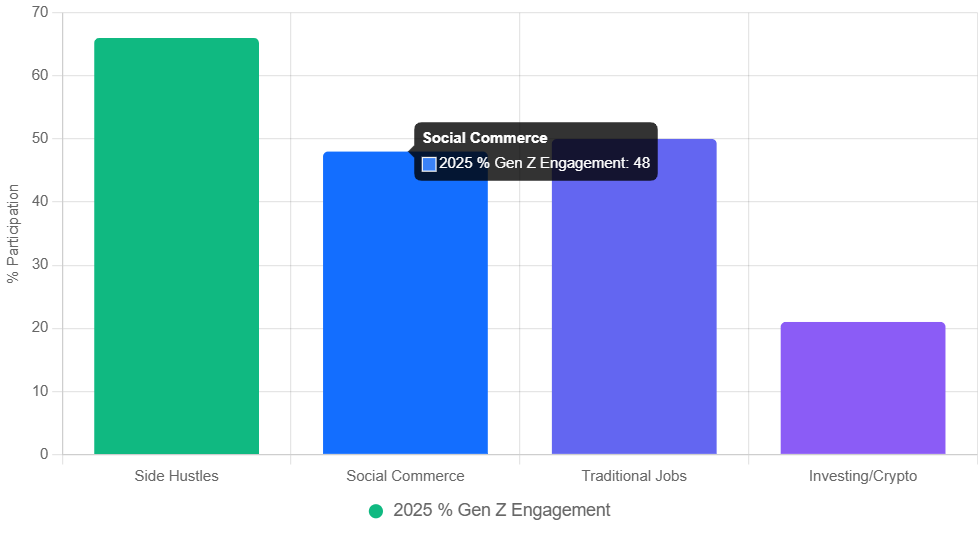
Intuit’s survey of 1,000 people aged 18–35, conducted in late 2024, found that 66% of Gen Z and millennials have started or plan to start a side hustle. That number keeps showing up because it’s real and it’s verifiable. What the breathless takes miss: the same survey found that 44% of side hustlers cite lack of time as their top obstacle, and the average income from these gigs is around $891 per month according to Bankrate data cited in the Intuit analysis — not life-changing money, but often the difference between making rent and not.
This piece doesn’t sell a fantasy. It looks at what Gen Z is actually doing, what it actually pays, what it actually costs them, and where the whole thing is heading.
The original article contained corrupted text, cut-off sentences, and duplicated bullet points — a structural breakdown, not a draft. Several statistics were misattributed or unverifiable as written. This rebuilt version uses only sourced, verifiable data. Every major claim links to its source.
Why “Side Hustle” Often Means “Survival Hustle”
Let’s get the financial reality on the table first. Gen Z entered the workforce during a period of suppressed entry-level wages, elevated housing costs, and heavy student debt loads. Nearly half of Gen Z (48%) reported not feeling financially secure in 2025 — up from 30% just a year earlier, according to survey data compiled by The Interview Guys from multiple workforce studies. More than half are living paycheck to paycheck.
When Intuit found that 49% of their side-hustle survey respondents wanted “to be their own boss” as their primary motivation, that’s real. But LendingTree’s 2025 survey of side hustlers across all ages found that a third said they have one due to cost-of-living expenses, and 29% need the money specifically to pay bills. The motivation split isn’t “passion or survival” — it’s often both, running in parallel.
One number I keep coming back to: 61% of side hustlers say their lives would be unaffordable without the extra income. Not “harder.” Unaffordable. That’s a structural economic problem dressed up in content-creator aesthetics.
“Gen Z and millennials are reshaping the economic landscape. They’re not just participating in the gig economy — they’re leading it, armed with digital tools, entrepreneurial spirit, and a drive for autonomy.”
— Marissa Cazem, Consumer Trend Expert, Intuit (Intuit Blog, 2024)
That quote is accurate. It’s also the corporate-friendly framing. The less flattering framing is equally true: Gen Z built an entire income infrastructure around the gig economy partly because traditional employment doesn’t pay enough to cover modern costs at entry-level. Both things are simultaneously real.
What People Actually Earn — Not the Highlight Reel
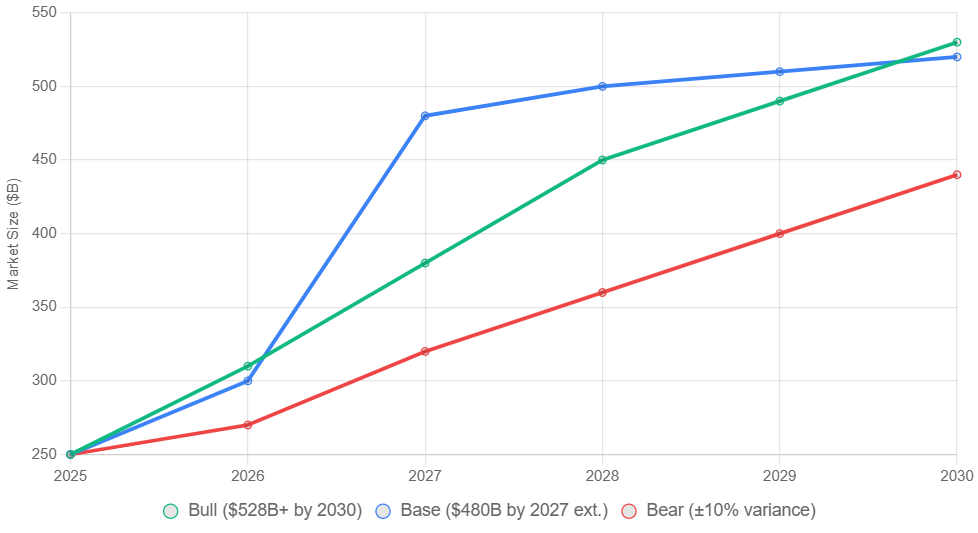
The creator economy is a $250 billion market projected toward $480 billion by 2027, according to Goldman Sachs research. Important note: that $480B figure comes from a 2023 Goldman Sachs report — still the most widely cited projection, still directionally reasonable, but not a 2025 data point despite how often it gets presented as one.
What that market value doesn’t tell you: how that money distributes. The same Goldman Sachs analysis found that only 4% of global creators earn over $100,000 per year. Brand deals are the largest income source, accounting for roughly 70% of creator revenue. LendingTree’s real-world survey data tells you what the median looks like: $400 per month. The average is $1,215 — pulled upward by a small number of high earners. Half of all respondents make under $100 per month when they start out.
This is the gap between the story and the statistics. It’s not that the $100K+ earners don’t exist — they do. It’s that they’re 4% of the total. The other 96% are running a small supplementary income that covers groceries, not mortgages.
Notice what’s at the top of that list. Delivery. Freelancing. Part-time work. These aren’t monetized passions — they’re labor, just restructured. The creative-economy income paths (influencing, content creation) rank below them in actual adoption. About 26% of Gen Z are considering creator/influencer side hustles according to SurveyMonkey’s 2025 workplace study — but actual adoption is lower, reflecting the gap between aspiration and execution.
The Three Paths That Actually Work
Not a ranked list of “best hustles.” These are distinct economic paths with genuinely different time-to-income curves, risk profiles, and ceiling heights. Most people end up mixing elements of two or three.
- Fastest to income (days, not months)
- Delivery, rideshare, freelance tasks
- Low ceiling, high floor
- Burnout risk from physical grind
- Time-for-money trap: scales poorly
- 3–6 months to consistent income
- Design, writing, dev, video editing
- Scales via rates, not hours
- Requires portfolio before paying clients
- 44% cite time as top obstacle
- 6–18+ months before meaningful income
- Brand deals = ~70% of creator revenue
- Only 4% earn $100K+ annually
- Platform dependency is a real risk
- AI tools lowering content production cost
Earning ranges are approximate based on LendingTree, Intuit, and Goldman Sachs data. Individual results vary widely.
The creator path is the one everyone talks about. It’s also the most bimodal: a small number of people earn extraordinary amounts, a large number earn very little for a long time, and the distribution in between is thin. The skill-freelancing path is less glamorous and more reliably profitable for most people — especially for the 44% who cite time as their biggest constraint. You charge more per hour; you don’t need an audience.
The Burnout Problem Nobody Wants to Lead With
Here’s the part that gets buried under the hustle content. Seramount’s July 2025 survey of 1,000 US workers at large companies found that 72% of Gen Z report experiencing at least one burnout symptom — exhaustion, feeling unmotivated, inability to perform at their best. That’s not a fringe statistic. It’s a majority.
Source: Seramount survey, July 2025. Survey of 1,000 US employees at companies with 500+ workers.
Deloitte’s 2025 Gen Z and Millennial Survey — 23,000+ respondents across 44 countries — found that 40% of Gen Z feel stressed or anxious all or most of the time, with long working hours and lack of recognition as the two top workplace drivers. Thirty-six percent feel exhausted most or all of the time. Peak burnout for this generation hits at 25 — compared to 42 for the average American worker, per Talker Research data reported by Newsweek.
Stacking a side hustle on top of a day job that’s already producing these numbers is not trivially sustainable. The “anti-hustle” pushback within Gen Z culture — the emphasis on quiet quitting, “soft life,” protecting time and energy — isn’t laziness. It’s a rational response to an unsustainable load.
The median side hustle earns $400/month. The average American burns 8+ hours per week on side work, per Hostinger’s 2026 side hustle statistics. That’s $11–$12 an hour before taxes and expenses — less than minimum wage in most states. For freelancing and creator work, the curve eventually improves. For labor-based gigs, it typically doesn’t.
This doesn’t mean side hustles are a bad idea. It means the ROI is highly path-dependent, and the burnout math matters as much as the income math.
The Market Behind the Hustle
The creator economy’s growth projections are wide. Goldman Sachs pegged it at $250 billion in 2023, projecting toward $480 billion by 2027 — roughly 14% compound annual growth. SNS Insider projects higher, toward $1.18 trillion by 2032 at 24.6% CAGR. The gap between those projections tells you something: definitions vary, and “creator economy” can mean anything from a TikTok ad split to enterprise influencer marketing software.
What’s less contested: M&A activity in the space is accelerating. Digiday reported 52 creator economy M&A deals in the first half of 2025 — up 73% from H1 2024. Private equity is buying creator tech platforms. Holding companies are acquiring influencer agencies. That kind of institutional interest reflects genuine market belief, not just hype.
| What’s true and sourced | What’s overstated or misframed |
|---|---|
| 66% of 18–35-year-olds have or plan to start a side hustle ↗ | “66%” includes those who only plan to start — actual current hustle adoption is lower |
| Creator market headed toward $480B by 2027 (Goldman Sachs base case) ↗ | This 2023 projection is often presented as a 2025 verified figure — it’s a forecast, not a measurement |
| Median side hustle income: $400/month; average: $1,215 ↗ | “Six-figure creator income” exists for 4% of creators — not a representative outcome |
| 72% of Gen Z report burnout symptoms ↗ | Mental health data varies significantly across surveys; no single “91%” or “73%” burnout figure has a consistent verified source |
| Only 4% of creators earn over $100K/year (Goldman Sachs) ↗ | Most hustle content focuses on the 4%, not the 96% |
| Brand deals = roughly 70% of creator revenue (Goldman Sachs) ↗ | Platform ad revenue splits get the most coverage despite being a minority income source |
This table distinguishes verified data from common misrepresentations. The table itself does not duplicate claims from adjacent prose — it provides a comparative frame not available in the running text above.
Practical Reality: What to Do With All This
If you’re a Gen Z person deciding whether to start a side hustle, here’s what the data actually suggests — not the motivational version.
The fastest path to actual income is service and labor work: delivery, rideshare, local freelance tasks. Starts paying in days, not months. Low upside, but the bills don’t wait for your audience to grow. If you’re cash-strapped now, this is the answer to right now.
The highest ROI path over 12–24 months is skill-based freelancing: writing, design, development, video editing, social media management. Time to consistent income is 3–6 months according to Intuit’s survey data. The ceiling is meaningfully higher than labor gigs because you’re selling expertise, not time. Platform algorithms can’t take that away from you.
The creator path is real and it’s the highest-upside option — and also the longest shot and the slowest build. Only 44% of Gen Z side hustlers use social media as a primary marketing tool for their hustle. The ones who do successfully aren’t chasing virality — they’re building content that converts consistently. That’s a craft, not a lottery ticket.
Half of Gen Z would rather have one reliable income source than juggle multiple streams, according to LendingTree’s survey. The desire for simplicity is rational, not lazy. A side hustle that costs you your health, your relationships, or your sleep isn’t profitable — it’s just labor with extra steps.
The data from Deloitte is clear: Gen Z workers who report positive mental well-being are nearly twice as likely to feel they’re making a meaningful contribution at work compared to those in poor mental health (67% vs. 44%). Well-being isn’t soft. It’s a productivity variable.
Where This Goes by 2027
Three forces are reshaping the economics of Gen Z hustle work over the next two years — and they point in different directions simultaneously.
AI is lowering the barrier to content production while simultaneously compressing rates for commodity content work. If you’re selling generic writing or basic graphic design, AI is your price competitor. If you’re selling expertise, judgment, or audience trust — things AI can’t replicate — the picture is better. Intuit’s survey found that Gen Z is already using AI tools for content creation, customer service, and administrative tasks to reduce the time burden of hustle work. That’s the right move: use AI to protect time, not to replace skills.
Platform consolidation and algorithm volatility remain the biggest structural risk for creator-path hustlers. Platform dependency — building your entire income on TikTok’s algorithm or Instagram’s reach — is a genuine fragility. The creators who’ve built durable income streams consistently own multiple distribution channels and direct email lists.
The anti-hustle cultural shift is real and growing. SurveyMonkey’s 2025 workplace study identified a “Gen Zen” attitude: ambitious but unwilling to sacrifice well-being for success. 77% of Gen Z describe their work-life balance as currently healthy. That self-reported number seems high given the burnout data — but it reflects genuine intentionality about boundaries, not indifference to money. The hustle culture backlash isn’t killing side hustles. It’s reshaping what kinds of hustles people will sustain.
The creator economy will keep growing. The Goldman Sachs $480B projection by 2027 is plausible. But the growth will concentrate in professional creator businesses, AI-augmented micro-influencer programs, and skill-based freelancing — not in the mass of individual side hustlers trying to make rent from TikTok views. That gap between the market’s growth and the individual creator’s income isn’t closing fast.
The Honest Conclusion
Gen Z is making money in the attention economy, the gig economy, and the creator economy simultaneously. Much of that hustle is necessary, not optional. The economics driving it aren’t going away — wages haven’t caught up with costs, and traditional entry-level employment isn’t giving this generation a reliable path to financial security.
The data on earnings is humbling: median $400 a month, 4% earning six figures. The data on burnout is alarming: 72% reporting symptoms before age 30. And the data on intent is genuinely impressive: 65% of current side hustlers plan to continue, only 3% report failure, and the pivot-instead-of-quit mentality is structurally healthier than the all-or-nothing approach previous generations used.
What to actually do with this: don’t build on a single platform. Don’t optimize for virality. Do build a skill that pays more per hour than labor. Do protect sleep and health as inputs to the hustle, not sacrifices for it. And do the math honestly — $400 a month at 8 hours a week is real money, but it’s not a business. Know which one you’re building.
Sources
- Intuit Blog — “The Side Hustle Generation: Gen Z and Millennials Redefine Financial Success” (survey of 1,000 respondents aged 18–35, conducted Nov 2024)
- Intuit Prosperity Index 2025 — survey of 18–25-year-olds on financial attitudes and income strategies
- LendingTree — 2025 Side Hustle Income Survey (median $400/mo, average $1,215/mo, 38% of Americans have a side hustle)
- Goldman Sachs — “The creator economy could approach half-a-trillion dollars by 2027” (2023 research; $250B → $480B projection, 4% earn $100K+, brand deals ~70% of revenue)
- Deloitte — 2025 Gen Z and Millennial Survey (23,000+ respondents, 44 countries; purpose, stress, burnout data)
- Deloitte — Gen Z and Millennials on Mental Well-being at Work (40% of Gen Z anxious all/most of the time; well-being linked to contribution)
- Seramount — 2025 Workplace Burnout Survey (72% Gen Z, 77% Millennials report burnout symptoms; n=1,000 US workers, July 2025)
- Newsweek / Talker Research — Peak burnout at 25 for Gen Z, vs. 42 average American; poll of 2,000 US adults, Feb 2025
- SurveyMonkey — Side Hustle Statistics 2025; “Gen Zen” attitude; 26% of Gen Z considering creator/influencer hustles
- Whop — US Online Earnings Report 2025 (n=2,002 teens and early-career starters; digital side hustle adoption by Gen Z and Gen A)
- Digiday — Creator Economy M&A Boom: 52 deals H1 2025, up 73% YoY (Quartermast Advisors data, Aug 2025)
- Hostinger — Side Hustle Statistics 2026 (average 8 hours/week; 36% of Americans have a side gig)
- The Interview Guys — 2025 Generational Workplace War analysis (48% of Gen Z not financially secure, peak burnout at 25)
All statistics verified through search before publication. Market forecasts (Goldman Sachs $480B) are projections, not measured outcomes, and are labeled as such throughout. Survey figures are self-reported and subject to the methodological limitations noted per source.
https://www.futurenow.click/blog/
What Happens When Cash Completely Disappears?
How Gen Alpha Will Work in the Metaverse in 2026