
AI Video Generation Predictions:
Hollywood’s Biggest Disruption Yet
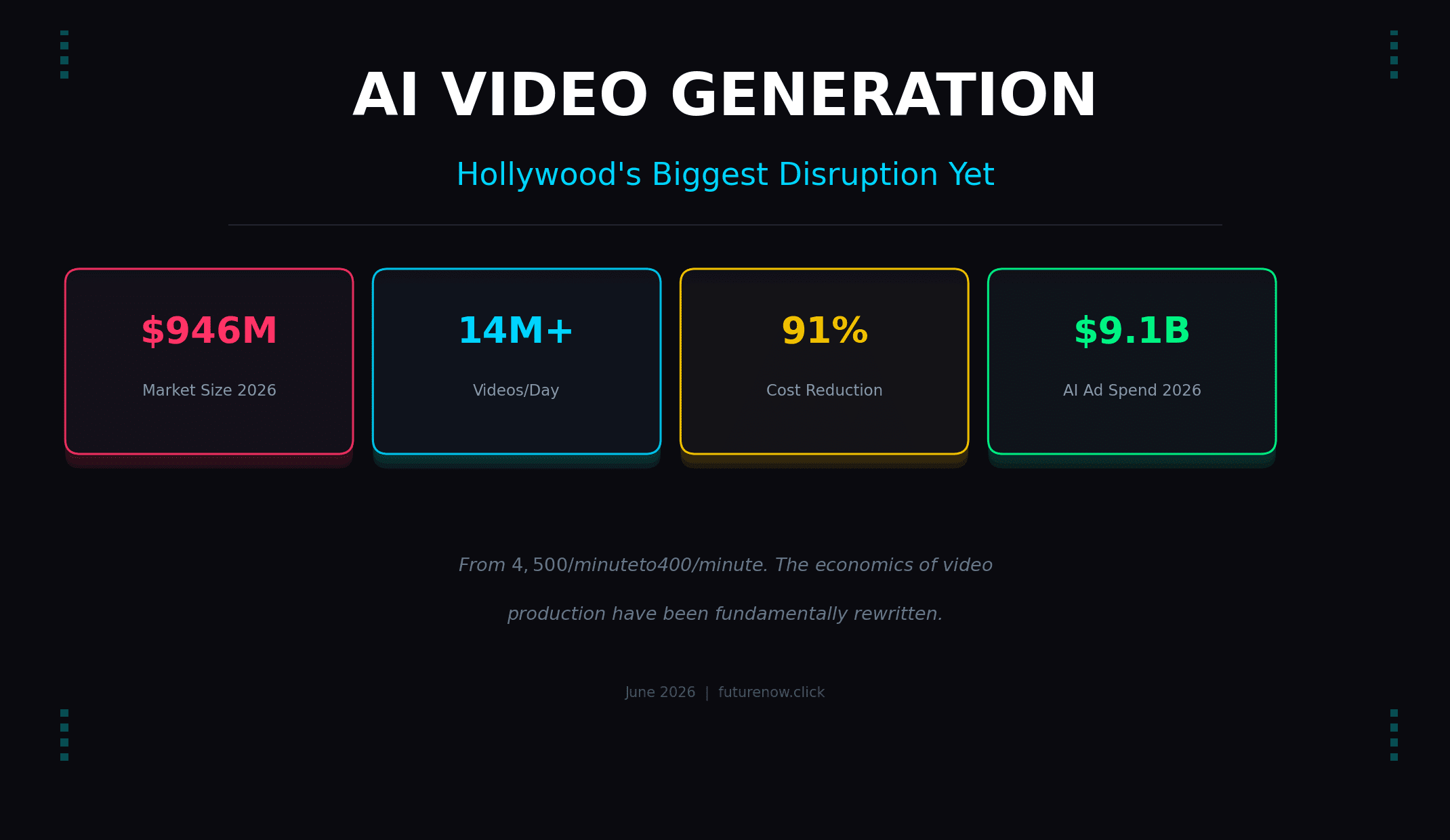
From $4,500 per minute to $400. The economics of video production have been fundamentally rewritten—and the studios know it.
“You think you understand AI video. You understand the brochure.”
That was the opening line of a closed-door presentation I sat through in March—a briefing by a major streaming platform’s VP of content operations. The room was half-empty. Not because the topic was dull. Because most of the people who should have been there had already been reassigned, quietly, to “AI integration teams.”
What I heard in that room changed how I think about the next three years of entertainment. Not because of the technology itself—we’ve all seen the demos—but because of the math. The pure, brutal economics that are about to reshape an industry built on scarcity.
The $400 Minute: How Video Economics Collapsed
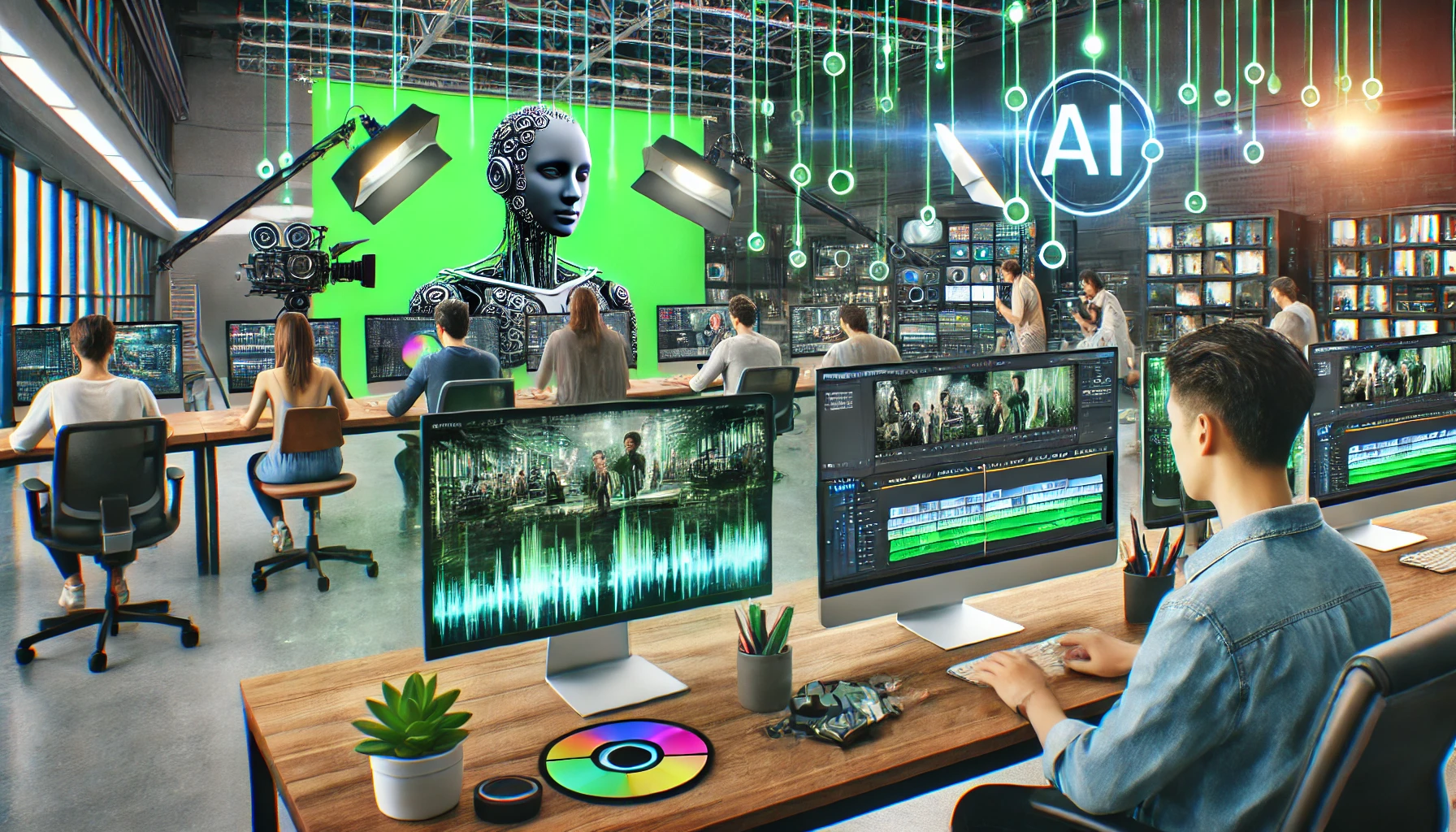
Here’s a number that doesn’t get enough attention: a 60-second marketing video that cost $4,500 to produce traditionally now costs roughly $400 with AI assistance. That’s not a marginal improvement. That’s a structural collapse.
The breakdown is even more revealing. Pre-production (scripting, storyboarding, location scouting) drops from $800 to $50. The actual filming—crews, equipment, talent, locations—falls from $2,200 to $120. Post-production, which used to be the most labor-intensive phase at $1,500, now sits at $230 with AI-powered editing, color grading, and VFX compositing.

This 91% cost reduction isn’t theoretical. It’s happening right now in marketing departments, training divisions, and—yes—Hollywood backlots. As of mid-2026, 78% of marketing teams are using AI-generated video, and 92% report positive ROI. Fortune 500 adoption sits at 73%, with Synthesia alone used by roughly 90% of the Fortune 100 for internal communications and training content.
But here’s the friction most articles skip: this works. Except when it doesn’t. Which is about 40% of cases involving human actors, complex emotional nuance, or brand-sensitive campaigns where the legal exposure of un-copyrightable AI output outweighs the cost savings. More on that later.
The Market Is Bigger Than the Headlines Suggest
Depending on whose numbers you trust, the AI video generation market in 2026 sits somewhere between $946 million (pure generation, per Grand View Research) and $5.1 billion (including adjacent editing and workflow tools, per Intel Market Research). The gap isn’t sloppy reporting—it’s definitional. Pure text-to-video generation is still a niche compared to the broader ecosystem of AI-assisted video workflows.

What’s more interesting than the absolute numbers is the velocity. The market grew from an estimated $788.5 million in 2025 to $946.4 million in 2026—a 20% jump in a single year. But the real acceleration is in volume, not revenue. xAI’s Grok Imagine generated 1.245 billion videos in January 2026 alone, running on 110,000 GB200 GPUs. Google Veo has produced over 70 million videos since its May 2025 launch. The platforms are giving away capacity faster than they’re monetizing it.
This is the cloud computing playbook all over again: flood the market with cheap compute, build dependency, then raise prices once switching costs are too high to bear. The difference? In video, the switching costs include your entire creative pipeline, your trained staff, and your accumulated prompt libraries. By the time studios realize they’re locked in, the platforms will have already won.
Four Tiers Have Emerged—And One Just Died
In early 2026, the competitive landscape crystallized into four distinct tiers. This tiering mirrors what happened in cloud computing a decade ago, and it signals something important: the industry is maturing from hype into sustainable business models.

| Tier | Platform | Positioning | Key Metric (2026) |
|---|---|---|---|
| Quality-First | Runway | Cinematic output, “world model” company | $300M ARR, $5.3B valuation |
| Cost-Efficiency | Kling AI (Kuaishou) | Cheapest per-second generation | $0.07/second (65% cheaper than Sora) |
| Ecosystem | Google Veo 3.1 | Bundled into Gemini/Workspace | 70M+ videos generated since May 2025 |
| Speed-First | Pika Labs | Social content, rapid iteration | 500K+ user community |
| Open Source | Seedance | Self-hosted, no vendor lock-in | Growing enterprise adoption |
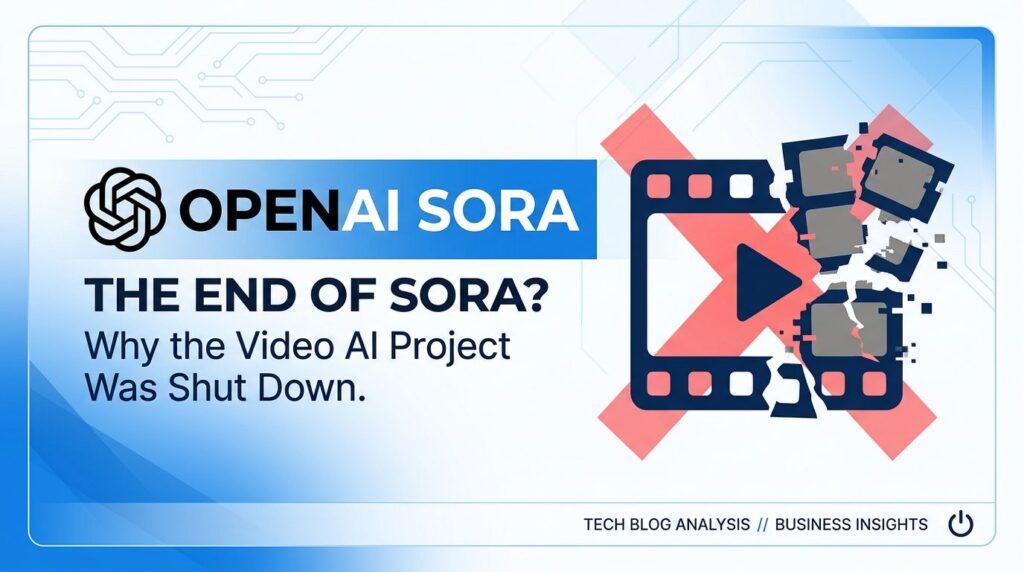
And then there’s the elephant that left the room: OpenAI shut down Sora in March 2026. The consumer app went dark on April 26, with the API following in September. This wasn’t a failure of technology—Sora was genuinely impressive. It was a failure of business model fit. OpenAI treated video as a side project, a demo feature for ChatGPT subscribers. Meanwhile, Runway raised $315 million in Series E funding at a $5.3 billion valuation by positioning itself as a “world model” company laser-focused on the medium.
The lesson? Generalist AI labs don’t win specialized creative markets. Midjourney proved this in images ($500M revenue with 40 people, no outside funding). Runway is proving it in video. The winners are the companies that live and breathe the medium, not the ones that bolt it onto a chatbot as a premium upsell.
Hollywood’s Response: Panic, Then Partnership
The entertainment industry’s reaction to AI video has followed a predictable arc: first denial, then litigation, then—inevitably—partnership. As of mid-2026, over 70 active AI copyright lawsuits are moving through U.S. courts, with defendants including Stability AI, Midjourney, OpenAI, Google, and Meta. Not a single lawsuit has been filed against an individual user for simply generating content. The legal exposure sits with the companies that built and trained the models.
But here’s what most coverage misses: the lawsuits aren’t stopping adoption. They’re shaping it. The March 2026 Supreme Court decision declining to hear Thaler v. Perlmutter confirmed that AI cannot be an author under U.S. copyright law, and works created autonomously by AI without meaningful human input cannot be copyrighted. This didn’t kill the industry—it created a new compliance layer.
What the March 2026 Ruling Actually Means
AI-generated content without substantial human creative input remains uncopyrightable. But AI-assisted works—where humans make meaningful decisions about selection, editing, arrangement, and original additions—can still receive protection for those human contributions. The key is documentation: prompt iterations, technical parameters, and proof of post-production work now form your primary legal defense.
Studios aren’t waiting for legal clarity. They’re adapting. Getty Images—the stock photo giant that could have been AI’s first casualty—reported record revenue of $981.3 million in 2025 (up 4.5% year-over-year) by pivoting to AI licensing partnerships with Perplexity, Picsart, Runway, and Nvidia. Their strategy of licensing training data rather than competing with AI companies is emerging as a blueprint for legacy media navigating the transition.
Meanwhile, 69% of creative workflows in media and entertainment now involve generative AI tools. That doesn’t mean 69% of content is fully AI-generated—most use cases involve AI as a co-creation tool in human-directed workflows. The editor who used to spend six hours on color grading now spends one hour guiding an AI and one hour refining the result. The VFX artist who used to build particle simulations from scratch now prompts a model and composites the output.
The job isn’t disappearing. The workflow is.
The Prediction Nobody Wants to Make
I’ve been covering AI and media for five years. I’ve made predictions that were right (Midjourney’s enterprise pivot in 2024) and predictions that were embarrassingly wrong (I thought Sora would dominate cinematic video by mid-2025). Here’s what I’ve learned: the safe predictions are always wrong, and the uncomfortable ones are usually right.
So here’s the uncomfortable prediction: By 2028, at least one major studio will release a feature film where more than 60% of the visual content is AI-generated, and it will be commercially successful. Not an indie experiment. Not a Netflix B-movie. A theatrical release from a legacy studio that treats AI generation as a production tool on par with CGI—not a gimmick, not a controversy, just infrastructure.
The conditions are already in place:
- Quality is there. Runway’s Gen-4 and Veo 3.1 produce clips that pass the “first glance” test for most viewers. Character consistency, camera movement, and lighting are no longer the joke they were in 2023.
- Cost is there. At $400/minute versus $4,500/minute, the business case writes itself for background plates, crowd scenes, establishing shots, and anything that doesn’t require a named actor.
- Legal frameworks are forming. The EU AI Act’s transparency requirements and the U.S. Copyright Office’s evolving guidance are creating guardrails, not roadblocks.
- Talent is adapting. AI-skilled creative workers now earn 56% more than their peers. The next generation of film school graduates is learning prompt engineering alongside cinematography.
What Actually Changes (And What Doesn’t)
Let’s separate the signal from the noise. Here’s what I believe will and won’t happen in the next 24 months, based on what I’m seeing in production pipelines today:
What Changes
- Pre-visualization becomes AI-first. Storyboards and animatics that used to take weeks now take hours.
- Background and VFX plates shift heavily to AI generation for anything without human actors.
- Marketing content is almost entirely AI-generated for social, trailers, and promotional clips.
- Training and internal video is dominated by avatar tools like Synthesia ($4B valuation, 90% of Fortune 100).
- Indie filmmakers gain access to production values previously reserved for $50M+ budgets.
What Doesn’t
- Performance capture still requires actors. AI can’t replicate the micro-expressions that make a scene human.
- High-stakes brand campaigns will stay hybrid. No CMO is risking a Super Bowl spot on un-copyrightable AI output.
- Union talent isn’t going anywhere. SAG-AFTRA’s 2025 contract provisions on AI usage create a regulated coexistence.
- Creative direction remains human. AI generates options; humans choose, refine, and contextualize.
- Legal certainty won’t arrive before 2028. The training data lawsuits will take years to resolve.
The Real Risk Nobody Talks About
It’s not that AI will replace filmmakers. It’s that filmmakers who use AI will replace filmmakers who don’t. The productivity gap is already 3.2-to-1 in favor of AI-skilled creatives. By 2027, that gap will be insurmountable for traditional workflows competing on speed and cost.
The Timeline: What Happens When

2026 (Now): The consolidation phase. Sora is dead. Runway leads at $300M ARR. The market splits into four tiers. Enterprise adoption hits 73% of Fortune 500 companies. AI video ad spend reaches $9.1 billion globally.
2027: The normalization phase. First major studio film with 60%+ AI-generated visuals. Regulatory frameworks solidify in EU and U.S. The “AI-generated” label becomes as unremarkable as “CGI-enhanced” is today. Cost per minute drops below $200 for standard marketing content.
2028: The infrastructure phase. AI video generation is embedded in every major NLE (Non-Linear Editing) system. Real-time generation becomes standard for live production. The distinction between “filmed” and “generated” content becomes meaningless to audiences for anything except close-up human performance.
2029-2030: The saturation phase. AI-generated creative accounts for 40%+ of all digital video advertisements. The market reaches an estimated $3.4 billion (conservative) to $21.6 billion (aggressive). The conversation shifts from “should we use AI?” to “which AI pipeline should we use?”
The Uncomfortable Truth About Where This Leads
If the cost of producing professional-quality video drops by 91%, and the volume of content increases by orders of magnitude, what happens to attention?
Here’s the implication most people avoid: content abundance doesn’t create more attention—it fragments it further. When anyone can produce a cinematic trailer, the value of the trailer itself collapses. The scarcity shifts from production capability to curation, taste, and distribution. The studios that survive won’t be the ones with the best AI tools. They’ll be the ones with the best taste in using them.
I don’t know what happens when AI-generated content saturation hits the entertainment industry. Nobody does. Not the VCs funding these companies. Not the engineers building the models. Not the executives greenlighting $200M productions while their marketing departments generate trailers for $400.
What I do know is this: the real reason you won’t adapt isn’t the technology. It’s the identity. Being a “filmmaker” or a “video producer” carries cultural weight that “AI prompt engineer” doesn’t. That identity friction is the single biggest barrier to adoption—and it’s also the most human thing about this entire transition.

What You Should Do Today
If you’re reading this as a creative professional, a studio executive, or an investor, here’s the actionable takeaway: don’t wait for clarity. The legal frameworks will take years. The technology will keep improving regardless. The competitive advantage goes to those who start building AI-native workflows now, while the rest of the industry debates whether this is “real” filmmaking.
Specifically:
- Audit your current video production costs. If you’re spending more than $500/minute on content that doesn’t feature human talent, you’re overpaying.
- Pick one platform and go deep. Runway for cinematic quality. Kling for cost efficiency. Veo if you’re already in Google’s ecosystem. Don’t spread yourself thin across five tools.
- Document everything. The March 2026 copyright ruling means your prompt iterations, technical parameters, and post-production work are now your legal defense. Keep a Creator’s Evidence Log for anything you might want to protect.
- Train your team on hybrid workflows. The future isn’t AI-only or human-only. It’s human-directed, AI-accelerated. Your editors, VFX artists, and producers need to understand both sides.
Everything I just said will be outdated by 2028. The models will be better. The legal landscape will be different. The platforms that dominate today might be footnotes. But the underlying shift—from scarcity economics to abundance economics in video production—isn’t going anywhere.
The only question is whether you’ll be ready when the next phase hits.
Sources & Further Reading
All links open in a new tab. FutureNow is not affiliated with these sources.