


Deep Dive
What Billionaires Actually Eat — And What the Science Really Says
Bryan Johnson spends $2 million a year. A woman spending almost nothing beats him on the leaderboard. Here’s what that tells you about longevity diets.
Bryan Johnson reduced his biological age by roughly 4.5 years in seven months — a genuine, verified result. He also spent $2 million doing it. Meanwhile, Julie Gibson Clark, a non-billionaire, out-ranked him on his own Rejuvenation Olympics leaderboard with a plant-based diet and stress management that costs essentially nothing. That gap is the most important fact in longevity nutrition right now — and almost nobody is writing about it.
This article does three things most competitors don’t: it separates the billionaire branding from the actual science, quantifies where expensive interventions produce real returns and where they don’t, and gives you the three or four moves that account for the majority of the biological age gains Johnson and others achieve. No supplement stack required.
The Signal Inside Bryan Johnson’s $2 Million Experiment
Johnson’s Blueprint protocol is genuinely unusual in medicine: it’s a single n=1 self-experiment, rigorously measured, and made fully public. He isn’t selling you snake oil — he’s running an open-source clinical trial on himself. That deserves respect. But the media coverage keeps making the same mistake: conflating the protocol’s cost with its effectiveness.
Here’s what his data actually shows. His DunedinPACE score sits at approximately 0.69, meaning his body accumulates about 8.3 months of biological wear for every calendar year. That’s striking — roughly 31% slower than average. His inflammation marker hsCRP is, per his published data, below detectable limits. These are real numbers from a validated testing platform (TruDiagnostic’s TruAge), not marketing copy.
The problem is what drives those numbers. Dr. Morgan Levine, who pioneered the advanced epigenetic clocks Johnson uses, publicly noted that his broader claims about reversing his pace of aging by 31 years are methodologically unsubstantiated — epigenetic clocks capture a moment in time, not a trajectory. Johnson himself has acknowledged this nuance on his own blog. The DunedinPACE score is predictive, but extrapolating it to decades of future aging involves assumptions the tool wasn’t designed to support.
“I have tried almost every major therapy that exists and my conclusion is: do less. Learn how to sleep first. Sleep is the most powerful drug in the world.” — Bryan Johnson, TIME Magazine, January 2026
Read that again. The man spending $2 million a year says the single most important intervention is free. That’s not false modesty — his own data supports it. The question worth asking is which parts of his 100-supplement stack are moving the needle, and which are noise.
What Caloric Restriction Actually Does (And Doesn’t)
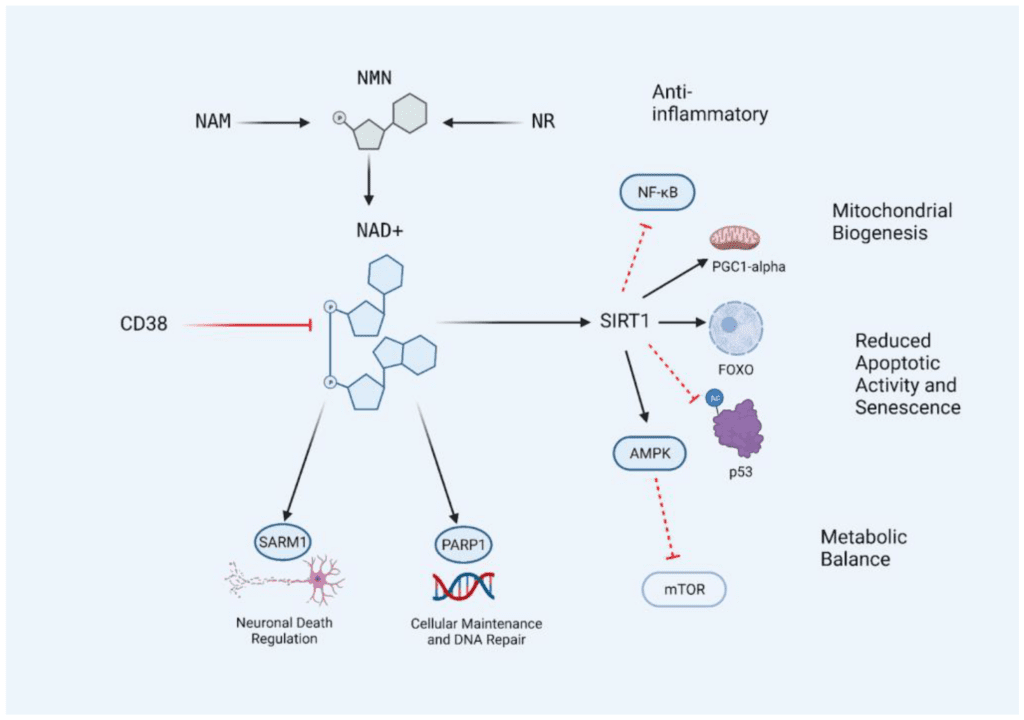
The biological mechanism behind most longevity diets comes down to one concept: calorie restriction (CR) activates a cellular recycling process called autophagy — your body breaking down and clearing damaged cellular components. It does this by suppressing the mTOR pathway (a growth-signaling enzyme that, when chronically elevated, accelerates aging) and activating AMPK (an energy-sensing enzyme that upregulates repair). These mechanisms are not speculative. A meta-analysis in Scientific Reports found CR consistently extends lifespan across model organisms and remains the most robust anti-aging intervention tested to date.
Johnson currently eats approximately 2,250 calories per day — about 10% below maintenance for his activity level, a reduction from the more aggressive 20–24% restriction he used early in the protocol, which left him gaunt and low-energy. This is important: severe CR carries real risks. Bone density loss, immune suppression, and muscle wasting are documented in humans who restrict too aggressively or for too long. The sweet spot most longevity researchers point to is 10–15% below maintenance, achieved through dietary quality rather than starvation.
His eating window is compressed to roughly five hours per day — a form of time-restricted eating (TRE) that is a subset of intermittent fasting. The benefit here is real but modest in isolation. TRE reduces insulin exposure time and creates a natural CR effect. The caution: it’s not magic, and the evidence for TRE specifically extending human lifespan (as opposed to improving metabolic markers) remains preliminary as of 2025.
Key Mechanism
Autophagy — the body’s cellular “cleaning” process — is the shared mechanism behind caloric restriction, time-restricted eating, and most CR-mimetic supplements. You don’t need to understand the molecular pathway to activate it. You need to eat less often, eat less overall, and prioritize plant-based foods dense in polyphenols. Everything else is optimization at the margins.
The Supplement Stack: Real Evidence vs. Expensive Speculation
Johnson takes over 100 supplements daily. Most coverage either reverently lists them or dismisses them entirely. Neither approach is useful. The actual picture is more granular.
NMN (Nicotinamide Mononucleotide) has the most interesting human evidence. A 2022 multi-center, placebo-controlled trial published in Science found that 250 mg/day of NMN for 10 weeks significantly improved muscle insulin sensitivity by 25% in overweight women with prediabetes. That’s a real, gold-standard measurement, not a rat study. Subsequent trials with doses of 300–900 mg have confirmed safety over 3–12 week periods. What NMN does not have yet is long-term human trial data on aging outcomes. The mechanism is compelling — NAD+ levels decline with age, and NAD+ powers the DNA repair enzymes (sirtuins) most associated with longevity — but whether supplementing with an NAD+ precursor translates that mechanism into years of life is unproven in humans.
Resveratrol is where the story gets complicated. Early research out of David Sinclair’s lab showed resveratrol mimicking CR effects and extending yeast lifespan by 70% through SIRT1 activation. Compelling. Then the replication problems started. A comprehensive review in Healthspan documents the inconsistency: resveratrol extends lifespan in some organisms but not others, has significant bioavailability problems in humans (most of an oral dose is metabolized before reaching target tissues), and a 2019 Scientific Reports study found it did not act as a CR mimetic in mice when administered systemically. Human trials have shown benefits in specific populations — better blood sugar control in Type 2 diabetics, improved memory in healthy adults — but the broad anti-aging claims remain unsubstantiated.
Metformin is the most interesting drug on the list. It’s a diabetes medication, cheap (roughly $4/month generic), and has the largest observational evidence base of any longevity compound in humans. Diabetic patients on metformin consistently outlive non-diabetic controls in large cohort studies — which is extraordinary, since the controls don’t even have the disease. The TAME trial (Targeting Aging with Metformin), an NIH-funded multi-site study, is currently testing metformin’s anti-aging effects in non-diabetic older adults. Results are pending. It requires a prescription and has gastrointestinal side effects at higher doses.
| Supplement | Evidence Tier | Best Human Evidence | Known Risks | Approx. Cost/mo |
|---|---|---|---|---|
| NMN (250–500 mg/day) | Mixed — promising | 25% insulin sensitivity improvement (human RCT, 2022) | Safe 3–12 weeks; no long-term data | $40–$80 |
| Resveratrol (500 mg/day) | Weak for aging | Memory improvement in some trials; bioavailability issues | Low; inconsistent effects across studies | $20–$40 |
| Omega-3 (2–4 g/day) | Strong | Cardiovascular mortality reduction; inflammation biomarker reduction | Blood thinning at high dose; quality varies | $15–$35 |
| Vitamin D3 (2,000–5,000 IU/day) | Strong | All-cause mortality reduction in deficient populations; immune function | Toxicity above ~10,000 IU/day | $5–$12 |
| Metformin (500–1,000 mg/day) | Mixed — strong obs. | Diabetics on metformin outlive non-diabetic controls; TAME trial ongoing | GI side effects; reduces exercise adaptation (debated) | $4–$10 (Rx) |
| Rapamycin (low-dose pulsed) | Mixed — significant risk | Extends lifespan in mice by 9–14%; human anti-aging data absent | Immunosuppression; not approved for this use | High (off-label) |
| Creatine (3–5 g/day) | Strong | Muscle preservation with aging; cognitive benefits in older adults | Very low; minor GI upset possible | $10–$18 |
| Magnesium glycinate (300–400 mg/day) | Strong | Sleep quality, blood pressure, glucose metabolism improvements | Diarrhoea at high doses | $10–$20 |
Table 1: Evidence quality is assessed against human anti-aging outcomes specifically, not general health benefits. NMN’s insulin sensitivity RCT is real; whether that translates to longevity is still an open question. All costs are approximate US retail as of early 2026. Sources: ChemRxiv 2025 NAD+ review, Healthspan resveratrol review.
The Diet Itself: What Johnson Actually Eats
Strip away the supplements and what’s left is, frankly, an exceptional plant-based diet. His three meals are: a “Super Veggie” bowl of broccoli, cauliflower, black lentils, ginger, and garlic; “Nutty Pudding” of macadamia nuts, flax seeds, walnuts, berries, and pomegranate juice with pea protein; and a third variable meal of vegetables, nuts, and seeds. A tablespoon of extra virgin olive oil appears at every meal. He drinks green tea for caffeine (up to 60 mg daily) and avoids coffee, which he says destabilizes his mood.
This is not exotic biohacking. It is, essentially, a textbook Mediterranean/whole-food plant-based diet, calibrated to caloric precision and eaten within a compressed window. The macronutrient breakdown: 33% carbohydrates, 19% protein, 48% fat — largely from nuts and olive oil. High polyphenols from berries and vegetables. High fiber from legumes. Very low processed food, added sugar, and refined carbohydrates.
Julie Gibson Clark eats a similar diet — high plants, low processed food, consistent sleep, stress management — and ranks above Johnson on his own leaderboard. That’s not a coincidence or an anomaly. It’s the data telling you where the returns actually live.
The Honest Risks: What the Bulletins Leave Out
No one covering this space talks enough about what goes wrong. A few things worth knowing:
Rapamycin is not a casual supplement. It is an immunosuppressant used to prevent organ rejection in transplant patients. At low, pulsed doses, some longevity physicians are experimenting with it for anti-aging purposes. The mouse lifespan data is real — studies show 9–14% lifespan extension in mice when started mid-life. The human safety data at these doses is limited. Infections become more frequent. Wound healing slows. It is not approved for anti-aging in humans, and self-prescribing carries genuine risk.
Johnson’s own early protocol caused muscle loss and a gaunt appearance. He openly admits his initial 20–24% caloric restriction was too aggressive. He’s been vegan for ethical reasons since before Blueprint, but his early protein intake — roughly 80 g/day — is below what most sports nutrition scientists consider adequate for preserving muscle mass with aging. He acknowledged his gut struggled to process higher protein loads. For most people over 50, adequate protein (1.2–1.6 g/kg body weight) matters as much or more for healthspan than caloric restriction does.
Epigenetic clock results are not what most media reports say they are. Dr. Morgan Levine is explicit on this point. These clocks predict disease and mortality risk — which is valuable — but they do not measure how long you will actually live. A DunedinPACE score of 0.69 is genuinely good. It doesn’t mean Johnson will live to 130.
What the Rejuvenation Olympics Actually Shows
The most underreported story in longevity right now is the Rejuvenation Olympics leaderboard — a public competition Johnson created where anyone can submit their DunedinPACE score. Multiple people rank above him. Several spend a fraction of what he does.
Chris Mirabile, at roughly the same testing period, reduced his biological age by 13.6 years versus his chronological age — compared to Johnson’s 2.5 years, according to independent third-party testing by the same lab. Mirabile credits consistent sleep, exercise, and a nutrient-dense diet with a targeted supplement stack. Julie Gibson Clark, Amy Hardison, and others consistently score well without the $2 million apparatus.
This is the thesis crystallized: the enormous returns in biological age improvement come from behaviors that cost almost nothing — consistent sleep, daily movement, whole food plant-based eating, stress reduction. The expensive interventions (hyperbaric oxygen, plasma infusions, rare drugs) are buying marginal gains on top of an already extraordinary foundation. Getting the foundation right is not a consolation prize for people who can’t afford the full protocol. It’s where the actual effect lives.
| Approach | Monthly cost | Evidence quality | Accessibility | Key limitation |
|---|---|---|---|---|
| Sleep optimization | ~$0 | Strong | Universal | Requires habit discipline |
| WFPB diet + mild CR | $200–$400/mo food | Strong | High | Social friction; requires cooking |
| Daily exercise (zone 2) | ~$0–$50 | Strong | Universal | Time commitment |
| Core supplements (D3, omega-3, Mg, creatine) | $40–$75/mo | Strong for deficiency/maintenance | High | Quality varies; blood test recommended |
| NMN + resveratrol | $60–$120/mo | Mixed | High | Long-term human aging data absent |
| Metformin (Rx) | $4–$10/mo | Mixed — strong obs. | Requires doctor | GI side effects; B12 depletion |
| Hyperbaric oxygen therapy | $2,000–$6,000/mo | Weak for aging | Low | Evidence limited to specific conditions; risks at pressure |
| Full Blueprint protocol | ~$165,000/mo | Mixed — n=1 | Effectively none | No control group; impossible to isolate variables |
Table 2: Monthly cost estimates for full Blueprint based on Johnson’s reported $2 million/year figure (platform self-reported; independently confirmed by Fortune, January 2025). WFPB = whole food plant-based.
The Practical Path Forward
The three people most worth studying in longevity right now are: Bryan Johnson, because he publishes all his data publicly and forces the field to engage with measurement; Johnson’s own critics — especially Dr. Morgan Levine and the researchers pushing back on epigenetic clock interpretation — because they keep the claims honest; and the people beating Johnson cheaply on his own leaderboard, because they reveal where the returns actually concentrate.
What those top performers share, without exception: consistent 7–8+ hour sleep; daily aerobic exercise (zone 2 — the conversational pace most people underutilize); a diet dominated by vegetables, legumes, nuts, and berries with minimal processed food; and stress management with real teeth, whether meditation, social connection, or therapy. These aren’t hacks. They’re the foundation, and they’re doing the heavy lifting.
The marginal interventions — NMN, time-restricted eating, sauna, red light, hyperbaric oxygen — may add something on top of that foundation. The honest answer is: we don’t know yet, in humans, at scale, over decades. The animal data is compelling. The mechanistic logic is sound. The human trial evidence is thin. If you want to experiment with NMN or TRE, there’s reasonable justification to try. Just don’t do it instead of fixing your sleep.
One tactical note, because most articles skip it: get a baseline. The TruDiagnostic TruAge test — the same platform Johnson uses — costs around $300–$400 and gives you your DunedinPACE score and organ-system ages. Without a baseline, you have no way to know whether any intervention is working for your specific biology. Johnson’s most transferable insight isn’t a supplement. It’s the principle: measure first, intervene second, measure again.
The Bottom Line
Johnson’s project is legitimately fascinating science — an n=1 public experiment that is forcing precision into a field historically full of vague advice. His biological age data is real. His epigenetic improvements are real. The methodology has genuine critics, and his interpretations sometimes outrun the evidence, but the intent and the transparency are unusual and valuable.
What it reveals, inconveniently for the supplements industry, is that the dominant variable in biological aging is behavior, not spending. The billionaire’s protocol works because of the discipline behind it — the consistent sleep, the absence of processed food, the daily movement, the radical elimination of alcohol and junk — not because of the $800 monthly supplement bill. Julie Gibson Clark is the proof of concept. A whole-food diet, good sleep, exercise, and stress management moved her to the top of a leaderboard that Johnson built to showcase his $2 million protocol.
That’s the story. The expensive stuff is real, incomplete, and marginal. The cheap stuff is real, well-evidenced, and central. Start there.
Biohacking Secrets 2026: How Hackers Add 20 Extra Years to Life
2026’s Bizarre Hybrid That Shook Biology
The 2026 Smartwatch That Replaces Your Doctor—Shockingly Accurate
5 Weird Lifestyle Experiments That Actually Work