
Your Next Computer Could Be an Earbud — Here’s Why
Researchers have crammed rice-grain cameras into Sony earbuds. OpenAI is building one designed by Jony Ive. Apple already has FDA clearance for a medical device in your ear. The shift is happening faster than most people realize — and the implications go well beyond music.
🗓 Last updated: May 23, 2026 — includes VueBuds CHI ’26 paper (April 2026), OpenAI Sweetpea leaks, CES 2026 hardware, and latest market data
The earbud-as-computer thesis, condensed
- The research is real, not vaporware: University of Washington researchers published peer-reviewed work at CHI ’26 demonstrating camera-equipped earbuds that answer visual questions in under one second — matching Meta Ray-Ban smart glasses quality at a fraction of the power draw.
- Big tech is committed: OpenAI is confirmed to unveil its first-ever hardware device in H2 2026 — reportedly earbud-form, Jony Ive–designed, powered by a 2nm chip. They spent $6.5B to get here.
- The market is already enormous: The global AI earbuds market was estimated at $5.99B in 2025, projected to reach $7.42B in 2026 (23.9% CAGR) and $17.34B by 2030.
- Medical legitimacy is already granted: The FDA in September 2024 authorized AirPods Pro 2 as an over-the-counter hearing aid — the first time a consumer audio product crossed that regulatory line.
- The key reasons earbuds beat glasses: Social acceptance, existing adoption (~500M units/year), no stigma, lower power requirements, and the fact that you can close your eyes but you can’t close your ears.
- Honest warning: Battery life, privacy concerns, accuracy limitations (VueBuds hit 83–84% on object ID tasks), and the graveyard of failed AI wearables (Humane AI Pin, Rabbit R1) all deserve serious scrutiny before declaring victory.
- Next step: The section on the competitive landscape and the FAQ will give you the clearest picture of where this is actually going and on what timeline.
There’s something almost absurd about the idea. The most powerful computer you’ll ever own might be a pair of wireless earbuds. Not a phone. Not a laptop. Not some vision-obscuring headset. Just two small pods in your ears, connected to an AI that can see what you see, answer questions you haven’t even thought to Google, translate foreign menus in real time, and monitor your cardiovascular health while you commute.
It sounds like a pitch deck. But in the spring of 2026, it started looking a lot more like engineering reality.
Three separate developments landed in quick succession. University of Washington researchers published a peer-reviewed paper at the world’s top human-computer interaction conference demonstrating that rice-grain cameras embedded in standard Sony earbuds could answer visual questions at near–real-time speed — matching Meta’s smart glasses — while drawing under 5 milliwatts of power. OpenAI confirmed it would unveil its first hardware product in H2 2026, widely leaked to be an ear-worn device designed by Jony Ive with a 2nm smartphone-class chip. And in the background, the global AI earbuds market crossed $7 billion, growing at nearly 24% per year.
What’s happening is not just a product cycle. It’s a quiet renegotiation of what a “computer” actually is.
Why the Earbud, and Why Now
The history of wearable computing is mostly a history of failure. Google Glass arrived in 2013 with enormous fanfare and departed quietly after generating more mockery than adoption. Microsoft HoloLens cost enterprise buyers $3,500 and demanded they look like extras from a science fiction film. The Humane AI Pin — a $699 screenless device that projected a tiny laser image onto your palm — received some of the worst consumer technology reviews in recent memory before being acquired by HP. The Rabbit R1, a bright orange handheld AI assistant, stumbled on basic functionality.
None of these failed because AI wasn’t ready. They failed because of a deceptively simple problem: people don’t actually want to wear computers that look like computers.
Earbuds are different. They solved the social acceptance problem a decade ago, almost by accident. Apple’s original AirPods, released in 2016, were mocked at first — the “expensive white sticks” jokes wrote themselves. By 2020, they had normalized a form of always-on personal electronics that previously would have seemed invasive. Today, roughly 455 million TWS earbuds shipped globally in 2024, and the true wireless category represents nearly 73% of all smart personal audio shipments, according to Canalys data. You can walk through any airport, gym, or office in the world and a significant portion of the people you see will be wearing them.
That ubiquity is not just a market opportunity. It’s a platform.
The earbud form factor’s greatest engineering advantage is that it doesn’t need to create adoption. Adoption already exists. The question is whether the underlying AI and sensor hardware can keep up with what the platform makes possible.
VueBuds: The Research Breakthrough That Changed the Conversation
On April 13, 2026, a paper appeared in the proceedings of CHI ’26 — the ACM Conference on Human Factors in Computing Systems, held in Barcelona — that should have gotten considerably more attention than it did. Its title was dry by academic standards: “VueBuds: Visual Intelligence with Wireless Earbuds.” What it described was anything but.
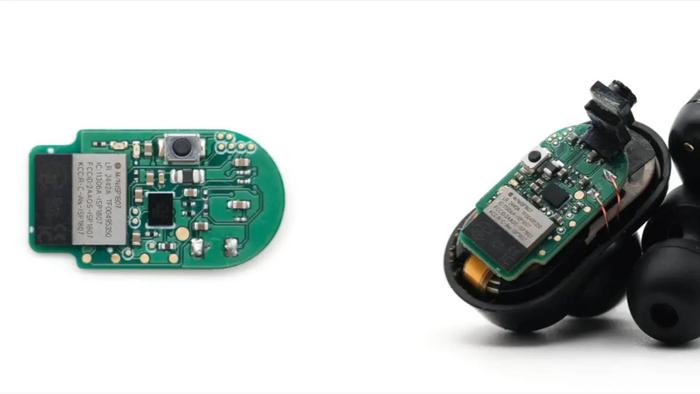
Maruchi Kim, Rasya Fawwaz, and their colleagues at the University of Washington’s Paul G. Allen School of Computer Science and Engineering had taken an ordinary pair of Sony WF-1000XM3 earbuds and embedded rice-grain-sized cameras inside each one. The cameras are black-and-white, low-resolution — deliberately so. The system then uses a vision language model (VLM) running on a nearby phone to answer spoken questions about whatever the user is looking at.
VueBuds in Practice: What the CHI ’26 Study Actually Found
The UW team ran user studies with 90 participants across 17 visual question-answering tasks. The results were striking:
Object identification and translation accuracy: 83–84% for translation and object identification tasks, and 93% accuracy when identifying the author and title of a book.
Response speed: Approximately one second — described by the research team as fast enough to feel real-time to users. This is achieved by transmitting image pairs via Bluetooth rather than individual frames.
Power draw: Under 5 mW, with cameras that automatically deactivate when not in use.
Head-to-head against Meta Ray-Bans: “Despite VueBuds using low-resolution images with greater privacy controls and the Ray-Bans taking high-res images processed in the cloud, the two systems performed equivalently.” Participants preferred VueBuds for translations; Ray-Bans did better at counting objects.
The published DOI for the full paper is: 10.1145/3772318.3791322. Video demonstrations are at vuebuds.cs.washington.edu.
What makes this significant beyond the headline accuracy numbers is the power consumption. Five milliwatts is nothing — a typical Bluetooth radio in an earbud already draws more than that. The researchers achieved this by leaning into the constraint rather than fighting it: low-resolution, monochrome images are actually better for privacy (faces are unrecognizable) and require dramatically less processing bandwidth. The AI compensates for what the camera lacks.
“A lot of people don’t like wearing glasses. Almost everyone wears earbuds already — so we wanted to see if we could put visual intelligence into tiny, low-power earbuds, and also address privacy concerns in the process.”
— Prof. Shyam Gollakota, UW Paul G. Allen School of Computer Science & Engineering, lead researcher on VueBudsThis isn’t a conceptual prototype running in ideal lab conditions. The team tested it in messy real-world scenarios: grocery store shelves, outdoor navigation with foreign-language signs, identifying dog breeds in a park. A chi-square test confirmed usage patterns differed significantly between device types (χ²(2) = 21.98, p < 0.001), with VueBuds showing the most distinct engagement pattern — users tended to ask more varied, exploratory questions, rather than the utilitarian queries that smart glasses tend to attract.
The Numbers Behind the Shift
The broader wireless earphone market is estimated at roughly $63.3 billion in 2026, according to Global Market Insights — projected to reach $172.4 billion by 2035 at an 11.8% CAGR. Apple alone shipped 76.5 million TWS units in 2024, driven by its H-chip integration and spatial audio capabilities (Canalys). The mid-range market ($50–$100) saw the steepest investment growth, rising 29% in funding volumes in Q4 2024 alone.
What’s changing in 2026 is the composition of that market. Devices with health monitoring sensors — heart rate, SpO2, temperature — grew 41% year-over-year in 2024. AI chip integration attracted $145 million in dedicated investment from Qualcomm and MediaTek. The earbud is quietly transforming from a peripheral into a primary device.
North America leads AI earbud adoption with 36.4% global market share. In India, a 2024 JBL survey found 54% of Gen Z and millennials had already adopted AI-powered audio devices. Apple’s R&D investment in wearable tech reached $1.1 billion last fiscal year, while Xiaomi allocated $312 million toward TWS-specific research.
OpenAI’s “Sweetpea” — What We Actually Know (and What’s Still Rumor)
The most anticipated piece of AI earbud hardware doesn’t exist yet — at least not publicly. But OpenAI’s plans for its first consumer hardware device have been gradually leaking since late 2025, and by January 2026, Chris Lehane, OpenAI’s Chief Global Affairs Officer, confirmed at Davos that the company was on track to announce its first hardware in the second half of 2026.
The project’s internal codename is “Sweetpea.” Leaks from Asian supply-chain sources and multiple technology publications paint a reasonably consistent picture, though it should be noted these are unconfirmed until an official announcement:
| Feature | Reported Details | Source / Confidence |
|---|---|---|
| Form Factor | Egg-stone–shaped metal charging case; two capsule/pill modules worn behind the ear, not inside the canal | Multiple supply-chain leaks; Hypebeast, Gizmochina (January 2026) — Moderate |
| Chip | 2nm-class processor (either custom-built or Samsung Exynos variant); custom silicon for on-device AI | WCCFTech, TechCrunch leaks — Low–Moderate |
| Design Lead | Jony Ive and his io design firm, acquired by OpenAI for $6.5 billion | Confirmed by OpenAI / Financial Times |
| Manufacturing | Foxconn; production lines reportedly being prepared for up to five OpenAI devices by 2028 | Supply-chain reports — Low–Moderate |
| Reveal Target | H2 2026 — some reports specify September 2026 | Confirmed in principle (Davos, January 2026) |
| Shipment Goal | 40–50 million units in first year (very ambitious for a first-gen product) | Single supply-chain report — Low confidence |
| Core Functionality | Always-on ChatGPT voice interface; local AI processing for some tasks; positioned as calmer, screen-free alternative to iPhone | Sam Altman public statements + leaks — Moderate |
Sam Altman’s framing of the device as “more peaceful and calm than iPhones” tells you something important about the product philosophy. This isn’t meant to be a supercomputer in your ear. It’s meant to be a companion that’s always there, never demanding your attention with a glowing rectangle. Whether that vision translates into a product people actually use daily is a different — and genuinely open — question.
The AI hardware graveyard is real. The Humane AI Pin, which raised $240 million, was acquired by HP within 18 months of launch after scathing reviews. The Rabbit R1 struggled with basic promised features. OpenAI entering hardware does not guarantee success — it guarantees a very well-funded attempt. The 40–50 million unit first-year target should be treated with extreme skepticism; for context, Apple’s AirPods (the most successful earbuds in history) took years to reach those volumes.
Guangfan Lightwear: What CES 2026 Revealed About the Race
OpenAI isn’t the only company betting on the form factor. At CES 2026, Chinese AI wearable startup Guangfan Technology debuted Lightwear — described as the world’s first proactive AI wearable to introduce visual perception into an earbud form factor.
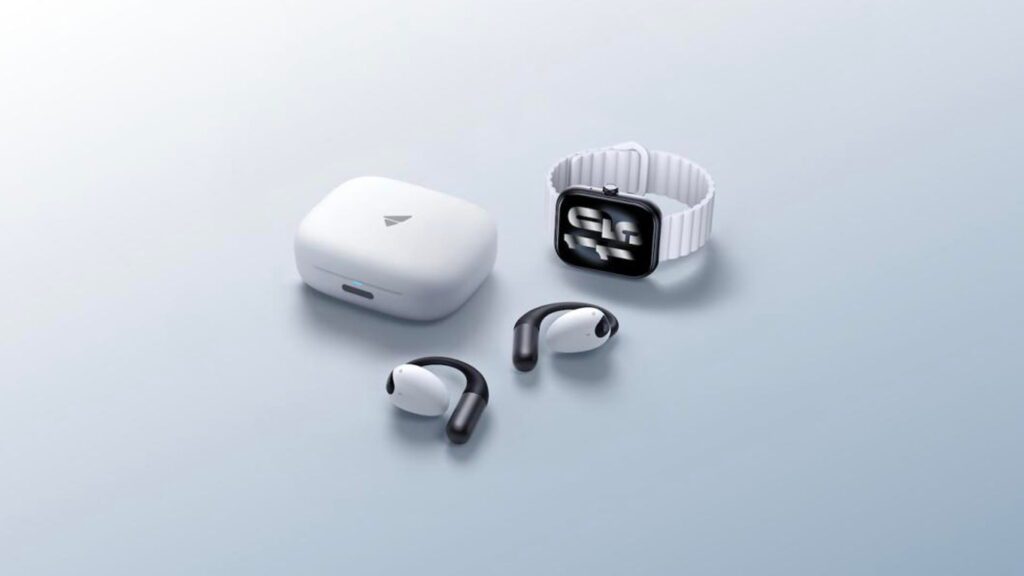
The engineering challenge Guangfan tackled was genuinely hard: fitting a camera into an earbud without the device becoming uncomfortable or overheating. Their solution involved a titanium ear-hook design with balanced front-and-back weight distribution. The result weighs 11 grams per earbud — substantially lighter than most smart glasses — while incorporating a camera and expanded battery.
What differentiates Lightwear from VueBuds philosophically is its “proactive” framing. Rather than answering questions you ask, Lightwear is designed to notice things and tell you about them — interpreting your physical environment, user activities, and “emotional context” without being prompted. Whether this is compelling or creepy depends entirely on your appetite for ambient surveillance by your own devices, a tension we’ll return to in the privacy section.
Apple AirPods as Medical Devices: A Line Already Crossed
While the technology press was busy covering AI concepts and hardware rumors, Apple quietly did something with genuine regulatory significance. In September 2024, the FDA authorized a piece of software called the “Hearing Aid Feature” (HAF) for AirPods Pro 2 — the first time the FDA had ever authorized an over-the-counter hearing aid software. A consumer audio product, sold in Apple Stores, had become a regulated medical device.
The clinical basis was solid: the HAF was evaluated in a study with 118 subjects with perceived mild to moderate hearing loss. The self-fitting approach — where users calibrate the device based on a hearing test run directly from their iPhone — was validated against audiologist-fit devices. The FDA’s statement at the time was notably direct: “Today’s marketing authorization of an over-the-counter hearing aid software on a widely used consumer audio product is another step that advances the availability, accessibility and acceptability of hearing support.”
Roughly 1.5 billion people worldwide live with some form of hearing loss, per WHO figures cited by Apple. Dedicated hearing aids from audiologists still cost $3,000–$7,000. AirPods Pro retail for $249. The implications for healthcare accessibility are not subtle.
Apple’s AirPods Pro Hearing Health Suite (2024–2026)
Apple’s hearing health platform on AirPods Pro 2 and Pro 3 now includes three distinct features:
Hearing Test: A scientifically validated audiogram run directly on-device in a quiet room. Results are stored privately in the Health app. Users can retake the test over time to monitor changes.
Hearing Aid Feature (FDA-authorized): For users with perceived mild to moderate hearing loss (18+). Self-fitting; users adjust volume, tone, and balance. As of 2026, available in over 100 countries.
Hearing Protection: Active reduction of exposure to loud sounds, even while listening to media. Distinct from noise cancellation — this monitors cumulative exposure levels.
Apple describes this as “the world’s first end-to-end hearing health experience.” That claim is defensible. What’s more interesting is that this is happening on hardware that hundreds of millions of people already own.
The Competitive Landscape in 2026
| Product / Project | Company | Key AI Feature | Status | Est. Price |
|---|---|---|---|---|
| AirPods Pro 3 | Apple | Hearing aid, spatial audio, Apple Intelligence, Siri | Available | $249 |
| Ray-Ban Meta (Display) | Meta | AI camera, Meta AI assistant, HUD display, EMG wristband | Available ($799) | $799 |
| “Sweetpea” Earbuds | OpenAI / io | Always-on ChatGPT, local 2nm AI chip, screen-free computing | H2 2026 Reveal | Unknown |
| VueBuds | Univ. of Washington | Camera + VLM, real-time visual Q&A, 83–93% accuracy | Research Prototype | N/A |
| Lightwear | Guangfan Technology | Proactive visual AI, camera-in-earbud, environmental awareness | CES 2026 — In Dev | TBD |
| Galaxy Buds 4 | Samsung | Galaxy AI integration, real-time translation, health monitoring | Available | ~$199 |
| Android XR Glasses | Google + partners | Gemini AI, spatial computing, multi-manufacturer ecosystem | 2026 Rollout | TBD |
The competitive picture here is more nuanced than a simple horse race. Apple’s strength is ecosystem lock-in, existing hardware penetration, and regulatory credibility. Meta’s Ray-Ban frames have demonstrated something more important: consumer willingness to pay for AI-assisted vision in a wearable, with reports of strong demand and supply constraints. OpenAI is betting on AI-first design with brand authority from ChatGPT. And academic prototypes like VueBuds keep resetting what people believe is technically possible.
Why Earbuds Beat Smart Glasses (for Most People)
The comparison with smart glasses comes up constantly, and it deserves honest treatment. Both form factors are trying to solve the same problem: move AI computation from a device you hold to a device you wear. Smart glasses have the advantage of a forward-facing camera at eye level. Earbuds have virtually everything else.
Professor Gollakota’s framing at the University of Washington was blunt: “even in the year 2026, a lot of people don’t like wearing glasses.” But social stigma is just the surface of the argument. There are at least five structural reasons earbuds have an edge:
1. Adoption without friction
Half a billion units ship annually. Adding AI capabilities to a product category people already buy is a fundamentally different challenge than convincing them to buy a new category entirely. The adoption curve for earbuds is already done.
2. Power economics
VueBuds’ cameras draw under 5 mW total. Smart glasses with displays — even relatively modest ones like the Ray-Ban Meta Display at $799 — require significantly more power for the heads-up display, higher-resolution camera, and processing. Battery life remains the binding constraint for any wearable AI device, and earbuds simply need to solve a smaller power problem.
3. The voice interface is already there
Earbuds are already optimized for voice — microphone arrays, bone conduction sensing, voice activity detection. The input modality that AI assistants rely on most is the one earbuds were built around. Smart glasses are trying to add audio to a visual device; earbuds are adding vision to an audio device.
4. You can close your eyes; you can’t close your ears
This sounds philosophical but has real consequences for ambient computing. An AI assistant that lives in your ear is always accessible without any deliberate action. Glasses require you to look at something. The interaction model for earbuds is genuinely more frictionless for most conversational and informational tasks.
5. Privacy optics (literally)
A camera in your earbud, using low-resolution black-and-white images, is far less alarming to the people around you than a forward-facing camera in a pair of glasses at eye level. This isn’t a small thing. The social failure of Google Glass was largely about the discomfort it created in people near the wearer, not just in the wearer themselves. VueBuds’ deliberate choice of low-res cameras is partly a technical decision and partly a social one.
“The interaction model for earbuds is genuinely more frictionless for most conversational and informational tasks — and friction is what kills AI products.”
— FutureNow Editorial Analysis, May 2026The Real Limitations — What the Demos Don’t Show
It would be dishonest to tell this story without spending real time on what doesn’t work. The graveyard of failed AI wearables was built by products that solved demonstrations and not daily use. A few things worth examining clearly:
Accuracy at 83% is not good enough for all use cases
VueBuds’ 83–84% accuracy on translation and object identification is genuinely impressive for the power budget and hardware constraints involved. But it means roughly one in six interactions produces a wrong answer. For navigation in an unfamiliar city or reading a medication label, 83% accuracy creates real risk. The 93% accuracy on book identification is more reassuring, but the task distribution matters enormously. Use cases that require near-perfect accuracy — medical contexts, legal documents, safety-critical identification — are not ready yet.
Battery life constraints remain binding
Current premium earbuds deliver 6–8 hours of listening time with active noise cancellation. Adding continuous camera operation and AI inference puts pressure on that budget, even at 5 mW camera draw. A device that needs charging by lunch doesn’t get worn all day, and all-day wear is the entire premise of ambient computing.
Latency under real network conditions
VueBuds’ one-second response time is measured under controlled conditions with Bluetooth-connected phone processing nearby. In a crowded train station with a congested 4G connection, that number changes. Cloud-dependent AI features are only as reliable as the network connection, which is a non-trivial constraint in exactly the environments where you’d want ambient AI most.
The context window is your ear canal
The camera placement on earbuds is fundamentally awkward. Your ears point roughly sideways; your eyes point forward. VueBuds addresses this with stereo cameras that create a wider field of view, and the system is designed for natural head-turning interactions. But it’s still a workaround, not a native solution. Smart glasses, for all their social friction, have the correct camera placement for egocentric vision AI.
Precedent from the AI hardware graveyard
The Humane AI Pin raised $240 million, was designed by a team with Apple pedigree, and still failed spectacularly in the market. The Rabbit R1 shipped a product that couldn’t reliably do what it promised. OpenAI entering hardware doesn’t change the underlying difficulty: making AI assistants that people actually use every day, across the full messiness of real life, is a very hard problem that has not been solved by any product yet.
Privacy, Ethics, and the Surveillance Question
Ambient AI that can see and hear everything you encounter raises legitimate ethical questions, and anyone writing about this space seriously needs to address them directly rather than burying them in a footnote.
The most urgent concern is consent by third parties. When you ask VueBuds “what breed is that dog?”, the dog’s owner didn’t consent to being recorded. When a Lightwear device identifies the emotional state of a person you’re talking to, that person presumably didn’t agree to AI emotion-reading. The fact that VueBuds uses low-resolution black-and-white images (faces are unrecognizable) is a meaningful design choice that reduces but doesn’t eliminate this tension.
Existing privacy laws in most jurisdictions were not written with ambient AI wearables in mind. GDPR’s “legitimate interest” and consent frameworks apply in principle to data collected by these devices, but enforcement in personal wearable contexts is largely untested. If you’re considering an always-on AI device with sensors, understanding what data is processed locally versus transmitted to the cloud, and retained for how long, matters more than any feature specification.
There’s also a data accumulation concern that’s more subtle. An earbud AI that processes everything you hear over months builds an extraordinarily detailed behavioral profile — your habits, relationships, health state, emotional patterns. The value of that profile to advertisers or other parties makes it an obvious target. The business models of the companies building these devices (particularly those supported by advertising revenue) deserve close scrutiny.
On balance: the privacy concerns are real and significant. They’re also not fundamentally different from concerns raised by smartphones, which have been recording ambient audio and tracking location for over a decade. The question is whether we want to extend that surveillance envelope deliberately into ambient computing, with full awareness of what we’re consenting to.
What 2027–2030 Might Look Like
Forecasting consumer technology is a reliable way to look foolish in retrospect. That said, certain technical trajectories seem reasonably clear:
On-device AI will get much better
The 2nm chip reportedly planned for OpenAI’s Sweetpea represents a significant jump in compute per milliwatt. As Apple Silicon and Qualcomm’s Snapdragon family demonstrate on phones and laptops, the efficiency gains from each node shrink have been dramatic. Running meaningful language models entirely locally, without cloud dependency, becomes more plausible each year. By 2028, an earbud running a capable on-device model isn’t a stretch.
Health monitoring will expand rapidly
The FDA clearance for AirPods as hearing aids opens a regulatory pathway. Continuous heart rate, blood pressure indication, temperature, and potentially glucose monitoring via in-ear sensors are all active research areas. The ear is a surprisingly good location for physiological monitoring — close to major blood vessels, stable for measurement, and protected from environmental noise by the earbud seal itself. Clinical validation will take time, but the direction is clear.
Spatial audio and AI will converge
The combination of precise spatial audio positioning and AI that understands your physical environment creates possibilities that are hard to fully articulate yet. Imagine an AI that can direct your attention to a specific location in a room via spatial audio cues, or that filters the soundscape of a crowded restaurant so you hear only the conversation you’re in. These aren’t science fiction — they’re extensions of capabilities that already exist in current premium earbuds, needing better AI integration.
The platform wars will intensify
Apple, Google, Meta, and OpenAI are all building toward the same thing from different directions: an AI that lives with you continuously, not one you consult occasionally. The earbud is currently the most viable physical expression of that vision. Whoever establishes platform dominance in this form factor will control something more valuable than the smartphone home screen: they’ll control the ambient layer of your cognitive life.
Frequently Asked Questions
Are AI earbuds currently good enough to replace my smartphone for most tasks?
No — not yet, and probably not for several years. Current AI earbuds excel at specific tasks: voice queries, music control, calls, real-time translation in premium devices. They don’t yet support the visual apps, navigation interfaces, payments, photography, or rich content creation that make smartphones irreplaceable. The more honest framing is “companion to your phone” for now, with “replacement for some smartphone tasks” as a realistic near-term trajectory.
How accurate is VueBuds’ visual AI, really?
The CHI ’26 paper reports 83–84% accuracy on translation and object identification tasks, and 93% on book title/author identification. These were measured in user studies with 90 participants across 17 tasks. Accuracy varied by task type — the system performed on par with Meta Ray-Ban Meta glasses overall, with VueBuds preferred for translations and Ray-Bans slightly better at counting objects. For the peer-reviewed source, see the DOI: 10.1145/3772318.3791322.
When will OpenAI’s Sweetpea earbuds actually ship?
OpenAI confirmed at Davos in January 2026 that it would announce its first hardware in H2 2026. Some supply-chain leaks point to a September 2026 reveal. However, “announce” and “ship” are different things — particularly for first-generation hardware. The most optimistic scenario puts consumer availability in H1 2027; a 2028 timeline for broad availability seems more realistic given manufacturing lead times and the reported complexity of the device.
Do Apple AirPods Pro really work as hearing aids?
Yes, with important qualifications. The FDA authorized the Hearing Aid Feature (HAF) for AirPods Pro 2 in September 2024. It’s intended for adults (18+) with perceived mild to moderate hearing loss. It is not suitable for severe or profound hearing loss. The self-fitting process uses a built-in hearing test or an audiogram from a professional. As of 2026, it’s available in over 100 countries, with regional authorization differences. For current availability by region, check apple.com/airpods-pro/feature-availability.
What’s the biggest technical barrier to earbuds becoming real computers?
Battery life is probably the most fundamental constraint, followed by camera placement geometry. An earbud that runs ambient AI all day and still has enough charge for evening calls doesn’t exist yet. The power budget for continuous AI inference, camera operation, and wireless data transmission is tight. Incremental improvements in chip efficiency (the shift to 2nm+ nodes) and battery energy density are the key technical variables to watch.
How does earbud AI compare to smart glasses in terms of practicality?
Smart glasses have better camera placement (eye-level, forward-facing) but face significant social friction, higher power demands, and niche adoption. Earbuds have overwhelming adoption advantage, lower power requirements, and better social acceptance, but awkward camera geometry and audio-primary interaction. For most everyday AI tasks — translation, queries, navigation assistance via audio — earbuds are currently more practical. For rich visual tasks where seeing what you’re analyzing matters, smart glasses retain an edge.
Are there privacy risks to using AI earbuds?
Yes, and they’re worth taking seriously. Always-on microphones and, in newer devices, cameras create detailed behavioral profiles. Cloud-processed AI means your conversations may be stored on third-party servers. VueBuds’ deliberate use of low-resolution cameras (faces unrecognizable) is a meaningful privacy design choice. Before using any always-on AI wearable, review the privacy policy carefully, understand what data is processed locally versus cloud-transmitted, and consider your comfort with the company’s data retention and business model.
What happened to the Humane AI Pin, and why should I care?
Humane raised $240 million, hired Apple veterans, and built a $699 screenless wearable with a laser projector. It received some of the worst reviews in consumer tech history — criticized for overheating, poor battery life, slow response times, and unreliable AI. HP acquired the company within 18 months of launch. It matters as a cautionary data point: AI hardware is genuinely difficult, and company pedigree plus capital does not guarantee a viable product. OpenAI and Jony Ive are not immune to this risk.
Which current AI earbuds are worth buying in mid-2026?
For most people, Apple AirPods Pro 3 (if you’re in the Apple ecosystem) offers the best combination of audio quality, health features (including FDA-cleared hearing aid), and AI integration via Apple Intelligence. Samsung Galaxy Buds 4 are competitive in the Android ecosystem with Galaxy AI features. For pure audio quality without AI emphasis, Sony and Bose remain strong. Avoid products promising capabilities their current hardware clearly can’t deliver — the AI earbuds marketing space contains significant exaggeration.
Will earbuds eventually replace laptops and desktops too?
For most creative, analytical, and complex work: no, not in any near-term horizon. Earbuds as computers excel at ambient, conversational, and sensory-augmentation tasks — things you want to do while moving through the world. Deep work requiring visual interfaces, precision input, and sustained concentration will continue to favor traditional form factors. The more honest framing is that earbuds will absorb the portions of computing currently done on phones, not replace the full computing stack.
How does the VueBuds research differ from commercial products?
VueBuds is a research prototype published in a peer-reviewed academic paper — it’s not available to consumers. The significance is that it establishes a technical baseline: low-power cameras in off-the-shelf earbuds can deliver visual AI performance comparable to commercially available smart glasses. This sets the engineering target for commercial products. The team also published their system design transparently, which typically means commercial implementations will follow relatively quickly.
What should I watch for to know if this shift is really happening?
Three signals matter most: (1) OpenAI Sweetpea’s actual specifications and pricing at reveal — if it ships at mass-market prices with genuinely capable on-device AI, the market changes fast; (2) whether Apple expands the AirPods health platform with additional FDA-authorized features (glucose monitoring, blood pressure indication); (3) whether the AI earbuds market’s 23.9% CAGR continues through 2027, or whether consumer adoption plateaus. Watch annual Canalys TWS shipment data and Apple’s wearables revenue line in quarterly earnings.
Final Verdict: Earned Optimism, Not Hype
Here’s where this actually stands, as of May 2026: the earbud-as-computer thesis has moved from speculative to plausible, but it hasn’t yet crossed into proven. What’s changed this year is the convergence of three things — credible academic research (VueBuds at CHI ’26), serious commercial intent (OpenAI’s confirmed hardware push), and regulatory legitimacy (Apple’s FDA-cleared hearing aid). Those three things together create a foundation that didn’t exist 18 months ago.
What hasn’t changed is the difficulty. Battery life is still a binding constraint. AI accuracy in vision tasks is still good enough to be impressive but not good enough to be trusted for high-stakes applications. The AI hardware graveyard still casts a long shadow. And the privacy implications of ambient computing deserve far more public scrutiny than they’re currently receiving.
The most honest assessment: your next computer will probably not be an earbud. Your computer after that — the one you use in 2029 or 2030 — might be. The technical direction is clear. The commercial execution is still deeply uncertain. And the social implications are large enough that “here’s why you should be excited” is only half the story — the other half is “here’s what we need to figure out before we get there.”
That’s a less triumphalist conclusion than most technology coverage offers. It’s also closer to the truth.
More from FutureNow
- AI & WearablesThe Complete Guide to AI Wearables in 2026
- OpenAI HardwareOpenAI’s Hardware Strategy: Everything We Know
- Smart GlassesSmart Glasses in 2026: Which Products Are Actually Worth It
- Future of ComputingWhat Is Ambient Computing — and Why It Matters
- Health TechAI and Health Monitoring: Where Wearables Are Going
- Apple IntelligenceApple Intelligence: One Year In — Honest Review
- Meta WearablesMeta Ray-Ban Display Review: The First AI Glasses Worth Buying?
- PrivacyThe Real Privacy Cost of Always-On AI Devices
Contact
The 2026 Tri-Fold Foldable Cellphone Nobody Believed Could Exist: Revolutionizing Productivity
5 Crazy Gadgets That Will Rule 2026: Revolutionary Tech to Supercharge Productivity and Innovation
The Flying Bike Shocking the World in 2026
2 thoughts on “Your Next Computer Could Be an Earbud”