

Deep Dive · Mobile Technology
Tri-Fold Smartphones: Engineering Triumph, Niche Reality
The Samsung Galaxy Z TriFold sold out immediately in the US — then Samsung discontinued it three months later. Here’s what that story actually tells you about where this technology stands.
When Samsung launched the Galaxy Z TriFold in the US on January 30, 2026, the $2,899 device sold out within days. That sounds like a vindication of tri-fold technology. Three months later, Samsung quietly discontinued it — and called it a “technological showcase,” not a flagship product. Both facts are true. Both tell you something important about where tri-fold phones actually stand in 2026, and neither fits the breathless hype that has surrounded this category since Huawei first cracked the code in September 2024.
This guide is built on verified data, not marketing projections. Every major claim links to its source. Where evidence is contested or uncertain, that’s stated explicitly.
The Devices That Actually Exist
Before anything else: let’s establish ground truth. As of April 2026, two commercially released tri-fold devices have reached real consumers. One is still purchasable. One is not.
- Screen (unfolded)10.2 inches
- Thinnest point3.6 mm
- Battery5,600 mAh
- OSHarmonyOS 5.1
- Camera systemStandard (no AI)
- Global availabilitySelect markets
- Screen (unfolded)10.0 inches
- Thinnest point3.9 mm
- Battery5,600 mAh · 45W
- ChipSnapdragon 8 Elite
- Main camera200 MP
- AI featuresGemini Live, on-device
The Huawei Mate XT was the world’s first commercially sold tri-fold, announced in September 2024 and launched globally in February 2025. Its successor, the Mate XTs, followed in September 2025, adding a stylus-compatible display and HarmonyOS 5.1. Samsung’s Galaxy Z TriFold launched in South Korea in December 2025 and reached the US on January 30, 2026 — then Samsung pulled it from sale three months later, citing its role as a “technology showcase” rather than a permanent lineup entry.
“Samsung has a long history of pioneering category-defining devices. Galaxy Z TriFold builds on that legacy with a standout form factor.”
— Drew Blackard, Senior VP of Mobile Product Management, Samsung Electronics America (Samsung Newsroom, Jan 2026)
Both devices share a roughly 10-inch unfolded display and identical 5,600 mAh battery size. Samsung is slightly thicker (3.9 mm vs. Huawei’s 3.6 mm) but brings more sophisticated AI features. Huawei dominates the Chinese market but faces significant restrictions elsewhere. Neither is what most people would call affordable. More on that in a moment.
The Market: Genuinely Promising, Still Tiny
The foldable phone market produced real headlines in 2025 — but size matters. According to IDC data, foldables represent just 1.6% of total global smartphone shipments, with an average selling price of roughly $1,218 — nearly three times that of a standard smartphone at $421. These are premium products for a small audience.
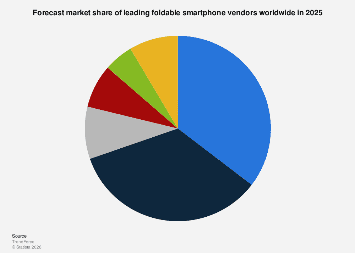
Within that small category, Huawei made a stunning move. Canalys data for H1 2025 shows Huawei capturing 48% of the global foldable market — up from 14% in 2022 — with Samsung in second place at 20%. That’s a dramatic reversal from Samsung’s long-standing dominance and reflects both Huawei’s aggressive multi-product strategy and Samsung’s slower cadence on true innovations.
Foldable smartphone market share, H1 2025. Source: Canalys via Tweaktown (Sep 2025). Includes all foldable form factors — not tri-fold only.
The forward-looking picture is genuinely compelling, though. After experiencing what IDC describes as their first market decline in 2025, foldables are projected to rebound with 30% year-over-year growth in 2026, driven by expected Apple entry into the folding segment, Samsung’s Z TriFold 2, and price compression as manufacturing matures. The overall foldable market — currently valued at around $34.65 billion — is forecast to reach $89.54 billion by 2032, per Verified Market Research as cited by Gadget Hacks. That’s meaningful long-term growth. It still puts 2026 in early-majority territory, not mass market.
Market forecasts from analyst firms are projections, not guarantees. The 30% 2026 growth figure and $89.54B 2032 valuation are estimates subject to revision based on Apple’s actual entry timing, price dynamics, and consumer uptake. Treat them as directional signals, not confirmed outcomes.
What a Tri-Fold Actually Does — and Doesn’t Do
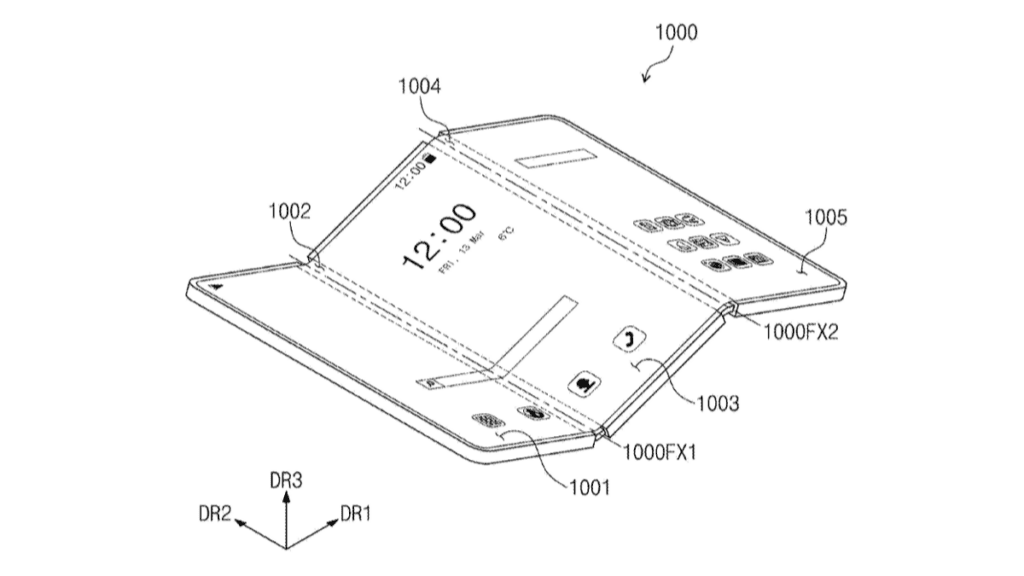
A tri-fold phone has two hinges instead of one. Closed, it looks like a chunky smartphone. Open fully, it becomes a 10-inch tablet. The intermediate “tent” or partially open position is where things get genuinely interesting for multitasking — you can run three apps across three panels simultaneously. Think of it as a pocket workstation that happens to make phone calls.
The practical benefits are real for specific users. Executives reviewing dashboards on a 10-inch screen rather than squinting at a 6.5-inch phone. Developers running code on one panel and documentation on another. Creatives editing photos with the device propped at an angle. These aren’t marketing fantasies. The form factor genuinely changes what’s possible.
What it doesn’t do: replace a laptop. The software ecosystem hasn’t caught up to the hardware ambition, which is the structural problem every foldable faces. Bloomberg’s review of the Galaxy Z TriFold in December 2025 called it “pricier than other foldables and also less polished.” TechRadar’s editor-at-large described it as “an uncompromising and remarkable feat of engineering that offers the potential of truly pocketable big-screen tablet productivity” — note the word potential. That hands-on review is worth reading in full.
The Spec Comparison You Actually Need
| Feature | Huawei Mate XTs | Samsung Galaxy Z TriFold |
|---|---|---|
| Launch date | Sep 4, 2025 | Dec 12, 2025 (Korea) · Jan 30, 2026 (US) |
| Price | ~$2,520–$2,800 ↗ | $2,899 ↗ |
| Unfolded screen | 10.2 in OLED | 10.0 in Dynamic AMOLED 2X ↗ |
| Cover screen | 6.4 in | 6.5 in, up to 2,600 nits |
| Thinnest point | 3.6 mm ↗ | 3.9 mm |
| Processor | Kirin 9020 | Snapdragon 8 Elite |
| Main camera | Standard setup | 200 MP, OIS ↗ |
| Battery | 5,600 mAh | 5,600 mAh · 45W charging ↗ |
| AI | None currently | Gemini Live, multimodal ↗ |
| Fold durability test | Not publicly disclosed | 200,000 cycles (Samsung-rated) ↗ |
| Current status | Available internationally (select markets) | Discontinued (Mar 2026) ↗ |
| OS | HarmonyOS 5.1 | Android 16 / One UI 8 |
Sources linked per row. All figures are manufacturer-confirmed or from primary journalism. Screen repair cost for Huawei Mate XT: approximately ¥7,999–¥9,799 ($1,100–$1,360) depending on configuration — a significant ownership consideration. Source: Wikipedia citing GSMArena repair documentation.
The Hinge Problem — and What It Really Means
Here’s where honest reporting matters most. Samsung rates the Galaxy Z TriFold for 200,000 fold cycles — equivalent to folding the device roughly 100 times a day for five years. That sounds reassuring. Independent stress testing tells a more complex story.
A livestreamed endurance test of the Galaxy Z TriFold found audible creaking from the left hinge at fold number 61,212, followed by similar creaking from the right hinge at 120,157. Total hinge failure — defined as complete loss of friction and inability to open and close properly — occurred at fold 144,984, below Samsung’s 200,000-cycle rating.
At Samsung’s projected “100 folds per day” usage pattern, the first audible warning signs would appear at approximately 20 months of ownership. This is a documented pattern, not a speculation — though the test was informal and not conducted under controlled laboratory conditions.
Source: Droid-Life (Dec 2025) and Gadget Hacks / Samsung (Jan 2026)
Two things are true simultaneously. Tri-fold hinges are dramatically more reliable than early foldable attempts — the original 2019 Galaxy Fold failed in days for multiple reviewers due to fragile screens and inadequate sealing. And tri-fold hinges introduce twice the mechanical complexity of single-fold designs, with twice the failure points. The dual-hinge architecture isn’t merely additive risk — it requires both hinges to wear at identical rates, which independent testing suggests they don’t. The asymmetric wear pattern found in endurance tests (Gadget Hacks, Jan 2026) is a real engineering challenge, not a nitpick.
For context: debris intrusion — not fold count alone — appears to be the primary hinge failure vector across all foldables. Independent analysis of over 1,200 units from iFixit and TechInsights found that 68% of early hinge failures occurred in devices stored with loose change, even with fold counts below 50,000. The tri-fold’s two hinges create more surface area for debris infiltration. Practical implication: if you get a tri-fold, a dedicated pocket is not optional hygiene — it’s mechanical maintenance.
The Samsung Discontinuation — What It Actually Signals
Samsung pulled the Z TriFold from sale in March 2026, three months after its US launch. The company told Bloomberg the device was designed as a technology showcase, not a flagship product. That framing is partly spin — but only partly.
The successor, Galaxy Z TriFold 2, is already confirmed in development as of March 2026, with a dramatically thinner design targeting a mid-2027 launch. The hinge verification process for the successor was reportedly near completion by March 2026, suggesting Samsung moved immediately to refine rather than retreat. Samsung also simultaneously developed the Galaxy Z Slide — a different form factor with a sliding OLED display — confirming this is a company actively investing in non-standard form factors, not backing away from them.
The discontinuation was a strategy statement, not a failure admission. That’s an important distinction for anyone trying to understand the technology’s trajectory.
24
25
25
25
26
Where the Market Is Actually Heading
Three forces are converging in 2026 and 2027 that will define whether tri-folds stay a premium curiosity or become a meaningful category.
First, Apple. When Apple enters a product category, the developer ecosystem follows — and the app optimization problem that has plagued foldables since 2019 would partially solve itself within a product cycle. IDC forecasts 30% YoY growth for foldables specifically in 2026, with Apple’s anticipated entry flagged as a primary catalyst. No confirmed Apple tri-fold exists yet — this remains a projection, not a product announcement.
Second, price. The current $2,500–$2,900 range isn’t sustainable for mainstream adoption. As manufacturing matures — particularly as flexible OLED production scales and hinge component costs fall — a $1,200–$1,500 tri-fold becomes plausible within two to three years. That’s the segment where adoption curves historically inflect.
Third, software. Samsung’s Galaxy AI features on the Z TriFold represent the clearest attempt yet to build software around the form factor rather than simply porting existing phone software to a larger screen. Gemini Live’s multimodal capabilities — understanding what you’re looking at, hearing, and saying simultaneously across a 10-inch display — are a meaningful preview of what a well-optimized tri-fold workflow could become. Whether the software ecosystem grows fast enough to match the hardware is the genuinely uncertain variable.
It’s tempting to write “by 2027, tri-folds will be mainstream.” The data doesn’t support that claim. The 30% growth forecast is for foldables as a category — not tri-folds specifically, which represent a subset. The market for tri-folds specifically remains tiny and driven primarily by enthusiasts and executives with specific use-case needs. Mainstream is a 2029-or-later story if it happens at all.
The honest projection: tri-folds move from niche premium to established premium category in the 2026–2028 window, with meaningful consumer adoption following if prices compress toward $1,500 and app ecosystems mature.
Is a Tri-Fold Right for You? The Decision Framework
| Your situation | Verdict | Why |
|---|---|---|
| Executive / analyst doing mobile-first work | Potentially worth it | Genuine productivity gain for dashboard review, document editing, and video calls on a 10-inch screen. The form factor solves a real problem if your phone is your primary work device. |
| Developer who tests on device | Potentially worth it | Multi-window development workflows have legitimate benefits. Budget for a dedicated case and understand the hinge care requirements before buying. |
| Marketer / creative professional | Wait for Gen 2 | Immersive canvas for creative review is appealing, but the software tools (Adobe, Figma) still aren’t optimized for tri-fold layouts. The hardware is ahead of the creative app ecosystem. |
| Small business owner | Not yet | The $2,500+ entry price and specialized care requirements create a high total cost of ownership for general productivity tasks better handled by a standard phone plus tablet. |
| Tech enthusiast | Your call | You already know the answer. Buy the Huawei Mate XTs if HarmonyOS limitations don’t bother you. Wait for Z TriFold 2 if they do. |
| Most consumers | Not yet | The 1.6% market share figure isn’t a failure — it’s an accurate representation of who currently benefits from this form factor. The technology isn’t wrong. The timing may be. |
This table reflects verified product realities and documented use case analysis. Individual results vary based on workflow and budget.
The Honest Conclusion
Tri-fold phones are genuinely impressive engineering achievements. Huawei pioneered the concept in 2024, Samsung validated it with a sell-out in January 2026, and both companies are already working on the next generation. The form factor is real. The durability has improved dramatically since the disaster of the original Galaxy Fold. The productivity benefits are real for specific professional contexts.
What it isn’t: mainstream, proven, or cheap. The Z TriFold’s quick sell-out at $2,899 followed by immediate discontinuation tells a more interesting story than either pure success or failure. Samsung proved demand exists at a premium price point — then immediately repositioned to build something better. That’s a healthy technology evolution cycle, not a dead end.
The question worth asking isn’t “will tri-folds win?” It’s whether the specific value they offer — a 10-inch screen in your pocket, genuinely useful for mobile-first work — is worth the premium today. For most people, the honest answer is: not yet. For a specific subset of power users, it already is. That gap will narrow. The 2027 devices — Samsung’s thinner Z TriFold 2, and likely Apple’s first folding product — are the ones that will settle the question.
Sources & Verification
- Samsung Newsroom (US) — Galaxy Z TriFold availability and pricing, January 27, 2026
- PhoneArena — Galaxy Z TriFold specs, discontinuation, March 2026
- CNBC — IDC foldable market data, 1.6% share, average prices, March 2025
- Tweaktown / Canalys — Huawei 48% foldable share, H1 2025, September 2025
- CNBC — Huawei Mate XTs launch, pricing, features, September 2025
- Wikipedia — Huawei Mate XT specs, global availability, repair costs
- Gadget Hacks — IDC 30% 2026 growth forecast, $34.65B market valuation, January 2026
- Bloomberg — Galaxy Z TriFold review, December 2025
- TechRadar — Z TriFold US price/date, hands-on assessment, January 2026
- Droid-Life — Galaxy Z TriFold hinge failure at 144,984 folds, December 2025
- Gadget Hacks / Samsung — TriFold durability test analysis, asymmetric hinge wear, January 2026
- OdinCase (sourced from SamMobile, GSMArena, Samsung Newsroom) — Z TriFold 2 confirmed development, March 2026
- 36Kr — Samsung vs. Huawei tri-fold spec comparison, thickness/weight, December 2025
- GSMArena — Samsung Galaxy Z TriFold full specifications
All statistics cited were verified through web search before publication. Self-reported platform figures are labeled as such. Market forecast figures are analyst projections and are presented as such throughout.
Smart Glasses Will Replace Your Phone — Here’s the Real Timeline
Your Next Computer Could Be an Earbud — Here’s Why
5 Crazy Gadgets That Will Rule 2026: Revolutionary Tech to Supercharge Productivity and Innovation
The 2026 Smartwatch That Replaces Your Doctor—Shockingly Accurate
This Wearable Translates in Real Time — And It’s Wild
Top 7 Must-Have AI Gadgets You’ll Want Immediately in 2026: Boost Productivity by 40%