Physical Address
304 North Cardinal St.
Dorchester Center, MA 02124
Physical Address
304 North Cardinal St.
Dorchester Center, MA 02124

Analysis • January 5, 2026
The academic integrity crisis isn’t about lazy students or failing detection. It’s about a broken system—and understanding why reveals the path forward.
TL;DR

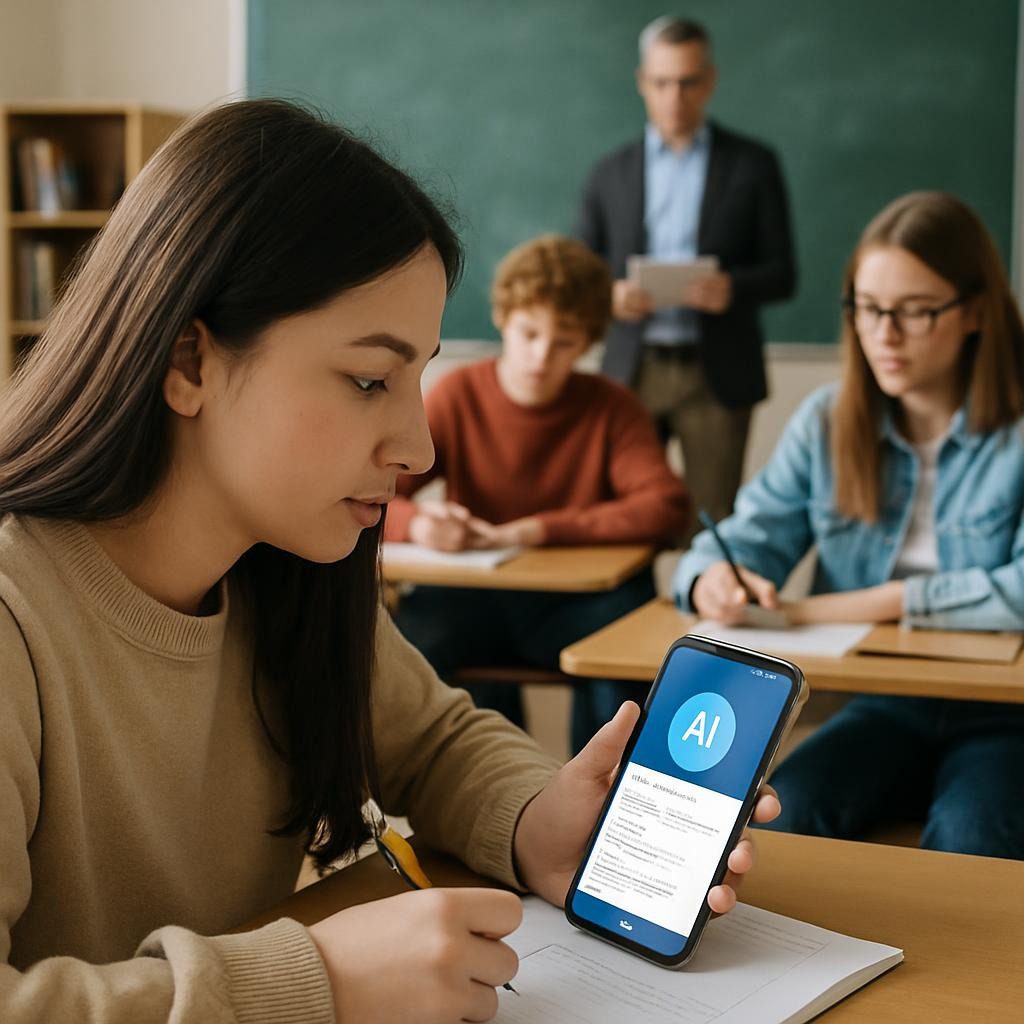
Walk into any university lecture hall in 2026, and you’ll find a near-universal truth: students have AI tools at their fingertips, and most are using them. A February 2025 survey by the Higher Education Policy Institute (HEPI) and Kortext found that 92% of UK students use generative AI tools for academic work, up dramatically from 66% just one year earlier.
This isn’t a fringe behavior. It’s the mainstream. Institutions across the globe are grappling with the implications of having technology that can compose a passable essay in every student’s possession.
The scale of documented misconduct reflects this shift. A Guardian investigation analyzing Freedom of Information responses from 131 UK universities found nearly 7,000 proven cases of AI cheating in the 2023-24 academic year—5.1 cases per 1,000 students, triple the 1.6 rate from the previous year. Early figures for 2024-25 suggest rates climbing to approximately 7.5 per 1,000.
However, Dr. Peter Scarfe, Associate Professor of Psychology at the University of Reading, informed The Guardian that these figures are merely the beginning. His research team tested university assessment systems and found that AI-generated submissions went undetected 94% of the time.
The data landscape in early 2026 reveals patterns that challenge simple narratives about student dishonesty.
| Metric | Finding | Source |
|---|---|---|
| UK students using AI for coursework | 92% | HEPI/Kortext, Feb 2025 |
| Students using AI for assessments specifically | 88% | HEPI/Kortext, Feb 2025 |
| Students submitting AI-generated content | 18% | HEPI, 2025 |
| Instructors believing students cheated (past year) | 96% | Wiley Survey, 2024 |
| Papers with 20%+ AI content (Turnitin) | 11% | Turnitin, Apr 2024 |
| Papers with 80%+ AI content (Turnitin) | 3% | Turnitin, Apr 2024 |
| Teachers using AI detection tools | 68% | ArtSmart Research, 2025 |
Sources: HEPI/Kortext UK Student Survey Feb 2025; Wiley Academic Integrity Report 2024; Turnitin Year One Data Apr 2024
Critically, research from Stanford University’s Challenge Success program found that overall cheating rates have remained remarkably stable. For years before ChatGPT, 60–70% of students reported engaging in at least one cheating behavior per month. That percentage held steady in 2023-24 surveys that included AI-specific questions.
This suggests something important: AI hasn’t created an epidemic of dishonesty. It has changed the tools students use—and made certain forms of cheating dramatically easier to execute and harder to detect.
Framing AI cheating as a moral failing misses the structural forces at play. Survey data consistently reveal the same cluster of motivations.
“There are so many reasons why students cheat. They might be struggling with the material and unable to obtain the help they need. Maybe they have too much homework and not enough time to do it. Or maybe assignments feel like pointless busywork. Many students tell us they’re overwhelmed by the pressure to achieve.”
— Dr. Denise Pope, Stanford Graduate School of Education
The Inside Higher Ed 2025 Student Voice survey asked students why peers use AI inappropriately. The responses mapped directly onto systemic pressures:
| Reason Given | Percentage |
|---|---|
| Pressure to get good grades | 37% |
| Pressed for time | 27% |
| Don’t care about academic integrity policies | 26% |
| Don’t connect with the course content | Younger students especially |
| Lack of confidence in abilities | Adult learners especially |
Source: Inside Higher Ed Student Voice Survey, July 2025 (n=1,047 students from 166 institutions)
Among students who admit to cheating broadly, 71% cite pressure to get good grades as a major reason, according to Packback research. The American educational system has created what Jason Gulya, Chair of Berkeley College’s AI and Academic Integrity Committee, calls “a model of education that places point-getting and grade-earning over learning.”
AI tools marketed as “quick and efficient ways to get the highest grades” slot perfectly into this dysfunction.
AI hasn’t just changed how students cheat—it has disrupted the economics of cheating services. Essay mills, once requiring human ghostwriters, now use AI to reduce costs and turnaround times. Since Australia introduced its essay mill law in 2021, over 300 illegal cheating websites have been blocked as of May 2025, according to TEQSA.
But new “AI-to-human-rewriter” services have emerged, taking AI-generated content and editing it to evade detection—a direct response to institutions’ focus on AI detection tools.
When ChatGPT launched in November 2022, institutions raced to implement AI detection tools. By 2025, 68% of teachers report using such tools. Yet the evidence suggests these tools create as many problems as they solve.
A landmark Stanford study found that while AI detectors achieved “near-perfect” accuracy on essays by U.S.-born eighth-graders, they misclassified over 61% of TOEFL essays written by non-native English speakers as AI-generated. Surprisingly, at least one detector flagged 97% of these essays.
The bias extends beyond language background. Research consistently shows that neurodivergent students—those with autism, ADHD, or dyslexia—are flagged at higher rates because their writing may feature “structured, literal, or repetitive writing styles” that pattern-matching algorithms interpret as machine-generated.
Vanderbilt University disabled Turnitin’s AI detection feature entirely, citing “equity, transparency, and accuracy concerns.” UCLA declined to adopt it. OpenAI shut down its AI text classifier in 2023 after it correctly identified only 26% of AI-written text while falsely flagging 9% of human writing.
Even when detection tools function effectively, they instigate a competition for weapons. The Guardian’s investigation found dozens of TikTok videos advertising AI paraphrasing tools designed to “humanize” ChatGPT output and bypass detection. The term “humanize” has become industry jargon for evading AI detection.
Students can now instruct ChatGPT to write “like an undergraduate” with intentional imperfections or run AI output through multiple paraphrasing tools. Detection tools trained on older AI models struggle to keep pace with rapidly evolving generation techniques.
Beyond academic integrity concerns, evidence suggests excessive AI reliance carries genuine cognitive costs.
A 2025 study published in Education and Information Technologies found that students who used AI more often felt less confident in their ability to do well on their own. The study also found that using AI a lot can lead to “learned helplessness,” which is the belief that trying is useless. Most concerning: increased AI use associated with slight declines in GPA.
A Turnitin and Vanson Bourne study found that 59% of students themselves worry that over-reliance on AI could reduce their critical thinking skills.
“Reasoning, logic, problem-solving, and writing—these are skills that students need. I fear that we’re going to have a generation with huge cognitive gaps in critical thinking skills. It’s really concerning to me.”
— Teacher quoted in The Markup, November 2025
The College Board’s 2025 report revealed a striking perception gap: 87% of principals worry AI use could prevent students from developing critical thinking skills, while only 45% of students express similar concern about skill erosion.
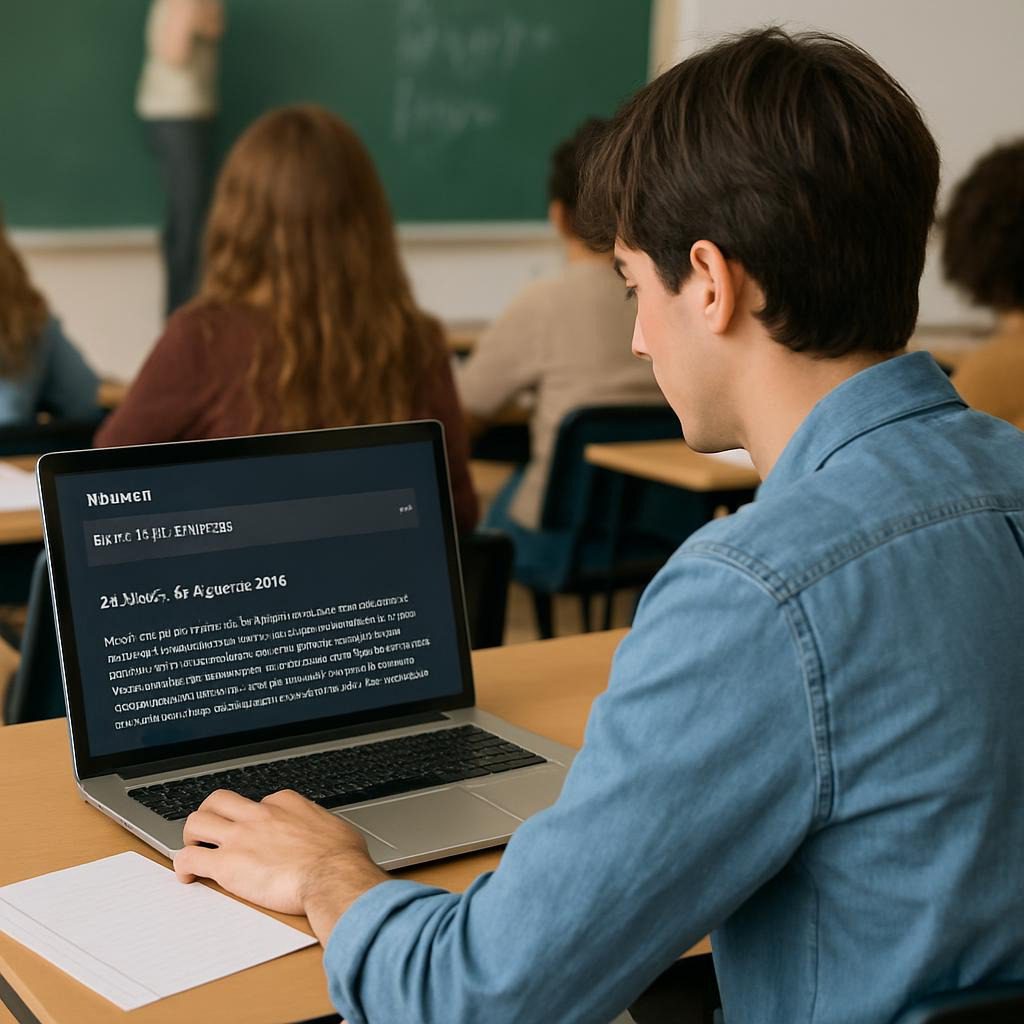
Faced with the futility of the detection arms race, many institutions are going analog. Sales of blue book exam booklets—the lined paper packets for handwritten tests—have surged dramatically.
| University | Blue Book Sales Increase | Time Period |
|---|---|---|
| UC Berkeley | 80% | The past two academic years |
| University of Florida | ~50% | 2024-25 school year |
| Texas A&M | 30%+ | 2024-25 school year |
Source: Wall Street Journal, May 2025
The logic is simple: if students must write by hand in class, there’s no opportunity for AI assistance. Critics argue this shortchanges deeper research skills, but proponents note it forces genuine engagement with material.
The University of Sydney has embedded a “two-lane” assessment framework, distinguishing between “secure assessments” (in-person, supervised) and “open assessments” (authentic tasks scaffolding responsible AI use). By 2027, all online programs may require in-person assessment components.
The most promising approaches make AI assistance irrelevant rather than prohibited:
Professors must consider how they assess student learning, including the assignments they give and the grading process. No AI policy or AI detection program will be as effective as cultivating a culture of trust, transparency, and student-directed learning.”
— Jason Gulya, Chair of AI and Academic Integrity Committee, Berkeley College
Dr. Gulya’s GEMS framework for AI-resilient assignments provides practical guidance:

| Approach | Incumbent Tactic | Evidence-Based Alternative |
|---|---|---|
| Detection | AI detection tools (Turnitin, GPTZero) | Human review and process documentation |
| Policy | Blanket AI bans | Clear, context-specific guidelines with disclosure requirements |
| Assessment | Take-home essays | In-class writing + oral defense + process portfolios |
| Punishment | Punitive focus on catching cheaters | A formative approach treating integrity as an educational outcome |
| Technology | Browser lockdowns/proctoring | Authentic assessments where AI assistance is transparently integrated |
While 92% of UK students use AI for coursework, 18% admit to submitting AI-generated content as their own work. In the US, studies suggest 56% of college students have used AI for assignments, though not all usage constitutes cheating depending on institutional policies.
Current detection tools identify AI content with varying accuracy. Turnitin claims less than 1% false positives for content flagged above 20% AI, but independent research shows detection fails 94% of the time when students actively try to evade it. False positive rates for non-native English speakers can exceed 61%.
Consequences range from assignment failure to expulsion, depending on the institution and severity. Beyond academic penalties, research suggests heavy AI reliance correlates with reduced critical thinking development, lower academic self-efficacy, and slightly lower GPAs.
It depends entirely on institutional policy and assignment guidelines. A 2025 BestColleges survey found 54% of students believe AI use constitutes cheating, while others view it similarly to using calculators or grammar checkers. Most institutions now require disclosure of any AI assistance.
Primary motivations include pressure to achieve satisfactory grades (37%), time constraints (27%), and disengagement from course content. For many students, AI represents a rational response to systemic pressures rather than moral failure.
Methods include AI detection software (68% of teachers use these tools), writing style analysis comparing current work to previous submissions, oral questioning about paper content, and process documentation requiring drafts and revision histories.
Yes. Stanford research found AI detectors misclassified 61%+ of essays by non-native English speakers as AI-generated. Neurodivergent students are also flagged at disproportionate rates. Several universities have disabled detection features, citing equity concerns.
AI-related misconduct now represents approximately 60% of academic integrity cases at many institutions globally, having largely displaced traditional plagiarism. According to data from the UK, the number of people cheating with AI tripled from 2022-23 to 2023-24.
Responses vary widely: some have returned to handwritten in-class exams (blue book sales up 30-80%), others are redesigning assessments to integrate AI transparently, and many are developing nuanced policies distinguishing acceptable from prohibited uses.
68% of instructors expect AI to negatively impact academic integrity over the next three years. However, institutions that are redesigning assessments to move away from easily outsourced features and formats are reporting success. The trajectory depends on whether education adapts faster than evasion tools.
Myth #1
“AI has caused a cheating epidemic.”
Reality: Stanford research shows cheating rates (60-70%) have remained stable since before ChatGPT. AI changed the tools and methods, not the underlying behavior rates. Students who would have cheated are now using AI; students who wouldn’t still aren’t.
Myth #2
“Detection tools can identify AI content reliably.”
Reality: University of Reading tests found 94% of AI-generated submissions went undetected. False positive rates for non-native English speakers exceed 61%. Even OpenAI discontinued its detector due to poor accuracy (26% true positive rate).
Myth #3
“Students cheat because they’re lazy or immoral.”
Reality: Survey data consistently show the primary driver is grade pressure (37%), followed by time constraints (27%). Many students report using AI to manage anxiety, mental health challenges, and systemic pressures rather than to avoid work.
Myth #4
“Banning AI tools solves the problem.”
Reality: 75% of students say they will continue using AI even if banned. The tools are ubiquitous, invisible, and improving constantly. Prohibition-based approaches have historically failed in education technology contexts (see: Wikipedia, calculators).
Myth #5
“Only struggling students use AI to cheat.”
Reality: Usage spans all performance levels. The representation of high-achieving students under competitive pressure is strong. A subset of students use AI strategically to maintain grades while managing overwhelming workloads across multiple commitments.
The AI cheating debate carries profound equity implications that receive insufficient attention.
When detection tools systematically flag non-native English speakers at rates exceeding 61%, institutions create a de facto two-tier system. International students—often paying premium tuition—face higher accusation rates for work they genuinely produced.
This phenomenon isn’t hypothetical. Medium writer Jen Wiss-Carline documents the experience of international students “staring at blank documents, struggling to translate complex thoughts into a foreign language” while facing systems that may flag their authentic writing as machine-generated.
If students bypass the cognitive struggle of writing—the “desirable difficulty” that builds skills—consequences may emerge years later when AI assistance isn’t available or appropriate. MIT research suggests students who rely heavily on AI tutors learn significantly less than those who engage directly with material.
As employers become aware of AI-enabled credential completion, degrees may lose signaling value. This affects all graduates, not just those who used AI inappropriately. 2025 research suggests academic credentials may be losing predictive value as employers struggle to assess genuine capabilities.
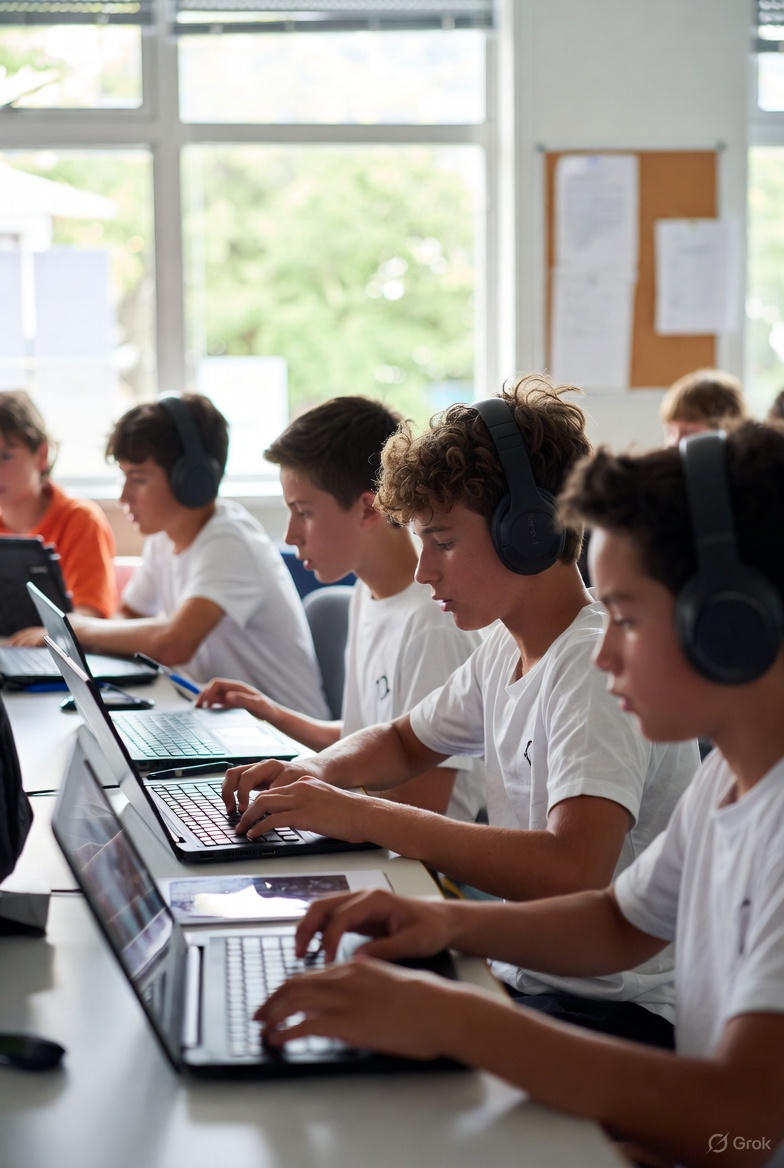
The AI cheating crisis isn’t really about AI. It’s about assessment systems designed for a world that no longer exists—systems that prioritize outputs over process, grades over learning, and compliance over genuine intellectual development.
AI has merely exposed these fractures at scale. Students facing intense grade pressure, overwhelming workloads, and assignments they perceive as busywork have always sought shortcuts. AI simply made the shortcut frictionless.
The institutions succeeding aren’t those with better detection technology. They’re those treating this moment as an opportunity to fundamentally reconsider what authentic learning looks like—and redesigning assessment to cultivate it.
Over the next 6–18 months, expect continued growth in AI usage, along with increasingly sophisticated evasion techniques. Detection will remain an arms race that institutions cannot win. The meaningful divergence will occur between institutions clinging to prohibition-based approaches and those embracing assessment redesign.
The question facing every educator, administrator, and student isn’t whether AI will transform education. It’s whether that transformation will be shaped intentionally—or simply happen to us.
Human review recommended: This analysis synthesizes current research and reporting. Given the rapidly evolving landscape, readers should verify specific statistics against primary sources for time-sensitive decisions. Geographic and institutional variation means that advice that applies in one context may fail in another.