Physical Address
304 North Cardinal St.
Dorchester Center, MA 02124
Physical Address
304 North Cardinal St.
Dorchester Center, MA 02124


Imagine waking up in 2026 to a world where your virtual AI avatar attends meetings on your behalf, scanning your colleagues’ facial expressions for unspoken tensions while you sip coffee on a beach in Bali. Sounds utopian? Now, imagine the following scenario: Your employer mandates a full return to the office (RTO), citing “hybrid creep” that’s slowly eroded remote freedoms, leaving you scrambling for childcare amid rising urban costs. Or worse, AI-driven surveillance tracks every keystroke, amplifying burnout in a job market where 78 million new digital roles emerge globally by 2030, but only the AI-savvy thrive.
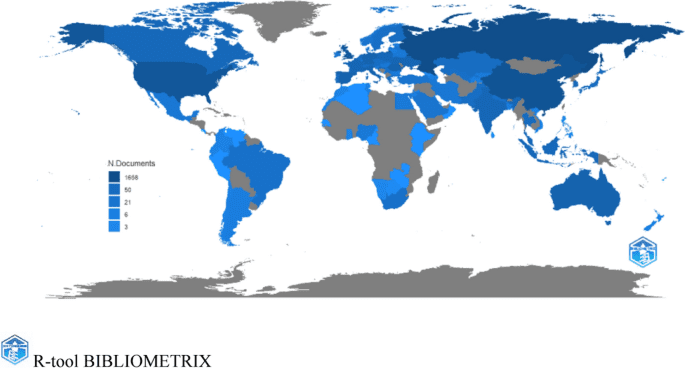
The future of remote work isn’t just evolving—it’s fracturing. What began as a pandemic lifeline has morphed into a battleground of innovation, inequality, and resistance. According to the World Economic Forum’s Future of Jobs Report 2025, technological shifts like AI and automation will disrupt 22% of jobs by 2030, with remote and hybrid models at the epicenter. Yet, while FlexJobs reports 85% of workers prioritizing flexibility over salary, a Resume Builder survey reveals 30% of companies planning to end remote work entirely by 2026. This tension is global: In Europe, OECD data highlights widening divides between high-skill remote workers and those tethered to physical sites, while in Asia, rapid AI adoption in countries like China accelerates hybrid trials but exacerbates urban-rural inequalities.
This article dives deep into the shocking undercurrents of remote work trends in 2026—beyond the headlines. We’ll explore AI’s double-edged role in hybrid work, the economic ripple effects on society, and real-world case studies from Dell’s RTO mandates to innovative Chinese models. Backed by data from McKinsey, Gartner, Statista, and more, we’ll uncover risks like isolation-fueled burnout and opportunities in global talent pools. Whether you’re a worker negotiating flexibility or an employer rethinking strategies, these insights—drawn from 2023-2025 sources—equip you for what’s next. For more on how AI is reshaping careers, refer to our piece on AI Innovations in 2026.
The landscape of remote work in 2026 is marked by “hybrid dominance,” where fully remote setups give way to structured blends of office and home time. Gartner’s 2026 predictions underscore that if hybrid complexities remain unaddressed, 75% of organizations will experience productivity losses, necessitating AI-integrated workflows. This shift, dubbed “hybrid creep,” sees companies gradually increasing mandatory office days, often from two to three or more per week, as seen in Microsoft’s phased RTO mandate starting February 2026.
Globally, adoption varies: In the U.S., Gallup’s 2025 data shows 22% of the workforce fully remote, down slightly from peaks, but with 52% in hybrid models. Europe leans toward regulated flexibility, with EU policies mandating right-to-disconnect laws to combat burnout. In Asia, rapid urbanization fuels hybrid trials; a Nature study on Chinese firms highlights how AI tools reduced coordination costs by 20% in remote setups but increased surveillance concerns. (Note: While the HBR article focuses on surveillance, it aligns with broader AI ethics discussions in Asian contexts.)
AI in hybrid work is transformative yet controversial. By 2026, Forbes predicts AI agents will automate 29% of routine tasks, displacing roles but creating 78 million new digital jobs per WEF. Think AI avatars handling virtual meetings, as explored in MIT Technology Review pieces on agentic AI. However, the Harvard Business Review raises ethical concerns, stating that the use of surveillance tools undermines trust and increases the likelihood of employees breaking rules by 50%.

Return-to-office (RTO) mandates are surging, with 30% of U.S. companies set to eliminate remote options by 2026, per Resume Builder. This “Great Return” aims to boost collaboration but ignores worker preferences: Vena Solutions’ 2026 stats show 76% would quit over lost flexibility. In Europe, resistance is fiercer; OECD reports highlight strikes in France against RTO, citing transport expenses and work-life imbalance.
Asia offers contrasts: Japanese firms, per World Bank data, blend RTO with tech to maintain productivity but face talent shortages as workers migrate to flexible hubs like Singapore.
Pros: Enhanced innovation through in-person serendipity. Cons: Increased commuting emissions and inequality for non-urban workers.
Remote work’s dark side? Isolation and burnout. Gallup’s 2025 State of the Global Workplace reveals 41% of remote workers experience high stress, up from 38% pre-pandemic. For working parents, McKinsey’s Women in the Workplace 2025 notes remote setups exacerbate burnout, with women 32% more likely to leave due to childcare gaps.
AI ethics are a significant issue: IEEE discussions warn that biased surveillance is widening trust gaps, and 52% of employees distrust AI monitoring, according to HBR. Job loss is real—WEF predicts 85 million roles displaced by 2030, hitting low-skill remote gigs hardest.
Societal divides: Remote work inequality persists, with U.S. Census data showing White workers 15% more likely to work remotely than Black or Hispanic counterparts. Globally, the World Bank reports urban migration reversal in developing nations, hollowing out rural economies.

As Gen Z enters the workforce in large numbers, only 23% prefer full remote work, citing feelings of loneliness. Gen Z workers favor hybrid work for mentorship, but they also experience “quarter-life crises” due to burnout from blurred boundaries; as Forbes notes, 45% are rethinking their careers because of the loss of flexibility. In Asia, Gen Z in China prioritizes AI upskilling amid hybrid trials.
Amid risks, opportunities abound. Global talent pools expand: Statista forecasts the remote workplace services market hitting $58.5 billion by 2027, driven by AI tech. Cost savings? According to McKinsey, the cost savings could be as high as $10,000 per employee annually.
Economic impact: OECD projects remote work boosting GDP by 1-2% in developed nations through productivity. For society, it narrows gender gaps—Harvard Business Review cites flexible models aiding working parents.
Predictions: By 2030, 92 million digital jobs (adjusted from WEF’s 78M net), with AI creating roles in remote IT support (75% growth per Gartner).
Here’s a table projecting remote work metrics, sourced from Statista, Gartner, and WEF. (ALT: “Table projecting remote work metrics from 2024 to 2030.”)
| Year | Market Size (Remote Services, $B) | U.S. Adoption Rate (%) | AI/Tech Growth in Remote (%) | Economic Savings/Employee ($) |
|---|---|---|---|---|
| 2024 | 31.7 | 22 | 60 | 8,000 |
| 2025 | 38.2 | 24 | 65 | 9,000 |
| 2026 | 45.1 | 25 | 70 | 9,500 |
| 2027 | 58.5 | 27 | 75 | 10,000 |
| 2028 | 65.0 | 28 | 80 | 10,500 |
| 2029 | 72.3 | 29 | 85 | 11,000 |
| 2030 | 80.0 | 30+ | 90 | 11,500 |
Another table on regional inequalities (ALT: “Table of remote work rates by region in 2026”):
| Region | Remote Adoption Rate (%) | Key Challenge | Opportunity |
|---|---|---|---|
| U.S. | 25 | RTO Mandates | AI Jobs |
| Europe | 28 | Burnout | Flexibility |
| Asia | 20 | Inequality | Tech Growth |
Imagine a line chart showing global remote work adoption from 2020 to 2030: A sharp rise to 28% in 2023, plateauing at 30% by 2030 amid hybrid shifts (ALT: “Line chart of global remote work adoption 2020-2030”). Data from Statista.
A bar graph for 2026 regional rates: U.S. at 25%, Europe 28%, Asia 20%, Latin America 15%, Africa 10% (ALT: “Bar graph showing remote work rates by region in 2026”). Sourced from the World Bank and OECD.


For deeper dives into work-life balance, explore Future of Work Strategies.

The future of remote work in 2026 shocks with its duality: AI unlocks unprecedented opportunities like global collaboration and cost savings, yet risks deepening isolation, inequality, and job displacement. Balanced approaches—hybrid models with ethical AI—can mitigate pitfalls, as seen in diverse global case studies. Forward-looking, we expect 30%+ adoption rates and 78 million new digital jobs by 2030, but only if we address trust gaps and upskill proactively.
Stay ahead: Subscribe to Futurenow. Click’s newsletter for updates on tech and society. Share this on social media, and check out our related articles like Digital Culture in 2026, Money & the Future, and AI in Society.
📌 Top 20 Keywords List: future of remote work, remote work trends 2026, hybrid work models, AI in remote jobs, remote work inequality, Gen Z remote preferences, RTO mandates 2026, AI remote surveillance, remote work economic impact, digital nomads, work-life balance, productivity metrics, remote burnout, hybrid creep, global talent pools, AI ethics in work, remote market growth, employee trust gaps, urban migration reversal, future work strategies