
By Tom Morgan, Editor, FutureNow · Originally published June 2025 · Last updated: October 20, 2026
Prices, shipping dates, and company claims below were checked against company pages and press coverage on that date. This page is reviewed every quarter, and the changelog at the bottom shows what moved.
The short answer
No consumer device has been shown, in published independent research, to reliably trigger lucid dreams. Some are shipping, some are on pre-order, and the science behind the most talked-about approach (focused ultrasound) is early. The one method with real trial data behind it is still free: a memory-based technique called MILD, combined with waking up briefly in the early morning.
Here is the state of play in one place:
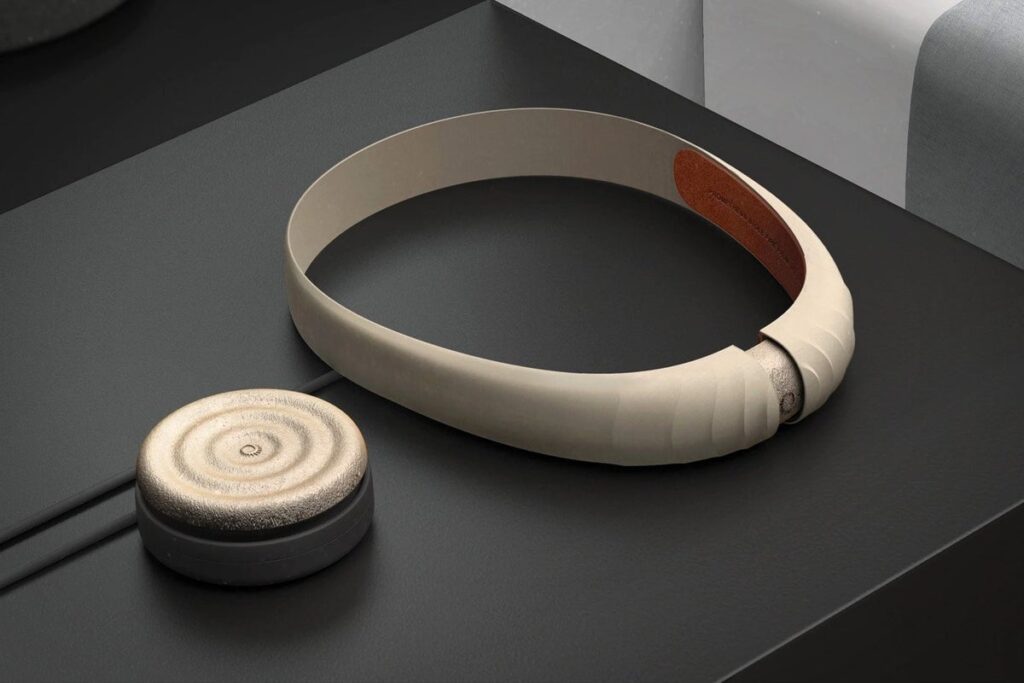
- Prophetic has dropped the “Halo” as its headline product and now sells two ultrasound headbands: Dual ($449) and Phase ($1,299). Dual’s first batch is sold out and listed to ship at the end of 2026. Phase is listed for mid-2027. Prophetic
- No peer-reviewed efficacy study exists for Prophetic’s devices. The company shows early beta results on its site, but an industry analyst noted that it has not shared enough detail to treat them as formal validation. Neurofounders, May 2026
- REMspace sells the LucidMe smart sleep mask, launched in July 2025 at $245, and announced a lower-priced app-plus-mask bundle for 2026. Business Wire
- Electrical stimulation (tACS): the famous 2014 result has a published replication attempt that did not find the effect. Blanchette-Carrière et al.
- MILD + wake-back-to-bed has the best-documented success rates of any approach, and costs nothing.
Contents
- What “lucid dreaming” science has actually confirmed
- Electrical stimulation (tACS): promising paper, shaky follow-up
- Focused ultrasound: Prophetic’s Dual and Phase
- Every device worth knowing, side by side
- What the efficacy numbers really measure
- The Halo story: what a shifting roadmap tells you
- Safety questions nobody has fully answered
- Who should buy what: a decision guide
- FAQ
- What to watch through 2027
- Sources
- Changelog and corrections
What science has confirmed {#what-science-has-confirmed}
Lucid dreaming, being aware you are dreaming while the dream continues, is real and has been verified in sleep labs for decades. Dreamers can send pre-agreed eye-movement signals from inside a dream to researchers watching their brain activity. Hearne’s experiment at Hull University in 1975 and LaBerge’s work at Stanford, published in 1981, are the classic demonstrations.
The modern version is stronger. In a 2021 Current Biology paper, four independent labs showed that people in verified REM sleep could receive questions, work out simple answers, and reply in real time. The study involved 36 participants, some with little prior lucid dreaming experience. Konkoly et al., 2021
It is also fairly common. Meta-analytic estimates cited by Neurofounders suggest about 55% of adults have had at least one lucid dream, and about 23% have them monthly or more. Neurofounders
What has not been shown is a technology that makes it happen on demand. A systematic review of induction studies found the overall quality of evidence limited, with no technique shown to work reliably and consistently. Stumbrys et al., 2012. That review predates ultrasound devices, but the pattern it describes (small studies, mixed results) is exactly where the newer hardware sits today.
tACS: a promising paper, a shaky follow-up {#tacs}
Transcranial alternating current stimulation (tACS) sends a weak electrical current through the scalp at a chosen frequency. The idea: lucid dreaming is associated with faster (gamma-range) brain activity in frontal regions, so nudging the brain at about 40 Hz during REM might help awareness switch on.
The 2014 result
Voss and colleagues tested this on 27 people with no lucid dreaming experience. They applied 30 seconds of frontotemporal stimulation during REM sleep at different frequencies, then woke participants within seconds and asked them to rate their dreams on a lucidity scale. Stimulation at 25 Hz, and especially 40 Hz, raised ratings of dream self-awareness compared with sham and other frequencies. Voss et al., 2014, Nature Neuroscience
You may have seen “77%” attached to this study. That figure came from press coverage, and it counts dream reports showing lucid-like features. It does not mean 77% of people had a controlled lucid dream. Participants were woken 5–10 seconds after stimulation, so the reports were short.
The replication problem
A later team ran a study built on the same idea, using mid-morning naps and signal-verified lucidity (the gold standard of eye signals sent from inside the dream). They reported no effect of 40 Hz frontal stimulation on lucid dreaming, and said their result also casts doubt on whether 40 Hz frontal activity is a reliable marker of lucidity. Blanchette-Carrière et al., Consciousness and Cognition. Other authors have since described the 2014 result as not consistently replicated. Stumbrys et al.
Fair reading
- The 2014 study is a real, peer-reviewed result, and not fraud.
- It is also small, used self-ratings after abrupt awakenings, and has not held up cleanly.
- Any product selling “40 Hz lucid dreaming” as settled science is ahead of the evidence.
Focused ultrasound: Prophetic’s Dual and Phase {#ultrasound}
Focused ultrasound sends low-intensity sound waves through the skull toward a chosen brain region. It is an established research tool for neuromodulation. Using it to induce lucid dreaming is not established: a consumer device doing so would be a first. Neurofounders
What Prophetic is selling now
Prophetic, a San Francisco company founded in 2023, announced its first commercial products in April 2026. Both target the prefrontal cortex, which research suggests is less active in ordinary dreams and more engaged during lucid ones.
| Dual | Phase | |
|---|---|---|
| Price | $449 (or financing) | $1,299 (or financing) |
| Focus | Fixed focus, two transmitters, bowl lens | Electronically steered focus, two phased arrays |
| Brain sensing | None | Infrared (fNIRS) sensors, closed loop |
| Adapts to you | Adjusts pulse duration and amplitude between nights | Adjusts targeting and output during the night |
| Status on Prophetic’s site (Oct 20, 2026) | Batch 1 sold out, ships end of 2026; Batch 2 ships early 2027 | Batch 1 sold out, ships mid-2027; Batch 2 mid-2027 |
Source: Prophetic, checked October 20, 2026. Return window per the site: 30 days after delivery.
Two details worth knowing. Prophetic says its devices are not medical devices, are for healthy adults 18 and over, and are for recreational use. It also says output stays below FDA intensity limits. Those are company statements, not independent verification.
What Prophetic’s own data shows, and doesn’t
Prophetic publishes a sham-versus-stimulation chart from 2026 Q1 beta testing. Participants rated dream recall, vividness, continuity, clear thinking, and deliberate choices on a 1–10 scale. In the chart, stimulation scores sit well above sham on all five (for example, recall about 2.1 versus 6.0, and “deliberate choices” about 1.1 versus 5.4).
Read that with care:
- These are self-ratings, the weakest kind of dream evidence.
- The page does not state the number of participants, the blinding procedure, or how sham was delivered, and testimonials came from prototypes “most similar to” the Dual rather than the final product.
- Neurofounders’ assessment: the company has not shared enough to count this as formal validation. Source
None of that proves the device fails. It means the claim is untested in the way that matters, and you would be an early adopter funding that test.
Every device worth knowing, side by side {#devices}
| Device | Approach | Price (listed) | Status (Oct 20, 2026) | Independent efficacy evidence |
|---|---|---|---|---|
| Prophetic Dual | Focused ultrasound, fixed focus | $449 | Pre-order; ships end of 2026 / early 2027 | None published |
| Prophetic Phase | Focused ultrasound, steered, fNIRS closed loop | $1,299 | Pre-order; ships mid-2027 | None published |
| REMspace LucidMe | Smart sleep mask: sleep-onset, REM and wake-transition cueing | $245 at launch (July 2025) | On sale per company; verify before buying | No independent trial found |
| REMspace SomnoAI + LucidMe PRO | App subscription plus a lower-cost mask | From $9/month plus $79 mask (announced) | Scheduled for 2026; check shipping | No independent trial found |
| Do-it-yourself tACS | Home electrical stimulation | Varies | Not recommended | Mixed (see above) |
Sources: Prophetic; REMspace press release, July 2025; REMspace press release, November 2025.
About REMspace’s research claims. The company has publicized lab demonstrations such as two-way communication between dreamers and controlling a remote-controlled car from a dream. These are company announcements. In an October 2024 interview, its CEO said the work had been submitted for peer review; I could not confirm publication, so treat them as unverified. ABC7: The peer-reviewed benchmark for dream communication remains the 2021 multi-lab study above.
A note on what’s missing. Earlier versions of this article listed a “Lucid Dreamer Pro” tACS headband and a “Neurosity + sleep mask” build. I could not verify either as a current product, so both were removed. If a product can’t be confirmed on the maker’s own site, it doesn’t belong in a buying guide.
What the efficacy numbers really measure {#efficacy}
The most common mistake in lucid dreaming coverage is putting different measurements side by side as if they were comparable. They are not.
| Source | What was measured | Result | How to read it |
|---|---|---|---|
| Aspy et al., 2017 (169 people) | Lucid dreams per attempt after one week of practice | 17.4% in the group using reality testing, WBTB and MILD together; about 46% of attempts when people fell asleep within 5 minutes of finishing MILD | Per-attempt success rate; also a self-reported logbook. Best real-world technique data. |
| Earlier induction studies | Success per attempt | Typically 3–13%, according to Aspy | Shows why the 2017 numbers were considered a step forward. |
| Voss et al., 2014 (27 people) | Lucid-like ratings after being woken seconds post-stimulation | Higher at 25 and 40 Hz than sham | Not a success rate per night. Not comparable with the rows above. |
| Blanchette-Carrière et al. | Signal-verified lucidity after 40 Hz stimulation | No effect reported | A negative replication attempt. |
| Prophetic beta (2026) | Self-rated recall, clarity, agency | Higher with stimulation vs. sham | Company data; sample and blinding not stated. |
Sources: Aspy et al., 2017, Dreaming 27(3); ScienceDaily summary; University of Adelaide interview.
The takeaway. The one approach with a reasonably large sample and a clear technique is the cognitive one. In Aspy’s study, the ~46% figure applies to people who fell asleep quickly after the MILD step, which shows how sensitive the method is to execution, not that it works for everyone.
MILD in one paragraph
MILD (Mnemonic Induction of Lucid Dreams) is a memory exercise. After waking naturally in the early morning, say after about five hours of sleep, you stay up briefly, then lie back down while repeating the intention to remember that you are dreaming, picturing a recent dream and noticing yourself becoming aware inside it. Then you go back to sleep. Aspy’s study found that how quickly people fell asleep afterward, and their baseline dream recall, mattered. Aspy et al., 2017
The Halo story: what a shifting roadmap tells you {#halo-story}
An earlier version of this article described Prophetic’s Halo as the device to watch, with a stated spring 2026 delivery target. That is no longer the product on offer, and the sequence is instructive:
- 2023–2024: Prophetic announced the Halo with ambitious claims. Coverage described a $1,500–$2,000 price estimate and a refundable $100 reservation, with delivery dates not yet determined. Glitchwire
- April 2026: the company launched two different products, Dual and Phase, with new names, new prices, and new sensing hardware. Prophetic
- October 2026: Dual has not yet shipped to customers according to the company’s own timeline, which still reads “end of 2026.”
This is not evidence of bad faith. Building a new category of hardware is hard, and a staged product line (cheaper fixed-focus first, steered system later) is a reasonable engineering path. But it is a useful pattern to know. As Neurofounders put it, consumer dream devices have a track record of being discontinued, delayed, niche, or weakly validated, and few have caught on. Neurofounders
Practical rule: treat any ship date on a pre-order dream device as a target, not a promise, and only commit money you could lose without regret. Check the refund terms first. Prophetic lists a 30-day return window after delivery, which does not help you during the wait.
Safety questions nobody has fully answered {#safety}
Ultrasound. Reviews of transcranial ultrasound research generally report no severe adverse events, with mild symptoms such as headache, scalp warming, sleepiness, anxiety, neck pain, or muscle twitches in a small share of participants. The catch is that those findings come from controlled research settings. A consumer device used repeatedly at home during sleep is a different, largely untested situation. Neurofounders
Sleep itself. Lucid dreaming is not generally considered dangerous, but attempts to alter dream awareness can interact with sleep stability, nightmares, sleep paralysis, and vulnerable mental states. The open question for any such device is not just “does it work” but “does it cost you good sleep.”
Electrical stimulation. Home-built or unregulated brain stimulation is a poor idea. Even the lead author of the 2014 tACS study cautioned that brain stimulation should be monitored by a physician. AFP via MGR Online
Who should skip this category and talk to a doctor first: anyone with a seizure disorder, a history of psychosis or severe nightmare disorders, a sleep disorder, pregnancy, or implanted electronic devices. I’m not a medical professional, and this is general information, not medical advice.
Who should buy what: a decision guide {#who-should-buy}
| If you… | Do this | Why |
|---|---|---|
| Have never had a lucid dream | Start with MILD + wake-back-to-bed for 3–4 weeks. Buy nothing. | It has the best evidence, costs nothing, and builds the skill any device would rely on. |
| Have occasional lucid dreams and want an experiment | Consider a mask-style cueing device such as LucidMe, after checking current shipping and refund terms. | Lower cost; the evidence is thin, so treat it as a trial. |
| Are curious about ultrasound and can afford to lose the money | Pre-order Dual only if you are comfortable with an unproven device and a late-2026/2027 delivery. | Prophetic’s data is company-reported, and Dual has no brain sensing. |
| Want the most advanced approach | Wait for Phase and for independent data. | Higher price, later date, and the closed-loop claim is the least tested part. |
| Are tempted by DIY electrical stimulation | Don’t. | Weak, contested evidence and real risk. |
| Have a sleep disorder, seizure history or serious mental health condition | Ask your doctor before trying anything beyond basic techniques. | Altering sleep or dream awareness may not be neutral for you. |
The principle behind this table: a device can only amplify a skill you are already building. Get your baseline first, then judge whether hardware adds anything.
FAQ {#faq}
Do lucid dreaming devices actually work?
Not in a way that has been independently demonstrated. Some sensory-cueing and stimulation methods have produced mixed results in studies, but no consumer device has published independent trial data showing reliable induction. The best-documented approach is the MILD technique, and Aspy’s 2017 study of 169 people found it effective when combined with other methods.
What is the best way to start lucid dreaming?
Combine reality testing, a brief wake-back-to-bed period, and MILD, then fall asleep quickly afterward. In Aspy’s study, people who fell asleep within five minutes of finishing MILD had success on nearly 46% of attempts.
How much does the Prophetic headband cost?
Prophetic lists Dual at $449 and Phase at $1,299, with financing options. As of October 20, 2026, Dual is listed to ship at the end of 2026 for batch 1 (sold out) and early 2027 for batch 2, and Phase in mid-2027.
Is the Prophetic Halo still available?
The Halo is no longer the featured product. Prophetic’s current lineup is Dual and Phase.
Is ultrasound on the brain safe?
Research settings report mostly mild effects, but there is little data on repeated at-home use during sleep. Prophetic says its output is below FDA limits and that its devices are not medical devices. Those are company statements.
Does tACS induce lucid dreams?
A 2014 study found higher lucidity ratings with 25 and 40 Hz stimulation in 27 people, but a later replication attempt found no effect on signal-verified lucid dreaming.
Can you really talk to someone who is dreaming?
Yes, in the lab. A 2021 multi-lab study showed that people in verified REM sleep could answer simple questions with pre-agreed signals. That is research equipment and trained participants, not a consumer product.
Can ultrasound put ads or scripted content into dreams?
Prophetic says no: it argues ultrasound can influence broad states like whether you become lucid, but cannot transmit images or language. That matches the broader limits of the technology, though it is the company’s statement.
What to watch through 2027 {#2027}
- Independent data on ultrasound. The decisive event is a pre-registered, peer-reviewed study with a stated sample size, proper sham control, and signal-verified lucidity. Until then, ultrasound lucid dreaming is a hypothesis.
- Whether Dual ships on time. It is the first real test of Prophetic’s delivery promises, and early customer reports will matter more than marketing.
- Phase’s closed-loop claim. The sensing-and-adapting approach is the most ambitious part and the least proven.
- Whether anyone funds a clean replication of 40 Hz tACS. The counterfactual is worth naming: if the failed replication is right, the electrical-stimulation branch of this category rests on a weak foundation.
- REMspace publication. Peer-reviewed publication of its dream-communication and control demonstrations would move those claims from announcements to evidence.
Sources {#sources}
Peer-reviewed and primary research
- Voss, U. et al. (2014). Induction of self-awareness in dreams through frontal low current stimulation of gamma activity. Nature Neuroscience. Nature Reviews Neuroscience summary
- Blanchette-Carrière, C. et al. Attempted induction of signalled lucid dreaming by transcranial alternating current stimulation. Consciousness and Cognition. ScienceDirect
- Aspy, D. J., Delfabbro, P., Proeve, M., & Mohr, P. (2017). Reality testing and the mnemonic induction of lucid dreams: Findings from the national Australian lucid dream induction study. Dreaming, 27(3), 206–231. Abstract
- Konkoly, K. R. et al. (2021). Real-time dialogue between experimenters and dreamers during REM sleep. Current Biology, 31, 1417–1427. HAL archive
- Stumbrys, T., Erlacher, D., Schädlich, M., & Schredl, M. (2012). Induction of lucid dreams: A systematic review of evidence. Consciousness and Cognition, 21(3), 1456–1475. PubMed
Company and industry sources
- Prophetic: product page, checked October 20, 2026
- Neurofounders, “Prophetic’s Ultrasound Bet on Lucid Dreaming,” May 29, 2026
- Glitchwire, “Prophetic’s Halo Wants to Put Lucid Dreaming on Demand”
- REMspace, LucidMe launch, July 2025
- REMspace, SomnoAI announcement, November 2025
- ABC7, REMspace dream-communication claim, October 2024
About the author
Tom Morgan is the editor of FutureNow, covering emerging technologies, artificial intelligence, digital innovation, and the trends shaping tomorrow. His work focuses on explaining complex developments in clear, practical terms, with an emphasis on credible sources, real-world implications, and informed analysis.
Changelog and corrections {#changelog}
October 20, 2026: full rewrite and update
- Replaced the Halo-centered outlook with Prophetic’s current Dual and Phase lineup (pricing, sensing hardware, and ship windows checked against the company site).
- Corrected the failed-replication citation. Earlier text attributed it to a 2019 Scientific Reports paper with a ~22% figure; the replication attempt is by Blanchette-Carrière et al. in Consciousness and Cognition, and no ~22% figure is supported.
- Corrected the MILD figures. The ~46% number comes from Aspy et al. (2017), not a 2019 study, and applies to people who fell asleep within five minutes of finishing the technique. The combined-technique group’s weekly rate was 17.4%. The earlier chart’s 58% and 46% values were inconsistent and have been removed.
- Removed the unsourced “failure case” anecdote and replaced it with a documented timeline of the Halo’s evolution.
- Removed two products I could not verify (“Lucid Dreamer Pro,” “Neurosity + sleep mask”).
- Replaced the single bar chart with a comparison table that separates measurements that cannot be compared.
- Corrected dating and attribution of early lucid dream verification (LaBerge’s published work dates to 1981).
June 2025: original publication.
This article is general information, not medical advice. Prices, shipping dates, and company claims change; verify on the maker’s site before buying.